



11 Indians get notices from Switzerland to share bank info

Agencies
May 27, 2019

Berne, May 27: As Switzerland strives hard to re-establish its global financial centre position after clamping down on secrecy walls of its banks, there has been a significant surge in the number of cases where it has initiated process to share information on Indians with Swiss bank accounts and shot off letters to about a dozen such individuals last week itself.

Since March, at least 25 notices have been issued by the Swiss authorities to Indian clients of Switzerland-based banks in which they have been given one last chance to appeal against sharing of their details with India.

An analysis of the notices issued by the Federal Tax Administration, Switzerland government's nodal department for sharing of information on foreign clients of Swiss banks, shows that the Swiss government has stepped up its efforts in sharing such details with a number of countries in the recent months, but the surge in India-related cases is noticeable in the past few weeks.

At least 11 such notices were issued to Indian nationals on May 21 itself, though the gazette notifications of the Swiss government has redacted full names for several of them while making public only their initials besides the nationality and the dates of birth.

The two Indians whose names have been mentioned in full are Krishna Bhagwan Ramchand (born in May 1949) and Kalpesh Harshad Kinariwala (born in September 1972). However, no further details have been disclosed about them as well.

The Indian nationals with redacted names include Mrs A S B K (born November 24, 1944), Mr A B K I (born July 9, 1944), Mrs P A S (born November 2, 1983), Mrs R A S (born November 22, 1973), Mr A P S (born November 27, 1944), Mrs A D S (born August 14, 1949), Mr M L A (born May 20, 1935), Mr N M A (born February 21, 1968) and Mr M M A (June 27, 1973).

In these notices, the individuals or their authorised representatives have been asked to file their appeals, if any, within 30 days with necessary documentary proof to support their case against providing ''administrative assistance'' to India, which broadly means sharing of their banking and other financial details.

Earlier this month on May 7, a similar notice was issued to another Indian national, Ratan Singh Chowdhury, giving an option to appeal within ten days, while another Indian national with redacted name, Mr R P N, was given 30 days on May 14.

In April also, some such notices were issued including to one Mrs J N V, as also to Kuldip Singh Dhingra and Anil Bhardwaj, among others.

Several of these names are said to have figured in the leaked HSBC lists and Panama papers which allegedly contained names of Indians with Swiss bank accounts and are being probed by Indian authorities in alleged black money cases.

In case of Krishna Bhagwan Ramchand and Kalpesh Harshad Kinariwala, such notices were issued in April as well and fresh notices have been served to them presumably after their responses to the earlier notices.

Before that in March, Switzerland had issued such notices to Mumbai-based Geodesic Ltd and its three directors (Prashant Sharad Mulekar, Pankajkumar Onkar Srivastava and Kiran Kulkarni), as also to Chennai-based Aadhi Enterprises Pvt Ltd, who are being probed by the Indian authorities for alleged money laundering and other financial irregularities.

Switzerland was widely known as an alleged safe haven for black money before it bowed down before the global pressure and agreed to bring down the famed secrecy walls that had historically surrounded the Swiss banks, provided the requesting country gave proof for financial irregularities done by the concerned person or the company.

Along with several other countries, India has also been making use of this change in the stance of Switzerland by seeking details of suspected black money hoarders in Swiss banks and it has already got back information in a large number of cases in the last few years.

As per the Swiss law, the FTA decision can be appealed within 30 days (in some cases 10 days), provided the appellant is able to give sufficient ground to challenge it.

While the Swiss government documents did not disclose specific details related to the information and assistance sought by the Indian authorities regarding these Indian companies and individuals, such an ''administrative assistance'' follows submission of proof about financial and tax-related wrongdoings and typically involves sharing of information relating to bank account details and other financial data.

While Switzerland has always denied being a safe haven for black money, it has begun sharing details for last few years with several countries including India after submission of evidence about financial and tax-related wrongdoings of the clients of Swiss banks.

Besides, a new framework of automatic information exchange has been now put in place and the details can be accessed under the new system from this year.

According to Switzerland's State Secretariat for International Finance, the global standard for the automatic exchange of information (AEOI) on financial accounts is expected to increase the transparency and prevent cross-border tax evasion.

The global standard makes provision for the mutual exchange of information on financial accounts between states and territories that have agreed among themselves to the AEOI. Besides Switzerland, over 100 states and territories, including all major financial centres, have declared their intention to adopt the standard.

Comments

Add new comment

  • Coastaldigest.com reserves the right to delete or block any comments.
  • Coastaldigset.com is not responsible for its readers’ comments.
  • Comments that are abusive, incendiary or irrelevant are strictly prohibited.
  • Please use a genuine email ID and provide your name to avoid reject.
News Network
February 3,2026

wind.jpg

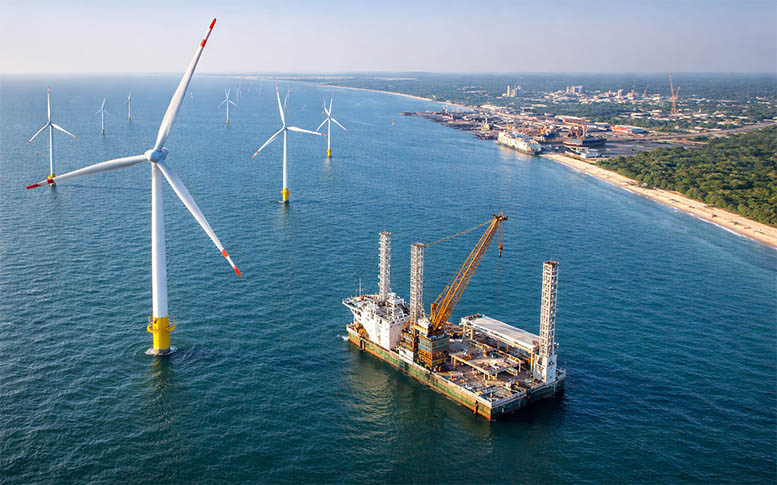
Dakshina Kannada MP Capt Brijesh Chowta has urged the Centre to give high priority to offshore wind energy generation along the Mangaluru coast, citing its strategic importance to India’s green energy and port-led development goals.

Raising the issue in the Lok Sabha under Rule 377, Chowta said studies by the National Institute of Oceanography have identified the Mangaluru coastline as part of India’s promising offshore wind ‘Zone-2’, covering nearly 6,490 sq km. He noted that the region’s relatively low exposure to cyclones and earthquakes makes it suitable for long-term offshore wind projects and called for its development as a dedicated offshore wind energy zone.

Highlighting the role of New Mangalore Port, Chowta said its modern infrastructure, multiple berths and heavy cargo-handling capacity position it well as a logistics hub for transporting and assembling large wind energy equipment.

He also pointed to the presence of major industrial units such as MRPL, OMPL, UPCL and the Mangaluru SEZ, which could serve as direct buyers of green power through power purchase agreements, improving project viability and speeding up execution.

With Karnataka’s peak power demand crossing 18,000 MW in early 2025, Chowta stressed the need to diversify renewable energy sources. He added that offshore wind projects in the Arabian Sea are strategically safer compared to the cyclone-prone Bay of Bengal.

Calling the project vital to India’s target of 500 GW of renewable energy by 2030, Chowta urged the Ministry of New and Renewable Energy to initiate resource assessments, pilot projects and stakeholder consultations at the earliest.

Comments

Add new comment

  • Coastaldigest.com reserves the right to delete or block any comments.
  • Coastaldigset.com is not responsible for its readers’ comments.
  • Comments that are abusive, incendiary or irrelevant are strictly prohibited.
  • Please use a genuine email ID and provide your name to avoid reject.
News Network
February 1,2026

Bengaluru, Feb 1: For travelers landing at Kempegowda International Airport (KIA), the sleek, wood-paneled curves of Terminal 2 promise a world-class welcome. But the famed “Garden City” charm quickly withers at the curb. As India’s aviation sector swells to record numbers—handling over 43 million passengers in Bengaluru alone this past year—the “last mile” has turned into a marathon of frustration.

The Bengaluru Logjam: Rules vs Reality

While the city awaits the 2027 completion of the Namma Metro Blue Line, the interim has been chaotic. Recent “decongestion” rules at Terminal 1 have pushed app-based cab pickups to distant parking zones, forcing weary passengers into a 20-minute walk with luggage.

“I landed after ten months away and felt like a stranger in my own city,” says Ruchitha Jain, a Koramangala resident. “My driver couldn’t find me, staff couldn’t guide me, and the so-called ‘Premium’ lane is just a fancy tax on convenience.”

•    The Cost of Distance: A 40-km cab ride can now easily cross ₹1,500, driven by demand pricing and airport surcharges.

•    The Bus Gap: While Vayu Vajra remains a lifeline, its ₹300–₹400 fare is often cited as the most expensive airport bus service in the country.

A National Pattern of Disconnect

The struggle is not unique to Karnataka. From Chennai’s coast to Hyderabad’s plateau, India’s airports tell a familiar story: brilliant runways, broken exits.

City:    Primary Issue   |    Recent Development

Bengaluru:    Cab pickup restrictions & distance  |    App-based taxis shifted to far parking zones; long walks and fare spikes reported

Chennai:    Multi-Level Parking (MLCP) hike  |    Passengers report 40-minute walks to reach cab pickup points

Hyderabad:    “Taxi mafia” & touting  |    Over 440 touting cases reported; security presence intensified

Mumbai:    Fare scams  |     Tourists charged ₹18,000 for just 400 metres, triggering police action

In Hyderabad, travelers continue to battle entrenched local groups that intimidate Uber and Ola drivers, pushing passengers toward overpriced private taxis. Chennai flyers, meanwhile, complain that reaching the designated pickup zones now takes longer than short-haul flights from cities like Coimbatore.

The ‘Budget Day’ Hope

As Finance Minister Nirmala Sitharaman presents the Union Budget 2026 today, the aviation sector is watching closely. With the government’s renewed emphasis on multimodal integration, there is cautious hope for funding toward seamless airport-metro-bus hubs.

The vision is clear: a future where planes, trains, and metros speak the same language. Until then, passengers at KIA—and airports across India—will continue to discover that the hardest part of flying isn’t the thousands of kilometres in the air, but the last few on the ground.

Comments

Add new comment

  • Coastaldigest.com reserves the right to delete or block any comments.
  • Coastaldigset.com is not responsible for its readers’ comments.
  • Comments that are abusive, incendiary or irrelevant are strictly prohibited.
  • Please use a genuine email ID and provide your name to avoid reject.
News Network
January 23,2026

Mangaluru: The Karnataka Government Polytechnic (KPT), Mangaluru, has achieved autonomous status from the All India Council for Technical Education (AICTE), becoming the first government polytechnic in the country to receive such recognition in its 78-year history. The status was granted by AICTE, New Delhi, and subsequently approved by the Karnataka Board of Technical Education in October last year.

Officials said the autonomy was conferred a few months ago. Until recently, AICTE extended autonomous status only to engineering colleges, excluding diploma institutions. However, with a renewed national focus on skill development, several government polytechnics across India have now been granted autonomy.

KPT, the second-largest polytechnic in Karnataka, was established in 1946 with four branches and has since expanded to offer eight diploma programmes, including computer science and polymer technology. The institution is spread across a 19-acre campus.

Ravindra M Keni, the first dean of the institution, told The Times of India that AICTE had proposed autonomous status for polytechnic institutions that are over 25 years old. “Many colleges applied. In the first round, 100 institutions were shortlisted, which was further narrowed down to 15 in the second round. We have already completed one semester after becoming an autonomous institution,” he said. He added that nearly 500 students are admitted annually across eight three-year diploma courses.

Explaining the factors that helped KPT secure autonomy, Keni said the institution has consistently recorded 100 per cent admissions and placements for its graduates. He also noted its strong performance in sports, with the college emerging champions for 12 consecutive years, along with active student participation in NCC and NSS activities.

Autonomous status allows KPT to design industry-oriented curricula, conduct examinations, prepare question papers, and manage academic documentation independently. The institution can also directly collaborate with industries and receive priority funding from AICTE or the Ministry of Education. While academic autonomy has been granted, financial control will continue to rest with the state government.

“There will be separate committees for examinations, question paper setting, boards of studies, and boards of examiners. The institution will now have the freedom to conduct admissions without government notifications and issue its own marks cards,” Keni said, adding that new academic initiatives would be planned after a year of functioning under the autonomous framework.

Comments

Add new comment

  • Coastaldigest.com reserves the right to delete or block any comments.
  • Coastaldigset.com is not responsible for its readers’ comments.
  • Comments that are abusive, incendiary or irrelevant are strictly prohibited.
  • Please use a genuine email ID and provide your name to avoid reject.