



72% increase in Indians staying illegally in US since 2010: Report

Agencies
June 18, 2019

Jun 18: The population of Indian-origin people in America grew by 38 per cent in seven years between 2010 and 2017, a South Asian advocacy group has said in its latest demographic report. There are at least 630,000 Indians who are undocumented, a 72 per cent increase since 2010, the South Asian Americans Leading Together (SAALT) said in its snapshot.
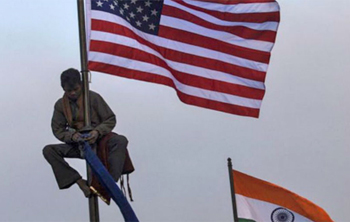
The increase in illegal Indian-Americans can be attributed to Indian immigrants overstaying visas, it said. Nearly 250,000 Indians overstayed their visa in 2016 therefore becoming undocumented, it said.

In general, the population of American residents tracing their roots to South Asia grew by 40 per cent. In real terms, it increased from 3.5 million in 2010 to 5.4 million in 2017, SAALT said.

The Nepali community grew by 206.6 per cent since 2010, followed by Indian (38 per cent), Bhutanese (38 per cent), Pakistani (33 per cent), Bangladeshi (26 per cent) and Sri Lankan populations (15 per cent).

There are currently at least 4,300 active South Asian Deferred Action for Childhood Arrivals (DACA) recipients. As of August 2018, there are approximately 2,550 active Indian DACA recipients. Only 13 per cent of the overall 20,000 DACA eligible Indians have applied and received DACA.

SAALT said that as far as DACA recipients from other countries are concerned, there are 1,300 from Pakistan, 470 from Bangladesh, 120 from Sri Lanka and 60 from Nepal.

The immigrant population density of the country shows that undocumented Bangladeshi immigrants live in New York (19,000); Michigan (4,000); Virginia (3,000); and California (2,000).

The demographic snapshot is based primarily on Census 2010 and the 2017 American Community Survey.

According to the report, income inequality has been reported to be the greatest among Asian Americans.

Nearly one percent of the approximately five million South Asians in the US live in poverty.

SAALT said there has been a rise in the number of South Asians seeking asylum in the US over the last 10 years.

The US Immigration and Customs Enforcement (ICE) has detained 3,013 South Asians since 2017. US Customs and Border Patrol arrested 17,119 South Asians between October 2014 and April 2018 through border and interior enforcement, it said.

According to SAALT, since 1997, more than 1.7 million dependent spouses of H-1B visa holders have received H-4 visas.

In 2017, 136,000 individuals received H-4 status. Nearly 86 per cent of H-4 visa holders are from South Asian countries.

In 2015, DHS granted work authorisation to certain H-4 visa holders. As of December 2017, approximately 127,000 visa holders were approved for H-4 EAD, the report said.

Nearly 472,000 or 10 per cent of the approximately five million South Asians in the US live in poverty, the report said.

Among South Asian Americans, Pakistanis (15.8 per cent), Nepalis (23.9 per cent), Bangladeshis (24.2 per cent), and Bhutanese (33.3 per cent) had the highest poverty rates, it said.

Bangladeshi and Nepali communities have the lowest median household incomes out of all Asian American groups, earning USD 49,800 and USD 43,500 respectively, it said.

Nearly 61 per cent of non-citizen Bangladeshi American families receive public benefits for at least one of the four federal programmes including TANF, SSI, SNAP and Medicaid/CHIP, 48 per cent of non-citizen Pakistani families and 11 per cent of non-citizen Indian families also receive public benefits, the report said.

In the lead up to the 2020 elections, South Asians are becoming an increasingly powerful segment of the American electorate, SAALT said.

According to the Current Population Survey (CPS), 49.9 per cent of voting-age, Asian American citizens cast a ballot in 2016. The number of Asian American voters in the last decade has nearly doubled from about two million voters in 2001 to 5 million voters in 2016.

Of these, Indians account for more than 1.5 million, followed by Pakistanis (222,252) and Bangladeshi (69,825), SAALT added.

Comments

Add new comment

  • Coastaldigest.com reserves the right to delete or block any comments.
  • Coastaldigset.com is not responsible for its readers’ comments.
  • Comments that are abusive, incendiary or irrelevant are strictly prohibited.
  • Please use a genuine email ID and provide your name to avoid reject.
News Network
December 6,2025

pilot.jpg

New Delhi: IndiGo, India’s largest airline, faced major operational turbulence this week after failing to prepare for new pilot-fatigue regulations issued by the Directorate General of Civil Aviation (DGCA). The stricter rules—designed to improve flight safety—took effect in phases through 2024, with the latest implementation on November 1. IndiGo has acknowledged that inadequate roster planning led to widespread cancellations and delays.

Below are the key DGCA rules that affected IndiGo’s operations:

1. Longer Mandatory Weekly Rest

Weekly rest for pilots has been increased from 36 hours to 48 hours.

The government says the extended break is essential to curb cumulative fatigue. This rule remains in force despite the current crisis.

2. Cap on Night Landings

Pilots can now perform only two night landings per week—a steep reduction from the earlier limit of six.

Night hours, defined as midnight to early morning, are considered the least alert period for pilots.

Given the disruptions, this rule has been temporarily relaxed for IndiGo until February 10.

3. Reduced Maximum Night Flight Duty

Flight duty that stretches into the night is now capped at 10 hours.

This measure has also been kept on hold for IndiGo until February 10 to stabilize operations.

4. Weekly Rest Cannot Be Replaced With Personal Leave

Airlines can no longer count a pilot’s personal leave as part of the mandatory 48-hour rest.

Pilots say this closes a loophole that previously reduced actual rest time.

Currently, all airlines are exempt from this rule to normalise travel.

5. Mandatory Fatigue Monitoring

Airlines must submit quarterly fatigue reports along with corrective actions to DGCA.

This system aims to create a transparent fatigue-tracking framework across the industry.

The DGCA has stressed that these rules were crafted to strengthen flight safety and align India with global fatigue-management standards. The temporary relaxations are expected to remain until February 2025, giving IndiGo time to stabilise its schedules and restore normal air travel.

Comments

Add new comment

  • Coastaldigest.com reserves the right to delete or block any comments.
  • Coastaldigset.com is not responsible for its readers’ comments.
  • Comments that are abusive, incendiary or irrelevant are strictly prohibited.
  • Please use a genuine email ID and provide your name to avoid reject.
News Network
November 22,2025

Mangaluru: Police Commissioner Sudheer Kumar Reddy C H has warned of strict action against individuals spreading rumours and attempting to create insecurity within the Muslim community and fuel hatred between Hindus and Muslims through social media.

Referring to a recent social media post alleging that police personnel had entered a masjid premises to check whether beef was being cooked, the commissioner said miscreants were attempting to push their communal agenda. 

“A group of people, both from Mangaluru and abroad, are trying hard to spread rumours. For the past 10 days, they have been attempting to rake up old issues, highlight routine matters as controversies, or fabricate news altogether,” he said.

He reiterated that any such attempts to disturb communal harmony would invite legal action. “Cases will be registered and the accused will be brought to book,” he stated.

Comments

Add new comment

  • Coastaldigest.com reserves the right to delete or block any comments.
  • Coastaldigset.com is not responsible for its readers’ comments.
  • Comments that are abusive, incendiary or irrelevant are strictly prohibited.
  • Please use a genuine email ID and provide your name to avoid reject.
News Network
November 27,2025

Bengaluru, Nov 27: Karnataka Chief Minister Siddaramaiah’s camp is reportedly on alert as the Congress leadership tussle in the state intensifies, particularly amid speculation over the potential promotion of Deputy Chief Minister D.K. Shivakumar. Siddaramaiah is said to be in a “wait-and-watch” mode after admitting to “confusion” earlier this week and urging the party to “put a full stop” to it.

Sources say his supporters are ready to act if senior leaders — including party chief Mallikarjun Kharge, Sonia Gandhi, and Rahul Gandhi — give any indication of backing Shivakumar. If the party insists on a leadership change, Siddaramaiah’s camp has a list of alternatives, underscoring the deep rift between the two leaders. One possible candidate is Home Minister G. Parameshwara, a Siddaramaiah loyalist and influential Dalit leader.

The strategy was reportedly finalized at a meeting led by PWD Minister Satish Jarkiholi, another Siddaramaiah supporter, who stressed that Delhi leaders need to resolve the issue. Kharge and the Gandhis are expected to meet soon, after which Siddaramaiah and Shivakumar may be summoned to Delhi.

Shivakumar has largely stayed non-confrontational, publicly endorsing Siddaramaiah and downplaying speculation about his own ambitions. However, he has made pointed comments emphasizing the importance of honoring promises, directed at Siddaramaiah.

The feud traces back to the 2023 state election, when Siddaramaiah was chosen as Chief Minister while Shivakumar, who led the party’s campaign, was made Deputy CM and state party chief — a departure from the Congress’ usual “one post per person” rule.

There were also hints of a prior understanding that Siddaramaiah would step down midway through the term. As the halfway mark passed last week, Shivakumar-aligned lawmakers have ramped up pressure on the party for a leadership change, with Shivakumar himself hinting at stepping down as state party chief to pursue the top job.

Comments

Add new comment

  • Coastaldigest.com reserves the right to delete or block any comments.
  • Coastaldigset.com is not responsible for its readers’ comments.
  • Comments that are abusive, incendiary or irrelevant are strictly prohibited.
  • Please use a genuine email ID and provide your name to avoid reject.
