72% increase in Indians staying illegally in US since 2010: Report

Agencies
June 18, 2019

Jun 18: The population of Indian-origin people in America grew by 38 per cent in seven years between 2010 and 2017, a South Asian advocacy group has said in its latest demographic report. There are at least 630,000 Indians who are undocumented, a 72 per cent increase since 2010, the South Asian Americans Leading Together (SAALT) said in its snapshot.
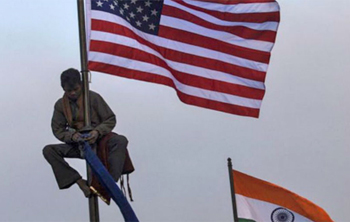
The increase in illegal Indian-Americans can be attributed to Indian immigrants overstaying visas, it said. Nearly 250,000 Indians overstayed their visa in 2016 therefore becoming undocumented, it said.

In general, the population of American residents tracing their roots to South Asia grew by 40 per cent. In real terms, it increased from 3.5 million in 2010 to 5.4 million in 2017, SAALT said.

The Nepali community grew by 206.6 per cent since 2010, followed by Indian (38 per cent), Bhutanese (38 per cent), Pakistani (33 per cent), Bangladeshi (26 per cent) and Sri Lankan populations (15 per cent).

There are currently at least 4,300 active South Asian Deferred Action for Childhood Arrivals (DACA) recipients. As of August 2018, there are approximately 2,550 active Indian DACA recipients. Only 13 per cent of the overall 20,000 DACA eligible Indians have applied and received DACA.

SAALT said that as far as DACA recipients from other countries are concerned, there are 1,300 from Pakistan, 470 from Bangladesh, 120 from Sri Lanka and 60 from Nepal.

The immigrant population density of the country shows that undocumented Bangladeshi immigrants live in New York (19,000); Michigan (4,000); Virginia (3,000); and California (2,000).

The demographic snapshot is based primarily on Census 2010 and the 2017 American Community Survey.

According to the report, income inequality has been reported to be the greatest among Asian Americans.

Nearly one percent of the approximately five million South Asians in the US live in poverty.

SAALT said there has been a rise in the number of South Asians seeking asylum in the US over the last 10 years.

The US Immigration and Customs Enforcement (ICE) has detained 3,013 South Asians since 2017. US Customs and Border Patrol arrested 17,119 South Asians between October 2014 and April 2018 through border and interior enforcement, it said.

According to SAALT, since 1997, more than 1.7 million dependent spouses of H-1B visa holders have received H-4 visas.

In 2017, 136,000 individuals received H-4 status. Nearly 86 per cent of H-4 visa holders are from South Asian countries.

In 2015, DHS granted work authorisation to certain H-4 visa holders. As of December 2017, approximately 127,000 visa holders were approved for H-4 EAD, the report said.

Nearly 472,000 or 10 per cent of the approximately five million South Asians in the US live in poverty, the report said.

Among South Asian Americans, Pakistanis (15.8 per cent), Nepalis (23.9 per cent), Bangladeshis (24.2 per cent), and Bhutanese (33.3 per cent) had the highest poverty rates, it said.

Bangladeshi and Nepali communities have the lowest median household incomes out of all Asian American groups, earning USD 49,800 and USD 43,500 respectively, it said.

Nearly 61 per cent of non-citizen Bangladeshi American families receive public benefits for at least one of the four federal programmes including TANF, SSI, SNAP and Medicaid/CHIP, 48 per cent of non-citizen Pakistani families and 11 per cent of non-citizen Indian families also receive public benefits, the report said.

In the lead up to the 2020 elections, South Asians are becoming an increasingly powerful segment of the American electorate, SAALT said.

According to the Current Population Survey (CPS), 49.9 per cent of voting-age, Asian American citizens cast a ballot in 2016. The number of Asian American voters in the last decade has nearly doubled from about two million voters in 2001 to 5 million voters in 2016.

Of these, Indians account for more than 1.5 million, followed by Pakistanis (222,252) and Bangladeshi (69,825), SAALT added.

Comments

Add new comment

  • Coastaldigest.com reserves the right to delete or block any comments.
  • Coastaldigset.com is not responsible for its readers’ comments.
  • Comments that are abusive, incendiary or irrelevant are strictly prohibited.
  • Please use a genuine email ID and provide your name to avoid reject.
News Network
February 1,2026

Bengaluru: The Karnataka High Court has refused to quash an investigation against a WhatsApp group administrator accused of allowing the circulation of obscene and offensive images depicting Hindutva politicians and idols in 2021.

Justice M Nagaprasanna observed that, prima facie, the ingredients of the offence under Section 295A of the Indian Penal Code were made out. “The offence under Section 295A of the IPC is met to every word of its ingredient, albeit prima facie,” the judge said.

The petitioner, Sirajuddin, a resident of Belthangady taluk in Dakshina Kannada district, had challenged the FIR registered against him at the CEN (Cyber, Economics and Narcotics) police station, Mangaluru, for offences under Section 295A of the IPC and Section 67 of the Information Technology Act. Section 295A relates to punishment for deliberate and malicious acts intended to outrage the religious feelings of any class of citizens.

According to the complaint filed by K Jayaraj Salian, also a resident of Belthangady taluk, he received a WhatsApp group link from an unknown source and was added to the group after accessing it. The group reportedly had six administrators and around 250 participants, where obscene and offensive images depicting Hindu deities and certain political figures were allegedly circulated repeatedly.

Sirajuddin was arrested in connection with the case and later released on bail on February 16, 2021. He argued before the court that he was being selectively targeted, while other administrators—including the creator of the group—were neither arrested nor investigated. He also contended that the Magistrate could not have taken cognisance of the offence under Section 295A without prior sanction under Section 196(1) of the CrPC.

Rejecting the argument, Justice Nagaprasanna held that prior sanction is required only at the stage of taking cognisance, and not at the stage of registration of the crime or during investigation.

The judge noted that the State had produced the entire investigation material before the court. “A perusal of the material reveals depictions of Hindu deities in an extraordinarily obscene, demeaning and profane manner. The content is such that its reproduction in a judicial order would itself be inappropriate,” the court said, adding that the material, on its face, had the tendency to outrage religious feelings and disturb communal harmony.

Observing that the case was still at the investigation stage, the court said it could not interdict the probe at this juncture. However, it expressed concern that the investigating officer appeared to have not proceeded uniformly against all administrators. The court clarified that if the investigation revealed the active involvement of any member in permitting the circulation of such content, they must also be proceeded against.

“At this investigative stage, any further observation by this Court would be unnecessary,” the order concluded.

Comments

Add new comment

  • Coastaldigest.com reserves the right to delete or block any comments.
  • Coastaldigset.com is not responsible for its readers’ comments.
  • Comments that are abusive, incendiary or irrelevant are strictly prohibited.
  • Please use a genuine email ID and provide your name to avoid reject.
News Network
January 31,2026

trumpkill.jpg

The US Department of Justice has released millions of new documents linked to the case of convicted child sex offender Jeffrey Epstein, before removing some pages that contained complaints mentioning President Donald Trump.

Deputy Attorney General Todd Blanche said on Friday that approximately 3.5 million files were published to comply with the Epstein Transparency Act, following criticism that the administration had missed a December 19 deadline set by Congress.

The documents include FBI communications and complaints submitted as tips, some of which list comments mentioning Trump and others who had social or professional ties to Epstein.

Trump has repeatedly denied any wrongdoing in relation to his past association with Epstein.

Pages removed from DOJ website

After their publication, pages containing complaints that mentioned Trump were removed from the DOJ website and now return a “page not found” message. Copies of the documents, however, have circulated widely on social media. CNN anchor Jake Tapper was among those who publicly noted that the pages had been taken down.

One complaint, filed by a friend of a victim, says Trump forced a girl aged 13–14 to perform “oral sex” approximately 35 years ago in New Jersey. The document states that an investigator was sent to Washington to conduct an interview.

Another complaint says Trump regularly paid an individual to perform sexual acts and adds that he was present when her newborn child was murdered by a relative. The paperwork notes that there was “no contact made” with the complainant.

A separate complaint, which provided no contact information, said “calendar girls” parties at Trump’s Mar-a-Lago involved children and sexual abuse. The document also names several public figures as present at such events.

In another account, a complainant said they witnessed a “sex trafficking ring” at Trump National Golf Club in Rancho Palos Verdes, California, in the mid-1990s. The person noted “threats” from Trump’s head of security if she spoke publicly about what she had seen.

Other figures mentioned in the files

The latest release also includes a draft email Epstein wrote to himself in 2013, referring to Microsoft co-founder Bill Gates. In the message, Epstein said Gates asked him to delete emails and referenced “personal matters.”

The DOJ has not provided a detailed explanation for why certain pages were removed after publication. The department said the document release was ongoing.

Comments

Add new comment

  • Coastaldigest.com reserves the right to delete or block any comments.
  • Coastaldigset.com is not responsible for its readers’ comments.
  • Comments that are abusive, incendiary or irrelevant are strictly prohibited.
  • Please use a genuine email ID and provide your name to avoid reject.
News Network
January 20,2026

iran.jpg

Iranian security and intelligence forces have captured more than 470 individuals in three provinces, identified as key figures behind the recent wave of violent unrest and terrorist activities linked to foreign-backed networks.

The Intelligence Ministry's provincial office in Khorasan Razavi announced on Monday the arrest of 192 armed terrorists, identified as the main agents behind recent riots in the region. 

According to an official statement, the detainees were involved in the killing of several security personnel and civilians, setting fire to mosques, public service facilities, and buses, as well as attacks on military and law enforcement centers.

The seized items from the group include several bulletproof vests, Kalashnikov rifles, hunting weapons, Winchester rifles, and various cold weapons such as daggers, swords, brass knuckles, tactical knives, crossbows, and chains.

Evidence indicates that some of the individuals were tied to hostile movements and terrorist organizations, with links overseas. Others were identified as members of violent criminal gangs, actively taking part in the unrest alongside their associates.

Simultaneously, in the western province of Lorestan, the IRGC announced the arrest of 134 individuals as the main leaders and influential field agents of a US-Israeli terrorist network.

The IRGC statement stated that these individuals formed terrorist cells during the recent unrest, committing "Daesh-like" acts.

They wounded security forces with firearms and cold weapons, and burned and destroyed public and private properties, including mosques, shops, banks, and private and public vehicles.

In the northwestern province of Zanjan, the police reported detaining 150 people identified as principal leaders and agents behind recent riots.

Authorities noted that these individuals were responsible for destroying public and private property and intentionally setting fire to vehicles in the province's squares.

Their crimes include shedding the blood of innocent people, destroying public and private property, attempting to enter military sites, disrupting public order, and spreading terror among citizens.

A variety of cold weapons were reportedly seized from the detainees.

What began late last month as peaceful protests over economic hardship across Iran turned violent after public statements by US and Israeli regime figures encouraged vandalism and disorder.

During the unrest, foreign-backed mercenaries rampaged through cities, killing security forces and civilians and damaging public property.

Comments

Add new comment

  • Coastaldigest.com reserves the right to delete or block any comments.
  • Coastaldigset.com is not responsible for its readers’ comments.
  • Comments that are abusive, incendiary or irrelevant are strictly prohibited.
  • Please use a genuine email ID and provide your name to avoid reject.