After $6 billion funding from Saudis, Pakistan PM now looks to China

Agencies
October 26, 2018

Islamabad, Oct 26: Pakistan’s Prime Minister Imran Khan will visit China next week, authorities said Thursday, as the former cricketer mounts a desperate search for funds to prop up the nation’s dire finances.
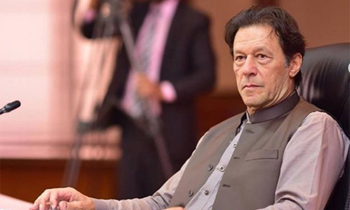
The confirmation of Khan’s first visit to China as premier comes days after Pakistan secured $6 billion dollars in funding from Saudi Arabia to help stave off a widening balance of payment crisis.

Khan said in a televised address Wednesday that he was working to nail down Saudi-style financing packages from two additional, unnamed countries to reduce the size of a potential loan from the International Monetary Fund.

The foreign affairs ministry said Khan would meet with Chinese President Xi Jinping and Premier Li Keqiang on the November 2-5 trip which will take in Beijing and and the commercial hub of Shanghai.

“The visit will provide an opportunity for the two countries to review the entire spectrum of bilateral relations with special reference to CPEC,” foreign ministry spokesman Muhammad Faisal told AFP, referring to the China-Pakistan Economic Corridor.

CPEC is a multi-billion-dollar infrastructure project aimed at building energy and transport links connecting the western Chinese region of Xinjiang with the Arabian Sea via Pakistan.

However, given Pakistan’s deteriorating finances, in recent months there have been concerns that portions of the ambitious agreement may have to be scaled down.

Analysts said Khan will be pushing for financial assistance from Beijing during the visit.

“Pakistan would certainly like China to play its role in supporting our balance of payments and this is going to be one major subject of discussions,” said economist Salman Shah.

“China has been providing financial support to Pakistan in difficult times and this will not be something new if they come forward this time also.” Since taking power in August, Khan has sought loans from “friendly” countries like Saudi Arabia, vowed to recover funds stolen by corrupt officials, and embarked on a series of populist austerity drives to raise cash.

Pakistan has gone to the IMF repeatedly since the late 1980s.

The last time was in 2013, when Islamabad got a $6.6 billion loan to tackle a similar crisis.

Comments

Add new comment

  • Coastaldigest.com reserves the right to delete or block any comments.
  • Coastaldigset.com is not responsible for its readers’ comments.
  • Comments that are abusive, incendiary or irrelevant are strictly prohibited.
  • Please use a genuine email ID and provide your name to avoid reject.
News Network
January 23,2026

modIKERALA.jpg

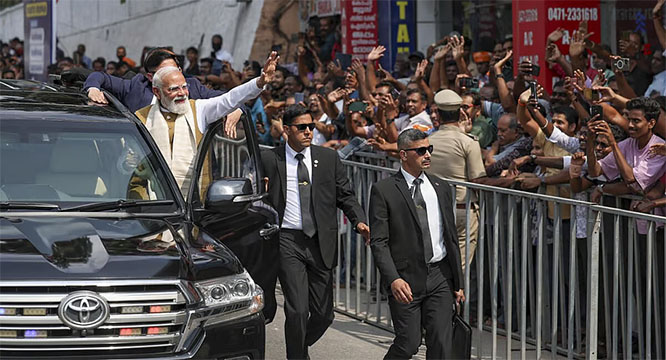
Prime Minister Narendra Modi, during his visit to Thiruvananthapuram on Friday, January 23, indicated that the Bharatiya Janata Party (BJP) is aiming to expand its political footprint in Kerala ahead of the Assembly elections scheduled in the coming months.

Speaking at a BJP-organised public meeting, Modi drew parallels between the party’s early electoral gains in Gujarat and its recent victory in the Thiruvananthapuram Municipal Corporation. The civic body win, which ended decades of Left control, was cited by the Prime Minister as a possible starting point for the party’s broader ambitions in the state.

Recalling BJP’s political trajectory in Gujarat, Modi said the party was largely insignificant before 1987 and received little media attention. He pointed out that the BJP’s first major breakthrough came with its victory in the Ahmedabad Municipal Corporation that year.

“Just as our journey in Gujarat began with one city, Kerala’s journey has also started with a single city,” Modi said, suggesting that the party’s municipal-level success could translate into wider electoral acceptance.

The Prime Minister alleged that successive governments led by the Left Democratic Front (LDF) and the United Democratic Front (UDF) had failed to adequately develop Thiruvananthapuram. He accused both fronts of corruption and neglect, claiming that basic infrastructure and facilities were denied to the capital city for decades.

According to Modi, the BJP’s control of the civic body represents a shift driven by public dissatisfaction with the existing political alternatives. He asserted that the BJP administration in Thiruvananthapuram had begun working towards development, though no specific details or timelines were outlined.

Addressing the gathering at Putharikandam Maidan, Modi said the BJP intended to project Thiruvananthapuram as a “model city,” reiterating his party’s commitment to governance-led change.

The Prime Minister’s visit to Kerala also included the inauguration of several development projects and the flagging off of new train services, as the BJP intensifies its political outreach in the poll-bound state.

Comments

Add new comment

  • Coastaldigest.com reserves the right to delete or block any comments.
  • Coastaldigset.com is not responsible for its readers’ comments.
  • Comments that are abusive, incendiary or irrelevant are strictly prohibited.
  • Please use a genuine email ID and provide your name to avoid reject.
News Network
January 23,2026

Mangaluru: The Karnataka Government Polytechnic (KPT), Mangaluru, has achieved autonomous status from the All India Council for Technical Education (AICTE), becoming the first government polytechnic in the country to receive such recognition in its 78-year history. The status was granted by AICTE, New Delhi, and subsequently approved by the Karnataka Board of Technical Education in October last year.

Officials said the autonomy was conferred a few months ago. Until recently, AICTE extended autonomous status only to engineering colleges, excluding diploma institutions. However, with a renewed national focus on skill development, several government polytechnics across India have now been granted autonomy.

KPT, the second-largest polytechnic in Karnataka, was established in 1946 with four branches and has since expanded to offer eight diploma programmes, including computer science and polymer technology. The institution is spread across a 19-acre campus.

Ravindra M Keni, the first dean of the institution, told The Times of India that AICTE had proposed autonomous status for polytechnic institutions that are over 25 years old. “Many colleges applied. In the first round, 100 institutions were shortlisted, which was further narrowed down to 15 in the second round. We have already completed one semester after becoming an autonomous institution,” he said. He added that nearly 500 students are admitted annually across eight three-year diploma courses.

Explaining the factors that helped KPT secure autonomy, Keni said the institution has consistently recorded 100 per cent admissions and placements for its graduates. He also noted its strong performance in sports, with the college emerging champions for 12 consecutive years, along with active student participation in NCC and NSS activities.

Autonomous status allows KPT to design industry-oriented curricula, conduct examinations, prepare question papers, and manage academic documentation independently. The institution can also directly collaborate with industries and receive priority funding from AICTE or the Ministry of Education. While academic autonomy has been granted, financial control will continue to rest with the state government.

“There will be separate committees for examinations, question paper setting, boards of studies, and boards of examiners. The institution will now have the freedom to conduct admissions without government notifications and issue its own marks cards,” Keni said, adding that new academic initiatives would be planned after a year of functioning under the autonomous framework.

Comments

Add new comment

  • Coastaldigest.com reserves the right to delete or block any comments.
  • Coastaldigset.com is not responsible for its readers’ comments.
  • Comments that are abusive, incendiary or irrelevant are strictly prohibited.
  • Please use a genuine email ID and provide your name to avoid reject.
News Network
February 4,2026

gaming.jpg

Ghaziabad: In a tragic incident, three sisters aged 12, 14 and 16 died after jumping from the ninth floor of their apartment in Uttar Pradesh’s Ghaziabad in the early hours of Wednesday. The girls allegedly took the extreme step after becoming deeply obsessed with an online Korean task-based game.

The incident occurred around 2.15 am at a high-rise apartment complex in Bharat City. Before jumping, the sisters — Pakhi (12), Prachi (14) and Vishika (16) — left behind a handwritten note that read, “Sorry, Papa.”

According to police, the girls went to the balcony, bolted the door from inside and jumped one after another. Their screams and the sound alerted their parents, neighbours and security guards. By the time the parents broke open the balcony door, all three had died.

“When we reached the spot, we confirmed that three minor girls, daughters of Chetan Kumar, had died after jumping from the building,” said Assistant Commissioner of Police Atul Kumar Singh.

Visuals from the scene on Wednesday morning showed the bodies lying on the ground, their mother wailing in grief, and stunned neighbours gathering at the complex.

Police said the sisters were heavily influenced by Korean culture and were addicted to an online “Korean love game”, though no specific game has been identified so far. Investigators are examining an eight-page suicide note written in a pocket diary, detailing the girls’ mobile and gaming activities.

“Read everything written in this diary because all of it is true. I’m really sorry. Sorry, Papa,” the note said, accompanied by a hand-drawn crying emoji.

Their father, Chetan Kumar, told police that the girls had even adopted Korean names and had gradually withdrawn from school and daily activities. “They used to say, ‘Korea is our life, Korea is our biggest love. We cannot give it up,’” he said, breaking down.

Police said the parents had recently restricted the girls’ mobile phone usage, which may have triggered distress. “The investigation has not revealed the name of any particular game, but it is evident that the girls were deeply influenced by Korean culture, as mentioned in the suicide note,” said senior police officer Nimish Patel.

The sisters reportedly did everything together, including eating and bathing. Their gaming addiction is believed to have begun during the COVID-19 pandemic, after which they became irregular at school and eventually stopped attending altogether.

Police also revealed that Chetan Kumar is married to two sisters and lives with both wives and their children, all daughters. Two of the deceased girls were daughters of one wife, while the third was their half-sister.

Further investigation is underway.

Comments

Add new comment

  • Coastaldigest.com reserves the right to delete or block any comments.
  • Coastaldigset.com is not responsible for its readers’ comments.
  • Comments that are abusive, incendiary or irrelevant are strictly prohibited.
  • Please use a genuine email ID and provide your name to avoid reject.