Ajmer dargah chief, who urged Modi to ban beef, ‘sacked’ by brother

April 5, 2017

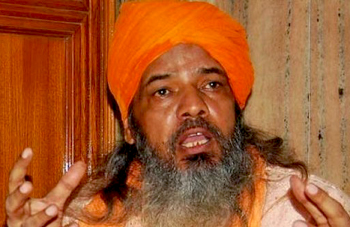
Ajmer, Apr 5: The spiritual head of Ajmer dargah, who had supported a ban on the sale of beef, was on Wednesday "sacked" by his brother.
Ajmer
On Monday, Syed Zainul Abedin had also urged the government to ban the slaughter of all bovine animals to promote communal harmony in the country.

However, his support has not gone down well with his brother who on Wednesday "sacked" him for the "blasphemous" support and declared him a "non-Muslim".

Syed Allauddin Alimi claimed he had the support of the family in sacking Abedin and anointing himself as the new "deewan", spiritual chief, of the Khwaja Moinuddin Chisti mausoleum in Ajmer -- one of the most famous Muslim shrines visited by millions of devotees from across the sub-continent every year.

However, his brother Allauddin Alimi's claim has not been recognised by the dargah committee.

Abedin said Alimi's move has no legal sanctity as per the Durgah Khawaja Saheb Act, 1955 and he will seek a legal opinion on the matter.

The post is hereditary and belongs to heirs of the 12th-13th-century Sufi priest. Deewan has no control over the management of the shrine but gets a monthly remuneration from the management committee, which is appointed by the government.

"I am the new deewan. I have the support of the entire (Chishti) clan," Alimi told news agency, alleging that Abedin was an "apostate because he had spoken in violation of the Islamic law".

"I am not interested in salary. He (Abedin) can have the money. Buy I won`t allow him to enter the shrine now. Whatever he has said is blasphemous."

When Abedin was performing some rituals at the sanctum sanctorum in the dargah last evening, Alimi occupied the 'Gaddi' of Deewan at Khanqah in the dargah premises and declared himself as the new Deewan or Sajjadanashin.

Khanqah is the holy place where the saint used to sit and preach. It is now the place where the Sajjadanashin, a descendant of the Saint, sits during religious ceremonies.

"After I read my brother's statement in newspapers, I discussed with some Muftis who verbally told me that he has now become a non-Muslim due to his statement against the Quran. Thus, he has no right and authority to remain the Sajjadanashin."

"I then called an urgent meeting of the family and went to the Khanqah and declared myself as the new Sajjadanashin on the seat of the Deewan," Alimi said.

Abedin, however, said, "My younger brother has no right to declare himself as the Sajjadanashin. He is neither empowered nor eligible for this act which is totally illegal and illegitimate and I'm seeking a legal opinion for taking action against him."

CEO of the government-appointed Dargah committee, MA Khan, said Abedin continues to be the Sajjadanashin as per the provisions of the Durgah Khawaja Saheb Act, 1955.

"This is a dispute between two brothers and the Sajjadanashin cannot be sacked or removed by such a move," the CEO, who recently took charge, said.

Chairman of the Dargah committee Sheikh Alim said as per the provisions of the Act when the post falls vacant, the dargah committee notifies the vacancy after approval of the Governor and the new Sajjadanashin is appointed with his permission.

Muzaffar Bharti, the head of the hereditary staff who conduct the religious ceremonies of the Sajjadanashin in the dargah, said Alimi's claim does not hold water and he has no moral authority to take over the post.

"Abedin performed Kul ki Rasm at the sanctum sanatorium followed by Dastarbandi (turban tying) at the Khanqah last evening. He is the Deewan of the Dargah as per the law at present and he cannot be sacked in this manner," Bharti said.

Wahid Chisty, the secretary of Anjuman Committee (body of Khadims or clerics), also supported Khan, saying the legal procedure cannot be mocked by anyone in such a manner.

Abedin had been the deewan of the shrine since after the Supreme Court 1987 order, ruling him as the most direct and eldest descendant of the Sufi priest.

He sparked a controversy on Monday by asking Muslims in India to stay away from the slaughter of "bovine animals" and to stop consuming beef for communal harmony in the country.

He read his message during the 805th annual function at the shrine that was also attended by religious heads of various shrines from different parts of the country.

Abedin also announced that he and his family members "will never eat beef now".

"The government should widely impose a ban on slaughtering of all bovine animals and sale of beef. This is one of the prominent reasons for communal hatred in India. Muslims should become an example by taking a resolution to not consume beef in the interest of communal harmony in the country," he had said.

He had also welcomed the Gujarat government's move to enact a law with the provision of life sentence for those found guilty of cow slaughter, saying that the central government should declare cow as the national animal if the government wants to protect it.

"Cow is the symbol of religious belief. Not only the government, but it is also the duty of every follower of the religion to protect them," he had said.

On the practice of 'triple talaq', he had said that it is not only irrelevant today but against the sentiments of the Quran.

He said that while practising justified divorce, the side of the woman should be considered equally and detailed dialogue with her should also take place.

Comments

Add new comment

  • Coastaldigest.com reserves the right to delete or block any comments.
  • Coastaldigset.com is not responsible for its readers’ comments.
  • Comments that are abusive, incendiary or irrelevant are strictly prohibited.
  • Please use a genuine email ID and provide your name to avoid reject.
News Network
December 13,2025

New Delhi: School-going children are picking up drug and smoking habits and engaging in consumption of alcohol, with the average age of introduction to such harmful substances found to be around 13 years, suggesting a need for earlier interventions as early as primary school, a multi-city survey by AIIMS-Delhi said.

The findings also showed substance use increased in higher grades, with grade XI/XII students two times more likely to report use of substances when compared with grade VIII students. This emphasised the importance of continued prevention and intervention through middle and high school.

The study led by Dr Anju Dhawan of AIIMS's National Drug Dependence Treatment Centre, published in the National Medical Journal of India this month, looks at adolescent substance use across diverse regions.

The survey included 5,920 students from classes 8, 9, 11 and 12 in urban government, private and rural schools across 10 cities -- Bengaluru, Chandigarh, Delhi, Dibrugarh, Hyderabad, Imphal, Jammu, Lucknow, Mumbai, and Ranchi. The data were collected between May 2018 and June 2019.

The average age of initiation for any substance was 12.9 (2.8) years. It was lowest for inhalants (11.3 years) followed by heroin (12.3 years) and opioid pharmaceuticals (without prescription; 12.5 years).

Overall, 15.1 per cent of participants reported lifetime use, 10.3 per cent reported past year use, and 7.2 per cent reported use in the past month of any substance, the study found.

The most common substances used in the past year, after tobacco (4 per cent) and alcohol (3.8 per cent), were opioids (2.8 per cent), followed by cannabis (2 per cent) and inhalants (1.9 per cent). Use of non-prescribed pharmaceutical opioids was most common among opioid users (90.2 per cent).

On being asked, 'Do you think this substance is easily available for a person of your age' separately for each substance category, nearly half the students (46.3 per cent) endorsed that tobacco products and more than one-third of the students (36.5 per cent) agreed that a person of their age can easily procure alcohol products.

Similarly, for Bhang (21.9 per cent), ganja/charas (16.1 per cent), inhalants (15.2 per cent), sedatives (13.7 per cent), opium and heroin (10 per cent each), the students endorsed that these can be easily procured.

About 95 per cent of the children, irrespective of their grade, agreed with the statement that 'drug use is harmful'.

The rates of substance use (any) among boys were significantly higher than those of girls for substance use (ever), use in the past year and use in the past 30 days. Compared to grade VIII students, grade IX students were more likely, and grade XI/XII students were twice as likely to have used any substance (ever).

The likelihood of past-year use of any substance was also higher for grade IX students and for grade XI/XII students as compared to grade VIII students.

About 40 per cent of students mentioned that they had a family member who used tobacco or alcohol each. The use of cannabis (any product) and opioid (any product) by a family member was reported by 8.2 per cent and 3.9 per cent of students, respectively, while the use of other substances, such as inhalants/sedatives by family was 2-3 per cent, the study found.

A relatively smaller percentage of students reported use of tobacco or alcohol among peers as compared to among family members, while a higher percentage reported inhalants, sedatives, cannabis or opioid use among peers.

Children using substances (past year) compared to non-users reported significantly higher any substance use by their family members and peers.

There were 25.7 per cent students who replied 'yes' to the question 'conflicts/fights often occur in your family'. Most students also replied affirmatively to 'family members are aware of how their time is being spent' and 'damily members are aware of with whom they spend their time'.

Comments

Add new comment

  • Coastaldigest.com reserves the right to delete or block any comments.
  • Coastaldigset.com is not responsible for its readers’ comments.
  • Comments that are abusive, incendiary or irrelevant are strictly prohibited.
  • Please use a genuine email ID and provide your name to avoid reject.
News Network
December 6,2025

indigoticket.jpg

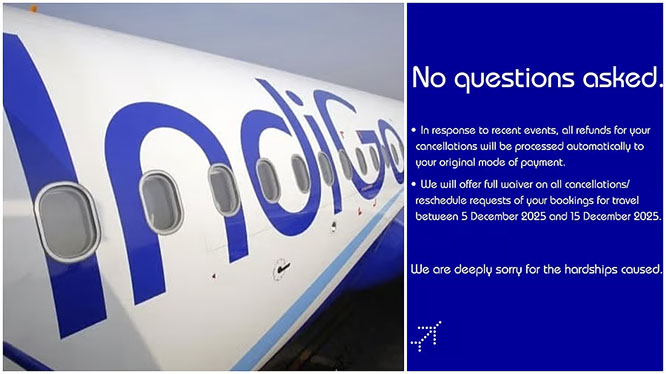
With IndiGo flight disruptions impacting thousands of passengers, the airline on Saturday said that it will offer full waiver on all cancellations/reschedule requests for travel bookings between December 5, 2025 and December 15, 2025.

Earlier in the day, the civil aviation ministry had directed the airline to complete the ticket refund process for the cancelled flights by Sunday evening, as well as ensure baggage separated from the travellers are delivered in the next two days.

In a post on X, titled 'No questions asked', IndiGo wrote, "In response to recent events, all refunds for your cancellations will be processed automatically to your original mode of payment."

"We are deeply sorry for the hardships caused," it further added.

Several passengers, however, complained of not getting full refund as promised by the airline.

Netizens have shared screenchots of getting charged for airline cancellation fee and convenience fee.

"Please tell me why u have did this airline cancellation charges when u say full amount will be refunded (sic)," a user wrote sharing a screenshot of the refund page.

"Well, but you have still debited the convenience charges," wrote another.

Passengers have also raised concerns about the "cancel" option being disabled on the IndiGo app. "First enable the 'Cancel' button on your App & offer full refund on tickets cancelled by customers between the said dates," wrote a user.

A day after the country's largest airline, IndiGo, cancelled more than 1,000 flights and caused disruptions for the fifth day on Saturday, the ministry said that any delay or non-compliance in refund processing will invite immediate regulatory action.

The refund process for all cancelled or disrupted flights must be completed by 8 pm on Sunday, the ministry said in a statement.

"Airlines have also been instructed not to levy any rescheduling charges for passengers whose travel plans were affected by cancellations," it said.

On Saturday, more than 400 flights were cancelled at various airports.

IndiGo has also been instructed to set up dedicated passenger support and refund facilitation cells.

Comments

Add new comment

  • Coastaldigest.com reserves the right to delete or block any comments.
  • Coastaldigset.com is not responsible for its readers’ comments.
  • Comments that are abusive, incendiary or irrelevant are strictly prohibited.
  • Please use a genuine email ID and provide your name to avoid reject.
News Network
December 20,2025

train.jpg

At least seven elephants were killed and one calf injured after a herd collided with the Sairang-New Delhi Rajdhani Express in Assam's Hojai on Saturday morning, leading to disruption of rail services. 

The Sairang-New Delhi Rajdhani Express struck a herd of elephants, resulting in the derailment of the locomotive and five coaches. No passenger casualties or injuries were reported, officials said.

The New Delhi-bound train met with the accident around 2.17 am, PTI reported. The Sairang-New Delhi Rajdhani Express connects Mizoram's Sairang (near Aizawl) to Anand Vihar Terminal (Delhi). 

Railway has issued helpline numbers at the Guwahati Railway Station:-

•    0361-2731621
•    0361-2731622
•    0361-2731623

The accident site is located about 126 km from Guwahati. Following the incident, accident relief trains and railway officials rushed to the spot to initiate rescue operations.

Train Services Disrupted

Sources said that due to the derailment and elephant body parts scattered on the tracks, train services to Upper Assam and other parts of the Northeast were affected.

Passengers from the affected coaches were temporarily accommodated in vacant berths available in other coaches of the train. Once the train reaches Guwahati, additional coaches will be attached to accommodate all passengers, after which the train will resume its onward journey.

The incident occurred at a location that is not a designated elephant corridor. The loco pilot, upon spotting the herd on the tracks, applied emergency brakes. Despite this, the elephants dashed into the train, leading to the collision and derailment.

Last month, an elephant was killed after being hit by a train in Dhupguri in West Bengal's Jalpaiguri district. The incident took place on November 30. 

The adult elephant was killed on the spot, and a calf was discovered lying injured beside the tracks. 

Over 70 Elephants Killed In Train Collisions Over Last 5 Years

At least 79 elephants have died in train collisions across the country in the last five years, the Environment Ministry had informed Parliament in August.

In a written reply in the Lok Sabha, Minister of State for Environment Kirti Vardhan Singh had said the figure is based on reports from state governments and Union Territory administrations for the period 2020-21 to 2024-25.

He said that the ministry does not maintain consolidated data on the deaths of other wild animals on railway tracks, including in designated elephant corridors.

Singh confirmed that three elephants, including a mother and her calf, were killed on July 18 this year after being hit by a speeding express train on the Kharagpur-Tatanagar section in West Bengal's Paschim Midnapore district. The incident took place near Banstala between Jhargram and Banstala stations.

The minister said several measures have been taken jointly by the Environment Ministry and the Railways to prevent such accidents.

These include imposing speed restrictions in elephant habitats, pilot projects such as seismic sensor-based detection of elephants near tracks and construction of underpasses, ramps and fencing at vulnerable points.

The Wildlife Institute of India, in consultation with the ministry and other stakeholders, has also issued guidelines titled 'Eco-friendly Measures to Mitigate Impacts of Linear Infrastructure' to help agencies design railways and other projects in ways that reduce human-animal conflicts.

Singh added that capacity-building workshops were conducted for railway officials at the Wildlife Institute of India in 2023 and 2024 to raise awareness on elephant conservation and protection.

A detailed report titled 'Suggested Measures to Mitigate Elephant & Other Wildlife Train Collisions on Vulnerable Railway Stretches in India' had also been prepared after surveys across 127 railway stretches covering 3,452 km.

Of these, 77 stretches spanning 1,965 km in 14 states were prioritised for mitigation, with site-specific interventions suggested. 

Comments

Add new comment

  • Coastaldigest.com reserves the right to delete or block any comments.
  • Coastaldigset.com is not responsible for its readers’ comments.
  • Comments that are abusive, incendiary or irrelevant are strictly prohibited.
  • Please use a genuine email ID and provide your name to avoid reject.