Toyota stops expansion plans in India, blames high tax regime

Agencies
September 15, 2020

toyota.jpg

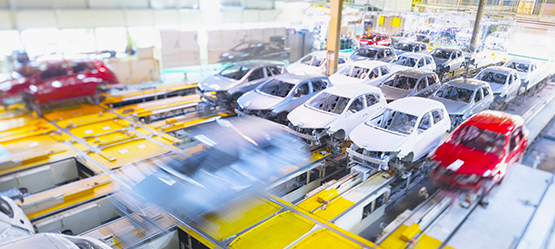
Mumbai, Sept 15: Toyota Motor Corp. won’t expand further in India due to the country’s high tax regime, a blow for Prime Minister Narendra Modi, who’s trying to lure global companies to offset the deep economic malaise brought on by the coronavirus pandemic.

The government keeps taxes on cars and motorbikes so high that companies find it hard to build scale, said Shekar Viswanathan, vice chairman of Toyota’s local unit, Toyota Kirloskar Motor. The high levies also put owning a car out of reach of many consumers, meaning factories are idled and jobs aren’t created, he said.

“The message we are getting, after we have come here and invested money, is that we don’t want you,” Viswanathan said in an interview. In the absence of any reforms, “we won’t exit India, but we won’t scale up.”

Toyota, one of the world’s biggest carmakers, began operating in India in 1997. Its local unit is owned 89% by the Japanese company and has a small market share -- just 2.6% in August versus almost 5% a year earlier, Federation of Automobile Dealers Associations data show.

In India, motor vehicles including cars, two-wheelers and sports utility vehicles (although not electric vehicles), attract taxes as high as 28%. On top of that there can be additional levies, ranging from 1% to as much as 22%, based on a car’s type, length or engine size. The tax on a four-meter long SUV with an engine capacity of more than 1500 cc works out to be as high as 50%.

Ford, GM Out

The additional levies are typically imposed on what are considered to be “luxury” goods. As well as cars, in India that can include cigarettes and sparkling water.

India is planning to offer incentives worth $23 billion to attract firms to set up manufacturing, people familiar with the matter said last week, including production-linked breaks for automakers. International automakers have struggled to expand in the world’s fourth-biggest car market.

General Motors Co. quit the country in 2017 while Ford Motor Co. agreed last year to move most of its assets in India into a joint venture with Mahindra & Mahindra Ltd. after struggling for more than two decades to win over buyers. That effectively ended independent operations in a country Ford had once said it wanted to be one of its top three markets by 2020.

Such punitive taxes discourage foreign investment, erode automakers’ margins and make the cost of launching new products “prohibitive,” Viswanathan said.

“You’d think the auto sector is making drugs or liquor,” he said. Toyota, which also has an alliance with Suzuki Motor Corp. to sell some of Suzuki’s compact cars under its own brand, is currently utilizing just about 20% of its capacity in a second plant in India.

Automobile sales in India were weathering a slump before the coronavirus pandemic, with at least half a million jobs lost.

Taxes on electric vehicles, currently 5%, will probably also go up once sales increase, Viswanathan said, referring to what he says has become a pattern with successive governments in India.

While discussions are ongoing between ministries for a reduction in taxes, there may not any immediate agreement on an actual cut, India’s Heavy Industries Minister Prakash Javadekar said earlier this month.

A finance ministry spokesman didn’t immediately respond to messages seeking comment.

EV Challenge

Automobile sales in India were weathering a slump before the coronavirus pandemic, with at least half a million jobs lost. A lobby group has predicted it may take as many as four years for sales to return to levels seen before the slowdown.

The biggest players are the local units of Suzuki and Hyundai Motor Co., which have cornered the market for compact, affordable cars. Maruti Suzuki India Ltd. and Hyundai Motor India Ltd. have a combined share of almost 70%.

Toyota in India has largely pivoted toward hybrid vehicles, which attract taxes of as much as 43% because they aren’t purely electric.

But in a nation where few can even afford a car, let alone a more environmentally friendly one, EVs or their hybrid cousins have yet to gain much acceptance. Elon Musk, the billionaire founder of Tesla Inc., has said import duties would make his vehicles unaffordable in India.


“Market India always has to precede Factory India, and this is something the politicians and bureaucrats don’t understand,” Viswanathan said. Modi’s much-touted Make in India is another program aimed at attracting foreign companies.


India needs to have demand for a product before asking firms to set up shop, yet “at the slightest sign of a product doing well, they slap it with a higher and higher tax rate,” he said.

Comments

Add new comment

  • Coastaldigest.com reserves the right to delete or block any comments.
  • Coastaldigset.com is not responsible for its readers’ comments.
  • Comments that are abusive, incendiary or irrelevant are strictly prohibited.
  • Please use a genuine email ID and provide your name to avoid reject.
News Network
November 27,2025

imrankhan.jpg

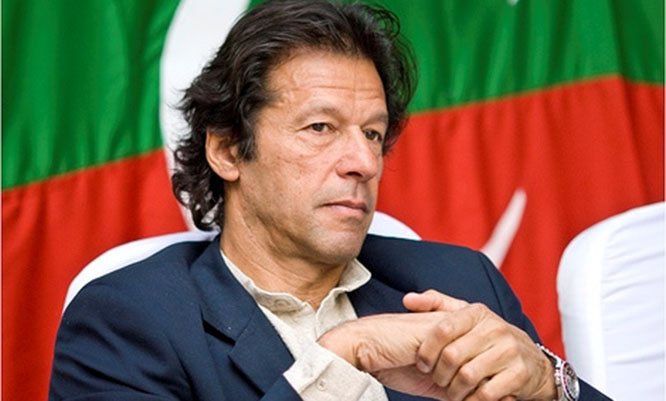
Authorities at Pakistan’s high-security Adiala Jail in Rawalpindi on Wednesday dismissed speculation about the condition of imprisoned former Pakistan Prime Minister Imran Khan, rejecting rumours that he had been moved out of the facility or was in danger. Officials said Khan was in “good health” and described the viral death claims as “baseless.”

“There is no truth to reports about his transfer from Adiala Jail,” the Rawalpindi prison administration said in a statement, according to Geo News. “He is fully healthy and receiving complete medical attention.”

Amid swirling rumours on social media, Imran Khan’s party, Pakistan Tehreek-e-Insaf (PTI), urged the federal government to issue an official clarification and demanded that authorities allow his family to meet him immediately, Dawn reported.

The frenzy began after Khan’s three sisters called for an impartial probe into what they described as a “brutal” police assault on them and other PTI supporters outside Adiala Jail last week. Soon after, several social media handles circulated unverified claims alleging that Khan had been “killed” inside the prison.

The rumours intensified when a handle named “Afghanistan Times” claimed that “credible sources” had confirmed Khan’s “murder” and that his body had been moved out of the jail — allegations that have not been verified by any credible agency.

Imran Khan, PTI’s patron-in-chief, has been lodged in the Rawalpindi prison since August 2023 in multiple cases. For over a month, an undeclared restriction has prevented family members and senior PTI leaders from meeting him. Khyber-Pakhtunkhwa Chief Minister Sohail Afridi has reportedly been denied access despite making seven attempts.

In a letter to Punjab Police Chief Usman Anwar, Khan’s sisters — Noreen Niazi, Aleema Khan, and Dr. Uzma Khan — said they were “peacefully protesting” outside the jail when police allegedly launched an unprovoked assault after streetlights were switched off.

“At 71, I was seized by my hair, thrown to the ground and dragged across the road,” Noreen Niazi said, alleging that other women present were also slapped and manhandled.

Adiala Jail officials reiterated that speculation over Imran Khan’s health was unfounded and insisted that his well-being was being ensured, Geo News reported.

Comments

Add new comment

  • Coastaldigest.com reserves the right to delete or block any comments.
  • Coastaldigset.com is not responsible for its readers’ comments.
  • Comments that are abusive, incendiary or irrelevant are strictly prohibited.
  • Please use a genuine email ID and provide your name to avoid reject.
News Network
November 26,2025

students.jpg

Bengaluru, Nov 26: Karnataka is taking its first concrete steps towards lifting a three-decade-old ban on student elections in colleges and universities. Deputy Chief Minister D.K. Shivakumar announced Wednesday that the state government will form a small committee to study the reintroduction of campus polls, a practice halted in 1989 following incidents of violence.

Speaking at a 'Constitution Day' event organised by the Karnataka Congress, Mr. Shivakumar underscored the move's aim: nurturing new political leadership from the grassroots.

"Recently, (Leader of the Opposition in Lok Sabha) Rahul Gandhi wrote a letter to me and Chief Minister (Siddaramaiah) asking us to think about restarting student elections," Shivakumar stated. "I'm announcing today that we'll form a small committee and seek a report on this."

Student elections were banned in Karnataka in 1989, largely due to concerns over violence and the infiltration of political party affiliates into campus life. The ban effectively extinguished vibrant student bodies and the pipeline of young leaders they often produced.

Mr. Shivakumar, who also serves as the Karnataka Congress president, said that former student leaders will be consulted to "study the pros and cons" of the re-introduction.

Acknowledging the history of the ban, he added, "There were many criminal activities taking place back then. We’ll see how we can conduct (student) elections by regulating such criminal activities."

The Deputy CM reminisced about his own journey, which began on campus. He recalled his political activism at Sri Jagadguru Renukacharya College leading to his first Assembly ticket in 1985 at the age of 23. "That's how student leadership was at the time. Such leadership has gone today. College elections have stopped," he lamented, adding that for many, college elections were "like a big movement" where leaders were forged.

The move, driven by the Congress high command's push to cultivate young talent, will face scrutiny from academics and university authorities who have, in the past, expressed concern that the return of polls could disrupt the peaceful academic environment and turn campuses into political battlegrounds.

Comments

Add new comment

  • Coastaldigest.com reserves the right to delete or block any comments.
  • Coastaldigset.com is not responsible for its readers’ comments.
  • Comments that are abusive, incendiary or irrelevant are strictly prohibited.
  • Please use a genuine email ID and provide your name to avoid reject.
Agencies
November 22,2025

indiapak.jpg

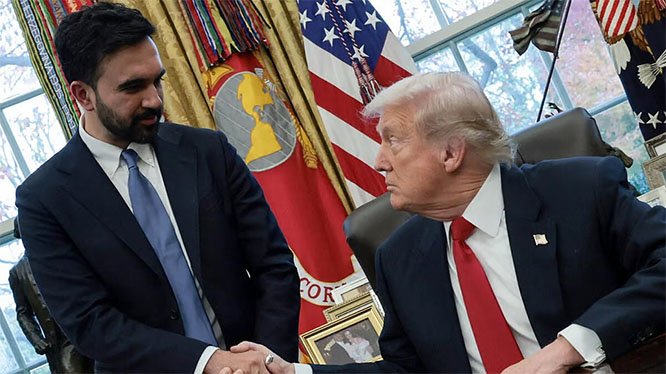
New York/Washington: US President Donald Trump has again claimed to have solved the conflict between India and Pakistan, repeating his assertion during a meeting with New York City Mayor-elect Zohran Mamdani in the Oval Office.

Mamdani flew to Washington DC for his first meeting with Trump in the White House on Friday. Trump said he “enjoyed” the meeting, which he described as “great.”

During remarks in the Oval Office, with Mamdani standing next to him, Trump repeated his claim that he solved the May conflict between India and Pakistan.

"I did eight peace deals of countries, including India and Pakistan,” he said.

On Wednesday, Trump had said he threatened to put 350 per cent tariffs on India and Pakistan if they did not end their conflict, repeating his claim that he solved the fighting between the nuclear-armed neighbours and that Prime Minister Narendra Modi had called him to say “we're not going to go to war.”

Since May 10, when Trump announced on social media that India and Pakistan had agreed to a “full and immediate” ceasefire after a “long night” of talks mediated by Washington, he has repeated his claim over 60 times that he “helped settle” the tensions between India and Pakistan.

India has consistently denied any third-party intervention. India launched Operation Sindoor on May 7, targeting terror infrastructure in Pakistan and Pakistan-occupied Kashmir in retaliation for the April 22 Pahalgam attack that killed 26 civilians. India and Pakistan reached an understanding on May 10 to end the conflict after four days of intense cross-border drone and missile strikes.

Mamdani emerged victorious in the closely-watched battle for New York City Mayor, becoming the first South Asian and Muslim to be elected to sit at the helm of the largest city in the US.

He had been the front-runner in the NYC Mayoral election for months and defeated Republican nominee Curtis Sliwa and political heavyweight former New York State Governor Andrew Cuomo, who ran as an independent candidate and was officially endorsed by Trump just hours before the elections.

Indian-descent Mamdani is the son of renowned filmmaker Mira Nair and Columbia University professor Mahmood Mamdani. He was born and raised in Kampala, Uganda and moved to New York City with his family when he was 7. Mamdani became a naturalised US citizen only recently, in 2018.

Comments

Add new comment

  • Coastaldigest.com reserves the right to delete or block any comments.
  • Coastaldigset.com is not responsible for its readers’ comments.
  • Comments that are abusive, incendiary or irrelevant are strictly prohibited.
  • Please use a genuine email ID and provide your name to avoid reject.