



Bangladesh EC bars live coverage of elections

Agencies
December 24, 2018

Dhaka, Dec 24: The Bangladesh Election Commission has barred television channels in the country to live broadcast from inside the polling centres during the General Elections on December 30, while deciding not to issue press stickers for the journalists travelling on motorcycles to cover the polls.

The decision, in force from December 22, comes in the backdrop of a set of election guidelines for the media organisations, which prohibit journalists from using motorcycles. A circular has also been issued by Bangladesh's Home Ministry calling for a ban on unauthorised motorcycles for four days starting from December 29.

The Election Commission has also barred live streaming of the elections in social networking platforms, including Facebook and Twitter from the polling booths. It added that only one journalist would be permitted at a time to enter the booth, according to Bangladeshi media reports.

However, the Election Commission of Bangladesh has agreed to issue stickers for scribes travelling in other modes of vehicles such as sedans and microbuses.

The 11th General Election of Bangladesh is scheduled to take place on December 30. Almost 104.2 million registered voters will cast their votes at about 40,000 polling stations to elect their representatives from across the country.

Earlier on December 15, the country's Chief Election Commissioner KM Nurul Huda had said that no live coverage or telephone conversation would be allowed from the polling centres during the elections.

He had added that journalists should not enter the polling booths in large groups. "Journalists, however, can use the mobile phone to take photographs inside the polling centres and broadcast live from the corridor or the ground of the polling centres," Huda had said.

The Election Commission is hinting at slowing down Internet speed across the country on the polling day. Secretary Helal Uddin Ahmed said that internet speeds for 3G and 4G services would be downgraded to 2G level during the voting and would come back to normal after 5 pm (local time) on that day, after polling concludes, as per the reports.

Bangladesh Telecommunication Regulatory Commission (BTRC), the country's telecom operator is calling for a complete shutdown of mobile internet services or blocking all social media platforms during the elections.

Locals have expressed concerns that a complete blackout or a partial shutdown of Internet services would be a huge blow for local and international businesses, impacting communication services, including ATM facilities, The Daily Star reported.

The Bangladesh government is also facing flak for preventing foreign observers from monitoring the high-stake elections. As of now, 146 foreign election observers from different countries and organisations have been accredited to undertake the election monitoring missions.

To ensure a free and fair election, more than 600,000 security personnel from police, Border Guard Bangladesh, Rapid Action Battalion, Coast Guard, Ansar, and Village Defence Party, would be deployed at polling stations.

The ruling Bangladesh Awami League-led Grand Alliance will be locking horns against the Bangladesh Nationalist Party (BNP)-led Jatiya Oikya Front (National Unity Front) and Left Democratic Alliance, where 300 constituencies of the 350-member Parliament are up for grabs. Incumbent Prime Minister Sheikh Hasina is seeking to win a third term.

For the BNP, which is looking down and out, following the conviction of its chairperson and former Prime Minister Begum Khaleda Zia for corruption, is expecting to re-establish itself in the political spectrum after five years.

The BNP also boycotted the last general elections in 2014 due to widespread political violence in which the Awami League won with a thumping majority of 234 seats.

Comments

Add new comment

  • Coastaldigest.com reserves the right to delete or block any comments.
  • Coastaldigset.com is not responsible for its readers’ comments.
  • Comments that are abusive, incendiary or irrelevant are strictly prohibited.
  • Please use a genuine email ID and provide your name to avoid reject.
News Network
January 23,2026

Mangaluru: The Karnataka Government Polytechnic (KPT), Mangaluru, has achieved autonomous status from the All India Council for Technical Education (AICTE), becoming the first government polytechnic in the country to receive such recognition in its 78-year history. The status was granted by AICTE, New Delhi, and subsequently approved by the Karnataka Board of Technical Education in October last year.

Officials said the autonomy was conferred a few months ago. Until recently, AICTE extended autonomous status only to engineering colleges, excluding diploma institutions. However, with a renewed national focus on skill development, several government polytechnics across India have now been granted autonomy.

KPT, the second-largest polytechnic in Karnataka, was established in 1946 with four branches and has since expanded to offer eight diploma programmes, including computer science and polymer technology. The institution is spread across a 19-acre campus.

Ravindra M Keni, the first dean of the institution, told The Times of India that AICTE had proposed autonomous status for polytechnic institutions that are over 25 years old. “Many colleges applied. In the first round, 100 institutions were shortlisted, which was further narrowed down to 15 in the second round. We have already completed one semester after becoming an autonomous institution,” he said. He added that nearly 500 students are admitted annually across eight three-year diploma courses.

Explaining the factors that helped KPT secure autonomy, Keni said the institution has consistently recorded 100 per cent admissions and placements for its graduates. He also noted its strong performance in sports, with the college emerging champions for 12 consecutive years, along with active student participation in NCC and NSS activities.

Autonomous status allows KPT to design industry-oriented curricula, conduct examinations, prepare question papers, and manage academic documentation independently. The institution can also directly collaborate with industries and receive priority funding from AICTE or the Ministry of Education. While academic autonomy has been granted, financial control will continue to rest with the state government.

“There will be separate committees for examinations, question paper setting, boards of studies, and boards of examiners. The institution will now have the freedom to conduct admissions without government notifications and issue its own marks cards,” Keni said, adding that new academic initiatives would be planned after a year of functioning under the autonomous framework.

Comments

Add new comment

  • Coastaldigest.com reserves the right to delete or block any comments.
  • Coastaldigset.com is not responsible for its readers’ comments.
  • Comments that are abusive, incendiary or irrelevant are strictly prohibited.
  • Please use a genuine email ID and provide your name to avoid reject.
News Network
February 1,2026

US President Donald Trump on Saturday claimed that the government of India led by Prime Minister Narendra Modi has made a deal to buy Venezuelan oil, as opposed to purchasing it from Iran.

"We've already made that deal, the concept of the deal," he told reporters on Air Force One.

Trump had imposed 25% tariffs on countries buying Venezuelan oil, including India, in March 2025. He had also hit India with tariffs for buying Russian oil, saying it was "funding" President Vladimir Putin's war against Ukraine.

Trump has said that the US has taken control of the oil-rich Venezuela after capturing former President Nicolas Maduro in January.

A fleet of 18 ships loaded with crude oil bound for refineries in Texas, Louisiana, and Mississippi in January, the most since December 2024, according to a report by the news agency Bloomberg.

Combined crude deliveries to the US will reach about 2,75,000 barrels a day, more than doubling volumes seen in December last year. Shipments to China, which averaged 4,00,000 barrels a day last year, fell to zero in January.

PM Modi, Venezuelan President Agree To Expand Ties

Prime Minister Narendra Modi and Venezuela's acting President Delcy Rodriguez spoke on Friday and agreed to take the bilateral relations to "new heights" in the years ahead.

It was the first phone call between the two leaders since the capture of Maduro and his wife by the US on January 3.

"Spoke with Acting President of Venezuela, Ms. Delcy Rodriguez. We agreed to further deepen and expand our bilateral partnership in all areas, with a shared vision of taking India-Venezuela relations to new heights in the years ahead," PM Modi said in a post on X.

A statement from Prime Minister Modi's office said the two leaders agreed to further expand and deepen the India-Venezuela partnership in all areas, including trade and investment, energy, digital technology, health, agriculture, and people-to-people ties.

They exchanged views on various regional and global issues of mutual interest and underscored the importance of their close cooperation for the Global South, the statement said.

Rodriguez also said that they discussed partnerships in the fields of agriculture, science and technology, mining, and tourism, as well as the pharmaceutical and automotive industries.

Comments

Add new comment

  • Coastaldigest.com reserves the right to delete or block any comments.
  • Coastaldigset.com is not responsible for its readers’ comments.
  • Comments that are abusive, incendiary or irrelevant are strictly prohibited.
  • Please use a genuine email ID and provide your name to avoid reject.
News Network
February 3,2026

wind.jpg

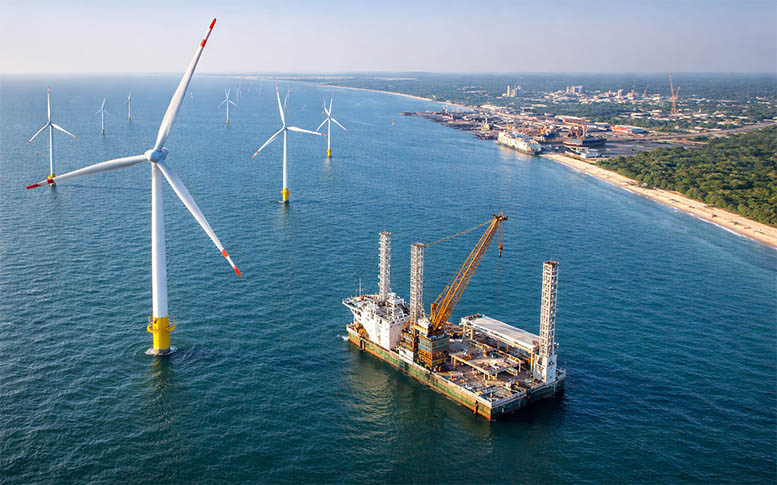
Dakshina Kannada MP Capt Brijesh Chowta has urged the Centre to give high priority to offshore wind energy generation along the Mangaluru coast, citing its strategic importance to India’s green energy and port-led development goals.

Raising the issue in the Lok Sabha under Rule 377, Chowta said studies by the National Institute of Oceanography have identified the Mangaluru coastline as part of India’s promising offshore wind ‘Zone-2’, covering nearly 6,490 sq km. He noted that the region’s relatively low exposure to cyclones and earthquakes makes it suitable for long-term offshore wind projects and called for its development as a dedicated offshore wind energy zone.

Highlighting the role of New Mangalore Port, Chowta said its modern infrastructure, multiple berths and heavy cargo-handling capacity position it well as a logistics hub for transporting and assembling large wind energy equipment.

He also pointed to the presence of major industrial units such as MRPL, OMPL, UPCL and the Mangaluru SEZ, which could serve as direct buyers of green power through power purchase agreements, improving project viability and speeding up execution.

With Karnataka’s peak power demand crossing 18,000 MW in early 2025, Chowta stressed the need to diversify renewable energy sources. He added that offshore wind projects in the Arabian Sea are strategically safer compared to the cyclone-prone Bay of Bengal.

Calling the project vital to India’s target of 500 GW of renewable energy by 2030, Chowta urged the Ministry of New and Renewable Energy to initiate resource assessments, pilot projects and stakeholder consultations at the earliest.

Comments

Add new comment

  • Coastaldigest.com reserves the right to delete or block any comments.
  • Coastaldigset.com is not responsible for its readers’ comments.
  • Comments that are abusive, incendiary or irrelevant are strictly prohibited.
  • Please use a genuine email ID and provide your name to avoid reject.