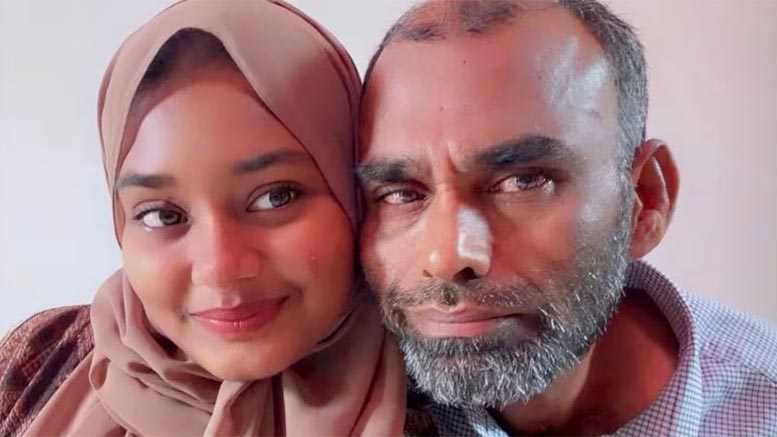
"Bloody Pieces Of Flesh Everywhere": 128 Dead In Pakistan's Quetta

Agencies
July 14, 2018

Quetta/Pakistan, Jul 14: A suicide blast ripped through a crowd at a political rally in southwest Pakistan Friday killing 128 people and wounding 150, officials told AFP, in one of the deadliest attacks in the country's history.

The blast in the town of Mastung, near the Balochistan provincial capital Quetta, was the latest in a string of attacks that have spurred fears of violence ahead of nationwide polls on July 25, and underscored the fragility of Pakistan's dramatic gains in security.

Authorities said the suicide bomber detonated in the middle of a compound where the political meeting was taking place.

"Human remains and red bloody pieces of flesh were littered everywhere in the compound. Injured people were crying in pain and fear," said local journalist Attah Ullah.

One political worker, Salam Baloch, said he heard a "deafening blast" and saw a "thick grey ball of fire and smoke".

"People put... bodies and the injured in rickshaws and other vehicles and rushed them to hospital before rescue officials arrived," he added.

Emergency workers also shuttled victims in ambulances as bystanders sobbed in the darkness due to the lack of electricity in the impoverished area.

Survivors in blood-smeared clothes were taken to hospitals in Mastung and nearby Quetta, where they were greeted by tense crowds of mourners, an AFP reporter said. The deceased could be seen covered in shrouds.

"The death toll has risen to 128," Balochistan home minister Agha Umar Bungalzai told AFP. A senior provincial government official also confirmed the figure, adding that 150 others were injured.

Among the dead was Siraj Raisani, who was running for a provincial seat with the newly-formed local Balochistan Awami Party (BAP), Bungalzai said.

The attack was the most lethal since Taliban terrorists assaulted a school in the northwestern city of Peshawar in 2014, killing over 150 people, mostly children, and one of the deadliest in Pakistan's long struggle with terrorism.

It came hours after four people were killed and 39 injured when a bomb hidden inside a motorcycle detonated close to another politician's convoy in Bannu on Friday, near the border with Afghanistan.

The politician -- Akram Khan Durrani, a candidate of the Muttahida Majlis-e-Amal (MMA) party -- survived, police said. No group has yet claimed responsibility for that attack.

On Tuesday, a bomb claimed by the Pakistani Taliban targeted a rally by the Awami National Party (ANP) in the city of Peshawar.

Local ANP leader Haroon Bilour was among the 22 killed. Thousands flocked to his funeral the next day.

'Duty To Protect'

ISIS has a muted presence in Pakistan but has carried out brutal attacks there in the past, including the blast at a Sufi shrine in February last year which killed nearly 90 people.

Terrorists have targeted politicians, religious gatherings, security forces and even schools in Pakistan.

But security across the country has dramatically improved since government and military operations cleared large swathes of territory near the Afghan border in recent years.

Analysts warn, however, that Pakistan has yet to tackle the root causes of extremism, and terrorists retain the ability to carry out attacks.

Last month, a US air strike killed the leader of the Pakistani Taliban, Maulana Fazlullah, in neighbouring Afghanistan in what the Pakistani army called a "positive development" that also sparked fears of reprisals.

The military has warned of security threats in the run-up to the tense election on July 25, and said it will deploy more than 370,000 soldiers on polling day.

Activists called for Pakistani authorities to remain vigilant to protect candidates during the final days of the campaign season, already tense amid a stand-off between former premier Nawaz Sharif and the security establishment.

Sharif returned to Pakistan from London late Thursday and was arrested, one week after he was convicted in absentia on corruption charges and given a ten-year jail sentence.

He claims he is being targeted by the military, which remains the country's most powerful institution, and which has faced blistering allegations that it is pressuring the media and politicians in a bid to manipulate the polls against the PML-N.

It denies the accusations.

The election will pit the PML-N against its main rival, the Pakistan Tehreek-e-Insaf, a party led by cricket star-turned-politician Imran Khan.

"The Pakistani authorities have a duty to protect the rights of all Pakistanis during this election period -- their physical security and their ability to express their political views freely, regardless of which party they belong to," said Omar Waraich, deputy South Asia director at Amnesty International.


Comments

Add new comment

  • Coastaldigest.com reserves the right to delete or block any comments.
  • Coastaldigset.com is not responsible for its readers’ comments.
  • Comments that are abusive, incendiary or irrelevant are strictly prohibited.
  • Please use a genuine email ID and provide your name to avoid reject.
News Network
December 6,2025

pilot.jpg

New Delhi: IndiGo, India’s largest airline, faced major operational turbulence this week after failing to prepare for new pilot-fatigue regulations issued by the Directorate General of Civil Aviation (DGCA). The stricter rules—designed to improve flight safety—took effect in phases through 2024, with the latest implementation on November 1. IndiGo has acknowledged that inadequate roster planning led to widespread cancellations and delays.

Below are the key DGCA rules that affected IndiGo’s operations:

1. Longer Mandatory Weekly Rest

Weekly rest for pilots has been increased from 36 hours to 48 hours.

The government says the extended break is essential to curb cumulative fatigue. This rule remains in force despite the current crisis.

2. Cap on Night Landings

Pilots can now perform only two night landings per week—a steep reduction from the earlier limit of six.

Night hours, defined as midnight to early morning, are considered the least alert period for pilots.

Given the disruptions, this rule has been temporarily relaxed for IndiGo until February 10.

3. Reduced Maximum Night Flight Duty

Flight duty that stretches into the night is now capped at 10 hours.

This measure has also been kept on hold for IndiGo until February 10 to stabilize operations.

4. Weekly Rest Cannot Be Replaced With Personal Leave

Airlines can no longer count a pilot’s personal leave as part of the mandatory 48-hour rest.

Pilots say this closes a loophole that previously reduced actual rest time.

Currently, all airlines are exempt from this rule to normalise travel.

5. Mandatory Fatigue Monitoring

Airlines must submit quarterly fatigue reports along with corrective actions to DGCA.

This system aims to create a transparent fatigue-tracking framework across the industry.

The DGCA has stressed that these rules were crafted to strengthen flight safety and align India with global fatigue-management standards. The temporary relaxations are expected to remain until February 2025, giving IndiGo time to stabilise its schedules and restore normal air travel.

Comments

Add new comment

  • Coastaldigest.com reserves the right to delete or block any comments.
  • Coastaldigset.com is not responsible for its readers’ comments.
  • Comments that are abusive, incendiary or irrelevant are strictly prohibited.
  • Please use a genuine email ID and provide your name to avoid reject.
News Network
December 15,2025

Mangaluru, Dec 15: Air India Express has announced that it will resume direct flight services between Mangaluru and Muscat from March 2026, restoring an important international air link for passengers from the coastal region.

Airport authorities said the service will operate twice a week—on Sundays and Tuesdays—from March 1. The initial flights are scheduled on March 3, 8 and 10, followed by March 15 and 17, with the same operating pattern to continue thereafter. The flight duration is approximately three hours and 25 minutes.

The Mangaluru–Muscat route was earlier operated under the 2025 summer schedule, with services beginning on July 14. At that time, Air India Express had operated four flights a week before suspending the service.

Officials said the summer schedule will come into effect from March 29, after which changes in flight timings and departure schedules from Mangaluru are expected. Passengers have been advised to check the latest schedules while planning their travel.

The resumption of direct flights to Muscat is expected to significantly benefit expatriates, business travellers and others, further strengthening Mangaluru’s air connectivity with the Gulf region.

Comments

Add new comment

  • Coastaldigest.com reserves the right to delete or block any comments.
  • Coastaldigset.com is not responsible for its readers’ comments.
  • Comments that are abusive, incendiary or irrelevant are strictly prohibited.
  • Please use a genuine email ID and provide your name to avoid reject.
News Network
December 2,2025

DKSsiddu.jpg

Bengaluru: 'Nati koli saaru' (country chicken curry) considered one of Chief Minister Siddaramaiah’s favourites along with steaming hot idlis was on the breakfast menu at Deputy CM D K Shivakumar’s residence on Tuesday, according to official sources.

The spread also included 'nati koli' fry, vada and pongal, among other items, they said.

In an apparent show of unity, Siddaramaiah visited Shivakumar’s residence for breakfast, just days after the two leaders shared a meal amid a simmering power tussle in the state Congress.

Siddaramaiah drove to the Deputy CM’s residence in Sadashivanagar, where he was received by Shivakumar and his brother D K Suresh, who is a former Congress MP.

Suresh and Kunigal MLA H D Ranganath, a relative of Shivakumar, joined them for breakfast, which featured a mix of vegetarian and non-vegetarian dishes.

Speaking to reporters later, Siddaramaiah said Shivakumar had invited him during his visit to the CM’s residence for breakfast on Saturday.

Asked about the difference between the two meals, the chief minister said, "At his (Shivakumar’s) house it was non-veg, while at my house it was veg. He is a vegetarian, I am a non-vegetarian. I had not prepared non-veg. I told DK to get chicken from the village as you won’t get the original in Bengaluru."

Shivakumar said he had initially invited Siddaramaiah to his residence, but the CM had suggested visiting his place first and reciprocating later. "It was a vegetarian breakfast at the CM’s house on Saturday," he noted.

"Today, I invited him (the CM) to my house. He enjoyed the breakfast, which had his Mysuru taste," Shivakumar added. At this point, Siddaramaiah remarked that Shivakumar’s wife is also from Mysuru.

Saturday’s breakfast at Siddaramaiah’s official residence, held as part of efforts by the Congress high command to ease tensions in the leadership dispute between the two, reportedly included idlis and sambar, according to official sources.

Comments

Add new comment

  • Coastaldigest.com reserves the right to delete or block any comments.
  • Coastaldigset.com is not responsible for its readers’ comments.
  • Comments that are abusive, incendiary or irrelevant are strictly prohibited.
  • Please use a genuine email ID and provide your name to avoid reject.