Karnataka polls 2023: Battle of survival for JDS or kingmaker once again?

News Network
January 15, 2023

HDKGowda.jpg

Will the 2023 Karnataka assembly polls be a battle of political survival for former Prime Minister H D Deve Gowda-led JD(S), or will the regional party once again emerge as a kingmaker, like it did in 2018, in the event of a hung verdict?

Plagued by desertions, internal rifts, and with the image of a "family party", it remains to be seen how Gowda's son and former Chief Minister H D Kumaraswamy, who is in a way single handedly managing the JD(S)' affairs with aging father taking the back seat, would steer the party in the upcoming Assembly polls.

Since the time of its formation in 1999, JD(S) has never formed a government on its own, but had been in power twice in coalition with both national parties- for 20 months with BJP from February 2006 and with Congress for 14 months after the May 2018 assembly polls- with Kumaraswamy as the Chief Minister.

This time however, the party has set an ambitious target of "mission 123" to independently form a government on its own by winning at least 123 out of total 224 seats going for polls by May, and has been seeking votes repeatedly invoking regional Kannadiga pride and asserting itself to be the only Kannadiga party.

There are however doubts among political observers and within a section of the party itself about JD(S) meeting this ambitious target, as the party's best ever performance so far has been in the 2004 assembly elections, when it won 58 seats, and 40 seats in 2013 was its second best.

In the 2018 polls, JD(S) had managed to win 37 seats. However, some party leaders are hopeful about the JD(S)' prospects of coming to power, by winning a few more seats than they did last time, and once again using the knack of power politics, by holding the key for government formation, in the event of a hung verdict.

"If such a situation arise we will certainly push for our Kumaranna (Kumaraswamy) to become the Chief Minister, but we will be more cautious on our choices and the bargain with the probable alliance partner this time after last time's bad experience," a JD(S) functionary not wanting to be named said, as he maintained that if not 123, the party will at least better its tally this time.

The party’s vote share is stagnant, if not shrinking. It has been ranging between 18-20 per cent, as the party has managed to continue its hold on a sizable number of constituencies, predominantly in the Vokkaliga belt of Old Mysuru region. It is this Gowda family’s hold over the Vokkaliga community that dominates the Old Mysuru region comprising 61 seats (excluding the 28 constituencies in Bengaluru), which the ruling BJP and Congress are looking forward to breaking and improving their prospects.

Congress is considerably strong in Old Mysuru region and has been a traditional rival for the JD(S) in the belt, the BJP however is weak here and is aiming to make swift inroads with an aim to get a clear majority.

Union Home Minister Amit Shah during his recent visit had asked his party leaders to concentrate on the region.

According to political analyst A Narayana from the Azim Premji University, how strong or weak the JD(S) actually is can be decided only after the candidates list is announced, because its survival depends on how many strong aspirants rejected by other parties join it. "It decides two things- the percentage of votes JD(S) is going to poll and the number of seats they win. In constituencies where JD(S) doesn't have strong candidates, they depend on rejects from other parties," he said.

Further, he said that the question is also whether the JD(S) is stronger or weaker in their core area of old Mysuru, when compared to 2018. It appears on the face of it that they are weak, for two reasons- one series of desertions since 2018, second Congress is in a better position among the Vokkaligas; one of the factors for it is D K Shivakumar (a Vokkaliga) as President.

"Also in the 2018 elections, JD(S) won in Mandya and Hassan districts, only because of Vokkaliga anger against Siddaramaiah, and that seems to have not disappeared now but subsided," he said, adding that how the BJP making inroads in Old Mysuru region will affect the JD(S) or Congress, is the question that cannot be answered at the moment.

Political observers are also of the view that the perception about JD(S) being too family centric is one of its major drawbacks.

Eight members of Gowda's immediate family are into active politics. Gowda, who is the JD(S) supremo, is also Member of Rajya Sabha from Karnataka, while his son Kumaraswamy is a former CM and MLA from Channapatna. Kumaraswamy's wife Anitha is MLA from Ramanagara segment, and his son Nikhil, who is the JD(S) youth wing President, had unsuccessfully contested the 2019 Lok Sabha polls from Mandya. The party supremo's elder son H D Revanna is a former minister and MLA from Holenarsipura, his wife Bhavani Revanna was a member of the Hassan Zilla Panchayat, and their sons Prajwal and Suraj are MP from Hassan and a MLC respectively.

The Gowda family has its representation in all the four major houses of public representatives- Lok Sabha, Rajya Sabha, Legislative Assembly and Legislative Council.

James Manor, University of London professor, who has been a keen observer of Karnataka's politics, during a webinar recently said, family-centred politics is causing discontent and leading to desertion. "JD(S) suffers from over-centralisation and dictatorial leadership." Narayana too echoing similar sentiments said, the party is perceived to be "over family centric", even among Vokkaligas, leading to leaders deserting the party. "It was also one of the primary reasons for JD(S)' rout in 2019 Lok Sabha polls, which was its lowest point ever since the party's formation."

According to some political observers, JD(S) inability to grow beyond the Vokkaliga-dominated old Mysuru region, other than in certain select pockets of north Karnataka is seen among its other drawbacks.

Kumaraswamy on Saturday however exuded confidence that his party will grow beyond its traditional old Mysuru region in the upcoming assembly polls and form a government on its own strength in Karnataka. He also claimed that there is a strong undercurrent in favour of him and his party, especially in rural areas.

Narayana further pointed out that Vokkaliga's support for JD(S) has not been consistent. "Of all the caste groups in Karnataka, I would say that Vokkaligas are more matured voters...In one election they will support Deve Gowda and when they perceive that his government or party has not done well or have disappointed them, they don't hesitate in shifting to Congress. This has happened consistently."

Amid questions of the party's survival and "shortage" of active leaders, Kumaraswamy is on a "Pancharatna Ratha Yatre", a statewide tour that he is undertaking ahead of polls.

This Yatre is to inform people about a five-fold programme called 'Pancharatna' that the JD(S) plans to implement on coming to power, which includes quality education, farmer welfare and employment. He has already announced a list of 93 candidates for the assembly polls, and will announce the second list of 50-60 candidates in about 10 days. " I want to give opportunity to fresh faces...want to build a second line of leadership in the party," he has said.

JD(S) believes it suffered damage in 2018 polls, when the Congress repeatedly called it the BJP’s ‘B’ team, which resulted in Muslim votes going away. The party's decision to bring C M Ibrahim as its state president might be a step towards regaining minority votes. However, noting that any such impact would be marginal, Narayana said, as there a growing sense of insecurity among Muslims this time they may go for strategic voting in which they may completely vote in favour of a party or in favour of the candidate, who is most likely to win against BJP in their segment.

Whatever said and done, one needs to be careful before writing off the JD(S), as before every election since 2008, discussions have always taken place in media and political circles, about it being a battle of survival for the regional party, but it has continued to remain a relevant force, according to political analysts.

Pointing out that this is seen by some quarters as Deve Gowda’s last election, Manor had recently said, "His emotional pleas for votes may attract more support from Vokkaligas than that of Shivakumar’s. Also, some Vokkaligas resent Siddaramaiah’s emphasis on minorities, backward classes and Dalits. Perhaps, the JD(S) may not do too badly, and if it does even somewhat well, it will be bad news for the Congress." 

Comments

Add new comment

  • Coastaldigest.com reserves the right to delete or block any comments.
  • Coastaldigset.com is not responsible for its readers’ comments.
  • Comments that are abusive, incendiary or irrelevant are strictly prohibited.
  • Please use a genuine email ID and provide your name to avoid reject.
News Network
January 20,2026

DGP.jpg

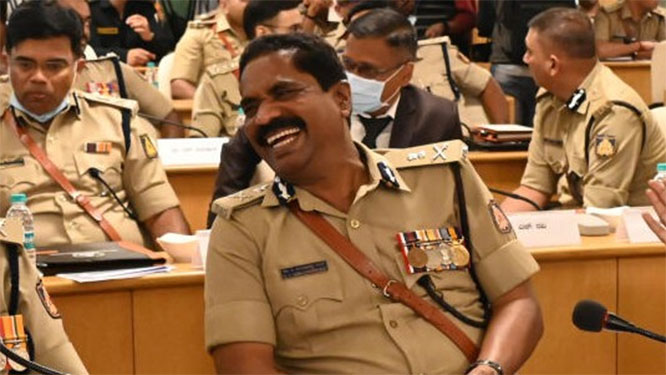
Karnataka DGP (Civil Rights Enforcement) K Ramachandra Rao was suspended with immediate effect, as per a state government order issued on Monday, 19 January. The order cited conduct unbecoming of a government servant and causing embarrassment to the state administration.

The Karnataka government suspended Rao after a purported video showed him in a compromising position with a woman inside his official chamber. The video went viral on social media. Rao rejected the videos outright, terming them "fabricated and false".

Who is K Ramachandra Rao?

Rao is a DGP-rank officer who was heading the Directorate of Civil Rights Enforcement until his suspension. He was promoted to DGP in September 2023 and assumed office in October 2023, the Sunday Guardian reported.

He also served as the Chairman and Managing Director of the Karnataka State Police Housing and Infrastructure Development Corporation Limited.

His stint as the Inspector General of Police (IGP) for the Southern Range was also marred by controversy. In 2014, during a cash seizure near Mysuru’s Yelwal, officials claimed the seized amount was ₹20 lakh, while the accused (Kerala-based merchants) claimed it was around ₹2.27 crore.

Rao, who was present during the seizure, denied all allegations. However, he was transferred soon after.

Allegations of collusion with a businessman surfaced, and a senior police officer was quoted by The Sunday Guardian as saying, “In Rao’s case, the CID has clearly mentioned that there was a great degree of lapse on the part of Rao and a deputy superintendent of police after it was brought to their notice that a few policemen, including a gunman attached to the IGP, were involved in the robbery.”

Rao had denied all wrongdoing in that incident. Despite past controversies, he rose to the state’s top police position, the Sunday Guardian reported.

Ranya Rao’s stepfather

Rao is the stepfather of Kannada actress Harshavardhini Ranya alias Ranya Rao, accused of orchestrating the illegal import of gold worth over ₹12.56 crore from Dubai to India along with two others — businessman Tarun Raju, and jewellery dealer Sahil Jain.

‘Obscene video’ controversy

A viral video showed Rao behaving inappropriately with a woman inside his office while in uniform.

The Karnataka government said in its Monday order that “vide videos and news reports widely broadcast on public news channels and media platforms, it is observed that Dr K Ramachandra Rao has acted in an obscene manner which is unbecoming of a Government Servant and also causing embarrassment to the Government.”

The order said the matter was examined by the state government, which found that the officer's conduct amounted to a violation of Rule 3 of the All India Services (Conduct) Rules, 1968.

The government said it is prima facie satisfied that "it is necessary to place Rao under suspension with immediate effect, pending inquiry".

During the suspension period, Rao will be entitled to subsistence allowance as per Rule 4 of the All India Services (Discipline and Appeal) Rules, 1969.

The order also places restrictions on his movement, stating that during the period of suspension, the officer must not leave headquarters under any circumstances without the written permission of the state government.

Comments

Add new comment

  • Coastaldigest.com reserves the right to delete or block any comments.
  • Coastaldigset.com is not responsible for its readers’ comments.
  • Comments that are abusive, incendiary or irrelevant are strictly prohibited.
  • Please use a genuine email ID and provide your name to avoid reject.
News Network
January 23,2026

modIKERALA.jpg

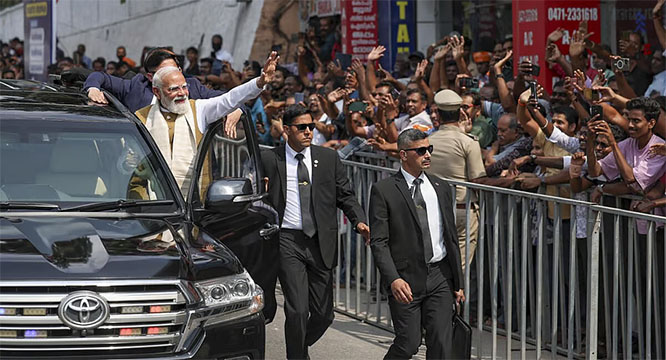
Prime Minister Narendra Modi, during his visit to Thiruvananthapuram on Friday, January 23, indicated that the Bharatiya Janata Party (BJP) is aiming to expand its political footprint in Kerala ahead of the Assembly elections scheduled in the coming months.

Speaking at a BJP-organised public meeting, Modi drew parallels between the party’s early electoral gains in Gujarat and its recent victory in the Thiruvananthapuram Municipal Corporation. The civic body win, which ended decades of Left control, was cited by the Prime Minister as a possible starting point for the party’s broader ambitions in the state.

Recalling BJP’s political trajectory in Gujarat, Modi said the party was largely insignificant before 1987 and received little media attention. He pointed out that the BJP’s first major breakthrough came with its victory in the Ahmedabad Municipal Corporation that year.

“Just as our journey in Gujarat began with one city, Kerala’s journey has also started with a single city,” Modi said, suggesting that the party’s municipal-level success could translate into wider electoral acceptance.

The Prime Minister alleged that successive governments led by the Left Democratic Front (LDF) and the United Democratic Front (UDF) had failed to adequately develop Thiruvananthapuram. He accused both fronts of corruption and neglect, claiming that basic infrastructure and facilities were denied to the capital city for decades.

According to Modi, the BJP’s control of the civic body represents a shift driven by public dissatisfaction with the existing political alternatives. He asserted that the BJP administration in Thiruvananthapuram had begun working towards development, though no specific details or timelines were outlined.

Addressing the gathering at Putharikandam Maidan, Modi said the BJP intended to project Thiruvananthapuram as a “model city,” reiterating his party’s commitment to governance-led change.

The Prime Minister’s visit to Kerala also included the inauguration of several development projects and the flagging off of new train services, as the BJP intensifies its political outreach in the poll-bound state.

Comments

Add new comment

  • Coastaldigest.com reserves the right to delete or block any comments.
  • Coastaldigset.com is not responsible for its readers’ comments.
  • Comments that are abusive, incendiary or irrelevant are strictly prohibited.
  • Please use a genuine email ID and provide your name to avoid reject.
News Network
January 23,2026

Karnataka Governor Thaawarchand Gehlot read only three lines from the 122-paragraph address prepared by the Congress-led state government while addressing the joint session of the Legislature on Thursday, effectively bypassing large sections critical of the BJP-led Union government.

The omitted portions of the customary Governor’s address outlined what the state government described as a “suppressive situation in economic and policy matters” under India’s federal framework. The speech also sharply criticised the Centre’s move to replace the Mahatma Gandhi National Rural Employment Guarantee Act (MGNREGA) with the Viksit Bharat–Guarantee for Rozgar and Ajeevika Mission (Gramin) Act, commonly referred to as the VB-GRAM (G) Act.

Governor Gehlot had earlier conveyed his objection to several paragraphs that were explicitly critical of the Union government. On Thursday, he confined himself to the opening lines — “I extend a warm welcome to all of you to the joint session of the State legislature. I am extremely pleased to address this august House” — before jumping directly to the concluding sentence of the final paragraph.

He ended the address by reading the last line of paragraph 122: “Overall, my government is firmly committed to doubling the pace of the State’s economic, social and physical development. Jai Hind — Jai Karnataka.”

According to the prepared speech, the Karnataka government demanded the scrapping of the VB-GRAM (G) Act, describing it as “contractor-centric” and detrimental to rural livelihoods, and called for the full restoration of MGNREGA. The state government argued that the new law undermines decentralisation, weakens labour protections, and centralises decision-making in violation of constitutional norms.

Key points from the unread sections of the speech:

•    Karnataka facing a “suppressive” economic and policy environment within the federal system

•    Repeal of MGNREGA described as a blow to rural livelihoods

•    VB-GRAM (G) Act accused of protecting corporate and contractor interests

•    New law alleged to weaken decentralised governance

•    Decision-making said to be imposed by the Centre without consulting states

•    Rights of Adivasis, women, backward classes and agrarian communities curtailed

•    Labourers allegedly placed under contractor control

•    States facing mounting fiscal stress due to central policies

•    VB-GRAM (G) Act accused of enabling large-scale corruption

Comments

Add new comment

  • Coastaldigest.com reserves the right to delete or block any comments.
  • Coastaldigset.com is not responsible for its readers’ comments.
  • Comments that are abusive, incendiary or irrelevant are strictly prohibited.
  • Please use a genuine email ID and provide your name to avoid reject.