



Deluge, destruction in Jammu and Kashmir

September 14, 2014

Srinagar, Sep 14: These are unprecedented times. Generations of people of Jammu and Kashmir had not seen the kind of devastation that the floods of September second week have wrought on the Himalayan state.
jk
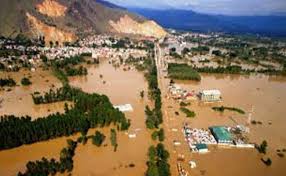
The deluge has left a trail of destruction in almost every district of this already vexed state. The flood havoc has left the Jammu region and the Kashmir Valley equally ruined. A week of thunderous rainfall has breached canals and lakes and flooded the rivers, pushing the state, not known for its administrative efficiency, backward by a couple of decades. There is hardly any family which has not been affected by this completely unpredicted misery.

Days of rainfall and flooding have impacted every walk of life. After the thunder storm that started on September 6, only now Srinagar has started getting electricity supply, that too only in parts of the state capital. There is hardly any telephone connectivity. With mobile networks non-functional and power intermittent, the problem of contacting the near and dear ones is a tall order. There are tales of parents not knowing the whereabouts of the family members, mothers having lost children and brothers unaware what happened to the uncontactable cousins.

Take anything in J&K, they are under water. Shops and establishments, hospitals, banks, government and private offices, telephone exchanges, police stations, schools and colleges, power plants, petrol pumps and newspaper offices are under water and will remain closed for days to come. Of the seven hospitals in the city, only one – Sher-e-Kashmir - is functional. Godowns are under water. Petrol pumps are empty.

The HP and IOC oil storage tanks located in Pulwama district along the closed Srinagar-Jammu highway are submerged. Most of the buildings and houses are under at least 10 ft of water. There is a level-playing field here though. Chief Minister Omar Abdullah’s office, secretariat, Assembly building, areas like the posh Jawahar Nagar - where leading politicians and top bureaucrats live - have been under water. So much so that the chiefminister could not contact his own ministers or officials for days on end.

There are no stocks in ration shops. Left over stocks are looted by thieves who came in boats. There is an acute shortage of food across the affected districts. Medicine is urgently needed as receding flood waters may bring in diseases. The biggest problem is acute shortage of medicine and drinking water. Some temporary hospitals are set up as voluntary doctors are working but are devoid of medical facilities. Without water, there is the danger of people getting dehydrated. In the only paediatric hospital of Srinagar, 14 newborns died. There are reports that some bodies are lying on trees.

Relief camps have been set up but the condition there is sub-human. While seven of the 10 north Kashmir districts were affected, rain has started pounding south Kashmir since Friday. People’s anger is against both the state and the Central governments.

Affected residents say while the state government completely failed to come to the rescue of the flood-hit, the Centre could have done more. Instead of pressing just 100 boats in to service, what was needed was 1000 boats as lakhs were waiting to be rescued over six days without proper food or water. In Sringar alone, of the 6 lakh trapped in waters, only 1 lakh have been rescued.

Said Riaz Ahmed, a businessman: “This is the time when the rest of the country can really show that Kashmir is part of India, that they are ready to embrace us in this hour of tragedy. Help is coming, but it is insufficient, not streamlined.”

Cries of woe

Many have lost their lives and also savings and property. Says Mohd Mazan Bhat, a retired government official: “I constructed a house in Bemina out of my life savings. The house has been washed away in the floods. I lost everything in a matter of a few hours.” Bhat, now in a relief camp, weeps: “I don’t know how to restart my life.”

Four days after he was rescued from his house which is under 15 ft of water in Karan Nagar, advocate Jawed is not able to live down the horror he went through. “I was saved by an army boat after three days and two nights. I am still terrified, I am not able to sleep. I get hallucinations of the violent waves lashing my house engulfing it and the neighbourhood.”

Senior journalist Arshad Hussian of Kashmir Times and his mother are not traceable. He has three small children and all are rescued from his house at Shivpura on the banks of the Jhelum river. His wife, a doctor, was at her hospital when the tragedy struck and is safe. I have been trying to locate them at relief camps but am not successful.

There are hundreds of such stories here. As for my relatives, there is no information about dozens of them. Same with scores of journalist colleagues and friends.

But many have not left their homes despite army boats reaching them. They are scared that the moment they leave, whatever that is left at home would be taken away by the gangs of thieves.

Lack of connectivity is one of the biggest logistical problems. Authorities claim that 50 per cent of mobile connectivity is restored but in reality, it is not even 10 per cent. BSNL and Airtel connections are not working. Aircel network is available but only in some areas.

There is apprehension as to what will happen to the cash deposits in scores of banks across the state as well as the cash in the main state treasury situated on Residency Road in Lal Chowk which are under water. The chiefminister has assured the people that cash in banks as well as treasury is safe.

In south Kashmir, Anant Nag, Pulwama and Pehlgam have been devastated by floods. Almost 90 per cent of people there are affected. In north Kashmir, parts of Badgam, Baramulla and Bandipore districts are badly hit. In north, only Ganderbal, Kupwara and Shopean districts remain largely unaffected. On Friday, 40 bodies were retrieved from Pancheri village in Udhampur district in Jammu division, devastated by landslide. There are reports that several bodies are lying in different police stations in Srinagar. No one knows about the identity of these bodies.

Rehabilitation in J&K will take years. Public infrastructure is badly affected. In hospitals, all equipment, be it CT scan, x-ray, MRI machines etc are badly damaged under muddy water. Even if water recedes, it won’t be of much help.

Comments

Add new comment

  • Coastaldigest.com reserves the right to delete or block any comments.
  • Coastaldigset.com is not responsible for its readers’ comments.
  • Comments that are abusive, incendiary or irrelevant are strictly prohibited.
  • Please use a genuine email ID and provide your name to avoid reject.
News Network
December 6,2025

indigoticket.jpg

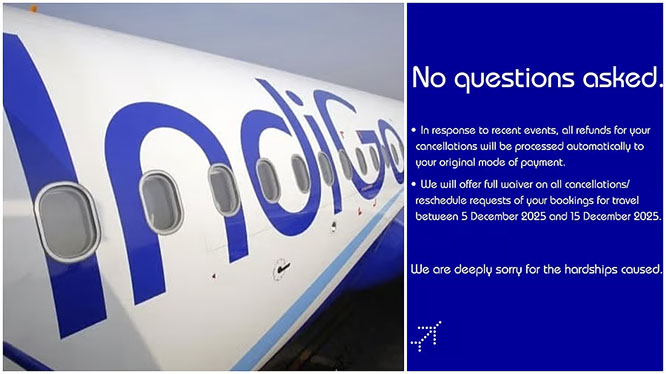
With IndiGo flight disruptions impacting thousands of passengers, the airline on Saturday said that it will offer full waiver on all cancellations/reschedule requests for travel bookings between December 5, 2025 and December 15, 2025.

Earlier in the day, the civil aviation ministry had directed the airline to complete the ticket refund process for the cancelled flights by Sunday evening, as well as ensure baggage separated from the travellers are delivered in the next two days.

In a post on X, titled 'No questions asked', IndiGo wrote, "In response to recent events, all refunds for your cancellations will be processed automatically to your original mode of payment."

"We are deeply sorry for the hardships caused," it further added.

Several passengers, however, complained of not getting full refund as promised by the airline.

Netizens have shared screenchots of getting charged for airline cancellation fee and convenience fee.

"Please tell me why u have did this airline cancellation charges when u say full amount will be refunded (sic)," a user wrote sharing a screenshot of the refund page.

"Well, but you have still debited the convenience charges," wrote another.

Passengers have also raised concerns about the "cancel" option being disabled on the IndiGo app. "First enable the 'Cancel' button on your App & offer full refund on tickets cancelled by customers between the said dates," wrote a user.

A day after the country's largest airline, IndiGo, cancelled more than 1,000 flights and caused disruptions for the fifth day on Saturday, the ministry said that any delay or non-compliance in refund processing will invite immediate regulatory action.

The refund process for all cancelled or disrupted flights must be completed by 8 pm on Sunday, the ministry said in a statement.

"Airlines have also been instructed not to levy any rescheduling charges for passengers whose travel plans were affected by cancellations," it said.

On Saturday, more than 400 flights were cancelled at various airports.

IndiGo has also been instructed to set up dedicated passenger support and refund facilitation cells.

Comments

Add new comment

  • Coastaldigest.com reserves the right to delete or block any comments.
  • Coastaldigset.com is not responsible for its readers’ comments.
  • Comments that are abusive, incendiary or irrelevant are strictly prohibited.
  • Please use a genuine email ID and provide your name to avoid reject.
News Network
December 13,2025

New Delhi: School-going children are picking up drug and smoking habits and engaging in consumption of alcohol, with the average age of introduction to such harmful substances found to be around 13 years, suggesting a need for earlier interventions as early as primary school, a multi-city survey by AIIMS-Delhi said.

The findings also showed substance use increased in higher grades, with grade XI/XII students two times more likely to report use of substances when compared with grade VIII students. This emphasised the importance of continued prevention and intervention through middle and high school.

The study led by Dr Anju Dhawan of AIIMS's National Drug Dependence Treatment Centre, published in the National Medical Journal of India this month, looks at adolescent substance use across diverse regions.

The survey included 5,920 students from classes 8, 9, 11 and 12 in urban government, private and rural schools across 10 cities -- Bengaluru, Chandigarh, Delhi, Dibrugarh, Hyderabad, Imphal, Jammu, Lucknow, Mumbai, and Ranchi. The data were collected between May 2018 and June 2019.

The average age of initiation for any substance was 12.9 (2.8) years. It was lowest for inhalants (11.3 years) followed by heroin (12.3 years) and opioid pharmaceuticals (without prescription; 12.5 years).

Overall, 15.1 per cent of participants reported lifetime use, 10.3 per cent reported past year use, and 7.2 per cent reported use in the past month of any substance, the study found.

The most common substances used in the past year, after tobacco (4 per cent) and alcohol (3.8 per cent), were opioids (2.8 per cent), followed by cannabis (2 per cent) and inhalants (1.9 per cent). Use of non-prescribed pharmaceutical opioids was most common among opioid users (90.2 per cent).

On being asked, 'Do you think this substance is easily available for a person of your age' separately for each substance category, nearly half the students (46.3 per cent) endorsed that tobacco products and more than one-third of the students (36.5 per cent) agreed that a person of their age can easily procure alcohol products.

Similarly, for Bhang (21.9 per cent), ganja/charas (16.1 per cent), inhalants (15.2 per cent), sedatives (13.7 per cent), opium and heroin (10 per cent each), the students endorsed that these can be easily procured.

About 95 per cent of the children, irrespective of their grade, agreed with the statement that 'drug use is harmful'.

The rates of substance use (any) among boys were significantly higher than those of girls for substance use (ever), use in the past year and use in the past 30 days. Compared to grade VIII students, grade IX students were more likely, and grade XI/XII students were twice as likely to have used any substance (ever).

The likelihood of past-year use of any substance was also higher for grade IX students and for grade XI/XII students as compared to grade VIII students.

About 40 per cent of students mentioned that they had a family member who used tobacco or alcohol each. The use of cannabis (any product) and opioid (any product) by a family member was reported by 8.2 per cent and 3.9 per cent of students, respectively, while the use of other substances, such as inhalants/sedatives by family was 2-3 per cent, the study found.

A relatively smaller percentage of students reported use of tobacco or alcohol among peers as compared to among family members, while a higher percentage reported inhalants, sedatives, cannabis or opioid use among peers.

Children using substances (past year) compared to non-users reported significantly higher any substance use by their family members and peers.

There were 25.7 per cent students who replied 'yes' to the question 'conflicts/fights often occur in your family'. Most students also replied affirmatively to 'family members are aware of how their time is being spent' and 'damily members are aware of with whom they spend their time'.

Comments

Add new comment

  • Coastaldigest.com reserves the right to delete or block any comments.
  • Coastaldigset.com is not responsible for its readers’ comments.
  • Comments that are abusive, incendiary or irrelevant are strictly prohibited.
  • Please use a genuine email ID and provide your name to avoid reject.
News Network
December 16,2025

jordan.jpg

Prime Minister Narendra Modi on Monday held talks with Jordan’s King Abdullah II in Amman, during which the two leaders discussed ways to further strengthen bilateral relations, with the Prime Minister outlining an eight-point vision covering key areas of cooperation.

Describing the meeting as “productive”, PM Modi said he shared a roadmap focused on trade and economy, fertilisers and agriculture, information technology, healthcare, infrastructure, critical and strategic minerals, civil nuclear cooperation, and people-to-people ties.

In a post on social media platform X, the Prime Minister praised King Abdullah II’s personal commitment to advancing India–Jordan relations, particularly as both countries mark the 75th anniversary of the establishment of diplomatic ties this year.

“Held productive discussions with His Majesty King Abdullah II in Amman. His personal commitment towards vibrant India-Jordan relations is noteworthy. This year, we are celebrating the 75th anniversary of our bilateral diplomatic relations,” PM Modi said.

The meeting took place at the Al Husseiniya Palace, where the two leaders also exchanged views on regional and global issues of mutual interest. According to the Ministry of External Affairs (MEA), both sides agreed to further deepen cooperation in areas including trade and investment, defence and security, counter-terrorism and de-radicalisation, fertilisers and agriculture, infrastructure, renewable energy, tourism, and heritage.

The MEA said both leaders reaffirmed their united stand against terrorism.

PM Modi arrived in Amman earlier on Monday and was received by Jordanian Prime Minister Jafar Hassan, who accorded him a formal welcome. Following the talks, King Abdullah II hosted a banquet dinner in honour of the Prime Minister, reflecting the warmth of bilateral ties.

Jordan is the first leg of PM Modi’s three-nation tour. From Amman, the Prime Minister will travel to Ethiopia at the invitation of Prime Minister Abiy Ahmed Ali, marking his first official visit to the African nation. The tour will conclude with a visit to Oman.

Comments

Add new comment

  • Coastaldigest.com reserves the right to delete or block any comments.
  • Coastaldigset.com is not responsible for its readers’ comments.
  • Comments that are abusive, incendiary or irrelevant are strictly prohibited.
  • Please use a genuine email ID and provide your name to avoid reject.
