



Those Hinduvta activists too should meet similar fate: Slain BJP worker's mother

[email protected] (CD Network)
August 20, 2016

Udupi, Aug 20: A pall of gloom descended on the house of BJP worker Praveen Poojary, who was beaten to death three days ago by a group of Hindutva activists for allegedly trafficking cows, and his family is finding it difficult to accept the reality that he is no more.
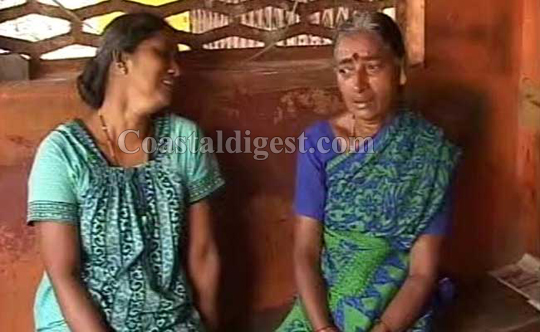
baby poojary

"These were people known to us. Why did they do this to my son?," sobbed Praveen's mother Baby Poojary, mourning the son who was her oldest and most gentle.

“Those people also must suffer the same way for what they did,” she cursed sitting on the verandah of her house at Kenjoor village, 3km from Santhekatte in Udupi.

Relatives and neighbours find it hard to accept that the alleged killers were people the family had known for years. Many of the attackers often visited his chicken shop and had reportedly had meals at his home in the past.

Pramila Poojary, Praveen's sister, said the family was not well off but her brother had come up by dint of sheer hard work and set up his own business, which was resented by many. He was also a local BJP leader.

Praveen, owned a tempo rickshaw and ran a chicken stall in his village. He headed a standing committee of the BJP's Santhekatte unit.

Ramesh Poojary, a relative, said the way his van was waylaid gave rise to suspicion. “When he was called at 8 p.m., he did not even know it was for transporting cattle,” he said.

Praveen's father Vasu said his son "left at 8.30 pm for some work" at his shop. "At 10.30 they brought him...the police came too, but he died in hospital."

Praveen's classmate Santhosh Shetty said he had never once seen his friend lose his temper, no matter the provocation. "They (the attackers) were Praveen's customers in his shop. Young boys in nearby villages have been indoctrinated and armed with weapons - we have never seen such conflict before," said Mr Shetty.

Panchayat member Geetha added: "He was never argumentative, never aggressive. We cannot believe that this has happened to him."

Also Read:

Some Sangh Parivar activists indulging in illegal cattle trade: Former BJP MLA

After BJP worker's murder, Hindutva groups disown Udupi cow vigilantes

'Cows rescued' by vigilantes in coastal Karnataka end up in slaughterhouses'

Udupi: Slain BJP worker's family accuses Hindutva activists of backstabbing

Comments

PK
 - 
Saturday, 20 Aug 2016

How can YOU say its illegal,
Cows can be slaughtered if old or diseased. possession not a crime. bill proposed by BJP in 2010 in karnataka made slaughter punishable by 7yrs jail and Rs 1 lakh fine. BUT it did not BEcome LAW.

INDIAN
 - 
Saturday, 20 Aug 2016

HEY KIRAN, ASK YOUR MOTHER SAME THING HAPPEN TO YOU WHAT WILL BE HER SENTIMENTS,,SHAME ON YOU...

EVERY DOG AS A DAY...WAIT FOR IT...

Muzzamil
 - 
Saturday, 20 Aug 2016

one lesson gaurakshak's should understand, mother lost her son that nobody can take that place, bread winner of the family lost by whole family.

Kiran Bajrangi
 - 
Saturday, 20 Aug 2016

i respect mother sentiments, still u Couldn’t stop your son by doing illegal transportation. u deserve for what u did. better luck next time.

Add new comment

  • Coastaldigest.com reserves the right to delete or block any comments.
  • Coastaldigset.com is not responsible for its readers’ comments.
  • Comments that are abusive, incendiary or irrelevant are strictly prohibited.
  • Please use a genuine email ID and provide your name to avoid reject.
News Network
February 3,2026

Bengaluru: Following reports of fresh Nipah virus (NiV) cases in West Bengal and heightened vigilance across parts of Southeast Asia, the Karnataka Health Department has placed the state on high alert and activated emergency preparedness protocols.

Health officials said enhanced surveillance measures have been initiated after two healthcare workers in Barasat, West Bengal, tested positive for the virus earlier this month. While no cases have been reported in Karnataka so far, authorities said the state’s past exposure to Nipah outbreaks and high inter-state mobility warranted preventive action.

Officials have directed district health teams to intensify monitoring, particularly at hospitals and points of entry, and to ensure early detection and isolation of suspected cases.

High Mortality Virus with Multiple Transmission Routes

Nipah virus is a zoonotic disease that can spread from animals to humans and has a reported fatality rate ranging between 60 and 75 per cent. Fruit bats, also known as flying foxes, are the natural reservoirs of the virus and can transmit it by contaminating food sources with saliva or urine.

Known modes of transmission include:

•    Contaminated food: Consumption of fruits partially eaten by bats or raw date-palm sap
•    Animal contact: Exposure to infected pigs or other animals
•    Human-to-human transmission: Close contact with body fluids of infected persons, particularly in healthcare settings

Symptoms and Disease Progression

The incubation period typically ranges from 4 to 14 days, though delayed onset has also been reported. Early symptoms often resemble common viral infections, making prompt clinical suspicion critical.

•    Initial symptoms: Fever, headache, body aches, fatigue, sore throat
•    Progressive symptoms: Drowsiness, disorientation, altered mental state
•    Severe stage: Seizures, neck stiffness and acute encephalitis, which can rapidly progress to coma

Public Health Advisory

The Health Department has issued precautionary guidelines urging the public to adopt risk-avoidance practices to prevent any local spillover.

Do’s
•    Wash fruits thoroughly before consumption
•    Drink boiled and cooled water
•    Use protective equipment while handling livestock
•    Maintain strict hand hygiene

Don’ts
•    Avoid fruits found on the ground or showing bite marks
•    Do not consume beverages made from raw tree sap, including toddy
•    Avoid areas with dense bat populations
•    Do not handle sick or dead animals

Preparedness Measures

Officials confirmed that isolation wards are being readied in major government hospitals and that medical staff are being sensitised to identify early warning signs.

“There is no cause for panic, but there is a need for heightened vigilance,” a senior health official said, adding that there is currently no approved vaccine or specific antiviral treatment for Nipah, and care remains largely supportive.

Comments

Add new comment

  • Coastaldigest.com reserves the right to delete or block any comments.
  • Coastaldigset.com is not responsible for its readers’ comments.
  • Comments that are abusive, incendiary or irrelevant are strictly prohibited.
  • Please use a genuine email ID and provide your name to avoid reject.