



Houthi missile attack an act of war by Iran; we have right to respond: Saudi Arabia

Agencies
November 7, 2017

Jeddah, Nov 7: Senior officials of Saudi Arabian government have termed the recent missile attack on Riyadh by Houthi rebels as an act of war by Iran, which according to them backs the rebels.

“The Kingdom reserves the right to respond in a timely manner to the hostile actions of the Iranian regime,” Saudi Foreign Minister Adel Al-Jubeir said.

“Iranian interventions in the region are detrimental to the security of neighboring countries and affect international peace and security. We will not allow any infringement of our national security.”

According to Saudi, Iran had supplied the ballistic missile which was fired into Saudi Arabia on Saturday night by Houthi rebels in Yemen. Saudi defense forces intercepted the missile and shot it down over King Khaled International Airport in Riyadh, and there were no casualties.

“Iran’s role and its direct command of its Houthi proxy in this matter constitute a clear act of aggression that targets neighboring countries, and threatens peace and security in the region and globally,” the Saudi-led coalition in Yemen said on Monday.

“Therefore, the coalition’s command considers this a blatant act of military aggression by the Iranian regime, and could rise to be considered as an act of war against the Kingdom of Saudi Arabia.

“The coalition command also affirms that the Kingdom reserves its right to respond to Iran at the appropriate time and in the appropriate manner.”

The Coalition Forces Command ordered the temporary closure on Monday of all air, sea and land ports in Yemen, except for aid workers and humanitarian supplies.

Col. Turki Al-Maliki, spokesman for the coalition, produced evidence on Sunday that Iran supplied weapons and technology to the Houthis, including ballistic missiles, launchers, aerial drones, land and naval mines and improvised explosive devices.

Bahraini Foreign Minister Sheikh Khaled bin Ahmed Al-Khalifa said Iran was a danger to the region, and the Harvard scholar and Iranian affairs expert Majid Rafizadeh said the international community should hold Tehran accountable.

“Compromises, concessions and diplomatic maneuvering don’t work with the Iranian regime,” he told Arab News. “Iranian leaders view concessions as weakness.”

He called for a combination of economic sanctions, political pressure and enhanced monitoring of Iran’s illegal activities. “Tehran’s exports and imports should be closely examined and restricted. The US, EU and Arab powers should form a military front, like NATO, as a bulwark against the Iran regime.”

Rafizadeh said Iran was the leading state sponsor of terrorism. “The UN should invoke UN Resolution 2231 and immediately punish Tehran for violating it. Otherwise, Tehran’s belligerent behavior will continue to grow. This can turn the regional conflict into a conflagration.”

UN Security Council Resolution 2231 adopted the 2015 Iranian nuclear deal, but also imposed restrictions on Iran’s use of some ballistic missiles.

Thomas Mattair, executive director of the Middle East Policy Council in Washington, told Arab News: “Iran should not expect to be able to facilitate attacks on Saudi Arabia without paying some consequences.”

Dr. Hamdan Al-Shehri, a Saudi political analyst and international relations scholar in Riyadh, said the international community should have prevented Iran from creating havoc in the region.

“Things would not have reached this pass if the world community had taken measures against Iran and its arming of militias such Hezbollah and the Houthis,” he told Arab News. “The world’s inaction led Iran to believe that it can basically get away with murder.”

He condemned Iran for first attacking Makkah in July, and now Riyadh. “They want to kill innocent people and spread terror; this is their only business.”

The world community, and specifically the US and Russia, must pressurize Iran to give up its hostility to Arab countries, Al-Shehri said. “Now is the time to act.”

Al-Shehri said the missile attack on Riyadh was a “declaration of war” on Saudi Arabia.

“Saudi Arabia will not sit idle and will not wait for the international community to do nothing,” he said. “Foreign Minister Adel Al-Jubeir has made it clear that Saudi Arabia, in coordination with its Arab allies, reserves the right to defend its sovereignty and its people.”

Al-Shehri said all options were on the table and all measures were being explored. “The Saudi leadership will decide what option and measures to go for and when,” he said. “One thing is clear, this Iranian-Hezbollah-Houthi provocation and attack will not go unpunished.”

Among the options, he said, was directly confronting Iran. “A fitting Saudi response will come at a time and place of its choosing.”

David Pollack, a scholar at the Washington Institute for Near East policy, said Saudi Arabia “generally has a valid case. The Arab coalition and its international partners, including the US, should intensify maritime and land interdiction efforts, including via Oman.”

Aaron David Miller, vice president for new initiatives and Middle East program director at the Woodrow Wilson Center for International Scholars, speculated that Saudi Arabia had reached a “firm understanding” with the US that should tensions with Iran escalate, “the US will be there to support” the Kingdom.

King Salman and President Donald Trump spoke by phone on Saturday and discussed the Houthi missile attack and Iran’s involvement in the region.

Comments

DinaHaines
 - 
Tuesday, 7 Nov 2017

Hello There. I found your blog using men. This is an extremely well written article. I make sure to bookmark it and come back to read more of your useful information. Thanks for the post. I’ll definitely return. https://www.traditionessaysonline.com/

Add new comment

  • Coastaldigest.com reserves the right to delete or block any comments.
  • Coastaldigset.com is not responsible for its readers’ comments.
  • Comments that are abusive, incendiary or irrelevant are strictly prohibited.
  • Please use a genuine email ID and provide your name to avoid reject.
News Network
February 1,2026

Bengaluru: The Karnataka High Court has refused to quash an investigation against a WhatsApp group administrator accused of allowing the circulation of obscene and offensive images depicting Hindutva politicians and idols in 2021.

Justice M Nagaprasanna observed that, prima facie, the ingredients of the offence under Section 295A of the Indian Penal Code were made out. “The offence under Section 295A of the IPC is met to every word of its ingredient, albeit prima facie,” the judge said.

The petitioner, Sirajuddin, a resident of Belthangady taluk in Dakshina Kannada district, had challenged the FIR registered against him at the CEN (Cyber, Economics and Narcotics) police station, Mangaluru, for offences under Section 295A of the IPC and Section 67 of the Information Technology Act. Section 295A relates to punishment for deliberate and malicious acts intended to outrage the religious feelings of any class of citizens.

According to the complaint filed by K Jayaraj Salian, also a resident of Belthangady taluk, he received a WhatsApp group link from an unknown source and was added to the group after accessing it. The group reportedly had six administrators and around 250 participants, where obscene and offensive images depicting Hindu deities and certain political figures were allegedly circulated repeatedly.

Sirajuddin was arrested in connection with the case and later released on bail on February 16, 2021. He argued before the court that he was being selectively targeted, while other administrators—including the creator of the group—were neither arrested nor investigated. He also contended that the Magistrate could not have taken cognisance of the offence under Section 295A without prior sanction under Section 196(1) of the CrPC.

Rejecting the argument, Justice Nagaprasanna held that prior sanction is required only at the stage of taking cognisance, and not at the stage of registration of the crime or during investigation.

The judge noted that the State had produced the entire investigation material before the court. “A perusal of the material reveals depictions of Hindu deities in an extraordinarily obscene, demeaning and profane manner. The content is such that its reproduction in a judicial order would itself be inappropriate,” the court said, adding that the material, on its face, had the tendency to outrage religious feelings and disturb communal harmony.

Observing that the case was still at the investigation stage, the court said it could not interdict the probe at this juncture. However, it expressed concern that the investigating officer appeared to have not proceeded uniformly against all administrators. The court clarified that if the investigation revealed the active involvement of any member in permitting the circulation of such content, they must also be proceeded against.

“At this investigative stage, any further observation by this Court would be unnecessary,” the order concluded.

Comments

Add new comment

  • Coastaldigest.com reserves the right to delete or block any comments.
  • Coastaldigset.com is not responsible for its readers’ comments.
  • Comments that are abusive, incendiary or irrelevant are strictly prohibited.
  • Please use a genuine email ID and provide your name to avoid reject.
News Network
February 3,2026

Bengaluru: Following reports of fresh Nipah virus (NiV) cases in West Bengal and heightened vigilance across parts of Southeast Asia, the Karnataka Health Department has placed the state on high alert and activated emergency preparedness protocols.

Health officials said enhanced surveillance measures have been initiated after two healthcare workers in Barasat, West Bengal, tested positive for the virus earlier this month. While no cases have been reported in Karnataka so far, authorities said the state’s past exposure to Nipah outbreaks and high inter-state mobility warranted preventive action.

Officials have directed district health teams to intensify monitoring, particularly at hospitals and points of entry, and to ensure early detection and isolation of suspected cases.

High Mortality Virus with Multiple Transmission Routes

Nipah virus is a zoonotic disease that can spread from animals to humans and has a reported fatality rate ranging between 60 and 75 per cent. Fruit bats, also known as flying foxes, are the natural reservoirs of the virus and can transmit it by contaminating food sources with saliva or urine.

Known modes of transmission include:

•    Contaminated food: Consumption of fruits partially eaten by bats or raw date-palm sap
•    Animal contact: Exposure to infected pigs or other animals
•    Human-to-human transmission: Close contact with body fluids of infected persons, particularly in healthcare settings

Symptoms and Disease Progression

The incubation period typically ranges from 4 to 14 days, though delayed onset has also been reported. Early symptoms often resemble common viral infections, making prompt clinical suspicion critical.

•    Initial symptoms: Fever, headache, body aches, fatigue, sore throat
•    Progressive symptoms: Drowsiness, disorientation, altered mental state
•    Severe stage: Seizures, neck stiffness and acute encephalitis, which can rapidly progress to coma

Public Health Advisory

The Health Department has issued precautionary guidelines urging the public to adopt risk-avoidance practices to prevent any local spillover.

Do’s
•    Wash fruits thoroughly before consumption
•    Drink boiled and cooled water
•    Use protective equipment while handling livestock
•    Maintain strict hand hygiene

Don’ts
•    Avoid fruits found on the ground or showing bite marks
•    Do not consume beverages made from raw tree sap, including toddy
•    Avoid areas with dense bat populations
•    Do not handle sick or dead animals

Preparedness Measures

Officials confirmed that isolation wards are being readied in major government hospitals and that medical staff are being sensitised to identify early warning signs.

“There is no cause for panic, but there is a need for heightened vigilance,” a senior health official said, adding that there is currently no approved vaccine or specific antiviral treatment for Nipah, and care remains largely supportive.

Comments

Add new comment

  • Coastaldigest.com reserves the right to delete or block any comments.
  • Coastaldigset.com is not responsible for its readers’ comments.
  • Comments that are abusive, incendiary or irrelevant are strictly prohibited.
  • Please use a genuine email ID and provide your name to avoid reject.
News Network
January 23,2026

oscar.jpg

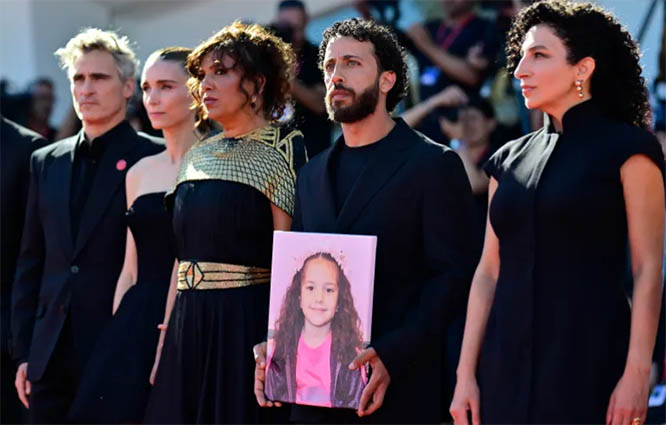
The Voice of Hind Rajab, inspired by the tragic final moments of a young Palestinian girl killed by Israeli fire in Gaza, has been nominated for an Academy Award in the Best International Feature Film category.

Directed by Tunisian filmmaker Kaouther Ben Hania, the film recounts the true story of five-year-old Hind Rajab, who lost her life in January 2024 while fleeing Israeli bombardment with her family.

The film features the real audio of Hind’s desperate call to the Palestinian Red Crescent Society, where she pleaded for help moments before the vehicle she was in was struck by 355 bullets.

The haunting narrative begins with a brief call made from the besieged Tel al-Hawa neighborhood of Gaza, where gunfire and armored vehicles drowned out every sound.

After witnessing the brutal killing of her family, she made a trembling call, her voice reduced to a whisper as she spoke of the massacre and her unbearable loneliness as the sole survivor.

Premiering at the Venice International Film Festival in September 2025, The Voice of Hind Rajab garnered widespread acclaim, receiving a record-setting 23-minute standing ovation and the Silver Lion Grand Jury Prize, the festival’s second-highest honor.

In her acceptance speech, Ben Hania dedicated the film to humanitarian workers and first responders in Gaza, emphasizing that Hind's voice symbolizes countless civilians affected by war.

She aims to give voice to victims often reduced to mere statistics, highlighting the broader suffering of civilians in war zones.

The film’s Oscar nomination underscores its powerful storytelling and ethical approach to depicting real-life tragedy, making it a crucial piece of contemporary cinema.

It serves not only as a narration of individual tragedy but also as an artistic and documentary response to the silence and censorship that often overshadow West Asian struggles and wars.

Using an innovative method she calls docufiction, Ben Hania bridges unvarnished reality and narrative structure, creating a work that is both artistically valuable and socially impactful.

Born in 1977 in Sidi Bouzid—later the epicenter of the Arab revolution—her background profoundly influenced her worldview and artistic approach.

She is a graduate of the Higher School of Audiovisual Arts of Tunis, Pantheon-Sorbonne University, and La Fémis in Paris, where her studies equipped her with the technical and theoretical tools needed to address complex subjects. 

Comments

Add new comment

  • Coastaldigest.com reserves the right to delete or block any comments.
  • Coastaldigset.com is not responsible for its readers’ comments.
  • Comments that are abusive, incendiary or irrelevant are strictly prohibited.
  • Please use a genuine email ID and provide your name to avoid reject.