Firecrackers, beef, child abduction rumours: India's lynching spectrum widens

Agencies
July 13, 2018

New Delhi, Jul 13: Jatin Das, a labourer, was beaten to death by an angry crowd at a wedding venue in Assam three days ago for allegedly demanding that revellers stop bursting firecrackers, laying bare once again the veneer of tolerance that gives way only too easily to extreme rage and aggression.

The 35-year-old labourer's tragic death this week is only the latest in a series of lynchings that have shocked India, and forced experts to introspect on collective anger that kills and the why and how of public violence.

According to reports, at least 20 people were killed in 14 separate incidents between May and July 2018 in various parts of India.

Though the National Crimes Records Bureau (NCRB) does not specifically track lynchings, the incidence of mob killings and vigilantism has been on the rise.

The killing of Das, who wanted the fireworks be stopped because he had been hit by a splinter, is one end of the lynching spectrum. If his ask triggered irrational fury, the other cases are fuelled by righteousness with mobs believing they were doing the good thing.

Some of the victims were believed to be beef eaters or indulging in cow slaughter, others were thought to be kidney smugglers, and in many cases the victims were suspected to be child abductors.

The reasons for this vigilante justice were varied but the root cause was often the same -- suspicion based on rumours fanned by messages on social media platforms like WhatsApp.

According to Mumbai-based psychologist Harish Shetty. India is caught in a "state of post-disaster syndrome", contributing significantly towards the making of an angst driven "fickle" population which can be easily instigated.

"One needs to understand that something or the other is always happening in this country...children are being stolen... suicides and murders are happening. All of this leaves people in a state of hyper-arousal and a small trigger can channel their frustration," he said.

In Dhule in Maharashtra, where five people were killed on July 1, violence in the predominantly adivasi region was triggered following rumours of child kidnappers on WhatsApp.

"Rumours of child kidnappers were doing rounds on Whatsapp, and people became suspicious of the victims who belonged to the nomadic Gosavi community due to their alien attire and language," Superintendent of Police M Ramkumar told .

A police team of "eight people", heavily outnumbered by the mob, reached the spot within 40 minutes, only to find that the victims had already succumbed to the attacks.

The deaths bring to light the horrors of mob fury when a group of people, sometimes 50 and sometimes as many as 3,500 like in Dhule, decide to take law in their hands and kill somebody. Last month, the deaths of 29-year-old Nilotpal Das and 30-year-old Abhijeet Nath in Assam's Karbi Anglong district shook the country. The two were beaten to death by over 500 angry people, again on the suspicion of being child abductors.

"It is an uncivilised notion of justice," said city-based lawyer Kirti Singh.

Equating the act of lynching with a kangaroo court where "the mob seems to be doing what it thinks is right", she said people build up the fury on "fake news".

She rued the absolute lack of political will to put an end to these "rumours" and blamed the absence of a policy of "zero-tolerance" towards the heinous crime for the lives lost.

"Lynching is illegal. It is brutal murder. The ruling dispensation needs to tell people they cannot take the law in their hands. There should be widespread condemnation of such actions. They should set an example by talking extensively about its horrors," the lawyer said.

Singh also stressed on the need for police to act immediately and efficiently to stop incidents of violence from escalating, particularly by getting more forces.

Agreeing with her, Shetty said, "The police needs to be 10 steps ahead of the rumours."

Putting a check on the anti-social elements spreading fake news, effectively communicating with the general public and making them aware about marginalised communities are some of key steps the police must keep in mind, Shetty said.

Cyber law expert Pawan Duggal suggested "data localisation" to supervise the disemmination of content on Whatsapp and similar platforms.

According to him, having servers of Whatsapp and Twitter in India will help bring the data that needs to be controlled within the physical boundary of India, thereby bringing it within the purview of Indian law.

"This could have a substantial impact on reducing the dissemination of fake news," Duggal said.

In 2015, the lynching of Mohammed Akhlaq following rumours that he was storing beef in his home in Dadri village shocked the nation and prompted a nationwide debate. Three years later, the cases continue to pile up but the outrage seems to have dulled, prompting the question -- is lynching the new normal?


Comments

saad Khan
 - 
Saturday, 14 Jul 2018

One Word  "ACHA DIN"

Add new comment

  • Coastaldigest.com reserves the right to delete or block any comments.
  • Coastaldigset.com is not responsible for its readers’ comments.
  • Comments that are abusive, incendiary or irrelevant are strictly prohibited.
  • Please use a genuine email ID and provide your name to avoid reject.
News Network
December 19,2025

Mangaluru: Public transport in Mangaluru is set for a state-led transformation as the government moves to deploy 100 new electric govt buses to replace unreliable private services. The initiative aims to provide a dependable alternative to private operators who have been frequently "cutting trips," leaving thousands of commuters stranded.

The announcement was made by Deputy Commissioner and MCC Administrator Darshan HV during a public phone-in session. The move specifically targets routes where private bus service has become erratic, ensuring that citizens no longer have to rely on a fluctuating private sector for their daily commute.

Restoring the Govt Presence

The transport crisis was brought to the forefront by Ramayya, a resident of Bajal, who highlighted a growing trend of private buses skipping morning and night trips. With the previous KSRTC (govt) services discontinued, residents have been left without a fallback option.

To fix this, the DC confirmed that the PM-eBus Sewa Scheme will bring 100 government-owned electric buses to the city:

•    Phased Deployment: The first 50 of the new 100 government buses are scheduled to arrive by March 2026.

•    State Infrastructure: Two new government depots, including one at Mudipu, are being prepared for operations.

•    Recruitment: The state has already begun training a new batch of government bus drivers to ensure the fleet is operational the moment it arrives.

Comments

Add new comment

  • Coastaldigest.com reserves the right to delete or block any comments.
  • Coastaldigset.com is not responsible for its readers’ comments.
  • Comments that are abusive, incendiary or irrelevant are strictly prohibited.
  • Please use a genuine email ID and provide your name to avoid reject.
News Network
December 6,2025

pilot.jpg

New Delhi: IndiGo, India’s largest airline, faced major operational turbulence this week after failing to prepare for new pilot-fatigue regulations issued by the Directorate General of Civil Aviation (DGCA). The stricter rules—designed to improve flight safety—took effect in phases through 2024, with the latest implementation on November 1. IndiGo has acknowledged that inadequate roster planning led to widespread cancellations and delays.

Below are the key DGCA rules that affected IndiGo’s operations:

1. Longer Mandatory Weekly Rest

Weekly rest for pilots has been increased from 36 hours to 48 hours.

The government says the extended break is essential to curb cumulative fatigue. This rule remains in force despite the current crisis.

2. Cap on Night Landings

Pilots can now perform only two night landings per week—a steep reduction from the earlier limit of six.

Night hours, defined as midnight to early morning, are considered the least alert period for pilots.

Given the disruptions, this rule has been temporarily relaxed for IndiGo until February 10.

3. Reduced Maximum Night Flight Duty

Flight duty that stretches into the night is now capped at 10 hours.

This measure has also been kept on hold for IndiGo until February 10 to stabilize operations.

4. Weekly Rest Cannot Be Replaced With Personal Leave

Airlines can no longer count a pilot’s personal leave as part of the mandatory 48-hour rest.

Pilots say this closes a loophole that previously reduced actual rest time.

Currently, all airlines are exempt from this rule to normalise travel.

5. Mandatory Fatigue Monitoring

Airlines must submit quarterly fatigue reports along with corrective actions to DGCA.

This system aims to create a transparent fatigue-tracking framework across the industry.

The DGCA has stressed that these rules were crafted to strengthen flight safety and align India with global fatigue-management standards. The temporary relaxations are expected to remain until February 2025, giving IndiGo time to stabilise its schedules and restore normal air travel.

Comments

Add new comment

  • Coastaldigest.com reserves the right to delete or block any comments.
  • Coastaldigset.com is not responsible for its readers’ comments.
  • Comments that are abusive, incendiary or irrelevant are strictly prohibited.
  • Please use a genuine email ID and provide your name to avoid reject.
News Network
December 17,2025

melkar1.jpg

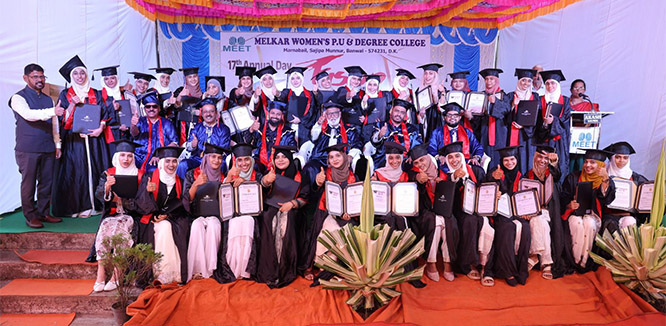
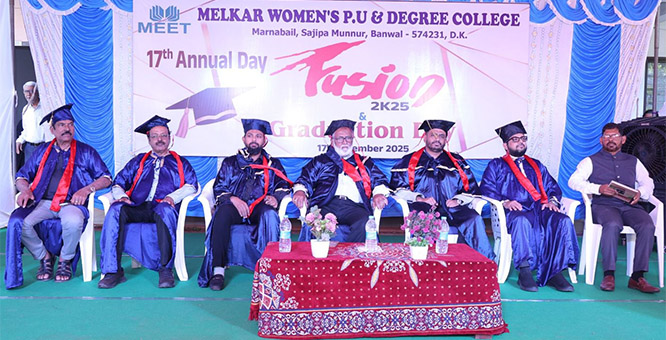
Melkar, Dec 17: The 17th Annual Day and Graduation Ceremony of Melkar Women’s PU and Degree College, themed “Fusion-2K25,” was celebrated with dignity and enthusiasm, marking a significant milestone in the institution’s academic journey. The programme reflected the college’s steadfast commitment to academic excellence, character building, and the holistic development of students.

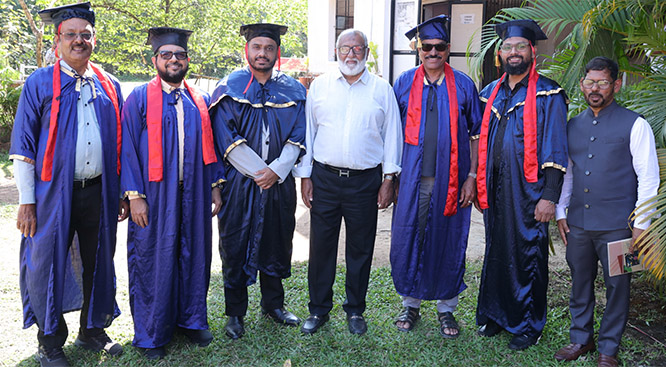
The event was inaugurated by Mr. Asif Mohammed, whose presence greatly enriched the occasion. The celebration was further graced by the chief guests Mr. P. B. Ahmed Mudassir and Mr. Nissar Fakeer Mohammed, along with the distinguished guests of honour Mr. B. A. Nazeer and Mr. Ibrahim Gadiyar. In their inspiring addresses, the guests encouraged the graduating students and appreciated the dedicated efforts of the management, faculty, and students.

The annual report was presented by the Principal, Mr. Abdul Majeed S, highlighting the institution’s academic progress, notable achievements, and extracurricular accomplishments during the academic year.

The presidential address was delivered by the esteemed Chairman of Melkar Women’s PU and Degree College, Dr. Haji S. M. Rasheed, who emphasized the vital role of education in empowering women and shaping responsible citizens. He also stressed the importance of discipline, dedication, and perseverance in achieving success.

Cultural programmes and academic recognitions formed an integral part of the celebration, showcasing the talents and achievements of the students. The graduation ceremony was a proud moment for the outgoing students as they were formally conferred degrees and wished success in their future endeavours.

Ms. Mashmooma Fathima served as the Master of Ceremonies. The welcome address was delivered by Ms. Fathima Nida, and the programme concluded with a vote of thanks proposed by Ms. Ayisha Suhana.

The event successfully achieved its objectives and was highly appreciated by the guests and attendees.

melkar3.jpg

melkar2.jpg

Comments

Add new comment

  • Coastaldigest.com reserves the right to delete or block any comments.
  • Coastaldigset.com is not responsible for its readers’ comments.
  • Comments that are abusive, incendiary or irrelevant are strictly prohibited.
  • Please use a genuine email ID and provide your name to avoid reject.