



Snub for Imran Khan: No US welcome at airport, takes metro to Pakistan envoy’s house

Agencies
July 22, 2019

Washington/Islamabad, Jul 22: With his country in financial doldrums, Khan made it a point to travel by a commercial flight, Qatar Airways, instead of a private jet, to cut down expenses.
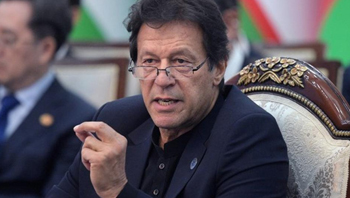
When his flight touched down at Dulles airport, reportedly there was no high ranking US administration official to welcome him.

Later, Khan took a metro ride to the Pakistani envoy’s house.

Social media was awash with speculation that Khan had been snubbed by the US administration, and that the Pakistani government had offered to pay $250,000 for the State Department to arrange an official welcome/protocol of the visiting Pakistani premier, but it was refused.

Pakistan Foreign Minister Shah Mehmood Qureshi was at the airport to receive Khan and also accompanied him on the metro ride.

Acting Chief of Protocol, Mary-Kate Fisher, who had welcomed the Pakistan Prime Minister at the airport, accompanied him on the metro ride.

The State Department later said the Acting Chief of Protocol had received the visiting Prime Minister, “as is standard for an Official Working Visit to the White House”.

Imran Khan, who is staying at the official residence of the Pakistani Ambassador to the US, Asad Majeed Khan, is to meet US President Donald Trump on July 22.

Khan, who was lustily greeted by members of the Pakistani expatriate community, later met with the Pakistani business community.

During his three-day visit, Khan is also to meet IMF acting chief David Lipton and World Bank President David Malpass.

Chief of the Army Staff Gen. Qamar Javed Bajwa and the Director General of Inter-Services Intelligence (ISI) are accompanying Khan to the US.

The Pakistan Embassy in Washington has hired the services of top lobbying firm Holland & Knight to help advance the country’s interests in the US.

His visit comes as Pakistan has received a $6 billion bailout from the International Monetary Fund (IMF) despite concerns expressed by the US.

According to the White House, Khan’s visit will focus on strengthening cooperation between Washington and Islamabad to bring peace, stability and economic prosperity to a region that has seen far too much conflict.

Comments

Abrar Lahore
 - 
Tuesday, 23 Jul 2019

1)    he was on family trip to United States. not official trip.
2)    If there is no official work, foreign leaders have to pay money to US govt to get official welcome. Khan did not waste pakitan’s public money. He decided not to pay.

Mr Frank
 - 
Tuesday, 23 Jul 2019

Welcome or not welcome will not change anyones good work in office.Pakistan recieved 6 billion from IMF where as India is loosing IMF funding bcoz of our violent culture of mobing lyching raping killings.

Add new comment

  • Coastaldigest.com reserves the right to delete or block any comments.
  • Coastaldigset.com is not responsible for its readers’ comments.
  • Comments that are abusive, incendiary or irrelevant are strictly prohibited.
  • Please use a genuine email ID and provide your name to avoid reject.
News Network
February 1,2026

Bengaluru, Feb 1: For travelers landing at Kempegowda International Airport (KIA), the sleek, wood-paneled curves of Terminal 2 promise a world-class welcome. But the famed “Garden City” charm quickly withers at the curb. As India’s aviation sector swells to record numbers—handling over 43 million passengers in Bengaluru alone this past year—the “last mile” has turned into a marathon of frustration.

The Bengaluru Logjam: Rules vs Reality

While the city awaits the 2027 completion of the Namma Metro Blue Line, the interim has been chaotic. Recent “decongestion” rules at Terminal 1 have pushed app-based cab pickups to distant parking zones, forcing weary passengers into a 20-minute walk with luggage.

“I landed after ten months away and felt like a stranger in my own city,” says Ruchitha Jain, a Koramangala resident. “My driver couldn’t find me, staff couldn’t guide me, and the so-called ‘Premium’ lane is just a fancy tax on convenience.”

•    The Cost of Distance: A 40-km cab ride can now easily cross ₹1,500, driven by demand pricing and airport surcharges.

•    The Bus Gap: While Vayu Vajra remains a lifeline, its ₹300–₹400 fare is often cited as the most expensive airport bus service in the country.

A National Pattern of Disconnect

The struggle is not unique to Karnataka. From Chennai’s coast to Hyderabad’s plateau, India’s airports tell a familiar story: brilliant runways, broken exits.

City:    Primary Issue   |    Recent Development

Bengaluru:    Cab pickup restrictions & distance  |    App-based taxis shifted to far parking zones; long walks and fare spikes reported

Chennai:    Multi-Level Parking (MLCP) hike  |    Passengers report 40-minute walks to reach cab pickup points

Hyderabad:    “Taxi mafia” & touting  |    Over 440 touting cases reported; security presence intensified

Mumbai:    Fare scams  |     Tourists charged ₹18,000 for just 400 metres, triggering police action

In Hyderabad, travelers continue to battle entrenched local groups that intimidate Uber and Ola drivers, pushing passengers toward overpriced private taxis. Chennai flyers, meanwhile, complain that reaching the designated pickup zones now takes longer than short-haul flights from cities like Coimbatore.

The ‘Budget Day’ Hope

As Finance Minister Nirmala Sitharaman presents the Union Budget 2026 today, the aviation sector is watching closely. With the government’s renewed emphasis on multimodal integration, there is cautious hope for funding toward seamless airport-metro-bus hubs.

The vision is clear: a future where planes, trains, and metros speak the same language. Until then, passengers at KIA—and airports across India—will continue to discover that the hardest part of flying isn’t the thousands of kilometres in the air, but the last few on the ground.

Comments

Add new comment

  • Coastaldigest.com reserves the right to delete or block any comments.
  • Coastaldigset.com is not responsible for its readers’ comments.
  • Comments that are abusive, incendiary or irrelevant are strictly prohibited.
  • Please use a genuine email ID and provide your name to avoid reject.
News Network
January 23,2026

oscar.jpg

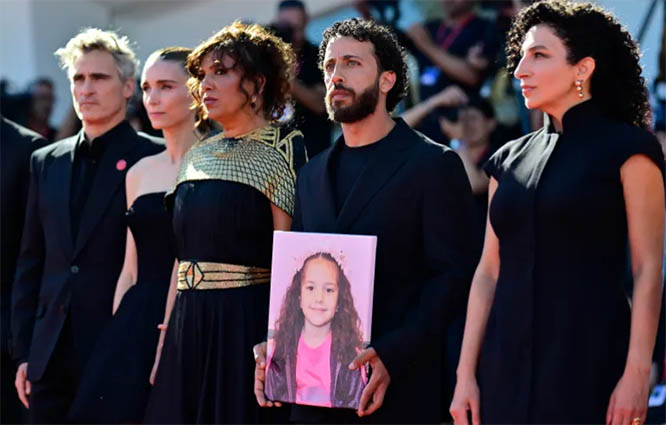
The Voice of Hind Rajab, inspired by the tragic final moments of a young Palestinian girl killed by Israeli fire in Gaza, has been nominated for an Academy Award in the Best International Feature Film category.

Directed by Tunisian filmmaker Kaouther Ben Hania, the film recounts the true story of five-year-old Hind Rajab, who lost her life in January 2024 while fleeing Israeli bombardment with her family.

The film features the real audio of Hind’s desperate call to the Palestinian Red Crescent Society, where she pleaded for help moments before the vehicle she was in was struck by 355 bullets.

The haunting narrative begins with a brief call made from the besieged Tel al-Hawa neighborhood of Gaza, where gunfire and armored vehicles drowned out every sound.

After witnessing the brutal killing of her family, she made a trembling call, her voice reduced to a whisper as she spoke of the massacre and her unbearable loneliness as the sole survivor.

Premiering at the Venice International Film Festival in September 2025, The Voice of Hind Rajab garnered widespread acclaim, receiving a record-setting 23-minute standing ovation and the Silver Lion Grand Jury Prize, the festival’s second-highest honor.

In her acceptance speech, Ben Hania dedicated the film to humanitarian workers and first responders in Gaza, emphasizing that Hind's voice symbolizes countless civilians affected by war.

She aims to give voice to victims often reduced to mere statistics, highlighting the broader suffering of civilians in war zones.

The film’s Oscar nomination underscores its powerful storytelling and ethical approach to depicting real-life tragedy, making it a crucial piece of contemporary cinema.

It serves not only as a narration of individual tragedy but also as an artistic and documentary response to the silence and censorship that often overshadow West Asian struggles and wars.

Using an innovative method she calls docufiction, Ben Hania bridges unvarnished reality and narrative structure, creating a work that is both artistically valuable and socially impactful.

Born in 1977 in Sidi Bouzid—later the epicenter of the Arab revolution—her background profoundly influenced her worldview and artistic approach.

She is a graduate of the Higher School of Audiovisual Arts of Tunis, Pantheon-Sorbonne University, and La Fémis in Paris, where her studies equipped her with the technical and theoretical tools needed to address complex subjects. 

Comments

Add new comment

  • Coastaldigest.com reserves the right to delete or block any comments.
  • Coastaldigset.com is not responsible for its readers’ comments.
  • Comments that are abusive, incendiary or irrelevant are strictly prohibited.
  • Please use a genuine email ID and provide your name to avoid reject.