



Curb terror funding by Oct or face action: FATF to Pak

Agencies
June 22, 2019

Washington, Jun 22: Pakistan has failed to complete its action plan on terror financing, the Financial Action Task Force (FATF) said on Friday, warning Islamabad to meet its commitment by October or face action, which could possibly lead to the country getting blacklisted.
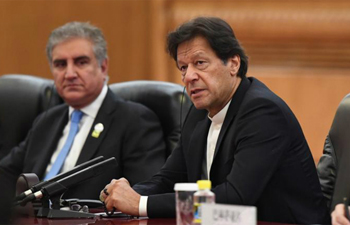
The Paris-based global body is working to curb terrorism financing and money laundering and has asked Pakistan to reassess the operation of banned terrorist outfits in the country.

In June last year, the FATF placed Pakistan on the grey list of countries whose domestic laws are considered weak to tackle the challenges of money laundering and terrorism financing.

In a statement issued at the conclusion of its Plenary meeting in Orlando, Florida, the FATF expressed concern "that not only did Pakistan fail to complete its action plan items with January deadlines, it also failed to complete its action plan items due May 2019".

The FATF "strongly" urges Pakistan to swiftly complete its action plan by October 2019 when the last set of action plan items are set to expire.

"Otherwise, the FATF will decide the next step at that time for insufficient progress," the international financial body said leaving a strong warning to Pakistan.

The FATF said Pakistan had taken steps towards improving its AML/CFT (anti-money laundering/combating the financial terrorism) regime, including the recent development of its terror funding risk assessment addendum.

However, it does not demonstrate a proper understanding of Pakistan's transnational terror funding risk.

Reacting to the FATF's warning, Pakistan on Friday said it was committed to taking measures needed to implement the action plan agreed with the FATF to come out of the grey list.

"The Government of Pakistan reiterates its commitment to take all necessary measures to ensure completion of the Action Plan in a timely manner," the Ministry of Finance said in a statement.

Noting that the Plenary meeting of the FATF took place at Orlando from June 16 to 21, it said the meeting reviewed the compliance of a number of countries, including Pakistan with the international standards on Anti-Money Laundering and Counter Financing of Terrorism (AML-CFT).

FATF reviewed progress made by Pakistan towards the implementation of the Action Plan and acknowledged the steps taken by Pakistan to improve its AML/CFT regime and highlighted the need for further actions for implementing the Action Plan, the ministry said in a statement.

The ministry said that the FATF will undertake the next review of Pakistan's Progress in October 2019.

Pakistan should continue to work on implementing its action plan to address its strategic deficiencies, including by adequately demonstrating its proper understanding of the terror funding risks posed by the terrorist groups and conducting supervision on a risk-sensitive basis, the FATF said.

It should demonstrate that remedial actions and sanctions are applied in cases of AML/CFT violations and that these actions have an effect on AML/CFT compliance by the financial institution, it said.

It asked Pakistan to demonstrate that competent authorities are cooperating and taking action to identify and take enforcement action against illegal money or value transfer services (MVTS).

It also asked Pakistan to show that authorities are identifying cash couriers and enforcing controls on illicit movement of currency and understanding the risk of cash couriers being used for terror funding.

Pakistan should improve inter-agency coordination including between provincial and federal authorities on combating terror funding risks and demonstrate that law enforcement agencies are identifying and investigating the widest range of terror funding activity, it said.

It should demonstrate that terror funding investigations and prosecutions target designated persons and entities, and persons and entities acting on behalf or at the direction of the designated persons or entities, it said.

The FATF asked Pakistan to demonstrate terror funding prosecutions result in effective, proportionate and dissuasive sanctions and enhancing the capacity and support for prosecutors and the judiciary.

Pakistan need to effectively implement targeted financial sanctions (supported by a comprehensive legal obligation) against all 1267 and 1373 designated terrorists and those acting for or on their behalf, including preventing the raising and moving of funds, identifying and freezing assets (movable and immovable), and prohibiting access to funds and financial services, it said.

The FATF said Pakistan needed to demonstrate enforcement against TFS violations, including administrative and criminal penalties and provincial and federal authorities cooperating on enforcement cases.

It should demonstrate that facilities and services owned or controlled by a designated person are deprived of their resources and the usage of the resources, it said.

The FATF currently has 36 members with voting powers and two regional organisations, representing most of the major financial centres in all parts of the globe.

On May 3 last year, former Finance Minister Arun Jaitley said India will ask the FATF to put Pakistan on a blacklist of countries that fail to meet international standards in stopping financial crime.

China is set to secure the FATF presidency next year while Saudi Arabia representing the Gulf Cooperation Council is to become a full FATF member.

Turkey was the only member that stood by Pakistan despite a strong campaign launched by the US, the UK, India and Europe.


Comments

Add new comment

  • Coastaldigest.com reserves the right to delete or block any comments.
  • Coastaldigset.com is not responsible for its readers’ comments.
  • Comments that are abusive, incendiary or irrelevant are strictly prohibited.
  • Please use a genuine email ID and provide your name to avoid reject.
News Network
November 26,2025

students.jpg

Bengaluru, Nov 26: Karnataka is taking its first concrete steps towards lifting a three-decade-old ban on student elections in colleges and universities. Deputy Chief Minister D.K. Shivakumar announced Wednesday that the state government will form a small committee to study the reintroduction of campus polls, a practice halted in 1989 following incidents of violence.

Speaking at a 'Constitution Day' event organised by the Karnataka Congress, Mr. Shivakumar underscored the move's aim: nurturing new political leadership from the grassroots.

"Recently, (Leader of the Opposition in Lok Sabha) Rahul Gandhi wrote a letter to me and Chief Minister (Siddaramaiah) asking us to think about restarting student elections," Shivakumar stated. "I'm announcing today that we'll form a small committee and seek a report on this."

Student elections were banned in Karnataka in 1989, largely due to concerns over violence and the infiltration of political party affiliates into campus life. The ban effectively extinguished vibrant student bodies and the pipeline of young leaders they often produced.

Mr. Shivakumar, who also serves as the Karnataka Congress president, said that former student leaders will be consulted to "study the pros and cons" of the re-introduction.

Acknowledging the history of the ban, he added, "There were many criminal activities taking place back then. We’ll see how we can conduct (student) elections by regulating such criminal activities."

The Deputy CM reminisced about his own journey, which began on campus. He recalled his political activism at Sri Jagadguru Renukacharya College leading to his first Assembly ticket in 1985 at the age of 23. "That's how student leadership was at the time. Such leadership has gone today. College elections have stopped," he lamented, adding that for many, college elections were "like a big movement" where leaders were forged.

The move, driven by the Congress high command's push to cultivate young talent, will face scrutiny from academics and university authorities who have, in the past, expressed concern that the return of polls could disrupt the peaceful academic environment and turn campuses into political battlegrounds.

Comments

Add new comment

  • Coastaldigest.com reserves the right to delete or block any comments.
  • Coastaldigset.com is not responsible for its readers’ comments.
  • Comments that are abusive, incendiary or irrelevant are strictly prohibited.
  • Please use a genuine email ID and provide your name to avoid reject.
News Network
November 24,2025

Mangaluru, Nov 24: The original departure time of 11.10 pm was a distant memory for scores of Dammam-bound passengers at Mangaluru International Airport last Friday night, as their Air India Express flight was abruptly cancelled at the eleventh hour, sparking hours of frustration and chaos.

The flight, IX 885, initially scheduled to depart at 11.10 pm on November 22, was subject to two back-to-back reschedules—first pushed to 11.45 pm and then significantly postponed to 1.40 am—before the final, crushing announcement of cancellation was made. For the travellers, many of whom are likely expatriate workers with tight schedules, the last-minute change marked the beginning of a distressing ordeal.

"There was no drinking water, no food, and absolutely no proper guidance. We were left stranded like refugees," complained a stranded passenger.

According to multiple passenger accounts, the airline's ground staff failed to provide adequate support or essential amenities following the cancellation. Complaints poured in about the total absence of drinking water, food provisions, and any reliable guidance from the carrier's representatives. Travellers alleged they were left stranded for a considerable period, with no immediate arrangements or clear communication offered regarding accommodation or alternative travel to send them back home.

The incident has highlighted serious concerns over the carrier's contingency planning and customer service protocols during flight disruptions at one of India's key international gateways. The airline is yet to issue a comprehensive statement addressing the alleged lapse in passenger care.
 

Comments

Add new comment

  • Coastaldigest.com reserves the right to delete or block any comments.
  • Coastaldigset.com is not responsible for its readers’ comments.
  • Comments that are abusive, incendiary or irrelevant are strictly prohibited.
  • Please use a genuine email ID and provide your name to avoid reject.
News Network
November 30,2025

The United Nations Committee against Torture (CAT) has condemned the Israeli regime for enforcing a policy of “organized torture” against Palestinians.

In a report published on Friday, CAT stated that the occupying regime enforces a deliberate policy of “organized and widespread torture and ill-treatment” against Palestinian abductees, particularly since October 7, 2023, when Israel launched its genocidal war on Gaza.

The committee expressed “deep concern over repeated severe beatings, dog attacks, electrocution, water-boarding, use of prolonged stress positions [and] sexual violence” inflicted on Palestinians.

Palestinian prisoners were degraded by “being made to act like animals or being urinated on,” systematically denied medical care, and subjected to excessive restraints, “in some cases resulting in amputation,” the report added.

CAT also condemned the routine application of “unlawful combatants law” to justify the prolonged detention without trial of thousands of Palestinian men, women, and children.

More than 10,000 Palestinians, including women and children, are currently held in Israeli prisons, according to Palestinian and international human rights groups, with 3,474 Palestinians in “administrative detention,” meaning they are imprisoned without trial for indefinite periods.

The report highlighted the “high proportion of children who are currently detained without charge or on remand,” noting that while Israel sets the age of criminal responsibility at 12, even younger children have been abducted.

Children designated as security prisoners face severe restrictions on family contact, may be subjected to solitary confinement, and are denied access to education, in clear violation of international law.

The committee further suggested that Israel’s policies across the Occupied Territories constitute collective torture against the Palestinian population.

“A range of policies adopted by Israel in the course of its continued unlawful presence in the Occupied Palestinian Territory amounts to cruel, inhuman or degrading living conditions for the Palestinian population,” the report said.

On Thursday, the Palestinian resistance movement Hamas condemned the systematic killing and torture of Palestinian abductees in Israeli prisons, urging international action to halt these abuses.

Citing human rights data, Hamas stated that 94 Palestinians have been killed in Israeli prisons since the start of Tel Aviv’s genocidal war on Gaza.

“This reflects an organized criminal approach that has turned these prisons into direct killing grounds to eliminate our people,” the resistance movement said.

Hamas called on the international community, the UN, and human rights organizations to immediately pressure Israel to end crimes against prisoners and uphold their rights as guaranteed by all international conventions and norms.

Comments

Add new comment

  • Coastaldigest.com reserves the right to delete or block any comments.
  • Coastaldigset.com is not responsible for its readers’ comments.
  • Comments that are abusive, incendiary or irrelevant are strictly prohibited.
  • Please use a genuine email ID and provide your name to avoid reject.