



Curb terror funding by Oct or face action: FATF to Pak

Agencies
June 22, 2019

Washington, Jun 22: Pakistan has failed to complete its action plan on terror financing, the Financial Action Task Force (FATF) said on Friday, warning Islamabad to meet its commitment by October or face action, which could possibly lead to the country getting blacklisted.
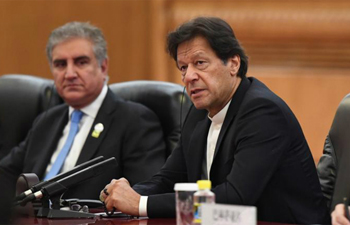
The Paris-based global body is working to curb terrorism financing and money laundering and has asked Pakistan to reassess the operation of banned terrorist outfits in the country.

In June last year, the FATF placed Pakistan on the grey list of countries whose domestic laws are considered weak to tackle the challenges of money laundering and terrorism financing.

In a statement issued at the conclusion of its Plenary meeting in Orlando, Florida, the FATF expressed concern "that not only did Pakistan fail to complete its action plan items with January deadlines, it also failed to complete its action plan items due May 2019".

The FATF "strongly" urges Pakistan to swiftly complete its action plan by October 2019 when the last set of action plan items are set to expire.

"Otherwise, the FATF will decide the next step at that time for insufficient progress," the international financial body said leaving a strong warning to Pakistan.

The FATF said Pakistan had taken steps towards improving its AML/CFT (anti-money laundering/combating the financial terrorism) regime, including the recent development of its terror funding risk assessment addendum.

However, it does not demonstrate a proper understanding of Pakistan's transnational terror funding risk.

Reacting to the FATF's warning, Pakistan on Friday said it was committed to taking measures needed to implement the action plan agreed with the FATF to come out of the grey list.

"The Government of Pakistan reiterates its commitment to take all necessary measures to ensure completion of the Action Plan in a timely manner," the Ministry of Finance said in a statement.

Noting that the Plenary meeting of the FATF took place at Orlando from June 16 to 21, it said the meeting reviewed the compliance of a number of countries, including Pakistan with the international standards on Anti-Money Laundering and Counter Financing of Terrorism (AML-CFT).

FATF reviewed progress made by Pakistan towards the implementation of the Action Plan and acknowledged the steps taken by Pakistan to improve its AML/CFT regime and highlighted the need for further actions for implementing the Action Plan, the ministry said in a statement.

The ministry said that the FATF will undertake the next review of Pakistan's Progress in October 2019.

Pakistan should continue to work on implementing its action plan to address its strategic deficiencies, including by adequately demonstrating its proper understanding of the terror funding risks posed by the terrorist groups and conducting supervision on a risk-sensitive basis, the FATF said.

It should demonstrate that remedial actions and sanctions are applied in cases of AML/CFT violations and that these actions have an effect on AML/CFT compliance by the financial institution, it said.

It asked Pakistan to demonstrate that competent authorities are cooperating and taking action to identify and take enforcement action against illegal money or value transfer services (MVTS).

It also asked Pakistan to show that authorities are identifying cash couriers and enforcing controls on illicit movement of currency and understanding the risk of cash couriers being used for terror funding.

Pakistan should improve inter-agency coordination including between provincial and federal authorities on combating terror funding risks and demonstrate that law enforcement agencies are identifying and investigating the widest range of terror funding activity, it said.

It should demonstrate that terror funding investigations and prosecutions target designated persons and entities, and persons and entities acting on behalf or at the direction of the designated persons or entities, it said.

The FATF asked Pakistan to demonstrate terror funding prosecutions result in effective, proportionate and dissuasive sanctions and enhancing the capacity and support for prosecutors and the judiciary.

Pakistan need to effectively implement targeted financial sanctions (supported by a comprehensive legal obligation) against all 1267 and 1373 designated terrorists and those acting for or on their behalf, including preventing the raising and moving of funds, identifying and freezing assets (movable and immovable), and prohibiting access to funds and financial services, it said.

The FATF said Pakistan needed to demonstrate enforcement against TFS violations, including administrative and criminal penalties and provincial and federal authorities cooperating on enforcement cases.

It should demonstrate that facilities and services owned or controlled by a designated person are deprived of their resources and the usage of the resources, it said.

The FATF currently has 36 members with voting powers and two regional organisations, representing most of the major financial centres in all parts of the globe.

On May 3 last year, former Finance Minister Arun Jaitley said India will ask the FATF to put Pakistan on a blacklist of countries that fail to meet international standards in stopping financial crime.

China is set to secure the FATF presidency next year while Saudi Arabia representing the Gulf Cooperation Council is to become a full FATF member.

Turkey was the only member that stood by Pakistan despite a strong campaign launched by the US, the UK, India and Europe.

Comments

Add new comment

  • Coastaldigest.com reserves the right to delete or block any comments.
  • Coastaldigset.com is not responsible for its readers’ comments.
  • Comments that are abusive, incendiary or irrelevant are strictly prohibited.
  • Please use a genuine email ID and provide your name to avoid reject.
News Network
February 1,2026

US President Donald Trump on Saturday claimed that the government of India led by Prime Minister Narendra Modi has made a deal to buy Venezuelan oil, as opposed to purchasing it from Iran.

"We've already made that deal, the concept of the deal," he told reporters on Air Force One.

Trump had imposed 25% tariffs on countries buying Venezuelan oil, including India, in March 2025. He had also hit India with tariffs for buying Russian oil, saying it was "funding" President Vladimir Putin's war against Ukraine.

Trump has said that the US has taken control of the oil-rich Venezuela after capturing former President Nicolas Maduro in January.

A fleet of 18 ships loaded with crude oil bound for refineries in Texas, Louisiana, and Mississippi in January, the most since December 2024, according to a report by the news agency Bloomberg.

Combined crude deliveries to the US will reach about 2,75,000 barrels a day, more than doubling volumes seen in December last year. Shipments to China, which averaged 4,00,000 barrels a day last year, fell to zero in January.

PM Modi, Venezuelan President Agree To Expand Ties

Prime Minister Narendra Modi and Venezuela's acting President Delcy Rodriguez spoke on Friday and agreed to take the bilateral relations to "new heights" in the years ahead.

It was the first phone call between the two leaders since the capture of Maduro and his wife by the US on January 3.

"Spoke with Acting President of Venezuela, Ms. Delcy Rodriguez. We agreed to further deepen and expand our bilateral partnership in all areas, with a shared vision of taking India-Venezuela relations to new heights in the years ahead," PM Modi said in a post on X.

A statement from Prime Minister Modi's office said the two leaders agreed to further expand and deepen the India-Venezuela partnership in all areas, including trade and investment, energy, digital technology, health, agriculture, and people-to-people ties.

They exchanged views on various regional and global issues of mutual interest and underscored the importance of their close cooperation for the Global South, the statement said.

Rodriguez also said that they discussed partnerships in the fields of agriculture, science and technology, mining, and tourism, as well as the pharmaceutical and automotive industries.

Comments

Add new comment

  • Coastaldigest.com reserves the right to delete or block any comments.
  • Coastaldigset.com is not responsible for its readers’ comments.
  • Comments that are abusive, incendiary or irrelevant are strictly prohibited.
  • Please use a genuine email ID and provide your name to avoid reject.
News Network
February 3,2026

manjeshwar.jpg

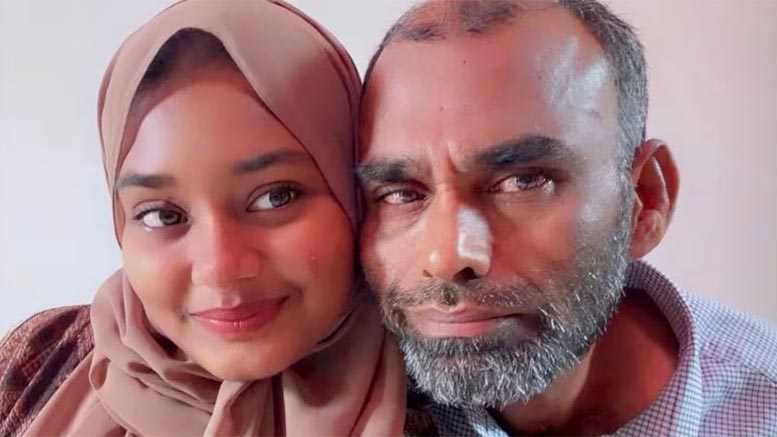
Kasaragod: An 18-year-old girl was stabbed to death at Thuminad in Manjeshwar panchayat on Monday, allegedly by her father following a domestic dispute. 

The victim has been identified as K U Mariyamath Jumaila. Her father, Umar Farooq, has been taken into police custody, Manjeshwar Station House Officer Inspector Ajith Kumar P said.

According to the police, Umar Farooq had been working in a West Asian country and returned home about three months ago. 

Family tensions reportedly escalated after his wife, Thahira (41), decided to seek a divorce and asked him to leave her life. Kasaragod district panchayat member Harshad Vorkady alleged that Umer was addicted to marijuana and frequently caused disturbances at home.

On Monday, Thahira asked Umar to come to her sister’s house in Thuminad to discuss the dispute. Jumaila accompanied her mother. 

Manjeshwar panchayat member Illiyas Thuminad said Umar arrived along with his brother, following which Thahira handed over gold ornaments and property documents to him and asked him to sever ties with her.

However, the police said a property dispute had been ongoing between Umar Farooq and his sister-in-law’s husband. During a heated argument, Umar allegedly attempted to attack the man with a sharp weapon. When Jumaila intervened to stop the assault, she was stabbed in the neck.

The teenager collapsed after bleeding profusely and was rushed to a private hospital in Mangaluru, where doctors declared her dead. Her body was later shifted to Mangalpady Taluk Hospital for post-mortem examination.

Jumaila was a former student of Sirajul Huda English Medium Higher Secondary School, Manjeshwar. 

Comments

Add new comment

  • Coastaldigest.com reserves the right to delete or block any comments.
  • Coastaldigset.com is not responsible for its readers’ comments.
  • Comments that are abusive, incendiary or irrelevant are strictly prohibited.
  • Please use a genuine email ID and provide your name to avoid reject.
News Network
February 1,2026

Bengaluru: The Karnataka High Court has refused to quash an investigation against a WhatsApp group administrator accused of allowing the circulation of obscene and offensive images depicting Hindutva politicians and idols in 2021.

Justice M Nagaprasanna observed that, prima facie, the ingredients of the offence under Section 295A of the Indian Penal Code were made out. “The offence under Section 295A of the IPC is met to every word of its ingredient, albeit prima facie,” the judge said.

The petitioner, Sirajuddin, a resident of Belthangady taluk in Dakshina Kannada district, had challenged the FIR registered against him at the CEN (Cyber, Economics and Narcotics) police station, Mangaluru, for offences under Section 295A of the IPC and Section 67 of the Information Technology Act. Section 295A relates to punishment for deliberate and malicious acts intended to outrage the religious feelings of any class of citizens.

According to the complaint filed by K Jayaraj Salian, also a resident of Belthangady taluk, he received a WhatsApp group link from an unknown source and was added to the group after accessing it. The group reportedly had six administrators and around 250 participants, where obscene and offensive images depicting Hindu deities and certain political figures were allegedly circulated repeatedly.

Sirajuddin was arrested in connection with the case and later released on bail on February 16, 2021. He argued before the court that he was being selectively targeted, while other administrators—including the creator of the group—were neither arrested nor investigated. He also contended that the Magistrate could not have taken cognisance of the offence under Section 295A without prior sanction under Section 196(1) of the CrPC.

Rejecting the argument, Justice Nagaprasanna held that prior sanction is required only at the stage of taking cognisance, and not at the stage of registration of the crime or during investigation.

The judge noted that the State had produced the entire investigation material before the court. “A perusal of the material reveals depictions of Hindu deities in an extraordinarily obscene, demeaning and profane manner. The content is such that its reproduction in a judicial order would itself be inappropriate,” the court said, adding that the material, on its face, had the tendency to outrage religious feelings and disturb communal harmony.

Observing that the case was still at the investigation stage, the court said it could not interdict the probe at this juncture. However, it expressed concern that the investigating officer appeared to have not proceeded uniformly against all administrators. The court clarified that if the investigation revealed the active involvement of any member in permitting the circulation of such content, they must also be proceeded against.

“At this investigative stage, any further observation by this Court would be unnecessary,” the order concluded.

Comments

Add new comment

  • Coastaldigest.com reserves the right to delete or block any comments.
  • Coastaldigset.com is not responsible for its readers’ comments.
  • Comments that are abusive, incendiary or irrelevant are strictly prohibited.
  • Please use a genuine email ID and provide your name to avoid reject.