Donald Trump offers 3-year protection for immigrants in exchange for border wall

Agencies
January 20, 2019

Washington, Jan 20: President Donald Trump on Saturday offered Democrats three years of deportation protections for some immigrants in exchange for $5.7 billion in border wall funding, a proposal immediately rejected by Democrats and derided by conservatives as amnesty.

Aiming to end the 29-day partial government shutdown, Trump outlined his plan in a White House address in which he sought to revive negotiations with Democrats, who responded that they would not engage in immigration talks until he reopened the government.

Trump proposed offering a reprieve on his attempts to end the Deferred Action for Childhood Arrivals (DACA) program and temporary protected status (TPS) for immigrants from some Latin American and African nations, in exchange for building hundreds of miles of barriers on the southern U.S. border and hiring thousands of new law enforcement agents to be deployed there.

"This is a common-sense compromise both parties should embrace," Trump said. He added: "The radical left can never control our borders. I will never let it happen."

But the initial reaction to the offer from Democrats and conservative border hawks was hostile, raising doubts that it would be enough to break an impasse that has resulted in 800,000 federal workers being furloughed or forced to work without pay and numerous government agencies, including the Department of Homeland Security, operating at minimal staffing levels.

The shutdown has become the longest in U.S. government history.

House Speaker Nancy Pelosi, D-Calif., dismissed the proposal as a "non-starter" and vowed that Democrats would pass legislation next week to reopen the government, putting the onus on the Republican-led Senate to follow suit.

"The president must sign these bills to reopen government immediately and stop holding the American people hostage with this senseless shutdown," Pelosi said. Senate Minority Leader Charles Schumer, D-N.Y., also said he opposed the plan.

Moving ahead on Trump's plan, Senate Majority Leader Mitch McConnell, R-Ky., announced that he would put the legislation on the Senate floor for a vote next week. And Trump heralded the package as a bipartisan, "compassionate response" that would offer humanitarian relief on the border and curb illegal immigration - while allowing the government to reopen.

McConnell laid out his plan in a private call with GOP senators late Saturday afternoon, where there was little dissent, according to an official who spoke on the condition of anonymity to discuss private deliberations.

In addition to its immigration provisions, the package - which McConnell could move to advance as early as Tuesday, although a Thursday vote appears more likely - would reopen all parts of the government that are closed. It also would provide emergency funding for U.S. areas hit by hurricanes, floods and other natural disasters.

The package would include an extension of the Violence against Women Act.

Senior White House aides cast the proposal as a good-faith effort from the president to incorporate ideas from Democrats during weeks of talks with a negotiating team led by Vice President Mike Pence and senior adviser Jared Kushner, the president's son-in-law.

In a briefing for reporters after Trump's remarks, the aides acknowledged that the bill faces a difficult path in the Senate, where it would require 60 votes to overcome a filibuster. But they predicted that ordinary Americans would view the plan as a compromise and pressure lawmakers to make the deal.

"I hope once people get past their initial statements, initial reaction, they will really look at the legislation that comes to the floor and see what it is - a sincere effort by the president of the United States to take ideas from both political parties," Pence said of lawmakers.

The shutting down of some 25 percent of the federal government was triggered by Trump's demand for $5.7 billion to build more than 200 miles of new wall along the U.S.-Mexico border. Pelosi has called the wall "immoral," and Democrats are refusing to offer more than $1.3 billion, maintaining existing funding levels for border barriers and fences. Democrats also frequently point out that Trump long claimed that Mexico would pay for the wall.

Trump's offer would not provide the path to permanent legal status - or citizenship - for DACA beneficiaries that many Democrats have sought in any immigration deal that dramatically ramps up border security. The DACA program, which began in 2012 under President Barack Obama, has provided renewable work permits to more than 700,000 undocumented young immigrants, known as "dreamers," who were brought into the country when they were children.

Trump appealed to "rank-and-file" Democratic lawmakers, hoping to peel them away from leadership, but many issued statements of opposition moments after his 13-minute speech.

Trump's proposal also was pilloried by some of the most influential border hawks, including conservative author and commentator Ann Coulter, who said in a tweet that the proposal was "amnesty."

"We voted for Trump and got Jeb!" she wrote, referring to former Florida governor Jeb Bush, who had a more moderate immigration position when campaigning for the presidency.

Rep. Steve King, R-Iowa, a longtime anti-immigration voice in the House, blasted Trump's offer, and the conservative news website Breitbart noted that most of the border would remain without a wall under the plan.

Pence vehemently disputed the suggestion that the plan was a betrayal of Trump's hard-line border agenda. "This is not an amnesty bill," he said, noting the deportation protections are temporary under the plan.

Some congressional Republicans tried to bolster the president.

"This bill takes a bipartisan approach to reopening the closed portions of the federal government," McConnell said in a statement.

Yet McConnell's decision to advance the bill to the Senate floor in the coming days marks a reversal of his promise not to hold votes on legislation that did not already have explicit support from the White House and Democratic leaders.

The calculus for the majority leader changed as the shutdown has dragged on, people familiar with his thinking said, pointing to Pelosi's letter to Trump on Wednesday suggesting he postpone his Jan. 29 State of the Union address until the government reopens. That moment, the sources said, convinced McConnell that Pelosi would not negotiate without further incentives.

McConnell spoke to Trump that afternoon, asking the president to add legislative sweeteners for Democrats, and Trump agreed, the official said.

Saturday's offer also marks a reversal for Trump, who had indicated for weeks that he would not include DACA in the talks.

Trump had said he was hoping the Supreme Court would hear an appeal to a lower court's injunction on his attempt to end the program; a high court ruling in his favor would give him more leverage.

But the Supreme Court signaled Friday that it might not take the case, meaning Trump cannot end the program for the time being.

On TPS, Trump has declared an end to a program that has offered hundreds of thousands of immigrants from El Salvador, Nicaragua, Haiti and Sudan the right to remain in the United States after they were uprooted from their home countries during natural disasters and other emergencies. But that move also has been enjoined by federal courts.

White House aides said the president's proposal was an echo of a bipartisan bill called the "Bridge Act," previously offered by Sens. Richard Durbin, D-Ill., and Lindsey Graham, R-S.C., that would have provided a three-year renewal of DACA-style protections from deportation - a period in which it was hoped lawmakers would pass a comprehensive immigration bill that included a permanent solution.

But Trump's proposal was far smaller in scope, covering fewer immigrants, and Democrats said his plan was akin to trading "permanent" border wall for "temporary" protections for immigrants that Trump could reverse in a second term.

Asked about that criticism, Pence replied: "I read that turn of phrase." He then paused and changed the subject.

Durbin issued a statement saying he opposed the offer.

After his speech, Trump joined a call with House Republicans, stressing his desire to finalize a deal with Democrats, according to an official on that call. Kevin McAleenan, the commissioner of Customs and Border Protection, also detailed to Republican lawmakers the administration's case for a wall, as well as for additional border security resources to "stop the flow of crime, drugs and trafficking coming over the southern border," the official said.

Other Trump aides said they think the president has the legal authority to declare a national emergency at the border, which could allow him to redirect Pentagon funding to a build a border wall, but they said Trump prefers a negotiated solution.

At the White House on Saturday morning, Trump continued to point to a new "caravan" of Central American migrants crossing into Mexico from Guatemala, which was featured on "Fox & Friends," a show the president watches regularly.

"If we had a wall, we wouldn't have a problem," Trump told reporters.

Ahead of his afternoon remarks from the White House, Trump oversaw a naturalization ceremony in the Oval Office for five new Americans, who recited the Oath of Allegiance, led by Homeland Security Secretary Kirstjen Nielsen. They had come to the United States from Iraq, Bolivia, Britain, South Korea and Jamaica.

The image of the new citizens raising their hands in the Oval Office was meant to underscore Trump's support of foreigners who enter the country through legal immigration programs, even as his administration has supported policies to slash overall immigration.

"Each of you worked hard for this moment," Trump told them. "You followed the rules, upheld our laws, and contributed to the strength and success and vitality of our nation."

Comments

Add new comment

  • Coastaldigest.com reserves the right to delete or block any comments.
  • Coastaldigset.com is not responsible for its readers’ comments.
  • Comments that are abusive, incendiary or irrelevant are strictly prohibited.
  • Please use a genuine email ID and provide your name to avoid reject.
News Network
January 20,2026

iran.jpg

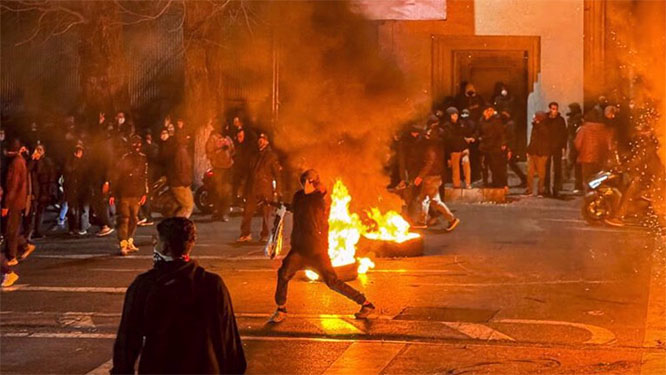
Iranian security and intelligence forces have captured more than 470 individuals in three provinces, identified as key figures behind the recent wave of violent unrest and terrorist activities linked to foreign-backed networks.

The Intelligence Ministry's provincial office in Khorasan Razavi announced on Monday the arrest of 192 armed terrorists, identified as the main agents behind recent riots in the region. 

According to an official statement, the detainees were involved in the killing of several security personnel and civilians, setting fire to mosques, public service facilities, and buses, as well as attacks on military and law enforcement centers.

The seized items from the group include several bulletproof vests, Kalashnikov rifles, hunting weapons, Winchester rifles, and various cold weapons such as daggers, swords, brass knuckles, tactical knives, crossbows, and chains.

Evidence indicates that some of the individuals were tied to hostile movements and terrorist organizations, with links overseas. Others were identified as members of violent criminal gangs, actively taking part in the unrest alongside their associates.

Simultaneously, in the western province of Lorestan, the IRGC announced the arrest of 134 individuals as the main leaders and influential field agents of a US-Israeli terrorist network.

The IRGC statement stated that these individuals formed terrorist cells during the recent unrest, committing "Daesh-like" acts.

They wounded security forces with firearms and cold weapons, and burned and destroyed public and private properties, including mosques, shops, banks, and private and public vehicles.

In the northwestern province of Zanjan, the police reported detaining 150 people identified as principal leaders and agents behind recent riots.

Authorities noted that these individuals were responsible for destroying public and private property and intentionally setting fire to vehicles in the province's squares.

Their crimes include shedding the blood of innocent people, destroying public and private property, attempting to enter military sites, disrupting public order, and spreading terror among citizens.

A variety of cold weapons were reportedly seized from the detainees.

What began late last month as peaceful protests over economic hardship across Iran turned violent after public statements by US and Israeli regime figures encouraged vandalism and disorder.

During the unrest, foreign-backed mercenaries rampaged through cities, killing security forces and civilians and damaging public property.

Comments

Add new comment

  • Coastaldigest.com reserves the right to delete or block any comments.
  • Coastaldigset.com is not responsible for its readers’ comments.
  • Comments that are abusive, incendiary or irrelevant are strictly prohibited.
  • Please use a genuine email ID and provide your name to avoid reject.
News Network
January 28,2026

ajit.jpg

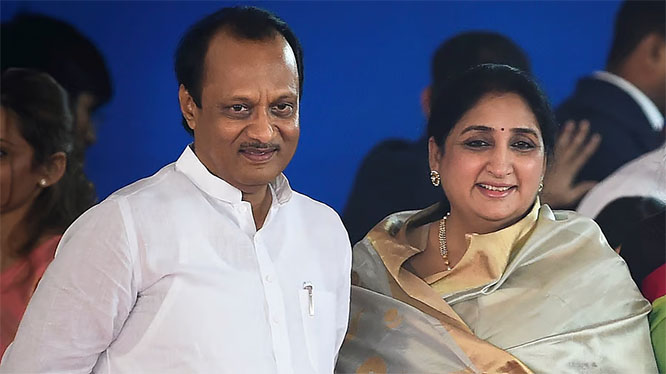
Mumbai: The sudden death of Maharashtra Deputy Chief Minister Ajit Pawar in a plane crash in his hometown of Baramati has plunged the state into political uncertainty, raising a pressing question for both the Nationalist Congress Party (NCP) and its rival faction, the Nationalist Congress Party (Sharadchandra Pawar): what next?

For the two factions that emerged after the dramatic split of June–July 2023, the moment marks their gravest challenge yet. Many believe the answer now rests with party founder Sharad Pawar.

Sharad Pawar, who founded the NCP in 1999 after parting ways with the Congress over Sonia Gandhi’s foreign origin, has already indicated his intention to step away from electoral politics once his Rajya Sabha term ends in April 2026.

Speaking at a public event in Baramati ahead of his 85th birthday on December 12, 2025, Pawar said he would not contest any further elections. “I have contested 14 elections. The younger generation needs to be given an opportunity,” he said, adding that he would decide later whether to seek another Rajya Sabha term.

Often described as the Bhishma Pitamah of Indian politics, Pawar also spoke of his gradual withdrawal from active leadership. “For the first 30 years, I handled everything. For the next 25–30 years, Ajit Dada handled responsibilities. Now, arrangements must be made for new leadership,” he said.

Ajit Pawar’s death has dramatically altered that transition, especially as he was working towards reunifying the two NCP factions.

“After the developments of June–July 2023 and the 2024 Lok Sabha and Vidhan Sabha elections, there were deep changes within the family and the party. In the last six months, serious efforts were made to reunite. Even workers from both sides wanted unity. This is a massive blow,” a Pawar family insider told DH over phone from Baramati.

Electoral outcomes over the past year reflected the split. In the 2024 Lok Sabha elections, NCP (SP) recorded the best strike rate in Maharashtra, winning eight of the 10 seats it contested. The NCP, by contrast, won just one seat out of four.

However, the trend reversed in the subsequent Vidhan Sabha elections, where the NCP emerged stronger, securing 41 of the 288 seats, while NCP (SP) managed only 10.

Within NCP (SP), Sharad Pawar’s daughter Supriya Sule serves as Working President, followed by leaders such as Rohit Pawar, state president Shashikant Shinde and former state chief Jayant Patil.

In the NCP, Praful Patel is the Working President and Raigad MP Sunil Tatkare heads the state unit. Ajit Pawar’s wife, Sunetra Pawar, is a Rajya Sabha MP, while their sons Parth and Jay are not actively involved in day-to-day politics. Parth Pawar briefly entered electoral politics in 2019 but lost the Lok Sabha election from Maval. Jay Pawar’s political debut was under consideration.

With Ajit Pawar gone, speculation has intensified that a member of the family may be asked to assume a larger role. For now, Sunetra Pawar is expected to play a key coordinating role in party affairs, alongside Patel and Tatkare.

The NCP continues to have several heavyweight leaders, including Chhagan Bhujbal, Hasan Mushrif, Dattatreya Bharne, Manikrao Kokate and Dhananjay Munde.

Ajit Pawar had already begun steps towards reconciliation between the two factions. While they contested the Pune and Pimpri-Chinchwad municipal elections separately, they later decided to fight the zilla parishad elections together under the ‘clock’ symbol—seen as the first formal step towards reunification.

Nagpur meet and party roadmap

Both NCP factions claim adherence to the ideology of ‘Shiv–Shahu–Phule–Ambedkar’. At the Rashtravadi Chintan Shivir held in Nagpur on September 19, 2025, the NCP reaffirmed its commitment to sarva dharma sambhav and discussed strengthening ties with the BJP “for the welfare and development of Maharashtra”.

In recent days, reports had suggested Ajit Pawar might return to the Maha Vikas Aghadi following the party’s poor performance in Pune municipal elections, but these claims were denied.

Big question for Maha Yuti

Ajit Pawar’s death also presents an immediate challenge for the Devendra Fadnavis-led Maha Yuti government. Pawar held crucial portfolios, including Finance, Planning and Excise. With the Budget Session approaching, appointing a new Finance Minister has become urgent.

Beyond numbers and portfolios, Maha Yuti has lost a swift decision-maker known for his administrative grip and political finesse—leaving a vacuum that will not be easy to fill.

Comments

Add new comment

  • Coastaldigest.com reserves the right to delete or block any comments.
  • Coastaldigset.com is not responsible for its readers’ comments.
  • Comments that are abusive, incendiary or irrelevant are strictly prohibited.
  • Please use a genuine email ID and provide your name to avoid reject.
News Network
January 20,2026

KCFabudhabi.jpg

KCF, a global socio-cultural organisation of Karnataka expatriates, is actively involved in education, humanitarian initiatives and community well-being across several countries. The awardees were selected following a structured evaluation of nominations by the Annual Council Program Committee, based on the depth, consistency and long-term impact of their social service.

One of the award recipients, Abdul Razak Haji, a prominent UAE-based entrepreneur from the Qamcon Group of Companies, was honoured for his significant contributions to society. Through both his professional journey and personal initiatives, he has supported numerous employees and families, while also extending assistance in education, housing for the underprivileged and various charitable causes, largely carried out quietly over the years. His award was presented earlier during the Annual Council Program held at the KCF Abu Dhabi office.

The second award was conferred on Latheef Kakkinje, a young social worker based in Abu Dhabi, in recognition of his active involvement in community engagement programmes, sports initiatives, talent festivals and family-oriented social activities. His consistent volunteering efforts and commitment to humanitarian causes were highly appreciated by the selection committee.

The award presentation ceremony for Latheef Kakkinje was held at the Zayed Cricket Stadium (Astro Turf Ground) in the presence of Kedumbady Ibrahim Saqafi, President of KCF UAE; Ibrahim, General Secretary; Kabeer Bayambady, President of KCF Abu Dhabi; Ummer Ishwaramangila, General Secretary; along with other members of the KCF Abu Dhabi cabinet.

Congratulating both awardees, KCF leaders reiterated the organisation’s commitment to recognising individuals who selflessly work for social upliftment and community service.

KCFabudhabi1.jpg

Comments

Add new comment

  • Coastaldigest.com reserves the right to delete or block any comments.
  • Coastaldigset.com is not responsible for its readers’ comments.
  • Comments that are abusive, incendiary or irrelevant are strictly prohibited.
  • Please use a genuine email ID and provide your name to avoid reject.