Erdogan gains greater powers as Turkey's new era begins

Agencies
July 9, 2018

Ankara, Jul 9: President Recep Tayyip Erdogan is to be sworn in for his second term as head of state on Monday, taking on greater powers than any Turkish leader for decades under a new system condemned by opponents as autocratic.

Erdogan, who has transformed Turkey by allowing Islam to play a greater role in public life and boosting the country's international stature, will take his oath almost two years after defeating a bloody attempted coup.

The inauguration in parliament after Erdogan's June election victory will be followed by a lavish ceremony at his palace attended by dozens of world leaders marking the transition to the new executive presidency system.

Erdogan will face immediate and major challenges in his second term, posed by an imbalanced if fast-growing economy and foreign policy tensions between the West and Turkey, a NATO member.

He has also pledged to end the state of emergency that has been in place since the failed July 2016 coup and has seen the biggest purge in the history of modern Turkey.

In what appeared to be the final emergency decree issued just one day before the inauguration, 18,632 public sector employees were ordered dismissed including thousands of soldiers and police officers.

After the inauguration, Erdogan will immediately turn to foreign policy, visiting northern Cyprus and Azerbaijan, both traditional first ports of call for a newly elected Turkish leader.

He will then head to more challenging encounters at a NATO summit in Brussels where he will meet with US counterpart Donald Trump.

The new system was agreed in a bitterly fought 2017 referendum, but the changes have been vehemently denounced by the opposition.

The president will sit at the top of a vertical power structure marked by a slimmed-down government with 16 ministries instead of 26 and multiple bodies reporting to him.

Emre Erdogan, professor of political science at Istanbul's Bilgi University, said the parliament's powers were "highly restricted" under the new system.

In one of the most significant changes, the EU affairs ministry, set up in 2011 to oversee Turkey's faltering bid to join the bloc, will be subsumed into the foreign ministry.

Prime Minister Binali Yildirim will on Monday go down in history as the 27th and final holder of a post that has existed since Mustafa Kemal Ataturk founded modern Turkey, and whose origins date back to the Ottoman Empire.

Erdogan's ruling Justice and Development Party (AKP) on Saturday nominated Yildirim as parliament speaker, an appointment likely to be rubber-stamped by the chamber on Thursday.

Those attending the ceremony at the presidential palace Monday evening will include Russian Prime Minister Dmitry Medvedev, in a new sign of the warm ties between Ankara and Moscow.

Among 22 heads of state attending will be Venezuelan President Nicolas Maduro, regarded with disdain by Washington but an ally of Erdogan, and Ukrainian President Petro Poroshenko.

The new cabinet, due to be announced at 1800 GMT, is expected to have a different look, especially after Erdogan said the government would include non-AKP figures.

The most intense attention will focus on who will be responsible for foreign policy and the economy.

Current Foreign Minister Mevlut Cavusoglu could, in theory, continue in his job but reports have said Erdogan may choose his spokesman, Ibrahim Kalin, or even spy chief Hakan Fidan to succeed him.

The markets will keep a close eye on economic appointments, keen to see a steady hand at the helm in a fast-growing economy dogged by double-digit inflation and a widening current account deficit.

Erdogan, who first came to power as premier in 2003, won 52.6 percent of ballots cast in June, higher than the 51.79 percent he garnered in the 2014 polls.

His closest rival, Muharrem Ince of the main opposition Republican People's Party (CHP), managed 30.6 percent, but the party is now locked in internal battles over its future leadership and direction.

The AKP failed to win a majority in parliament, taking 294 of the 600 seats, meaning it will need its allies in the Nationalist Movement Party (MHP), which has 49 seats, to ensure a majority.

Analysts have said that the partnership with nationalists could push the AKP into more hardline policies, notably on Kurdish issues and relations with the West.

Comments

Add new comment

  • Coastaldigest.com reserves the right to delete or block any comments.
  • Coastaldigset.com is not responsible for its readers’ comments.
  • Comments that are abusive, incendiary or irrelevant are strictly prohibited.
  • Please use a genuine email ID and provide your name to avoid reject.
News Network
February 4,2026

shettigar.jpg

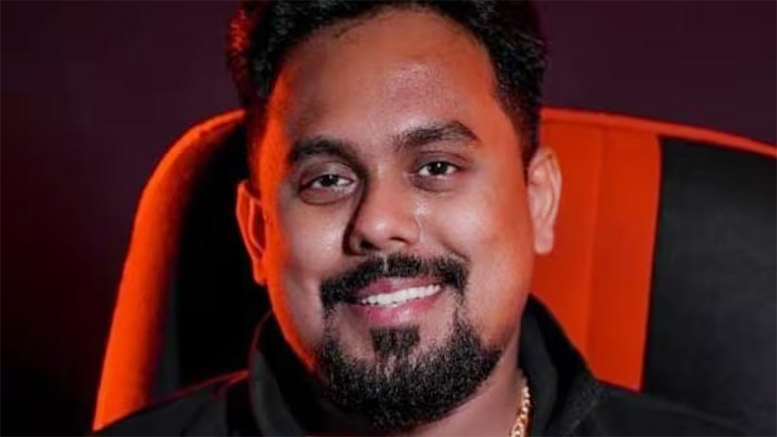
An Indian resident who won the Dh20 million (approximately Rs 50 crore) jackpot in Abu Dhabi's Big Ticket draw has told of his joy at sharing his life-changing fortune with a friend.

Shanthanu Shettigar, a shop manager in Muscat, regularly buys tickets for the monthly grand prize draw with one of his closest friends – and the pair won on February 3.

Mr Shettigar, 33, who is from Udyavar in Udupi district of the southern state of Karnataka and has lived in the Omani capital for eight years, said he was left speechless after learning of his success.

“When I first moved to Muscat, many of my colleagues were purchasing Big Ticket, which encouraged me to give it a try,” he said.

“I started buying tickets on my own, and later began sharing tickets with a close friend. The ticket that brought me this win was one we purchased together.”

“Like most people, I receive a lot of spam calls, and I was fully absorbed in my work as well. I knew the live draw was taking place tonight, but I never imagined my name would be announced,” he said.

“When I realised it was real and that I had won, I was honestly speechless. It still hasn’t fully sunk in, but I’m extremely happy.”

Mr Shettigar is not sure how he will spend his share of the money, but encouraged others to take part.

“This win was completely unexpected, so I want to take some time to think things through before deciding what to do next,” he said.

“I would definitely encourage others to participate with Big Ticket, whether with family or friends – you never know when your moment might come.”

The Big Ticket was established in 1992 with an initial first prize of Dh1 million. It is one of the most popular monthly raffles in the UAE.

It has transformed the lives of many people across the Emirates and beyond.

Entry to the Big Ticket Millionaire is Dh500. Tickets can be bought online or at counters at Zayed International Airport and Al Ain Airport.

Comments

Add new comment

  • Coastaldigest.com reserves the right to delete or block any comments.
  • Coastaldigset.com is not responsible for its readers’ comments.
  • Comments that are abusive, incendiary or irrelevant are strictly prohibited.
  • Please use a genuine email ID and provide your name to avoid reject.
News Network
February 3,2026

wind.jpg

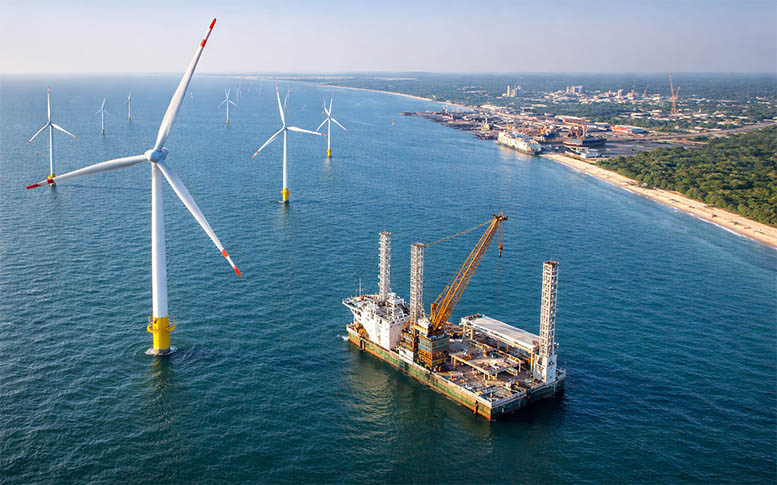
Dakshina Kannada MP Capt Brijesh Chowta has urged the Centre to give high priority to offshore wind energy generation along the Mangaluru coast, citing its strategic importance to India’s green energy and port-led development goals.

Raising the issue in the Lok Sabha under Rule 377, Chowta said studies by the National Institute of Oceanography have identified the Mangaluru coastline as part of India’s promising offshore wind ‘Zone-2’, covering nearly 6,490 sq km. He noted that the region’s relatively low exposure to cyclones and earthquakes makes it suitable for long-term offshore wind projects and called for its development as a dedicated offshore wind energy zone.

Highlighting the role of New Mangalore Port, Chowta said its modern infrastructure, multiple berths and heavy cargo-handling capacity position it well as a logistics hub for transporting and assembling large wind energy equipment.

He also pointed to the presence of major industrial units such as MRPL, OMPL, UPCL and the Mangaluru SEZ, which could serve as direct buyers of green power through power purchase agreements, improving project viability and speeding up execution.

With Karnataka’s peak power demand crossing 18,000 MW in early 2025, Chowta stressed the need to diversify renewable energy sources. He added that offshore wind projects in the Arabian Sea are strategically safer compared to the cyclone-prone Bay of Bengal.

Calling the project vital to India’s target of 500 GW of renewable energy by 2030, Chowta urged the Ministry of New and Renewable Energy to initiate resource assessments, pilot projects and stakeholder consultations at the earliest.

Comments

Add new comment

  • Coastaldigest.com reserves the right to delete or block any comments.
  • Coastaldigset.com is not responsible for its readers’ comments.
  • Comments that are abusive, incendiary or irrelevant are strictly prohibited.
  • Please use a genuine email ID and provide your name to avoid reject.
News Network
January 23,2026

Mangaluru: The Karnataka Government Polytechnic (KPT), Mangaluru, has achieved autonomous status from the All India Council for Technical Education (AICTE), becoming the first government polytechnic in the country to receive such recognition in its 78-year history. The status was granted by AICTE, New Delhi, and subsequently approved by the Karnataka Board of Technical Education in October last year.

Officials said the autonomy was conferred a few months ago. Until recently, AICTE extended autonomous status only to engineering colleges, excluding diploma institutions. However, with a renewed national focus on skill development, several government polytechnics across India have now been granted autonomy.

KPT, the second-largest polytechnic in Karnataka, was established in 1946 with four branches and has since expanded to offer eight diploma programmes, including computer science and polymer technology. The institution is spread across a 19-acre campus.

Ravindra M Keni, the first dean of the institution, told The Times of India that AICTE had proposed autonomous status for polytechnic institutions that are over 25 years old. “Many colleges applied. In the first round, 100 institutions were shortlisted, which was further narrowed down to 15 in the second round. We have already completed one semester after becoming an autonomous institution,” he said. He added that nearly 500 students are admitted annually across eight three-year diploma courses.

Explaining the factors that helped KPT secure autonomy, Keni said the institution has consistently recorded 100 per cent admissions and placements for its graduates. He also noted its strong performance in sports, with the college emerging champions for 12 consecutive years, along with active student participation in NCC and NSS activities.

Autonomous status allows KPT to design industry-oriented curricula, conduct examinations, prepare question papers, and manage academic documentation independently. The institution can also directly collaborate with industries and receive priority funding from AICTE or the Ministry of Education. While academic autonomy has been granted, financial control will continue to rest with the state government.

“There will be separate committees for examinations, question paper setting, boards of studies, and boards of examiners. The institution will now have the freedom to conduct admissions without government notifications and issue its own marks cards,” Keni said, adding that new academic initiatives would be planned after a year of functioning under the autonomous framework.

Comments

Add new comment

  • Coastaldigest.com reserves the right to delete or block any comments.
  • Coastaldigset.com is not responsible for its readers’ comments.
  • Comments that are abusive, incendiary or irrelevant are strictly prohibited.
  • Please use a genuine email ID and provide your name to avoid reject.