Ethiopia appoints its first female president

Agencies
October 26, 2018

Addis Ababa, Oct 26: Ethiopia on Thursday appointed a woman to the largely ceremonial position of president for the first time, further increasing female representation in the government of Africa's second most populous nation.

In a unanimous vote, Ethiopian lawmakers picked career diplomat Sahle-Work Zewde, 68, to replace Mulatu Teshome who resigned in unclear circumstances.

Ethiopia's reformist Prime Minister Abiy Ahmed last week appointed a slimline 20-person cabinet in which half the posts are held by women.

They include defence minister Aisha Mohammed and Muferiat Kamil who leads the newly-created Ministry of Peace, responsible for police and domestic intelligence agencies.

"If the current change in Ethiopia is headed equally by both men and women, it can sustain its momentum and realise a prosperous Ethiopia free of religious, ethnic and gender discrimination," Sahle-Work said Thursday.

Sahle-Work, who was born in the capital Addis Ababa and attended university in France, has been Ethiopia's ambassador to France, Djibouti, Senegal and the regional bloc, the Intergovernmental Authority on Development (IGAD).

Just prior to her appointment as president she was the UN's top official at the African Union. She is fluent in English and French as well as Amharic, Ethiopia's main language.

As president she is expected to serve two six-year terms.

The European Union hailed Sahle-Work as "a highly accomplished diplomat" calling her appointment "another sign of Ethiopia's path towards reform and internal cohesion," the spokesperson for the EU's external action service said in a statement.

"Mulatu has shown us the way for change and hope, he has shown life continues before and after leaving power. I call on others to heed his example and be ready for change," said Sahle-Work in a speech to parliament.

Political power in Ethiopia is wielded by the prime minister with the president's role restricted to attending ceremonies and functions.

Nevertheless, Sahle-Work's position carries important symbolic weight and social influence.

"Government and opposition parties have to understand we are living in a common house and focus on things that unite us, not what divides us, to create a country and generation that will make all of us proud," she said.

"The absence of peace victimises firstly women, so during my tenure I will emphasise women's roles in ensuring peace and the dividends of peace for women."

Sahle-Work becomes Africa's only serving female head of state, albeit in a ceremonial role.

A handful of African countries have in the recent past been led by female presidents with executive powers, including Ellen Johnson Sirleaf in Liberia (2006-18) and Joyce Banda in Malawi (2012-14).

Banda was elevated to the presidency following the death in office of Bingu wa Mutharika, while Sirleaf won two elections before standing down earlier this year at the end of her constitutionally mandated terms.

Comments

Add new comment

  • Coastaldigest.com reserves the right to delete or block any comments.
  • Coastaldigset.com is not responsible for its readers’ comments.
  • Comments that are abusive, incendiary or irrelevant are strictly prohibited.
  • Please use a genuine email ID and provide your name to avoid reject.
News Network
January 23,2026

Mangaluru: The Karnataka Government Polytechnic (KPT), Mangaluru, has achieved autonomous status from the All India Council for Technical Education (AICTE), becoming the first government polytechnic in the country to receive such recognition in its 78-year history. The status was granted by AICTE, New Delhi, and subsequently approved by the Karnataka Board of Technical Education in October last year.

Officials said the autonomy was conferred a few months ago. Until recently, AICTE extended autonomous status only to engineering colleges, excluding diploma institutions. However, with a renewed national focus on skill development, several government polytechnics across India have now been granted autonomy.

KPT, the second-largest polytechnic in Karnataka, was established in 1946 with four branches and has since expanded to offer eight diploma programmes, including computer science and polymer technology. The institution is spread across a 19-acre campus.

Ravindra M Keni, the first dean of the institution, told The Times of India that AICTE had proposed autonomous status for polytechnic institutions that are over 25 years old. “Many colleges applied. In the first round, 100 institutions were shortlisted, which was further narrowed down to 15 in the second round. We have already completed one semester after becoming an autonomous institution,” he said. He added that nearly 500 students are admitted annually across eight three-year diploma courses.

Explaining the factors that helped KPT secure autonomy, Keni said the institution has consistently recorded 100 per cent admissions and placements for its graduates. He also noted its strong performance in sports, with the college emerging champions for 12 consecutive years, along with active student participation in NCC and NSS activities.

Autonomous status allows KPT to design industry-oriented curricula, conduct examinations, prepare question papers, and manage academic documentation independently. The institution can also directly collaborate with industries and receive priority funding from AICTE or the Ministry of Education. While academic autonomy has been granted, financial control will continue to rest with the state government.

“There will be separate committees for examinations, question paper setting, boards of studies, and boards of examiners. The institution will now have the freedom to conduct admissions without government notifications and issue its own marks cards,” Keni said, adding that new academic initiatives would be planned after a year of functioning under the autonomous framework.

Comments

Add new comment

  • Coastaldigest.com reserves the right to delete or block any comments.
  • Coastaldigset.com is not responsible for its readers’ comments.
  • Comments that are abusive, incendiary or irrelevant are strictly prohibited.
  • Please use a genuine email ID and provide your name to avoid reject.
News Network
February 3,2026

manjeshwar.jpg

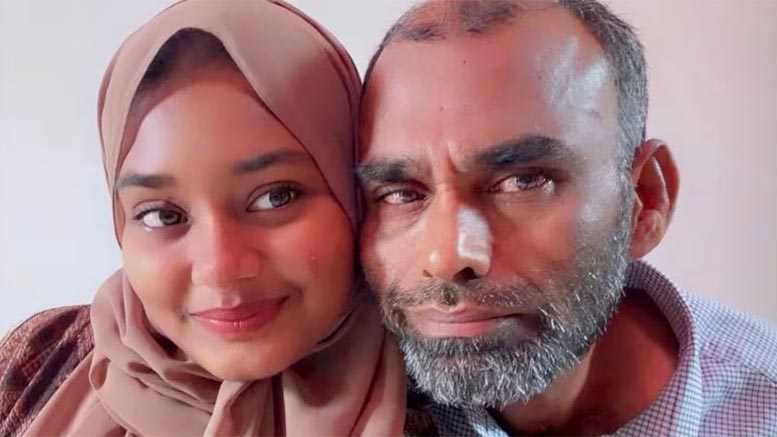
Kasaragod: An 18-year-old girl was stabbed to death at Thuminad in Manjeshwar panchayat on Monday, allegedly by her father following a domestic dispute. 

The victim has been identified as K U Mariyamath Jumaila. Her father, Umar Farooq, has been taken into police custody, Manjeshwar Station House Officer Inspector Ajith Kumar P said.

According to the police, Umar Farooq had been working in a West Asian country and returned home about three months ago. 

Family tensions reportedly escalated after his wife, Thahira (41), decided to seek a divorce and asked him to leave her life. Kasaragod district panchayat member Harshad Vorkady alleged that Umer was addicted to marijuana and frequently caused disturbances at home.

On Monday, Thahira asked Umar to come to her sister’s house in Thuminad to discuss the dispute. Jumaila accompanied her mother. 

Manjeshwar panchayat member Illiyas Thuminad said Umar arrived along with his brother, following which Thahira handed over gold ornaments and property documents to him and asked him to sever ties with her.

However, the police said a property dispute had been ongoing between Umar Farooq and his sister-in-law’s husband. During a heated argument, Umar allegedly attempted to attack the man with a sharp weapon. When Jumaila intervened to stop the assault, she was stabbed in the neck.

The teenager collapsed after bleeding profusely and was rushed to a private hospital in Mangaluru, where doctors declared her dead. Her body was later shifted to Mangalpady Taluk Hospital for post-mortem examination.

Jumaila was a former student of Sirajul Huda English Medium Higher Secondary School, Manjeshwar. 

Comments

Add new comment

  • Coastaldigest.com reserves the right to delete or block any comments.
  • Coastaldigset.com is not responsible for its readers’ comments.
  • Comments that are abusive, incendiary or irrelevant are strictly prohibited.
  • Please use a genuine email ID and provide your name to avoid reject.
News Network
January 23,2026

modIKERALA.jpg

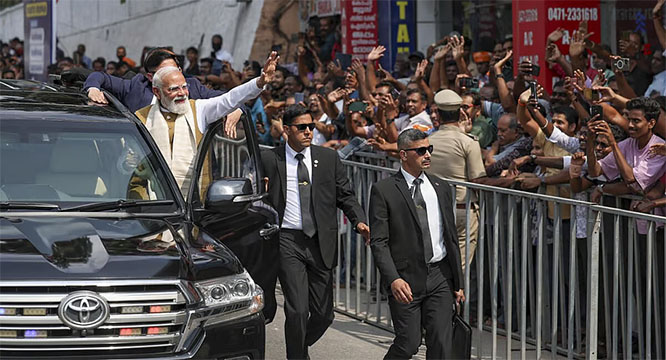
Prime Minister Narendra Modi, during his visit to Thiruvananthapuram on Friday, January 23, indicated that the Bharatiya Janata Party (BJP) is aiming to expand its political footprint in Kerala ahead of the Assembly elections scheduled in the coming months.

Speaking at a BJP-organised public meeting, Modi drew parallels between the party’s early electoral gains in Gujarat and its recent victory in the Thiruvananthapuram Municipal Corporation. The civic body win, which ended decades of Left control, was cited by the Prime Minister as a possible starting point for the party’s broader ambitions in the state.

Recalling BJP’s political trajectory in Gujarat, Modi said the party was largely insignificant before 1987 and received little media attention. He pointed out that the BJP’s first major breakthrough came with its victory in the Ahmedabad Municipal Corporation that year.

“Just as our journey in Gujarat began with one city, Kerala’s journey has also started with a single city,” Modi said, suggesting that the party’s municipal-level success could translate into wider electoral acceptance.

The Prime Minister alleged that successive governments led by the Left Democratic Front (LDF) and the United Democratic Front (UDF) had failed to adequately develop Thiruvananthapuram. He accused both fronts of corruption and neglect, claiming that basic infrastructure and facilities were denied to the capital city for decades.

According to Modi, the BJP’s control of the civic body represents a shift driven by public dissatisfaction with the existing political alternatives. He asserted that the BJP administration in Thiruvananthapuram had begun working towards development, though no specific details or timelines were outlined.

Addressing the gathering at Putharikandam Maidan, Modi said the BJP intended to project Thiruvananthapuram as a “model city,” reiterating his party’s commitment to governance-led change.

The Prime Minister’s visit to Kerala also included the inauguration of several development projects and the flagging off of new train services, as the BJP intensifies its political outreach in the poll-bound state.

Comments

Add new comment

  • Coastaldigest.com reserves the right to delete or block any comments.
  • Coastaldigset.com is not responsible for its readers’ comments.
  • Comments that are abusive, incendiary or irrelevant are strictly prohibited.
  • Please use a genuine email ID and provide your name to avoid reject.