Ethiopian Airlines Pilot Cried 'Pull Up' Before 737 Max Crash, Preliminary Report Blames Boeing

Agencies
April 5, 2019

Apr 5: Ethiopian Airlines' doomed 737 MAX jet hit excessive speed and was forced downwards by a wrongly-triggered automation system as pilots wrestled to regain control, a preliminary report into the crash that has shaken the aviation world showed on Thursday. Three times the captain, Yared Getachew, cried "pull up", before the Boeing Co plane plunged into a field six minutes after takeoff from Addis Ababa, killing all 157 passengers and crew, said the report by Ethiopian investigators.

The March 10 disaster, and parallels with another 737 MAX crash in Indonesia last October in which 189 people died, has led to the worldwide grounding of Boeing's flagship model.

It has also brought uncomfortable scrutiny over new software, pilot training and regulatory rigour.

The report leaves unanswered questions, aviation experts said, over whether crew followed guidance not to restore power to a troublesome anti-stall system following sensor damage, possibly caused by a bird strike. The plane was also left at unusually high thrust throughout the flight, data suggested.

While the Ethiopian Civil Aviation Authority's Accident Prevention and Investigation Bureau had a remit to investigate rather than blame, it implicitly pointed the finger at Boeing by defending the pilots, recommending the U.S. company fix its control systems, and saying regulators must be certain before allowing the MAX back in the air.

"The crew performed all the procedures repeatedly provided by the manufacturer but was not able to control the aircraft," Transport Minister Dagmawit Moges told a news conference.

"Since repetitive uncommanded aircraft nose down conditions are noticed ... it is recommended that the aircraft control system shall be reviewed by the manufacturer."

Boeing, the world's biggest planemaker and one of the United States' most important exporters with a $500 billion order book for the MAX, says a new software fix for its MCAS anti-stall system will enable pilots to always override if necessary.

Responding to the preliminary report, Boeing Chief Executive Officer Dennis Muilenburg said: "As pilots have told us, erroneous activation of the MCAS function can add to what is already a high workload environment."

"It's our responsibility to eliminate this risk. We own it and we know how to do it," Muilenburg said in a statement.

FRAGMENTS IN A CRATER

According to the preliminary report, an alarm indicating excess speed was heard on the cockpit voice reporter as the jet reached 500 knots (575 miles per hour) - well above operational limits.

The plane had faulty "angle of attack" sensor readings, its nose was pushed down automatically, and the crew lost control despite following recommended instructions, it said.

"Most of the wreckage was found buried in the ground," the report said, indicating the strength of the impact on an arid field in an agricultural zone. No bodies were recovered, only charred fragments among the debris in a crater.

A final report by Ethiopian authorities aided by air-safety experts from the United States and Europe is due to be published within a year.

Boeing has seen billions wiped off its market value since the crash, but its shares rose 2.9 percent on Thursday. Morgan Stanley said the report of flight control problems, whichBoeing was already trying to fix, meant a "worst case scenario" of a new cause was probably off the table.

The software update "along with the associated training and additional educational materials that pilots want in the wake of these accidents, will eliminate the possibility of unintended MCAS activation and prevent an MCAS-related accident from ever happening again," Muilenburg's statement said.

Families of the victims, regulators and travellers around the world have been waiting to find out to what extent Boeing technology or the pilots' actions played a role.

The preliminary report into the crash of a Lion Air 737 MAX in Indonesia suggested pilots also lost control after grappling with the MCAS software, a new automated anti-stall feature that repeatedly lowered the nose based on faulty sensor data.

"Whatever the issues were, they better be 110 percent sure about their resolution, otherwise the 157 lives lost would have been for nothing if something like this happens again," said one woman, who lost her father in the Ethiopian crash, asking not to be identified. "This is a lesson to not take shortcuts in order to try and save bucks."

'PROFITS OVER SAFETY'?

The U.S. Federal Aviation Administration regulator, under fire for its certification of the MAX, cautioned the inquiry was not over. "As we learn more about the accident and findings become available, we will take appropriate action," it said.

Boeing may press to know more about how crew members responded to problems triggered by the faulty data. The New York Times quoted the Ethiopian government's Dagmawit as saying pilots turned MCAS off and on, which is not the step recommended in procedures telling crew to leave it off once disabled.

With bereaved families angry and confused, relatives of an American woman killed in the Ethiopian crash, Samya Stumo, filed the first lawsuit on behalf of a U.S. victim in Chicago. The complaint named Boeing and Rosemount Aerospace Inc, the manufacturer of the angle of attack sensor, as defendants.

Stumo is the niece of consumer activist Ralph Nader, who called for a boycott of the 737 MAX on Thursday.

Pilots around the world were watching closely.

"If the preliminary report from the Ethiopian authorities is accurate, the pilots quickly identified the malfunction and applied the manufacturer's checklist," said Captain Jason Goldberg, spokesman for Allied Pilots Association, which represents American Airlines pilots.

"Following this checklist did not appear to allow the pilots to regain control of the aircraft."

But a former U.S. National Transportation Safety Board investigator questioned the aircraft's speed, which according to data in the report was left on a higher than usual setting. Aviation experts say the sensor fault should have required the crew to take manual control of the power since it would disrupt accurate speed readings in the cockpit.

"The report does not address information about unreliable airspeed procedures which should be considered," said Greg Feith, a former NTSB air safety investigator.

Comments

Add new comment

  • Coastaldigest.com reserves the right to delete or block any comments.
  • Coastaldigset.com is not responsible for its readers’ comments.
  • Comments that are abusive, incendiary or irrelevant are strictly prohibited.
  • Please use a genuine email ID and provide your name to avoid reject.
News Network
February 3,2026

Bengaluru: Following reports of fresh Nipah virus (NiV) cases in West Bengal and heightened vigilance across parts of Southeast Asia, the Karnataka Health Department has placed the state on high alert and activated emergency preparedness protocols.

Health officials said enhanced surveillance measures have been initiated after two healthcare workers in Barasat, West Bengal, tested positive for the virus earlier this month. While no cases have been reported in Karnataka so far, authorities said the state’s past exposure to Nipah outbreaks and high inter-state mobility warranted preventive action.

Officials have directed district health teams to intensify monitoring, particularly at hospitals and points of entry, and to ensure early detection and isolation of suspected cases.

High Mortality Virus with Multiple Transmission Routes

Nipah virus is a zoonotic disease that can spread from animals to humans and has a reported fatality rate ranging between 60 and 75 per cent. Fruit bats, also known as flying foxes, are the natural reservoirs of the virus and can transmit it by contaminating food sources with saliva or urine.

Known modes of transmission include:

•    Contaminated food: Consumption of fruits partially eaten by bats or raw date-palm sap
•    Animal contact: Exposure to infected pigs or other animals
•    Human-to-human transmission: Close contact with body fluids of infected persons, particularly in healthcare settings

Symptoms and Disease Progression

The incubation period typically ranges from 4 to 14 days, though delayed onset has also been reported. Early symptoms often resemble common viral infections, making prompt clinical suspicion critical.

•    Initial symptoms: Fever, headache, body aches, fatigue, sore throat
•    Progressive symptoms: Drowsiness, disorientation, altered mental state
•    Severe stage: Seizures, neck stiffness and acute encephalitis, which can rapidly progress to coma

Public Health Advisory

The Health Department has issued precautionary guidelines urging the public to adopt risk-avoidance practices to prevent any local spillover.

Do’s
•    Wash fruits thoroughly before consumption
•    Drink boiled and cooled water
•    Use protective equipment while handling livestock
•    Maintain strict hand hygiene

Don’ts
•    Avoid fruits found on the ground or showing bite marks
•    Do not consume beverages made from raw tree sap, including toddy
•    Avoid areas with dense bat populations
•    Do not handle sick or dead animals

Preparedness Measures

Officials confirmed that isolation wards are being readied in major government hospitals and that medical staff are being sensitised to identify early warning signs.

“There is no cause for panic, but there is a need for heightened vigilance,” a senior health official said, adding that there is currently no approved vaccine or specific antiviral treatment for Nipah, and care remains largely supportive.

Comments

Add new comment

  • Coastaldigest.com reserves the right to delete or block any comments.
  • Coastaldigset.com is not responsible for its readers’ comments.
  • Comments that are abusive, incendiary or irrelevant are strictly prohibited.
  • Please use a genuine email ID and provide your name to avoid reject.
News Network
January 31,2026

files.jpg

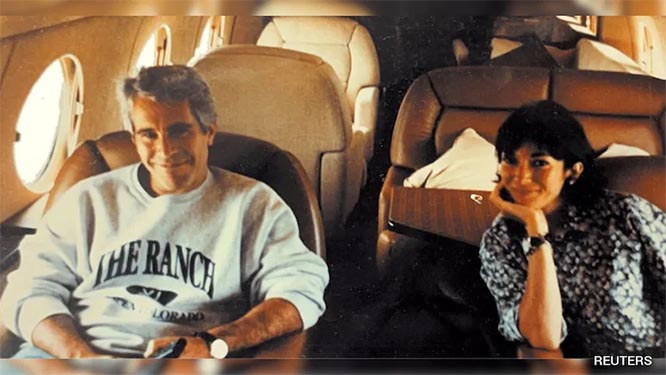
A fresh cache of files related to the investigation into the late convicted sex offender Jeffrey Epstein contains documents that reference President Donald Trump and other high-profile figures including Microsoft co-founder Bill Gates, Commerce Secretary Howard Lutnick and British billionaire Richard Branson.

Here are key details about mentions of the celebrities, none of whom have been accused of wrongdoing:

Donald Trump

The files included an FBI-compiled list of sexual assault allegations related to President Donald Trump -- many of them involving anonymous callers and unverified tips.

The allegations -- some secondhand -- were sent to the FBI's National Threat Operations Center which receives information by phone and electronically.

The document suggests that investigators followed up on a number of the tips. Some were deemed to lack credibility.

Trump has long denied any wrongdoing related to Epstein.

In a statement accompanying Friday's file dump, the Justice Department said: "Some of the documents contain untrue and sensationalist claims against President Trump that were submitted to the FBI right before the 2020 election. To be clear, the claims are unfounded and false."

Bill Gates

In a draft email among the documents, Epstein alleged Gates had engaged in extramarital affairs.

In the mail, Epstein wrote that his relationship with Gates had ranged from "helping Bill to get drugs, in order to deal with consequences of sex with russian girls, to facilitating his illicit trysts, with married women."

Richard Branson

Files show friendly relations between the two billionaires.

In an email sent to Epstein on Sept 11, 2013, Branson wrote "It was really nice seeing you yesterday. The boys in Watersports can't stop speaking about it! Any time you're in the area would love to see you. As long as you bring your harem!"

Elon Musk

The files contain numerous mail exchanges between Epstein and billionaire entrepreneur Elon Musk.

In November 2012, Epstein sent Musk an email asking "how many people will you be for the heli to island."

"Probably just Talulah and me. What day/night will be the wildest party on your island?" Musk replied.

Andrew Mountbatten-Windsor

The disgraced former prince invited Epstein to visit him at Buckingham Palace in September 2010 while the financier was making a trip to London.

An email exchange shows Epstein contacting Andrew to ask: "What time would you like me... we will also need... private time."

Andrew replied: "we could have dinner at Buckingham Palace and lots of privacy."

Howard Lutnick

Emails show that Epstein and businessman Lutnick -- currently Trump's commerce secretary -- made plans in December 2012 to lunch on Epstein's Caribbean island.

"We are heading towards you from St. Thomas" Lutnick's wife wrote to Epstein's secretary, asking where they should anchor.

Steve Tisch

Several mails suggested Epstein connected Steve Tisch, 76, producer of the movies "Forrest Gump" and "Risky Business" and the co-owner of the New York Giants football team, with multiple women.

In one exchange with Tisch, Epstein describes a woman as "russian, and rarely tells the full truth, but fun."

Zohran Mamdani's Mother, Filmmaker Mira Nair 

New York City Mayor Zohran Mamdani's mother, Mira Nair, attended an afterparty at convicted sex trafficker Ghislaine Maxwell's house for her 2009 film "Amelia", reveals a new set of Epstein files.

An email dated October 21, 2009, sent by publicist Peggy Siegal to Jeffrey Epstein, also surfaced in documents. The email, sent in the early hours, right after Siegal left the gathering, gives an insight into the afterparty. 

The party was also attended by former President Bill Clinton and Amazon CEO Jeff Bezos.

"Just left Ghislaine's townhouse...after party for film. Bill Clinton and Jeff Bezos were there...Jean Pigoni, director Mira Nair....etc," the email read.

The email described the reaction of guests to Nair's film as "tepid."

"Film received tepid reaction although women like it much more...Hillary Swank and Gen: at stupid party in Bloomingdales cheap sportwear department....very weird. Studio went for free party from store and windows for a month....Going to be in Wall Street 2 tomorrow ....more to come. xoxo Peg," the email read.

Comments

Add new comment

  • Coastaldigest.com reserves the right to delete or block any comments.
  • Coastaldigset.com is not responsible for its readers’ comments.
  • Comments that are abusive, incendiary or irrelevant are strictly prohibited.
  • Please use a genuine email ID and provide your name to avoid reject.
News Network
January 20,2026

iran.jpg

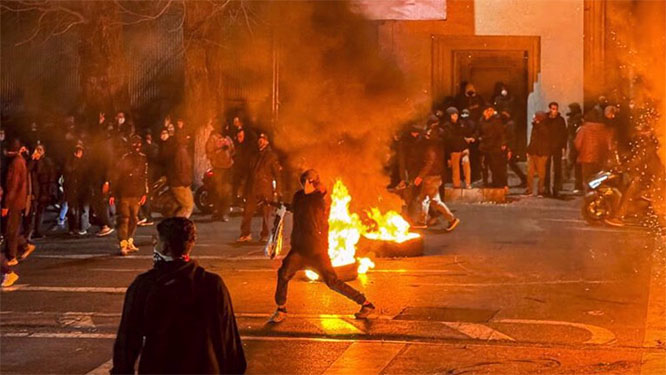
Iranian security and intelligence forces have captured more than 470 individuals in three provinces, identified as key figures behind the recent wave of violent unrest and terrorist activities linked to foreign-backed networks.

The Intelligence Ministry's provincial office in Khorasan Razavi announced on Monday the arrest of 192 armed terrorists, identified as the main agents behind recent riots in the region. 

According to an official statement, the detainees were involved in the killing of several security personnel and civilians, setting fire to mosques, public service facilities, and buses, as well as attacks on military and law enforcement centers.

The seized items from the group include several bulletproof vests, Kalashnikov rifles, hunting weapons, Winchester rifles, and various cold weapons such as daggers, swords, brass knuckles, tactical knives, crossbows, and chains.

Evidence indicates that some of the individuals were tied to hostile movements and terrorist organizations, with links overseas. Others were identified as members of violent criminal gangs, actively taking part in the unrest alongside their associates.

Simultaneously, in the western province of Lorestan, the IRGC announced the arrest of 134 individuals as the main leaders and influential field agents of a US-Israeli terrorist network.

The IRGC statement stated that these individuals formed terrorist cells during the recent unrest, committing "Daesh-like" acts.

They wounded security forces with firearms and cold weapons, and burned and destroyed public and private properties, including mosques, shops, banks, and private and public vehicles.

In the northwestern province of Zanjan, the police reported detaining 150 people identified as principal leaders and agents behind recent riots.

Authorities noted that these individuals were responsible for destroying public and private property and intentionally setting fire to vehicles in the province's squares.

Their crimes include shedding the blood of innocent people, destroying public and private property, attempting to enter military sites, disrupting public order, and spreading terror among citizens.

A variety of cold weapons were reportedly seized from the detainees.

What began late last month as peaceful protests over economic hardship across Iran turned violent after public statements by US and Israeli regime figures encouraged vandalism and disorder.

During the unrest, foreign-backed mercenaries rampaged through cities, killing security forces and civilians and damaging public property.

Comments

Add new comment

  • Coastaldigest.com reserves the right to delete or block any comments.
  • Coastaldigset.com is not responsible for its readers’ comments.
  • Comments that are abusive, incendiary or irrelevant are strictly prohibited.
  • Please use a genuine email ID and provide your name to avoid reject.