Ethiopian army chief, regional president killed

Agencies
June 23, 2019

Addis Ababa, Jun 23: Ethiopia's army chief and the president of a key region have been shot dead in a wave of violence highlighting the political instability in the country as Prime Minister Abiy Ahmed tries to push through reforms.
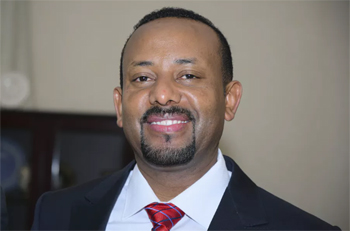
The latest unrest in the Horn of Africa nation flared on Saturday afternoon in Amhara, one of nine autonomous regions, when a "hit squad" attacked a meeting of top officials, Abiy's office said Sunday.

Spokeswoman Billene Seyoum told journalists the attack was led by Amhara's security chief Asaminew Tsige, and resulted in regional president Ambachew Mekonnen and another top official being shot.

The men were "gravely injured in the attack and later died of their wounds," she said.

"Several hours later in what seems like a coordinated attack, the chief of the staff of the national security forces Seare Mekonnen was killed in his home by his bodyguard" in the capital Addis Ababa, she added.

Also shot dead was a retired general who had been visiting him, Billene added.

The bodyguard has been apprehended while Asaminew is still on the loose, sources said.

The link between the two attacks was not immediately clear.

The internet has been cut nationwide since Saturday evening, after being severed for much of the previous week.

A journalist in the regional capital Bahir Dar told AFP shooting had begun shortly after sunset and continued for several hours before ceasing.

The United States embassy issued alerts about reported gunfire in the capital Addis Ababa, and violence around Amhara's main city Bahir Dar.

An analyst said Saturday's incident showed the seriousness of the political crisis in Ethiopia, where efforts by Abiy to loosen the iron-fisted grip of his predecessors and push through reforms have unleashed a wave of unrest.

"These tragic incidents, unfortunately, demonstrate the depth of Ethiopia's political crisis," said International Crisis Group analyst William Davison.

"It is now critical that actors across the country do not worsen the instability by reacting violently or trying to exploit this unfolding situation for their own political ends," the expert said.

Amhara in Ethiopia's northern highlands is the homeland of the ethnic group by the same name and is the birthplace of many of its emperors as well as the national language Amharic.

The Amhara are the second-largest ethnic grouping after the Oromo, and both spearheaded two years of anti-government protests which led to the resignation of former prime minister Hailemariam Desalegn.

Abiy, an Oromo, took power in April 2018 and has been lauded for a string of efforts to reform a nation which has known only the authoritarian rule of emperors and strongmen.

He has embarked on economic reforms, allowed dissident groups back into the country, sought to crack down on rights abuses and arrested dozens of top military and intelligence officials He also sealed a peace deal with neighbouring Eritrea, a longtime foe.

However, the loosening of the reins has also unleashed a wave of unrest.

Ethiopia's 1995 constitution, written by the Ethiopian People's Revolutionary Democratic Front (EPRDF) after it unseated the Derg military junta in 1991, partitioned the country into nine autonomous regions with borders following ethnic lines.

The EPRDF itself is a coalition of four parties from Oromia, Amhara, Tigray and the Southern Nations, Nationalities, and Peoples' Region.

Observers say that Abiy's plans to hold an election in 2020 have stirred up resentment in local politics, with other regional parties contesting the hold of those within the EPRDF, and seen a rise in ethnonationalism.

At the same time, longstanding tensions in a country of more than 80 ethnic groups have burst into the open, often over land and resources in Africa's second-most-populous nation.

Over a million people have been displaced by ethnic clashes, which analysts attribute to multiple causes, such as the weakening of the once all-powerful ruling EPRDF and different groups trying to take advantage of opportunities presented by the political transition.

In other regions, dozens of people have been killed in the last few months in clashes between residents of northern Benishangul Gumuz and Amhara states.

The security chief Asaminew, accused of being behind the attack in Amhara, was in 2018 released from prison after being held over a 2009 coup plot by the armed opposition group Ginbot 7 and Davison described him as an Amhara hardliner.

The coup attempt comes a year after a grenade explosion at a rally Abiy was addressing left two people dead.


Comments

Add new comment

  • Coastaldigest.com reserves the right to delete or block any comments.
  • Coastaldigset.com is not responsible for its readers’ comments.
  • Comments that are abusive, incendiary or irrelevant are strictly prohibited.
  • Please use a genuine email ID and provide your name to avoid reject.
News Network
January 20,2026

KCFabudhabi.jpg

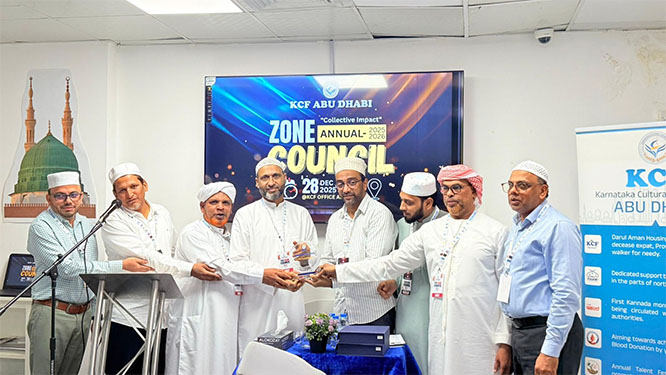
KCF, a global socio-cultural organisation of Karnataka expatriates, is actively involved in education, humanitarian initiatives and community well-being across several countries. The awardees were selected following a structured evaluation of nominations by the Annual Council Program Committee, based on the depth, consistency and long-term impact of their social service.

One of the award recipients, Abdul Razak Haji, a prominent UAE-based entrepreneur from the Qamcon Group of Companies, was honoured for his significant contributions to society. Through both his professional journey and personal initiatives, he has supported numerous employees and families, while also extending assistance in education, housing for the underprivileged and various charitable causes, largely carried out quietly over the years. His award was presented earlier during the Annual Council Program held at the KCF Abu Dhabi office.

The second award was conferred on Latheef Kakkinje, a young social worker based in Abu Dhabi, in recognition of his active involvement in community engagement programmes, sports initiatives, talent festivals and family-oriented social activities. His consistent volunteering efforts and commitment to humanitarian causes were highly appreciated by the selection committee.

The award presentation ceremony for Latheef Kakkinje was held at the Zayed Cricket Stadium (Astro Turf Ground) in the presence of Kedumbady Ibrahim Saqafi, President of KCF UAE; Ibrahim, General Secretary; Kabeer Bayambady, President of KCF Abu Dhabi; Ummer Ishwaramangila, General Secretary; along with other members of the KCF Abu Dhabi cabinet.

Congratulating both awardees, KCF leaders reiterated the organisation’s commitment to recognising individuals who selflessly work for social upliftment and community service.

KCFabudhabi1.jpg

Comments

Add new comment

  • Coastaldigest.com reserves the right to delete or block any comments.
  • Coastaldigset.com is not responsible for its readers’ comments.
  • Comments that are abusive, incendiary or irrelevant are strictly prohibited.
  • Please use a genuine email ID and provide your name to avoid reject.
News Network
February 1,2026

Bengaluru: Karnataka Deputy Chief Minister D K Shivakumar on Sunday criticised the Union Budget presented by Finance Minister Nirmala Sitharaman, claiming it offered no tangible benefit to the state.

Though he said he was yet to study the budget in detail, Shivakumar asserted that Karnataka had gained little from it. “There is no benefit for our state from the central budget. I was observing it. They have now named a programme after Mahatma Gandhi, after repealing the MGNREGA Act that was named after him,” he said.

Speaking to reporters here, the Deputy Chief Minister demanded the restoration of MGNREGA, and made it clear that the newly enacted rural employment scheme — VB-G RAM G — which proposes a 60:40 fund-sharing formula between the Centre and the states, would not be implemented in Karnataka.

“I don’t see any major share for our state in this budget,” he added.

Shivakumar, who also holds charge of Bengaluru development, said there were high expectations for the city from the Union Budget. “The Prime Minister calls Bengaluru a ‘global city’, but what has the Centre done for it?” he asked.

He also drew attention to the problems faced by sugar factories, particularly those in the cooperative sector, alleging a lack of timely decisions and support from the central government.

Noting that the Centre has the authority to fix the minimum support price (MSP) for agricultural produce, Shivakumar said the Union government must take concrete steps to protect farmers’ interests.

Comments

Add new comment

  • Coastaldigest.com reserves the right to delete or block any comments.
  • Coastaldigset.com is not responsible for its readers’ comments.
  • Comments that are abusive, incendiary or irrelevant are strictly prohibited.
  • Please use a genuine email ID and provide your name to avoid reject.
News Network
January 23,2026

Mangaluru: The Karnataka Government Polytechnic (KPT), Mangaluru, has achieved autonomous status from the All India Council for Technical Education (AICTE), becoming the first government polytechnic in the country to receive such recognition in its 78-year history. The status was granted by AICTE, New Delhi, and subsequently approved by the Karnataka Board of Technical Education in October last year.

Officials said the autonomy was conferred a few months ago. Until recently, AICTE extended autonomous status only to engineering colleges, excluding diploma institutions. However, with a renewed national focus on skill development, several government polytechnics across India have now been granted autonomy.

KPT, the second-largest polytechnic in Karnataka, was established in 1946 with four branches and has since expanded to offer eight diploma programmes, including computer science and polymer technology. The institution is spread across a 19-acre campus.

Ravindra M Keni, the first dean of the institution, told The Times of India that AICTE had proposed autonomous status for polytechnic institutions that are over 25 years old. “Many colleges applied. In the first round, 100 institutions were shortlisted, which was further narrowed down to 15 in the second round. We have already completed one semester after becoming an autonomous institution,” he said. He added that nearly 500 students are admitted annually across eight three-year diploma courses.

Explaining the factors that helped KPT secure autonomy, Keni said the institution has consistently recorded 100 per cent admissions and placements for its graduates. He also noted its strong performance in sports, with the college emerging champions for 12 consecutive years, along with active student participation in NCC and NSS activities.

Autonomous status allows KPT to design industry-oriented curricula, conduct examinations, prepare question papers, and manage academic documentation independently. The institution can also directly collaborate with industries and receive priority funding from AICTE or the Ministry of Education. While academic autonomy has been granted, financial control will continue to rest with the state government.

“There will be separate committees for examinations, question paper setting, boards of studies, and boards of examiners. The institution will now have the freedom to conduct admissions without government notifications and issue its own marks cards,” Keni said, adding that new academic initiatives would be planned after a year of functioning under the autonomous framework.

Comments

Add new comment

  • Coastaldigest.com reserves the right to delete or block any comments.
  • Coastaldigset.com is not responsible for its readers’ comments.
  • Comments that are abusive, incendiary or irrelevant are strictly prohibited.
  • Please use a genuine email ID and provide your name to avoid reject.