Fake news surges after Sri Lanka attack

Agencies
May 22, 2019

Colombo, May 22: Sri Lankan social networks saw a surge in fake news after the Easter suicide bombings a month ago despite an official social media blackout, highlighting the inability of governments to contain disinformation, experts said.
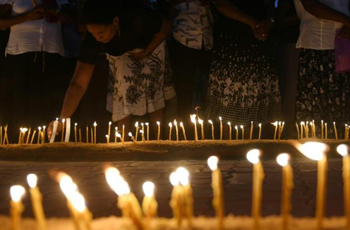
A nine-day ban on platforms including Facebook, Twitter, YouTube, Instagram and WhatsApp was introduced following the Islamic State-claimed attacks on churches and hotels on April 21 which killed 258 people and wounded nearly 500.

Many anxious social media users switched to virtual private networks (VPNs) or the TOR network to bypass the order and keep communication open with friends and relatives as the extent of the carnage became clear.

But for others, the tools were a means to spread confusion and vitriol as the island struggled to come to terms with one of the worst terror attacks in its history.

Sanjana Hattotuwa, who monitors social media for fake news at the Centre for Policy Alternatives in Colombo, said the government blackout had failed to prevent "engagement, production, sharing and discussion of Facebook content", and that he had seen a significant increase in false reports.

AFP has published half a dozen fact-checks debunking false claims made on Facebook and Twitter after the Easter attacks.

Some had dug out photos of coffins and funerals from Sri Lanka's brutal decades-long civil war and claimed they showed victims of the blasts.

One video posted to Facebook showed police arresting a man dressed in a burqa and claimed he was involved in the bombings. The video was actually from 2018, and showed a man who had used a burqa to hide his identity while he sought to attack someone over a debt issue.

Another used a five-year-old photo from India that showed a group of men wearing T-shirts with "ISIS", another name for Islamic State, written on them to claim there was an active IS cell in eastern Sri Lanka.

One Twitter user claiming to be a high-ranking Sri Lankan army brigadier used the platform to accuse neighbouring India of being involved in the attacks. The account was later taken down by Twitter after the Sri Lankan army complained.

Authorities in Sri Lanka -- where ethnic divisions still linger after decades of war -- previously blocked Facebook in March 2018 after Buddhist hardliners used incendiary posts to fan religious violence that left three people dead and reduced several hundred homes and shops to ashes.

The surge in fake news has further blemished the troubled reputation of social media -- which several years ago had been seen as a means to expand freedom of information -- in the region.

In India, authorities have temporarily shut down mobile networks or blocked social media apps during riots, while critics say the spread of hate speech via Facebook was crucial in facilitating a brutal 2017 military crackdown on the Rohingya Muslim minority in Myanmar.

Since the attacks, Sri Lankan authorities have imposed other short bans on social media, including earlier this month after mobs in the northwestern town of Chilaw attacked Muslim-owned businesses in anger at a Facebook post by a shopkeeper.

But for those unaware of the government ban or unable to circumvent it, the blocking of social media in the days following the attacks was a cause for panic.

A Sydney-based engineer was desperate to call his sister in Colombo soon after hearing about the Easter blasts, but could not get through.

"I kept calling her on WhatsApp, but there was no reply. We are so used to calling on WhatsApp, I had forgotten her landline number," the Sri Lankan-born engineer said.

Fortunately, he said, he managed to call a friend in Colombo who was using a VPN to access WhatsApp and told him about the social media ban that prevented him from reaching his sister.

Comments

Add new comment

  • Coastaldigest.com reserves the right to delete or block any comments.
  • Coastaldigset.com is not responsible for its readers’ comments.
  • Comments that are abusive, incendiary or irrelevant are strictly prohibited.
  • Please use a genuine email ID and provide your name to avoid reject.
News Network
December 5,2025

indigoCEO.jpg

New Delhi, Dec 5: IndiGo CEO Pieter Elbers issued a public apology this evening after more than a thousand flights were cancelled today, making it the "most severely impacted day" in terms of cancellations. The biggest airline of the country cancelled "more than half" of its daily number of flights on Friday, said Elbers. He also said that even though the crisis will persist on Saturday, the airline anticipates fewer than 1,000 flight cancellations.

"Full normalisation is expected between December 10 and 15, though IndiGo cautions that recovery will take time due to the scale of operations," the IndiGo CEO said. 

IndiGo operates around 2,300 domestic and international flights daily.

Pieter Elbers, while apologising for the major inconvenience due to delays and cancellations, said the situation is a result of various causes.

The crisis at IndiGo stems from new regulations that boost pilots' weekly rest requirements by 12 hours to 48 and allow only two night-time landings per week, down from six. IndiGo has attributed the mass cancellations to "misjudgment and planning gaps".

Elbers also listed three lines of action that the airline will adopt to address the issue.

"Firstly, customer communication and addressing your needs, for this, messages have been sent on social media. And just now, a more detailed communication with information, refunds, cancellations and other customer support measures was sent," he said.

The airline has also stepped up its call centre capacity.

"Secondly, due to yesterday's situation, we had customers stranded mostly at the nation's largest airports. Our focus was for all of them to be able to travel today itself, which will be achieved. For this, we also ask customers whose flights are cancelled not to come to the airports as notifications are sent," the CEO said.

"Thirdly, cancellations were made for today to align our crew and planes to be where they need to start tomorrow morning afresh. Earlier measures of the last few days, regrettable, have proven not to be enough, but we have decided today to reboot all our systems and schedules, resulting in the highest numbers of cancellations so far, but imperative for progressive improvements starting from tomorrow," he added.

As airports witnessed chaotic scenes, the Directorate General of Civil Aviation (DGCA) stepped in to grant IndiGo a temporary exemption from stricter night duty rules for pilots. It also allowed substitution of leaves with a weekly rest period. 

Civil Aviation Minister Ram Mohan Naidu has said a high-level inquiry will be ordered and accountability will be fixed.

Comments

Add new comment

  • Coastaldigest.com reserves the right to delete or block any comments.
  • Coastaldigset.com is not responsible for its readers’ comments.
  • Comments that are abusive, incendiary or irrelevant are strictly prohibited.
  • Please use a genuine email ID and provide your name to avoid reject.
News Network
December 2,2025

A major upgrade in safety and monitoring is planned for Haj 2026, with every Indian pilgrim set to receive a Haj Suvidha smart wristband linked to the official Haj Suvidha mobile app. The initiative aims to support pilgrims—especially senior citizens—who may struggle with smartphones during the 45-day journey.

What the Smart Wristband Will Do

Officials said the device will come with:
•    Location tracking
•    Pedometer
•    SOS emergency button
•    Qibla compass
•    Prayer timings
•    Basic health monitoring

SP Tiwari, secretary of the UP State Haj Committee, said the goal is to make the pilgrimage safer and more comfortable.

“Most Hajis are elderly and not comfortable with mobile apps,” he said. “The smartwatch will help locate pilgrims who forget their way or cannot communicate their location.”

The wristbands will be monitored by the Consulate General of India in Saudi Arabia, similar to mobile tracking via the Haj Suvidha App.

Free Distribution and Training

•    Smart wristbands will be given free of cost.
•    Training for pilgrims will be conducted between January and February 2026.
•    Sample units will reach state Haj committees soon.
•    Final devices will be distributed as pilgrims begin their journey.

New Rules for Accommodation

Two major decisions have also been finalised for Haj 2026:
1.    Separate rooms for men and women – including married couples. They may stay on the same floor but must occupy different rooms, following stricter Saudi guidelines.
2.    Cooking banned – gas cylinders will not be allowed; all meals will be provided through official catering services arranged by the Haj Committee of India.

These decisions were finalised during a meeting of the Haj Committee of India and state representatives in Mumbai.

Haj Suvidha App Launched Earlier

The government launched the Haj Suvidha App in 2024, offering:

•    Training modules
•    Accommodation and flight details
•    Baggage information
•    SOS and translation tools
•    Grievance redressal

Haj 2026 Quota and Key States

•    India’s total Haj quota for 2026: 1,75,025 pilgrims
•    70% (1,25,000) allotted to the Haj Committee of India
•    30% (around 50,000) reserved for Haj Group Organisers

Uttar Pradesh has the largest allocation (around 30,000 seats), though approximately 18,000 pilgrims are expected to go this year. States with high pilgrim numbers include Kerala, Maharashtra and Gujarat.

Dates of Haj 2026

The pilgrimage is scheduled to take place from 24 May to 29 May, 2026 (tentative).
Haj is one of the five pillars of Islam and is mandatory for Muslims who meet the required conditions.

Comments

Add new comment

  • Coastaldigest.com reserves the right to delete or block any comments.
  • Coastaldigset.com is not responsible for its readers’ comments.
  • Comments that are abusive, incendiary or irrelevant are strictly prohibited.
  • Please use a genuine email ID and provide your name to avoid reject.
News Network
December 2,2025

Mangaluru, Dec 2: Mangaluru International Airport responded to a medical emergency late on Monday night. Air India Express flight IX 522, travelling from Riyadh to Thiruvananthapuram, was diverted to Mangaluru Airport after a passenger in his late 30s experienced a medical emergency on board.

The Airport’s Operations Control Centre received an alert regarding the passenger’s health condition. The airport activated its emergency response protocol, mobilising the airport medical team and coordinating with stakeholders including CISF, immigration, and customs. 

Upon landing, airport medical personnel attended to the passenger, assessed his condition, and arranged to shift him to a local tertiary-care hospital for further treatment. The passenger’s relatives accompanied the passenger, who incidentally received necessary medical care on board, which helped stabilise the situation.

Following the handling of the emergency, the flight departed for Thiruvananthapuram at 2:05 am on Tuesday.

"We appreciate the cooperation of all parties involved, and this incident reaffirms our ongoing commitment to prioritising passenger safety and readiness to respond to unforeseen emergencies with professionalism and care," the Airport spokesperson said. 

Comments

Add new comment

  • Coastaldigest.com reserves the right to delete or block any comments.
  • Coastaldigset.com is not responsible for its readers’ comments.
  • Comments that are abusive, incendiary or irrelevant are strictly prohibited.
  • Please use a genuine email ID and provide your name to avoid reject.