Growing up Afghanistan: ‘My parents were told to swap me for a boy’

Agencies
December 1, 2018

Kabul, Dec 1: When Nargis Taraki became the fifth girl born to her parents in Afghanistan, her parents were told they should swap her with another baby in the village.

Now 21, she has made it her life ambition to prove they were right to keep her.

Nargis now campaigns for women's education and empowerment in her home country, and is one of the BBC's 2018 100 Women, according to a BBC News report.

"In 1997, I opened my eyes to the world as my parents' fifth child, and their fifth girl," said Nargis.

"My father's sister, and other relatives, immediately put pressure on my mum to agree to my father taking a second wife. Taking a second or even third wife is not uncommon in Afghanistan, and is sometimes done because they believe a new wife could mean a new chance to have a male child."

When she refused, they suggested that my father swap me for a boy. They even found a family in the village who was willing to give their boy away and take me.

Swapping children is not something that is part of our culture, and I haven't heard of it happening before, but boys are more valued in Afghan society as the traditional family breadwinners.

"People deliberately said things to upset my mother and make her feel inferior for not having a son. Despite her refusal to part ways with me, some elders still kept approaching my father. But he had a completely different mentality. He told them he loved me, and he would one day prove to them that a daughter can achieve everything a son can.

"It was not an easy time for my father. He had a military background and a history of service in the previous Soviet-backed regime, and my native district at the time was controlled by people with religious or fundamentalist tendencies.

"So certain people in the village used to detest him and did not socialise with us.

But my father believed in what he said, and he always stood by his word. Although there was pressure on my parents to swap me because I was a girl, it was a man who had the most positive impact on my character.

"Things got worse for us after Taliban militants took control of our district. In 1998, my father had to flee to Pakistan and soon after that we joined him there.

"Life there was not easy - but he managed to get work as a manager in a shoe factory. Perhaps the best thing to happen to my parents whilst in Pakistan was that they finally had a son, followed by my fifth sister.

"In 2001, we all returned to Kabul after the Taliban regime was toppled. We didn't have a house of our own and had to live with my uncles. My sisters and I managed to keep going to school despite conservatism in our culture.

"I went on to study public policy and administration at Kabul University and graduated two years ago with the highest marks for that year. Throughout that time my father never stopped supporting me.

"A couple of years ago I went to watch a cricket game in Kabul with my sister. There weren't many women in the stadium and our photographs and videos were circulated on social media. People started criticising us and leaving negative comments, saying we were shameless to be in a stadium amongst men. Others said we were trying to spread adultery and were being paid by the Americans.

"When my father saw some of the comments on Facebook, he looked at me and said: "My dear. You have done the right thing. I am glad you have annoyed some of these idiots. Life is short. Enjoy it as much as you can."

"My father died of cancer earlier this year. In him, I lost someone whose constant support made me into the person that I am today, and I know he will always be with me.

"Three years ago I tried to open a school for girls in my native village in Ghazni. I talked to my father about it and he said it would be almost impossible because of cultural boundaries, and even boys have difficulties because of the security situation. My father thought giving it a name of a religious madrassa might have improved our chances.

"In the end I was unable to travel to my native village because it was simply too dangerous. One of my sisters and I still hope to achieve this goal one day.

"In the meantime, I volunteered for several years for NGOs in that part of the world, working for women's education, health and empowerment.

I've also presented talks on a girl's right to go to school, university and to get a job.

"I've always dreamed of studying at the University of Oxford one day. When I look at international university rankings I always find Oxford in first or second position, and when I compare that with Kabul University I feel a bit sad - although that's not to say I'm not thankful I was able to go.

"I love to read in my spare time - an average of two to three books a week - and Paolo Coelho is my favourite author.

"In terms of marriage, I would like to choose someone myself and my family have given me permission to marry someone of my own choice.

"It would be great if I can find someone who has the same qualities as my father. I would want to spend the rest of my life with someone who has a similar attitude - who can support me and stand by my choices.

"Family is also important - sometimes you marry the best man out there but then you cannot adapt to his family.

"They will have to support me in what I want to do in my life. If they resist then I will try and change their minds. I believe in what I want to achieve in life and will not compromise.

Comments

Add new comment

  • Coastaldigest.com reserves the right to delete or block any comments.
  • Coastaldigset.com is not responsible for its readers’ comments.
  • Comments that are abusive, incendiary or irrelevant are strictly prohibited.
  • Please use a genuine email ID and provide your name to avoid reject.
News Network
February 4,2026

shettigar.jpg

An Indian resident who won the Dh20 million (approximately Rs 50 crore) jackpot in Abu Dhabi's Big Ticket draw has told of his joy at sharing his life-changing fortune with a friend.

Shanthanu Shettigar, a shop manager in Muscat, regularly buys tickets for the monthly grand prize draw with one of his closest friends – and the pair won on February 3.

Mr Shettigar, 33, who is from Udyavar in Udupi district of the southern state of Karnataka and has lived in the Omani capital for eight years, said he was left speechless after learning of his success.

“When I first moved to Muscat, many of my colleagues were purchasing Big Ticket, which encouraged me to give it a try,” he said.

“I started buying tickets on my own, and later began sharing tickets with a close friend. The ticket that brought me this win was one we purchased together.”

“Like most people, I receive a lot of spam calls, and I was fully absorbed in my work as well. I knew the live draw was taking place tonight, but I never imagined my name would be announced,” he said.

“When I realised it was real and that I had won, I was honestly speechless. It still hasn’t fully sunk in, but I’m extremely happy.”

Mr Shettigar is not sure how he will spend his share of the money, but encouraged others to take part.

“This win was completely unexpected, so I want to take some time to think things through before deciding what to do next,” he said.

“I would definitely encourage others to participate with Big Ticket, whether with family or friends – you never know when your moment might come.”

The Big Ticket was established in 1992 with an initial first prize of Dh1 million. It is one of the most popular monthly raffles in the UAE.

It has transformed the lives of many people across the Emirates and beyond.

Entry to the Big Ticket Millionaire is Dh500. Tickets can be bought online or at counters at Zayed International Airport and Al Ain Airport.

Comments

Add new comment

  • Coastaldigest.com reserves the right to delete or block any comments.
  • Coastaldigset.com is not responsible for its readers’ comments.
  • Comments that are abusive, incendiary or irrelevant are strictly prohibited.
  • Please use a genuine email ID and provide your name to avoid reject.
News Network
February 4,2026

gaming.jpg

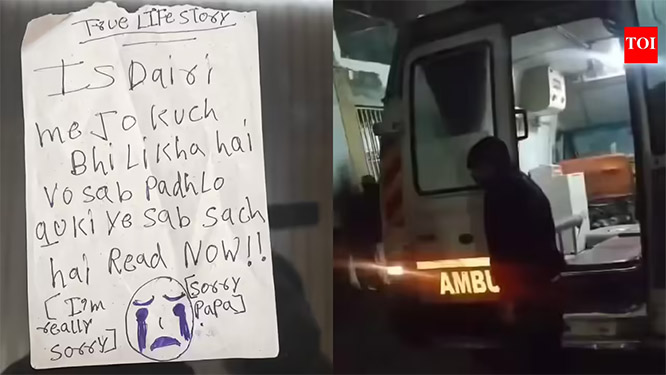
Ghaziabad: In a tragic incident, three sisters aged 12, 14 and 16 died after jumping from the ninth floor of their apartment in Uttar Pradesh’s Ghaziabad in the early hours of Wednesday. The girls allegedly took the extreme step after becoming deeply obsessed with an online Korean task-based game.

The incident occurred around 2.15 am at a high-rise apartment complex in Bharat City. Before jumping, the sisters — Pakhi (12), Prachi (14) and Vishika (16) — left behind a handwritten note that read, “Sorry, Papa.”

According to police, the girls went to the balcony, bolted the door from inside and jumped one after another. Their screams and the sound alerted their parents, neighbours and security guards. By the time the parents broke open the balcony door, all three had died.

“When we reached the spot, we confirmed that three minor girls, daughters of Chetan Kumar, had died after jumping from the building,” said Assistant Commissioner of Police Atul Kumar Singh.

Visuals from the scene on Wednesday morning showed the bodies lying on the ground, their mother wailing in grief, and stunned neighbours gathering at the complex.

Police said the sisters were heavily influenced by Korean culture and were addicted to an online “Korean love game”, though no specific game has been identified so far. Investigators are examining an eight-page suicide note written in a pocket diary, detailing the girls’ mobile and gaming activities.

“Read everything written in this diary because all of it is true. I’m really sorry. Sorry, Papa,” the note said, accompanied by a hand-drawn crying emoji.

Their father, Chetan Kumar, told police that the girls had even adopted Korean names and had gradually withdrawn from school and daily activities. “They used to say, ‘Korea is our life, Korea is our biggest love. We cannot give it up,’” he said, breaking down.

Police said the parents had recently restricted the girls’ mobile phone usage, which may have triggered distress. “The investigation has not revealed the name of any particular game, but it is evident that the girls were deeply influenced by Korean culture, as mentioned in the suicide note,” said senior police officer Nimish Patel.

The sisters reportedly did everything together, including eating and bathing. Their gaming addiction is believed to have begun during the COVID-19 pandemic, after which they became irregular at school and eventually stopped attending altogether.

Police also revealed that Chetan Kumar is married to two sisters and lives with both wives and their children, all daughters. Two of the deceased girls were daughters of one wife, while the third was their half-sister.

Further investigation is underway.

Comments

Add new comment

  • Coastaldigest.com reserves the right to delete or block any comments.
  • Coastaldigset.com is not responsible for its readers’ comments.
  • Comments that are abusive, incendiary or irrelevant are strictly prohibited.
  • Please use a genuine email ID and provide your name to avoid reject.
News Network
February 1,2026

Bengaluru: The Karnataka High Court has refused to quash an investigation against a WhatsApp group administrator accused of allowing the circulation of obscene and offensive images depicting Hindutva politicians and idols in 2021.

Justice M Nagaprasanna observed that, prima facie, the ingredients of the offence under Section 295A of the Indian Penal Code were made out. “The offence under Section 295A of the IPC is met to every word of its ingredient, albeit prima facie,” the judge said.

The petitioner, Sirajuddin, a resident of Belthangady taluk in Dakshina Kannada district, had challenged the FIR registered against him at the CEN (Cyber, Economics and Narcotics) police station, Mangaluru, for offences under Section 295A of the IPC and Section 67 of the Information Technology Act. Section 295A relates to punishment for deliberate and malicious acts intended to outrage the religious feelings of any class of citizens.

According to the complaint filed by K Jayaraj Salian, also a resident of Belthangady taluk, he received a WhatsApp group link from an unknown source and was added to the group after accessing it. The group reportedly had six administrators and around 250 participants, where obscene and offensive images depicting Hindu deities and certain political figures were allegedly circulated repeatedly.

Sirajuddin was arrested in connection with the case and later released on bail on February 16, 2021. He argued before the court that he was being selectively targeted, while other administrators—including the creator of the group—were neither arrested nor investigated. He also contended that the Magistrate could not have taken cognisance of the offence under Section 295A without prior sanction under Section 196(1) of the CrPC.

Rejecting the argument, Justice Nagaprasanna held that prior sanction is required only at the stage of taking cognisance, and not at the stage of registration of the crime or during investigation.

The judge noted that the State had produced the entire investigation material before the court. “A perusal of the material reveals depictions of Hindu deities in an extraordinarily obscene, demeaning and profane manner. The content is such that its reproduction in a judicial order would itself be inappropriate,” the court said, adding that the material, on its face, had the tendency to outrage religious feelings and disturb communal harmony.

Observing that the case was still at the investigation stage, the court said it could not interdict the probe at this juncture. However, it expressed concern that the investigating officer appeared to have not proceeded uniformly against all administrators. The court clarified that if the investigation revealed the active involvement of any member in permitting the circulation of such content, they must also be proceeded against.

“At this investigative stage, any further observation by this Court would be unnecessary,” the order concluded.

Comments

Add new comment

  • Coastaldigest.com reserves the right to delete or block any comments.
  • Coastaldigset.com is not responsible for its readers’ comments.
  • Comments that are abusive, incendiary or irrelevant are strictly prohibited.
  • Please use a genuine email ID and provide your name to avoid reject.