



High air pollution cuts most Indian lives by 3 years

February 21, 2015

Chicago, Feb 21: India's high air pollution, ranked by the World Health Organisation among the worst in the world, is adversely impacting the lifespans of its citizens, reducing most Indian lives by over three years, a new study has said.

High air pollution
Over half of India's population – 660 million people – live in areas where fine particulate matter pollution is above India's standards for what is considered safe, said the study by economists from the University of Chicago, Harvard and Yale published in this week's 'Economic & Political Weekly'.

If India reverses this trend to meet its air standards, those 660 million people would gain about 3.2 years onto their lives, the study said.

Put another way, compliance with Indian air quality standards would save 2.1 billion life-years, it said.

"India's focus is necessarily on growth. However, for too long, the conventional definition of growth has ignored the health consequences of air pollution," said Michael Greenstone, an author of the study and director of the Energy Policy Institute at the University of Chicago (EPIC).

"This study demonstrates that air pollution retards growth by causing people to die prematurely. Other studies have also shown that air pollution reduces productivity at work, increases the incidence of sick days, and raises health care expenses that could be devoted to other goods."

The new figures come after the WHO estimates showed 13 of the 20 most polluted cities in the world were in India, including the worst-ranked city, Delhi.

India has the highest rate of death caused by chronic respiratory diseases anywhere in the world.

"The loss of more than two billion life years is a substantial price to pay for air pollution," said Rohini Pande, also an author and director of Evidence for Policy Design at the Harvard Kennedy School.

"It is in India's power to change this in cost effective ways that allow hundreds of millions of its citizens to live longer, healthier, and more productive lives. Reforms of the current form of regulation would allow for health improvements that lead to increased growth," Pande said.

The authors – who also include Nicholas Ryan of Yale, Janhavi Nilekani and Anish Sugathan of Harvard, and Anant Sudarshan, director of EPIC's India office – offer three policy solutions that would help to cost-effectively decrease India's pollution.

One initial step would be to increase its monitoring efforts and take advantage of new technology that allows for real-time monitoring, the authors said.

Further, there is not enough pollution monitoring stations for the public to learn about ambient concentrations. As one point of comparison, Beijing has 35 monitoring stations, while the Indian city with the most monitoring stations, Kolkata, has only 20.

The authors argue increased monitoring would put more pressure on polluters to comply with existing regulations.

While the government has taken important steps to improve monitoring, there is room for further expansion.

Additionally, the authors say a greater reliance on civil rather than criminal penalties would instill a "polluter pays" system that would provide polluters with an incentive to reduce pollution.

India's flagship environmental laws, the authors write, are built on an outdated criminal system with draconian penalties such as imprisonment or industry closure. Because these penalties are so severe, they are difficult to enforce.

Building on more rigorous monitoring and financial penalties, the authors suggest India should begin to adopt a market-based approach toward regulating emissions, like an emissions trading system.

Such an approach has been proven to reduce pollution at the lowest possible cost, making it compatible with the continued economic growth that is vital for India's future.

The study draws from an earlier study by Greenstone conducted in China in which he and his coauthors compared pollution in north China – where a policy subsidised coal use for home heating – to south China.

Through this study, he was able to separate the effect of pollution from other factors that also affect mortality to find an important metric: Every additional 100 micrograms of total suspended particulate matter per cubic meter in the atmosphere lowers life expectancy at birth by three years. That metric was then applied to the Indian data.

Comments

Add new comment

  • Coastaldigest.com reserves the right to delete or block any comments.
  • Coastaldigset.com is not responsible for its readers’ comments.
  • Comments that are abusive, incendiary or irrelevant are strictly prohibited.
  • Please use a genuine email ID and provide your name to avoid reject.
News Network
December 15,2025

Mangaluru, Dec 15: Educational institutions in Mangaluru that rely on the popular Mangala Stadium for their annual sports events are bracing for an inconvenience as the city's key sporting venue is set to close its gates for a significant upgrade. The stadium is expected to be unavailable for approximately two months starting from January 15, 2026.

The closure is necessitated by a proposed overhaul of the stadium's facilities, with a special focus on upgrading the synthetic track. Pradeep Dsouza, Assistant Director of the District of Youth Empowerment and Sports (DYES), Dakshina Kannada, confirmed the development.

"Experts have visited the stadium, conducted a thorough inspection, and have given the go-ahead for a complete makeover," Dsouza stated. "Funds have been allocated for the project, and we are currently awaiting the final green signal from state officials to commence the work. We anticipate that the work will likely begin in the second week of January. Consequently, we have stopped renting out the stadium to colleges and other organizations in preparation for the upgrade."

The timing presents a logistical challenge for colleges, as many schools have already concluded their sports meets.

"Colleges will now be organizing their events and will need to find alternative locations to host their sports meets," Dsouza added. He suggested a few potential venues, including the Dakshina Kannada police ground, University College grounds, Panambur grounds, Swaraj Maidan in Moodbidri, and the Mangalore University sports grounds in Konaje.

However, many institutions note that finding a comparable venue will be difficult. While the DK police ground and University College grounds are closer to the city center, they do not possess the extensive facilities and infrastructure offered by Mangala Stadium.

Dr. P Dayananda Pai - P Satisha Govt First Grade College, Carstreet, is one such institution dependent on the stadium. Principal Jayakar Bhandary expressed hope for a swift completion of the work. "We expect the work to be completed at the earliest. If not, we will be forced to look for other venues to host the sports day for our students," Bhandary said, highlighting the pressing need for the city's main sporting facility.

Comments

Add new comment

  • Coastaldigest.com reserves the right to delete or block any comments.
  • Coastaldigset.com is not responsible for its readers’ comments.
  • Comments that are abusive, incendiary or irrelevant are strictly prohibited.
  • Please use a genuine email ID and provide your name to avoid reject.
News Network
December 7,2025

Mangaluru, Dec 7: A 34-year-old fruit and vegetable trader in Mangaluru has reportedly lost ₹33.1 lakh after falling victim to an online investment scam run through a fake mobile app.

Police said the scam began in September, when the victim received a link on Facebook. Clicking it connected him to a WhatsApp number, where an unidentified person introduced a high-return investment scheme and instructed him to download an app.

To build trust, the fraudster asked him to invest ₹30,000 on September 24. The trader soon received ₹34,000 as “profit,” convincing him the scheme was genuine. Over the next two months, he transferred money in multiple instalments via Google Pay and IMPS to different scanner codes and bank accounts shared by the scammers. Between September 24 and December 3, he ended up sending a total of ₹33.1 lakh.

When he later requested a refund of his investment and promised returns, the scammers demanded additional payments, claiming he needed to pay a “service tax” first. Even after he paid a small amount, no money was returned, and the scammers continued pressuring him for more.

A case has been registered at the CEN Crime Police Station.

Comments

Add new comment

  • Coastaldigest.com reserves the right to delete or block any comments.
  • Coastaldigset.com is not responsible for its readers’ comments.
  • Comments that are abusive, incendiary or irrelevant are strictly prohibited.
  • Please use a genuine email ID and provide your name to avoid reject.
News Network
December 7,2025

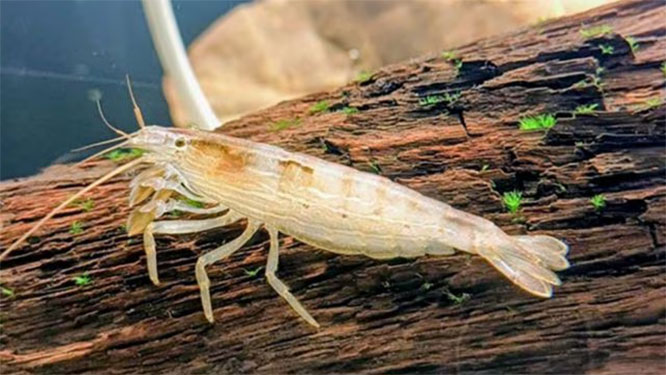
SHRIMP.jpg

Mangaluru, Dec 7: A rare bamboo shrimp has been rediscovered on mainland India more than 70 years after it was last reported, confirming for the first time the presence of Atyopsis spinipes in the country. The find was made by researchers from the Centre for Climate Change Studies at Sathyabama Institute of Science and Technology, Chennai, during surveys in Karnataka and Odisha.

The team — shrimp expert Dr S Prakash, PhD scholar K Kunjulakshmi, and Mangaluru-based researcher Maclean Antony Santos — combined field surveys, ecological assessments and DNA analysis to identify the elusive species. Their findings, published in Zootaxa, resolve decades of taxonomic confusion stemming from a 1951 report that misidentified the species as Atyopsis moluccensis without strong evidence.

The shrimp has now been confirmed at two locations: the Mulki–Pavanje estuary near Mangaluru and the Kuakhai River in Bhubaneswar. Historical specimens from the Andaman Islands, previously labelled as A. moluccensis, were also found to be misidentified and actually belong to A. spinipes.

The rediscovery began after an aquarium hobbyist in Odisha spotted a shrimp in 2022, prompting systematic surveys across Udupi, Karwar and Mangaluru. Four female specimens were collected in Mulki and one in Odisha, all genetically matching.

Researchers warn the species may exist in very small, vulnerable populations as freshwater habitats face increasing pressure from pollution, sand mining and infrastructure development. All verified specimens have been deposited with the Zoological Survey of India for future reference.

Comments

Add new comment

  • Coastaldigest.com reserves the right to delete or block any comments.
  • Coastaldigset.com is not responsible for its readers’ comments.
  • Comments that are abusive, incendiary or irrelevant are strictly prohibited.
  • Please use a genuine email ID and provide your name to avoid reject.