



Jan 28: Authorities in Brazil have raised the death toll from a massive dam collapse that triggered a devastating landslide to 58 amid fading hopes of finding survivors.
Fears of a second dam breach near the southeastern town of Brumadinho receded on Sunday, enabling a search to resume for hundreds still missing after the collapse at mining giant Vale's Corrego do Feijao mine on Friday released a torrent of mud engulfing buildings, vehicles and roads.
Early on Sunday, authorities in Minas Gerais statehad put the search and rescue operations on hold and moved to evacuate several Brumadinho neighbourhoods after Vale sounded the alarm over dangerously high water levels at a different dam, called B6, in the same area.
But by the afternoon, civil engineers gave the all clear.
"There is no more risk of a break," said Lieutenant Colonel Flavio Godinho, a spokesman for the state civil defence agency, adding the high water levels had been drained off.
"The search has resumed - by land, by aircraft and with dogs."
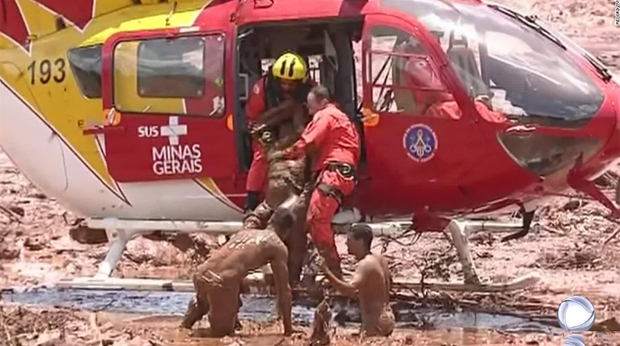
Dozens of helicopters were set to be deployed because the thick mud was too treacherous for ground rescuers.
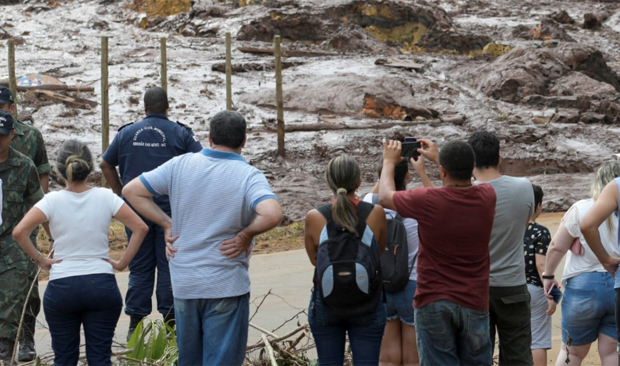
"I've come to the river to see if I can find some information, someone who could tell me something," Fernandos Nune Araujo, the brother of Peterson, a missing subcontractor at the mine, told Al Jazeera.
"Maybe they'll find a body and it might be my brother," he added, his voice breaking.
The latest official toll from the dam breach was 58 dead and 305 missing, according to Godinho. He said rescuers found a bus full of bodies. So far, 192 people have been rescued alive, 23 of whom were hospitalised with injuries, officials said.
The ruptured dam, 42 years old and 86 metres high, had been in the process of being decommissioned. Vale said it had recently passed structural safety tests.
Workers at its mine had been at lunch in an administrative area on Friday when they were suddenly swamped by millions of tonnes of muddy trailings - a waste byproduct of the iron-ore mining operations.
After overflowing a second dam, the muddy mass barrelled down towards Brumadinho but only glanced along the town's edge before roaring through vegetation and farmland, smashing houses and swallowing tractors and roads in its path.
Vale has been shaken by the disaster, the second in three years it has suffered in the same state.
Brazilian judicial authorities announced they had frozen $3bn of Vale's assets, saying real estate and vehicles would be seized if the company could not come up with the full amount.
The company also has been hit with fines by the federal and state government totalling some $92.5m.
The mining company, one of the world's biggest, was involved in a 2015 mine collapse elsewhere in Minas Gerais that killed 19 people.
At the time, a tailings dam collapsed at an iron ore mine belonging to Samarco Mineracao SA, a Vale joint venture with BHP Group. The resulting torrent of toxic mud buried a small village and contaminated a major river in Brazil's worst environmental disaster on record.
'No way I can stay calm'
Even before the half-day suspension of rescue efforts, hopes that loved ones had survived were turning to anguish and anger over the increasing likelihood that many of the hundreds of people missing had died.
Caroline Steifeld, who was evacuated, said she heard the warning sirens on Sunday, but no such alert came when the first dam collapsed two days before.
"I only heard shouting, people saying to get out. I had to run with my family to get to higher ground, but there was no siren," she said, adding that a cousin was still unaccounted for.
Several others made similar complaints when interviewed by The Associated Press. An email to Vale asking for comment was not immediately answered.
"I'm angry. There is no way I can stay calm," said Sonia Fatima da Silva, as she tried to get information about her son, who had worked at Vale for 20 years. "My hope is that they be honest. I want news, even if it's bad."
Al Jazeera's Daniel Schweimler, reporting from Brumadinho, said tensions in the town ran high.
"Many questions are being asked why lessons were not learned from the last such disaster in the nearby town of Mariana in November 2015," he said.
The Brazilian branch of environmental group Greenpeace said the dam break was "a sad consequence of the lessons not learned by the Brazilian government and the mining companies."
Such incidents "are not accidents but environmental crimes that must be investigated, punished and repaired", it added.
Marina Silva, a former environment minister who visited the site of the dam collapse, called for more preemptive action to stop similar disasters in the future and said congress must shoulder part of the blame for failing to strengthen regulations and enforcement.
"Federal and state governments' support to victims is very important. Taking measures to prevent situations like this is just as important as rescuing victims," she said.
"We can't become specialists in helping victims and consoling widows and orphans. We have to anticipate such things. There are ways to protect the society from this kind of crime, this kind of calamity."
Paulo Sotero, director of the Brazil Institute at the Woodrow Wilson Center, said there was a "collective fault" by Vale and state and local authorities.
"In light of this tragedy that could have victims counting on the hundreds, I think the nation will react and demand practical and effective responses," he told Al Jazeera from Washington, DC.
"Yes, Brazil has an excessive number of licensing requirements that sometimes hurt businesses but the challenge is to reform the system and keep or improve the regulations where they are necessary - and, as it’s usually the problem in Brazil, to enforce the regulations; the laws are pretty good but they are not enforced and we see once again a demonstration of this kind of irresponsibility."


Comments
Add new comment