



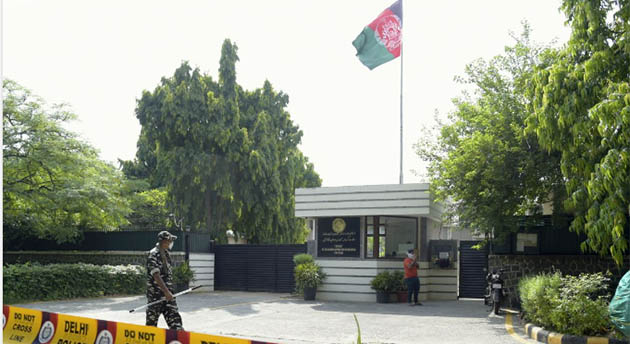
Afghan announces permanent closure of embassy in Delhi, cites challenges from Indian govt including no visa extension

News Network
November 24, 2023

afghanindia.jpg

Almost two months after it announced the shutting down of its operations, the Afghanistan embassy in New Delhi announced its permanent closure and asked the Indian government to allow the flag of the erstwhile Afghan republic to be hoisted on the premises.

“The Embassy of the Islamic Republic of Afghanistan in New Delhi regrets to announce the permanent closure of its diplomatic mission in New Delhi, effective from 23 November 2023, owing to persistent challenges from the Indian government,” a statement released by Afghanistan’s ambassador to India, Farid Mamundzay, said.

“The decision follows the embassy’s earlier cessation of operations on September 30, a move made in the hope that the Indian government stance will favourably change to let the mission operate normally,” it said, adding, “Unfortunately, despite an eight-week wait, the objectives of visa extension for diplomats and a shift in the Indian government’s conduct were not realised.”

The statement added that given the “constant pressure from both the Taliban & the Indian government to relinquish control, the embassy faced a difficult choice”.

“India has been a steadfast strategic partner of the erstwhile Afghan Republic since 2001, & we acknowledge the limitations & concerns that govern the realm of realpolitik and the balancing act required at a difficult time in a geo-politically sensitive region,” it said.

“Therefore, we firmly believe that the decision to close the mission in India at this stage and to transfer the custodial authority of the mission to the host country is in the best interest of Afghanistan,” the statement released by Mamundzay said.

Currently, there are no diplomats from the Afghan Republic in India. Those who served in the national capital have safely reached third countries, the official statement said, adding that the only individuals present in India are diplomats affiliated with the Taliban, visibly attending their regular online meetings.

“The diplomats of the Afghan Republic have handed over the mission solely to the Indian government. It now rests upon the Indian government to decide the fate of the mission, whether to maintain its closure or consider alternatives, including the possibility of handing it over to Taliban diplomats. The responsibility of diplomats appointed by the Islamic Republic of Afghanistan has officially come to an end. The unfortunate end of the Republic mission marks the conclusion of the Afghan Republic in India,” it added.

The statement went on to implore the Indian government to consider certain requests “in this challenging time for Afghanistan, where millions suffer because of poverty and socio-economic and political exclusion”.

The first request was that the Indian government should take into custody the Afghan diplomatic mission properties, bank accounts and vehicles, and an amount of USD 500,000 in the embassy’s bank account. Secondly, the government should continue to hoist Afghanistan’s tricolour flag on the embassy premises. And thirdly, it should “ensure the safekeeping of the embassy’s property and assets with the understanding that they will be entrusted to a legitimate accountable government duly elected or chosen by the Afghan people in the future,” the statement said.

The embassy said it was “cognisant” that some may attempt to characterise this move as an internal conflict, allegedly involving diplomats who switched allegiance to the Taliban, adding “that this decision is a result of broader changes in policy and interests”.

“To the Afghan citizens in India, the Embassy extends its sincere gratitude for their understanding and support throughout our mission’s tenure,” it added.

Despite “limitations in resources and power”, the Afghan embassy said it has worked “tirelessly for their betterment and in the absence of a legitimate government in Kabul”.

Over the past two years and three months, the Afghan community in India has witnessed a significant decline, with Afghan refugees, students, and traders leaving the country, the embassy noted in its statement, adding that the number has nearly halved since August 2021, with very limited new visas being issued during this period.

“We assure the Afghan community that the mission operated with transparency, accountability, and a commitment to fair treatment based on the goodwill and interests of Afghanistan considering historic ties and bilateral relations with India,” it added.

“Unfortunately, efforts have been made to tarnish our image and hinder diplomatic efforts in order to justify the presence and work of Taliban-appointed and affiliated diplomats. In the face of these challenges, our committed team worked diligently in the most difficult circumstances, prioritizing the interests of the 40 million Afghans in every possible sphere from securing humanitarian aid and online education scholarships to facilitating ease in trade and advocating for the formation of a broad-based government,” the Afghan embassy stated further in its statement.

It added that the Afghan embassy “exerted diplomatic pressure in its power on those who defy the will of the Afghan people by failing to form an inclusive government and denying millions of girls the right to attend school”.

“We have considered the historic events and current circumstances carefully in arriving at this conclusion. We also extend our heartfelt gratitude to the people of India for their support and assistance to Afghanistan over the past 22 years. We reiterate our commitment to serving the people of Afghanistan and will continue to explore avenues to support our nation in these challenging times,” the statement concluded.

Notably, the embassy had announced the closure of its operations on October 1, citing “lack of resources” and “failure to meet Afghanistan’s interests” by the Taliban regime.

The embassy also made an “unequivocal statement” stating that certain consulates that work on the instructions and funding from Kabul are not in consonance with the objectives of a legitimate or elected government but rather serve the interests of an “illegitimate regime”.

Comments

Add new comment

  • Coastaldigest.com reserves the right to delete or block any comments.
  • Coastaldigset.com is not responsible for its readers’ comments.
  • Comments that are abusive, incendiary or irrelevant are strictly prohibited.
  • Please use a genuine email ID and provide your name to avoid reject.
News Network
February 1,2026

Bengaluru, Feb 1: For travelers landing at Kempegowda International Airport (KIA), the sleek, wood-paneled curves of Terminal 2 promise a world-class welcome. But the famed “Garden City” charm quickly withers at the curb. As India’s aviation sector swells to record numbers—handling over 43 million passengers in Bengaluru alone this past year—the “last mile” has turned into a marathon of frustration.

The Bengaluru Logjam: Rules vs Reality

While the city awaits the 2027 completion of the Namma Metro Blue Line, the interim has been chaotic. Recent “decongestion” rules at Terminal 1 have pushed app-based cab pickups to distant parking zones, forcing weary passengers into a 20-minute walk with luggage.

“I landed after ten months away and felt like a stranger in my own city,” says Ruchitha Jain, a Koramangala resident. “My driver couldn’t find me, staff couldn’t guide me, and the so-called ‘Premium’ lane is just a fancy tax on convenience.”

•    The Cost of Distance: A 40-km cab ride can now easily cross ₹1,500, driven by demand pricing and airport surcharges.

•    The Bus Gap: While Vayu Vajra remains a lifeline, its ₹300–₹400 fare is often cited as the most expensive airport bus service in the country.

A National Pattern of Disconnect

The struggle is not unique to Karnataka. From Chennai’s coast to Hyderabad’s plateau, India’s airports tell a familiar story: brilliant runways, broken exits.

City:    Primary Issue   |    Recent Development

Bengaluru:    Cab pickup restrictions & distance  |    App-based taxis shifted to far parking zones; long walks and fare spikes reported

Chennai:    Multi-Level Parking (MLCP) hike  |    Passengers report 40-minute walks to reach cab pickup points

Hyderabad:    “Taxi mafia” & touting  |    Over 440 touting cases reported; security presence intensified

Mumbai:    Fare scams  |     Tourists charged ₹18,000 for just 400 metres, triggering police action

In Hyderabad, travelers continue to battle entrenched local groups that intimidate Uber and Ola drivers, pushing passengers toward overpriced private taxis. Chennai flyers, meanwhile, complain that reaching the designated pickup zones now takes longer than short-haul flights from cities like Coimbatore.

The ‘Budget Day’ Hope

As Finance Minister Nirmala Sitharaman presents the Union Budget 2026 today, the aviation sector is watching closely. With the government’s renewed emphasis on multimodal integration, there is cautious hope for funding toward seamless airport-metro-bus hubs.

The vision is clear: a future where planes, trains, and metros speak the same language. Until then, passengers at KIA—and airports across India—will continue to discover that the hardest part of flying isn’t the thousands of kilometres in the air, but the last few on the ground.

Comments

Add new comment

  • Coastaldigest.com reserves the right to delete or block any comments.
  • Coastaldigset.com is not responsible for its readers’ comments.
  • Comments that are abusive, incendiary or irrelevant are strictly prohibited.
  • Please use a genuine email ID and provide your name to avoid reject.
News Network
January 23,2026

Mangaluru: The Karnataka Government Polytechnic (KPT), Mangaluru, has achieved autonomous status from the All India Council for Technical Education (AICTE), becoming the first government polytechnic in the country to receive such recognition in its 78-year history. The status was granted by AICTE, New Delhi, and subsequently approved by the Karnataka Board of Technical Education in October last year.

Officials said the autonomy was conferred a few months ago. Until recently, AICTE extended autonomous status only to engineering colleges, excluding diploma institutions. However, with a renewed national focus on skill development, several government polytechnics across India have now been granted autonomy.

KPT, the second-largest polytechnic in Karnataka, was established in 1946 with four branches and has since expanded to offer eight diploma programmes, including computer science and polymer technology. The institution is spread across a 19-acre campus.

Ravindra M Keni, the first dean of the institution, told The Times of India that AICTE had proposed autonomous status for polytechnic institutions that are over 25 years old. “Many colleges applied. In the first round, 100 institutions were shortlisted, which was further narrowed down to 15 in the second round. We have already completed one semester after becoming an autonomous institution,” he said. He added that nearly 500 students are admitted annually across eight three-year diploma courses.

Explaining the factors that helped KPT secure autonomy, Keni said the institution has consistently recorded 100 per cent admissions and placements for its graduates. He also noted its strong performance in sports, with the college emerging champions for 12 consecutive years, along with active student participation in NCC and NSS activities.

Autonomous status allows KPT to design industry-oriented curricula, conduct examinations, prepare question papers, and manage academic documentation independently. The institution can also directly collaborate with industries and receive priority funding from AICTE or the Ministry of Education. While academic autonomy has been granted, financial control will continue to rest with the state government.

“There will be separate committees for examinations, question paper setting, boards of studies, and boards of examiners. The institution will now have the freedom to conduct admissions without government notifications and issue its own marks cards,” Keni said, adding that new academic initiatives would be planned after a year of functioning under the autonomous framework.

Comments

Add new comment

  • Coastaldigest.com reserves the right to delete or block any comments.
  • Coastaldigset.com is not responsible for its readers’ comments.
  • Comments that are abusive, incendiary or irrelevant are strictly prohibited.
  • Please use a genuine email ID and provide your name to avoid reject.
News Network
January 23,2026

modIKERALA.jpg

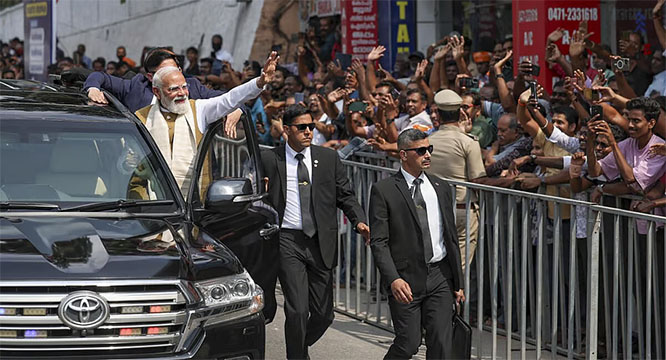
Prime Minister Narendra Modi, during his visit to Thiruvananthapuram on Friday, January 23, indicated that the Bharatiya Janata Party (BJP) is aiming to expand its political footprint in Kerala ahead of the Assembly elections scheduled in the coming months.

Speaking at a BJP-organised public meeting, Modi drew parallels between the party’s early electoral gains in Gujarat and its recent victory in the Thiruvananthapuram Municipal Corporation. The civic body win, which ended decades of Left control, was cited by the Prime Minister as a possible starting point for the party’s broader ambitions in the state.

Recalling BJP’s political trajectory in Gujarat, Modi said the party was largely insignificant before 1987 and received little media attention. He pointed out that the BJP’s first major breakthrough came with its victory in the Ahmedabad Municipal Corporation that year.

“Just as our journey in Gujarat began with one city, Kerala’s journey has also started with a single city,” Modi said, suggesting that the party’s municipal-level success could translate into wider electoral acceptance.

The Prime Minister alleged that successive governments led by the Left Democratic Front (LDF) and the United Democratic Front (UDF) had failed to adequately develop Thiruvananthapuram. He accused both fronts of corruption and neglect, claiming that basic infrastructure and facilities were denied to the capital city for decades.

According to Modi, the BJP’s control of the civic body represents a shift driven by public dissatisfaction with the existing political alternatives. He asserted that the BJP administration in Thiruvananthapuram had begun working towards development, though no specific details or timelines were outlined.

Addressing the gathering at Putharikandam Maidan, Modi said the BJP intended to project Thiruvananthapuram as a “model city,” reiterating his party’s commitment to governance-led change.

The Prime Minister’s visit to Kerala also included the inauguration of several development projects and the flagging off of new train services, as the BJP intensifies its political outreach in the poll-bound state.

Comments

Add new comment

  • Coastaldigest.com reserves the right to delete or block any comments.
  • Coastaldigset.com is not responsible for its readers’ comments.
  • Comments that are abusive, incendiary or irrelevant are strictly prohibited.
  • Please use a genuine email ID and provide your name to avoid reject.