



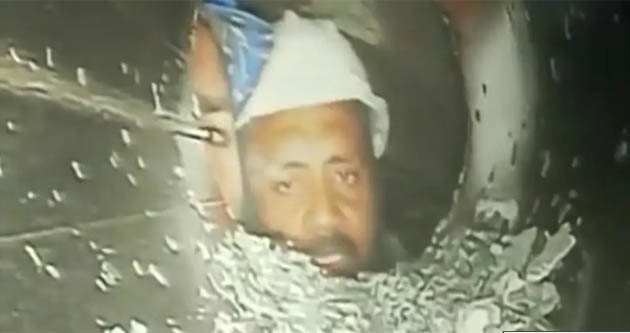
How 41 workers got trapped inside Silkyara tunnel in Uttarakhand for 17 days

News Network
November 28, 2023

tunnel.jpg

The 41 workers trapped in an Uttarakhand tunnel for 17 days are likely to be rescued anytime now, as the manual drilling team clearing the debris that blocks their escape is metres away from reaching them. The operation, which faced several setbacks owing to the difficult terrain, is now on the threshold of success. As the country has its fingers crossed and hands joined in prayer, here's a look at how the workers got stuck

The Tunnel

The 4.5 km-tunnel is part of the Centre's ambitious Char Dham project aimed at providing all-weather connectivity between four prominent Hindu shrines in Uttarakhand - Badrinath, Kedarnath, Gangotri and Yamunotri. Also known as Silkyara tunnel, this tunnel is on the route connecting Silyara and Dandalgaon in Uttarkashi district. It is a double-lane tunnel and one of the longest under Char Dham project. About 2.4 km of the under-construction tunnel from the Silkyara side and 1.75 km from the other side has been built. The tunnel, once complete, is expected to cut down travel time by an hour. The project to build the tunnel is being carried out by Hyderabad-based Navayuga Engineering Company Limited, which has reportedly handled such projects before.

What Went Wrong?

On November 12, a section of tunnel between 205 and 260 metres from the Silkyara side collapsed. Workers who were beyond the 260-metre mark were trapped, with their exit blocked. Fortunately for them, the part of the tunnel where they are stuck has power and water supply. While government authorities have maintained that a detailed probe will reveal what led to the collapse, multiple theories are floating around. One of them is that a landslide in the fragile Himalayan region led to the collapse. Several experts have pointed out how hasty development in the ecologically sensitive region was responsible for the incident.

Big Lapses?

There have been claims that the collapse was triggered by a blast carried out by construction teams building the tunnel. SP Sati, a geologist and professor of environmental science at Uttarakhand University of Horticulture and Forestry, said, "The agency will never accept this, but I am certain that a major blast led to this collapse." NDTV had earlier reported that the construction plan for the tunnel mentioned an escape tunnel, but it was never built. International expert Arnold Dix, who has been at the site, was asked if the absence of an escape tunnel contributed to the situation. He said that globally, escape tunnels are put at the end "because normally you don't expect them to collapse". He, however, added a disclaimer that escape tunnels may be built during the course of the project in areas that have specific geological conditions.

Comments

Add new comment

  • Coastaldigest.com reserves the right to delete or block any comments.
  • Coastaldigset.com is not responsible for its readers’ comments.
  • Comments that are abusive, incendiary or irrelevant are strictly prohibited.
  • Please use a genuine email ID and provide your name to avoid reject.
News Network
January 23,2026

modIKERALA.jpg

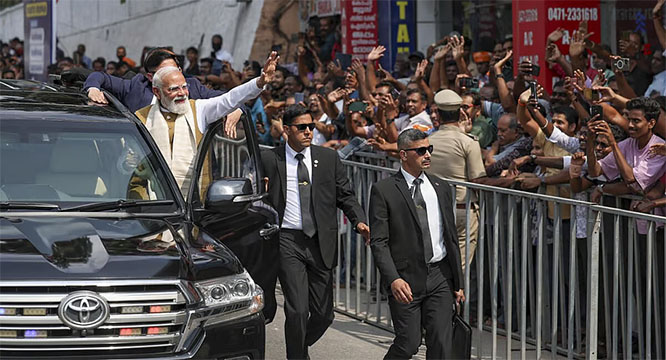
Prime Minister Narendra Modi, during his visit to Thiruvananthapuram on Friday, January 23, indicated that the Bharatiya Janata Party (BJP) is aiming to expand its political footprint in Kerala ahead of the Assembly elections scheduled in the coming months.

Speaking at a BJP-organised public meeting, Modi drew parallels between the party’s early electoral gains in Gujarat and its recent victory in the Thiruvananthapuram Municipal Corporation. The civic body win, which ended decades of Left control, was cited by the Prime Minister as a possible starting point for the party’s broader ambitions in the state.

Recalling BJP’s political trajectory in Gujarat, Modi said the party was largely insignificant before 1987 and received little media attention. He pointed out that the BJP’s first major breakthrough came with its victory in the Ahmedabad Municipal Corporation that year.

“Just as our journey in Gujarat began with one city, Kerala’s journey has also started with a single city,” Modi said, suggesting that the party’s municipal-level success could translate into wider electoral acceptance.

The Prime Minister alleged that successive governments led by the Left Democratic Front (LDF) and the United Democratic Front (UDF) had failed to adequately develop Thiruvananthapuram. He accused both fronts of corruption and neglect, claiming that basic infrastructure and facilities were denied to the capital city for decades.

According to Modi, the BJP’s control of the civic body represents a shift driven by public dissatisfaction with the existing political alternatives. He asserted that the BJP administration in Thiruvananthapuram had begun working towards development, though no specific details or timelines were outlined.

Addressing the gathering at Putharikandam Maidan, Modi said the BJP intended to project Thiruvananthapuram as a “model city,” reiterating his party’s commitment to governance-led change.

The Prime Minister’s visit to Kerala also included the inauguration of several development projects and the flagging off of new train services, as the BJP intensifies its political outreach in the poll-bound state.

Comments

Add new comment

  • Coastaldigest.com reserves the right to delete or block any comments.
  • Coastaldigset.com is not responsible for its readers’ comments.
  • Comments that are abusive, incendiary or irrelevant are strictly prohibited.
  • Please use a genuine email ID and provide your name to avoid reject.
News Network
January 23,2026

modIKERALA.jpg

Prime Minister Narendra Modi, during his visit to Thiruvananthapuram on Friday, January 23, indicated that the Bharatiya Janata Party (BJP) is aiming to expand its political footprint in Kerala ahead of the Assembly elections scheduled in the coming months.

Speaking at a BJP-organised public meeting, Modi drew parallels between the party’s early electoral gains in Gujarat and its recent victory in the Thiruvananthapuram Municipal Corporation. The civic body win, which ended decades of Left control, was cited by the Prime Minister as a possible starting point for the party’s broader ambitions in the state.

Recalling BJP’s political trajectory in Gujarat, Modi said the party was largely insignificant before 1987 and received little media attention. He pointed out that the BJP’s first major breakthrough came with its victory in the Ahmedabad Municipal Corporation that year.

“Just as our journey in Gujarat began with one city, Kerala’s journey has also started with a single city,” Modi said, suggesting that the party’s municipal-level success could translate into wider electoral acceptance.

The Prime Minister alleged that successive governments led by the Left Democratic Front (LDF) and the United Democratic Front (UDF) had failed to adequately develop Thiruvananthapuram. He accused both fronts of corruption and neglect, claiming that basic infrastructure and facilities were denied to the capital city for decades.

According to Modi, the BJP’s control of the civic body represents a shift driven by public dissatisfaction with the existing political alternatives. He asserted that the BJP administration in Thiruvananthapuram had begun working towards development, though no specific details or timelines were outlined.

Addressing the gathering at Putharikandam Maidan, Modi said the BJP intended to project Thiruvananthapuram as a “model city,” reiterating his party’s commitment to governance-led change.

The Prime Minister’s visit to Kerala also included the inauguration of several development projects and the flagging off of new train services, as the BJP intensifies its political outreach in the poll-bound state.

Comments

Add new comment

  • Coastaldigest.com reserves the right to delete or block any comments.
  • Coastaldigset.com is not responsible for its readers’ comments.
  • Comments that are abusive, incendiary or irrelevant are strictly prohibited.
  • Please use a genuine email ID and provide your name to avoid reject.