PM Modi to attend UN World Climate Action Summit in Dubai

News Network
November 24, 2023

modi.jpg

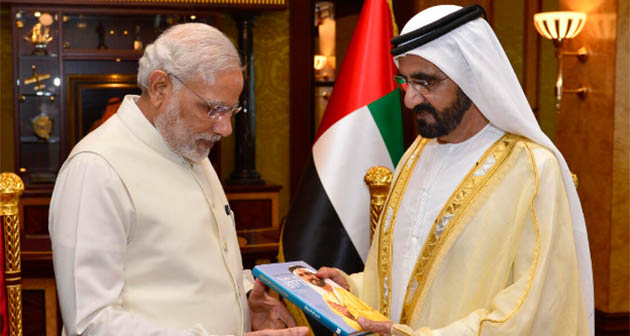
New Delhi: Prime Minister Narendra Modi will attend the UN climate talks in Dubai on December 1 and deliver a national statement highlighting India's climate action, sources said on Friday.

The prime minister will reach the UAE on November 30, deliver India's national statement during the United Nations' World Climate Action Summit on December 1 and return the same day, a source told PTI.

The World Climate Action Summit on December 1-2 will see heads of states and governments, leaders from civil society, business, youth, indigenous peoples' organizations, frontline communities, science and other sectors discussing actions and plans aimed at scaling climate action. 

Modi has been championing Lifestyle for Environment (LiFE movement), urging countries to adopt planet-friendly living practices and move away from deeply consumerist behaviours.

Recognising the criticality of this decade (2021-2030) for climate action, there's a call for rebalancing consumption patterns between the Global North and South.

Differences in historic emissions and contributions to global warming across nations are evident. For instance, while the US accounts for only 4 per cent of the current global population, it contributed 17 per cent of global emissions between 1850 and 2021. In contrast, India, representing 18 per cent of the world's population, has contributed only 5 percent of greenhouse gas emissions to date.

According to Oxfam International, a group of independent charitable organisations, the world's wealthiest 10 per cent were responsible for around half of global emissions in 2015. 

Modi had attended the Glasgow climate talks in 2021 and announced India's strategy to combat climate change.

In August last year, India updated nationally determined contributions or nation action plan to achieve the goals set in the 2015 Paris Agreement, especially the target of limiting global warming to well below 2 degrees Celsius and preferably to 1.5 degrees Celsius.    

India's updated NDCs aim to reduce emissions intensity of gross domestic product by 45 per cent by 2030 from 2005 levels and achieve 50 per cent cumulative electric power installed capacity from non-fossil fuel-based energy resources by 2030.

Union Environment Minister Bhupender Yadav will also participate in high-level events and roundtables of the 28th session of the annual climate talks (COP28), including on finance for climate goals, emissions reduction, adaptation to climate impacts, and transitioning to a green economy with inclusivity.

COP28, scheduled to take place from November 30 to December 12 in Dubai, UAE, will see the conclusion of the first-ever 'global stocktake', a periodic review of collective progress to meet the Paris Agreement goals.  This assessment will shape forthcoming climate action plans or NDCs by 2025.

The climate conference may see hectic negotiations on how the fund meant to provide financial support to developing and poor countries for climate impacts should operate, and funding for adaptation. 

The global south would demand the global north to undertake rapid decarbonization and massively scale up finance and technology support to limit global warming to 1.5 degrees Celsius. Discontent among developing countries regarding unfulfilled promises of financial aid, particularly the yet-to-materialize $100 billion pledged by rich countries by 2020, is expected.

Some countries, especially the European Union, are expected to push for a global deal to phase out unabated fossil fuels at COP28.

According to the Intergovernmental Panel on Climate Change, a body of top climate scientists in the world. 

Global emissions need to drop 43 per cent below 2019 levels by 2030 to avoid the worst impacts of climate change, caused largely by GHG emissions from the burning of fossil fuels.

In October, Sultan Al Jaber, the president designate of COP28, urged nations to achieve a responsible phase-down of unabated fossil fuels and increase investments in clean energy. 

'Unabated' refers to fossil fuels burned without employing controversial carbon emission capture technologies, allowing for continued burning if countries utilize technologies to reduce resulting emissions.

Comments

Add new comment

  • Coastaldigest.com reserves the right to delete or block any comments.
  • Coastaldigset.com is not responsible for its readers’ comments.
  • Comments that are abusive, incendiary or irrelevant are strictly prohibited.
  • Please use a genuine email ID and provide your name to avoid reject.
News Network
January 23,2026

Karnataka Governor Thaawarchand Gehlot read only three lines from the 122-paragraph address prepared by the Congress-led state government while addressing the joint session of the Legislature on Thursday, effectively bypassing large sections critical of the BJP-led Union government.

The omitted portions of the customary Governor’s address outlined what the state government described as a “suppressive situation in economic and policy matters” under India’s federal framework. The speech also sharply criticised the Centre’s move to replace the Mahatma Gandhi National Rural Employment Guarantee Act (MGNREGA) with the Viksit Bharat–Guarantee for Rozgar and Ajeevika Mission (Gramin) Act, commonly referred to as the VB-GRAM (G) Act.

Governor Gehlot had earlier conveyed his objection to several paragraphs that were explicitly critical of the Union government. On Thursday, he confined himself to the opening lines — “I extend a warm welcome to all of you to the joint session of the State legislature. I am extremely pleased to address this august House” — before jumping directly to the concluding sentence of the final paragraph.

He ended the address by reading the last line of paragraph 122: “Overall, my government is firmly committed to doubling the pace of the State’s economic, social and physical development. Jai Hind — Jai Karnataka.”

According to the prepared speech, the Karnataka government demanded the scrapping of the VB-GRAM (G) Act, describing it as “contractor-centric” and detrimental to rural livelihoods, and called for the full restoration of MGNREGA. The state government argued that the new law undermines decentralisation, weakens labour protections, and centralises decision-making in violation of constitutional norms.

Key points from the unread sections of the speech:

•    Karnataka facing a “suppressive” economic and policy environment within the federal system

•    Repeal of MGNREGA described as a blow to rural livelihoods

•    VB-GRAM (G) Act accused of protecting corporate and contractor interests

•    New law alleged to weaken decentralised governance

•    Decision-making said to be imposed by the Centre without consulting states

•    Rights of Adivasis, women, backward classes and agrarian communities curtailed

•    Labourers allegedly placed under contractor control

•    States facing mounting fiscal stress due to central policies

•    VB-GRAM (G) Act accused of enabling large-scale corruption

Comments

Add new comment

  • Coastaldigest.com reserves the right to delete or block any comments.
  • Coastaldigset.com is not responsible for its readers’ comments.
  • Comments that are abusive, incendiary or irrelevant are strictly prohibited.
  • Please use a genuine email ID and provide your name to avoid reject.
News Network
January 23,2026

modIKERALA.jpg

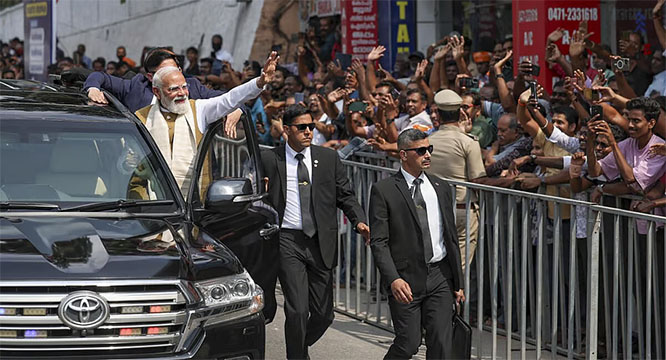
Prime Minister Narendra Modi, during his visit to Thiruvananthapuram on Friday, January 23, indicated that the Bharatiya Janata Party (BJP) is aiming to expand its political footprint in Kerala ahead of the Assembly elections scheduled in the coming months.

Speaking at a BJP-organised public meeting, Modi drew parallels between the party’s early electoral gains in Gujarat and its recent victory in the Thiruvananthapuram Municipal Corporation. The civic body win, which ended decades of Left control, was cited by the Prime Minister as a possible starting point for the party’s broader ambitions in the state.

Recalling BJP’s political trajectory in Gujarat, Modi said the party was largely insignificant before 1987 and received little media attention. He pointed out that the BJP’s first major breakthrough came with its victory in the Ahmedabad Municipal Corporation that year.

“Just as our journey in Gujarat began with one city, Kerala’s journey has also started with a single city,” Modi said, suggesting that the party’s municipal-level success could translate into wider electoral acceptance.

The Prime Minister alleged that successive governments led by the Left Democratic Front (LDF) and the United Democratic Front (UDF) had failed to adequately develop Thiruvananthapuram. He accused both fronts of corruption and neglect, claiming that basic infrastructure and facilities were denied to the capital city for decades.

According to Modi, the BJP’s control of the civic body represents a shift driven by public dissatisfaction with the existing political alternatives. He asserted that the BJP administration in Thiruvananthapuram had begun working towards development, though no specific details or timelines were outlined.

Addressing the gathering at Putharikandam Maidan, Modi said the BJP intended to project Thiruvananthapuram as a “model city,” reiterating his party’s commitment to governance-led change.

The Prime Minister’s visit to Kerala also included the inauguration of several development projects and the flagging off of new train services, as the BJP intensifies its political outreach in the poll-bound state.

Comments

Add new comment

  • Coastaldigest.com reserves the right to delete or block any comments.
  • Coastaldigset.com is not responsible for its readers’ comments.
  • Comments that are abusive, incendiary or irrelevant are strictly prohibited.
  • Please use a genuine email ID and provide your name to avoid reject.
News Network
February 3,2026

wind.jpg

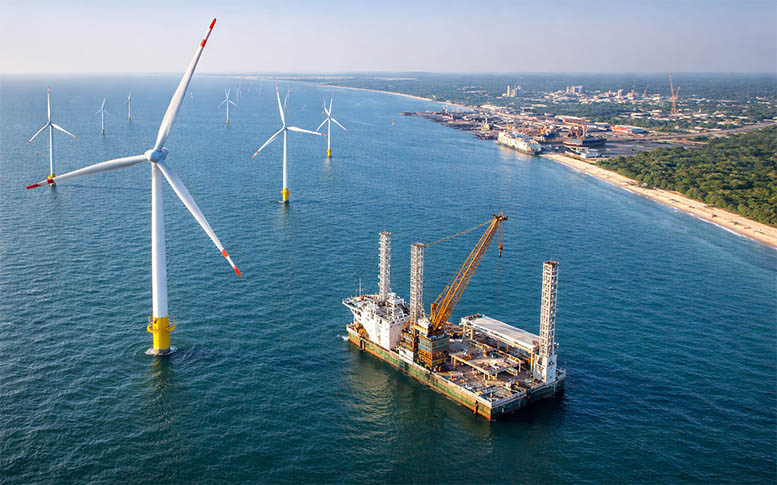
Dakshina Kannada MP Capt Brijesh Chowta has urged the Centre to give high priority to offshore wind energy generation along the Mangaluru coast, citing its strategic importance to India’s green energy and port-led development goals.

Raising the issue in the Lok Sabha under Rule 377, Chowta said studies by the National Institute of Oceanography have identified the Mangaluru coastline as part of India’s promising offshore wind ‘Zone-2’, covering nearly 6,490 sq km. He noted that the region’s relatively low exposure to cyclones and earthquakes makes it suitable for long-term offshore wind projects and called for its development as a dedicated offshore wind energy zone.

Highlighting the role of New Mangalore Port, Chowta said its modern infrastructure, multiple berths and heavy cargo-handling capacity position it well as a logistics hub for transporting and assembling large wind energy equipment.

He also pointed to the presence of major industrial units such as MRPL, OMPL, UPCL and the Mangaluru SEZ, which could serve as direct buyers of green power through power purchase agreements, improving project viability and speeding up execution.

With Karnataka’s peak power demand crossing 18,000 MW in early 2025, Chowta stressed the need to diversify renewable energy sources. He added that offshore wind projects in the Arabian Sea are strategically safer compared to the cyclone-prone Bay of Bengal.

Calling the project vital to India’s target of 500 GW of renewable energy by 2030, Chowta urged the Ministry of New and Renewable Energy to initiate resource assessments, pilot projects and stakeholder consultations at the earliest.

Comments

Add new comment

  • Coastaldigest.com reserves the right to delete or block any comments.
  • Coastaldigset.com is not responsible for its readers’ comments.
  • Comments that are abusive, incendiary or irrelevant are strictly prohibited.
  • Please use a genuine email ID and provide your name to avoid reject.