Iran death toll rises as protests continue; hundreds arrested

Al Jazeera
January 2, 2018

Tehran, Jan 2: A number of Iranians have died  amid ongoing nationwide anti-government protests that began last week in various cities across Iran.

Nine Iranians were killed in Isfahan province alone during anti-government protests on Monday night.

State TV said on Tuesday that six people were killed in Isfahan's central town Qahderijan - during a raid on a police station - and one more in Khomeinishahr.

According to state media, the rioters were attempting to break into the station to obtain weapons.

An 11-year-old boy and a 20-year-old man were among those killed in Khomeinishahr.

In addition, Iran's semi-official Mehr news agency said a member of Basij militia and a police officer were killed in Najafabad, 350km south of the capital Tehran, on Monday.

According to reports, an Iranian Revolutionary Guard Corps (IRGC) soldier was shot by an assailant using a hunting rifle in Najafabad.

Al Jazeera could not independently verify whether the IRGC member was the same police officer who was reported as being shot.

Overall, at least 21 people have died in Iran during six days of protests, according to state media.

In the same period, at least 20 people have been killed and about 450 people n arrested, with the Tehran governor's deputy giving the following breakdown: 200 on Saturday; 150 on Sunday; and 100 on Monday.

The detention figures for other Iranian cities were not available.

Khamenei's comments

On Tuesday, Iran's top authority, Supreme Leader Ayatollah Ali Khamenei, accused "enemies" of the state of stirring unrest in the country.

He said that "enemies" of Iran have allied and used the various means they have available including "money, weapons, politics, and intelligence services" to stir unrest as nationwide anti-government rallies continue.

"The dignity, security, and progress of the Iranian nation is owed to the self-sacrifice of the martyrs. What prevents enemies from exerting their atrocities is the spirit of courage, sacrifice, and faith within the nation," he said in a statement posted on his official website.

"I have something to say on these events, and I will speak to the dear people when the time is right.

"The Iranian nation will forever owe the dear martyrs, who left behind their homes and families, to stand against the wicked enemies."

Despite threats by the IRGC to put down the demonstrations, protesters have continued taking to the streets in various parts of Iran, in what has been described as the biggest show of dissent in the country since huge rallies took place in 2009.

The rallies began on December 28 in the second-largest city of Mashhad, prompted by anger over rising cost of living and the state of the economy.

"We cannot predict a time when the protests will come to an end," said Sadegh Zibakalam, an author and academic.

"But the protests will shake the people in power who must give priority to the people's demands and needs."

On Sunday, President Hassan Rouhani said Iranians have the right to protest but not violently.

"People are free to express their criticism and to protest," he said in televised remarks, his first since the rallies began.

"However, we need to pay attention to the manner of that criticism and protest. It should be in such a way that it will lead to the improvement of the people and state," he added.

"People have the right to protest, but those demonstrations should not make the public feel concerned about their lives and security."

Why are there protests taking place in Iran?

In May 2017, Rouhani, who belongs to the reformist bloc of Iran's political spectrum, decisively won re-election after garnering 57 percent of the vote in the country's presidential election.

That poll was the first since Rouhani negotiated a historic deal with world powers in 2015 to curb Iran's nuclear programme in exchange for sanctions relief.

Many in Iran hoped that the deal, by lifting many international sanctions, would ease the country's financial struggles. Yet, the benefits do not seem to have trickled down.

Ali Vaez, the Iran project director at the International Crisis Group who worked with all sides during the negotiations for the nuclear deal, said the fact that the nuclear deal did not quite deliver the results people expected played a key part in what is happening currently in Iran.

"The government inflated public expectations a lot," Vaez told Al Jazeera, noting that factors such as falling oil prices and doubts over the US commitment to the deal were also adversely affecting the Iranian economy.

"The reality is, however, that President Rouhani failed to pave the ground for the potential the nuclear deal created, and that has led to a lot of frustration in Iran," he said.

"President Rouhani over-promised and under-delivered."

Mohammad Ali Shabani, an Iranian political analyst and scholar, agreed.

"The issue is elevated expectations, that's where the danger comes in," he told Al Jazeera.

"People have been expecting better lives, partly as a result of Rouhani's promises in connection with the nuclear deal.

"It's not a matter of absolute poverty driving people into the streets.

"It's mostly about people thinking that 'We need more than this, we were actually promised more than what's happening, and we don't have the jobs that we were anticipating'."

Comments

Add new comment

  • Coastaldigest.com reserves the right to delete or block any comments.
  • Coastaldigset.com is not responsible for its readers’ comments.
  • Comments that are abusive, incendiary or irrelevant are strictly prohibited.
  • Please use a genuine email ID and provide your name to avoid reject.
News Network
February 3,2026

wind.jpg

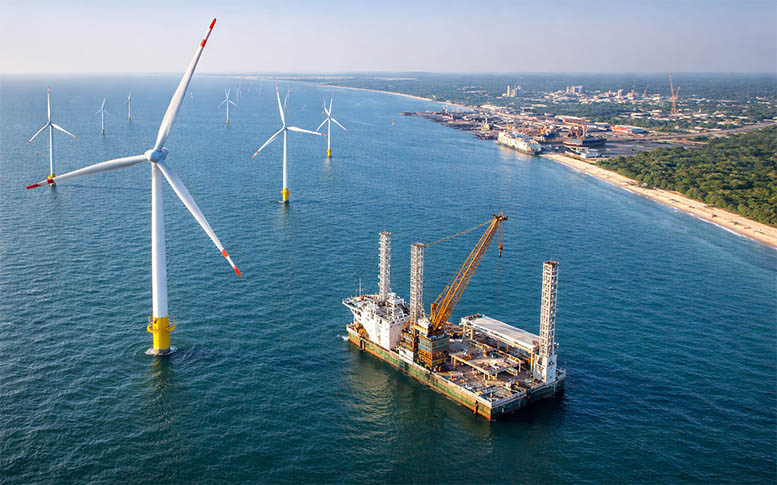
Dakshina Kannada MP Capt Brijesh Chowta has urged the Centre to give high priority to offshore wind energy generation along the Mangaluru coast, citing its strategic importance to India’s green energy and port-led development goals.

Raising the issue in the Lok Sabha under Rule 377, Chowta said studies by the National Institute of Oceanography have identified the Mangaluru coastline as part of India’s promising offshore wind ‘Zone-2’, covering nearly 6,490 sq km. He noted that the region’s relatively low exposure to cyclones and earthquakes makes it suitable for long-term offshore wind projects and called for its development as a dedicated offshore wind energy zone.

Highlighting the role of New Mangalore Port, Chowta said its modern infrastructure, multiple berths and heavy cargo-handling capacity position it well as a logistics hub for transporting and assembling large wind energy equipment.

He also pointed to the presence of major industrial units such as MRPL, OMPL, UPCL and the Mangaluru SEZ, which could serve as direct buyers of green power through power purchase agreements, improving project viability and speeding up execution.

With Karnataka’s peak power demand crossing 18,000 MW in early 2025, Chowta stressed the need to diversify renewable energy sources. He added that offshore wind projects in the Arabian Sea are strategically safer compared to the cyclone-prone Bay of Bengal.

Calling the project vital to India’s target of 500 GW of renewable energy by 2030, Chowta urged the Ministry of New and Renewable Energy to initiate resource assessments, pilot projects and stakeholder consultations at the earliest.

Comments

Add new comment

  • Coastaldigest.com reserves the right to delete or block any comments.
  • Coastaldigset.com is not responsible for its readers’ comments.
  • Comments that are abusive, incendiary or irrelevant are strictly prohibited.
  • Please use a genuine email ID and provide your name to avoid reject.
News Network
February 3,2026

manjeshwar.jpg

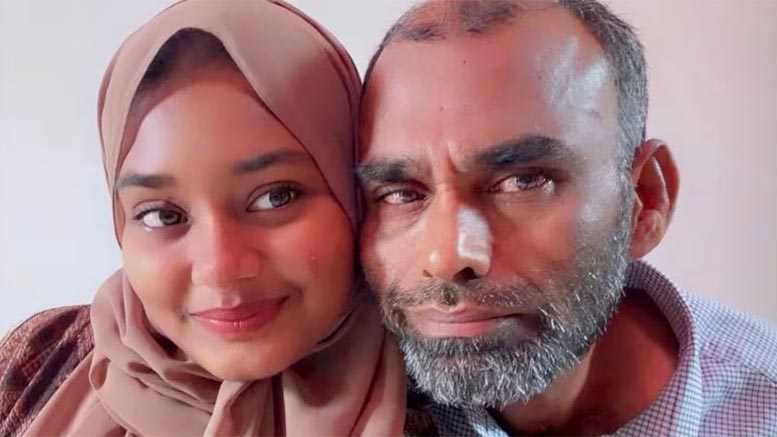
Kasaragod: An 18-year-old girl was stabbed to death at Thuminad in Manjeshwar panchayat on Monday, allegedly by her father following a domestic dispute. 

The victim has been identified as K U Mariyamath Jumaila. Her father, Umar Farooq, has been taken into police custody, Manjeshwar Station House Officer Inspector Ajith Kumar P said.

According to the police, Umar Farooq had been working in a West Asian country and returned home about three months ago. 

Family tensions reportedly escalated after his wife, Thahira (41), decided to seek a divorce and asked him to leave her life. Kasaragod district panchayat member Harshad Vorkady alleged that Umer was addicted to marijuana and frequently caused disturbances at home.

On Monday, Thahira asked Umar to come to her sister’s house in Thuminad to discuss the dispute. Jumaila accompanied her mother. 

Manjeshwar panchayat member Illiyas Thuminad said Umar arrived along with his brother, following which Thahira handed over gold ornaments and property documents to him and asked him to sever ties with her.

However, the police said a property dispute had been ongoing between Umar Farooq and his sister-in-law’s husband. During a heated argument, Umar allegedly attempted to attack the man with a sharp weapon. When Jumaila intervened to stop the assault, she was stabbed in the neck.

The teenager collapsed after bleeding profusely and was rushed to a private hospital in Mangaluru, where doctors declared her dead. Her body was later shifted to Mangalpady Taluk Hospital for post-mortem examination.

Jumaila was a former student of Sirajul Huda English Medium Higher Secondary School, Manjeshwar. 

Comments

Add new comment

  • Coastaldigest.com reserves the right to delete or block any comments.
  • Coastaldigset.com is not responsible for its readers’ comments.
  • Comments that are abusive, incendiary or irrelevant are strictly prohibited.
  • Please use a genuine email ID and provide your name to avoid reject.
News Network
January 23,2026

Karnataka Governor Thaawarchand Gehlot read only three lines from the 122-paragraph address prepared by the Congress-led state government while addressing the joint session of the Legislature on Thursday, effectively bypassing large sections critical of the BJP-led Union government.

The omitted portions of the customary Governor’s address outlined what the state government described as a “suppressive situation in economic and policy matters” under India’s federal framework. The speech also sharply criticised the Centre’s move to replace the Mahatma Gandhi National Rural Employment Guarantee Act (MGNREGA) with the Viksit Bharat–Guarantee for Rozgar and Ajeevika Mission (Gramin) Act, commonly referred to as the VB-GRAM (G) Act.

Governor Gehlot had earlier conveyed his objection to several paragraphs that were explicitly critical of the Union government. On Thursday, he confined himself to the opening lines — “I extend a warm welcome to all of you to the joint session of the State legislature. I am extremely pleased to address this august House” — before jumping directly to the concluding sentence of the final paragraph.

He ended the address by reading the last line of paragraph 122: “Overall, my government is firmly committed to doubling the pace of the State’s economic, social and physical development. Jai Hind — Jai Karnataka.”

According to the prepared speech, the Karnataka government demanded the scrapping of the VB-GRAM (G) Act, describing it as “contractor-centric” and detrimental to rural livelihoods, and called for the full restoration of MGNREGA. The state government argued that the new law undermines decentralisation, weakens labour protections, and centralises decision-making in violation of constitutional norms.

Key points from the unread sections of the speech:

•    Karnataka facing a “suppressive” economic and policy environment within the federal system

•    Repeal of MGNREGA described as a blow to rural livelihoods

•    VB-GRAM (G) Act accused of protecting corporate and contractor interests

•    New law alleged to weaken decentralised governance

•    Decision-making said to be imposed by the Centre without consulting states

•    Rights of Adivasis, women, backward classes and agrarian communities curtailed

•    Labourers allegedly placed under contractor control

•    States facing mounting fiscal stress due to central policies

•    VB-GRAM (G) Act accused of enabling large-scale corruption

Comments

Add new comment

  • Coastaldigest.com reserves the right to delete or block any comments.
  • Coastaldigset.com is not responsible for its readers’ comments.
  • Comments that are abusive, incendiary or irrelevant are strictly prohibited.
  • Please use a genuine email ID and provide your name to avoid reject.