Japan New Emperor Naruhito Formally Ascends Chrysanthemum Throne

Agencies
May 1, 2019

Tokyo, May 1: Japan's new Emperor Naruhito formally ascended the Chrysanthemum Throne on Wednesday, a day after his father's historic abdication, and vowed to stand with the people as the country begins a new imperial era.

In a brief address, his first to the nation since inheriting the throne, Naruhito vowed to "act according to the Constitution" while "always turning my thoughts to the people and standing with them".

Naruhito officially became emperor at the stroke of midnight but the process was formalised in the ritual on Wednesday morning, which was off-limits to female royals - even his wife Masako.

The emperor entered the Imperial Palace's Pine Room in formal Western clothing and a heavy gold chain of office, accompanied by male family members including his brother Akishino.

The 59-year-old was presented with the items his father Akihito relinquished a day earlier: sacred imperial treasures of a sword and a jewel, as well as the seal of state and his personal imperial seal.

The sole woman invitee was the only female member of Prime Minister Shinzo Abe's cabinet.

The ceremony took place on the first day of the new imperial era of Reiwa, meaning "beautiful harmony", which will last throughout Naruhito's reign.

Shortly afterwards, Empress Masako arrived by car at the palace in a diamond-studded tiara to join Naruhito, the nation's 126th emperor.

He said he would "reflect deeply" on the example set by his popular father Akihito, and that assuming the throne filled him with a "sense of solemnity".

Abe, replying on behalf of the people, said: "We are determined to create a bright future for a proud Japan filled with peace and hope at a time when the international situation is changing dramatically."

After heavy rain dampened celebrations for the abdication on Tuesday, Japanese took advantage of sunnier weather to flock to the Meiji Shrine in the heart of the capital where free sake was served ahead of a display of horseback archery.

Balancing act

Naruhito will make his first public appearance on Saturday when he will again address the people of Japan.

But the real pomp and ceremony will wait until October 22 when he and Masako will appear in elaborate traditional robes for a ceremony in the palace before parading through the streets of the capital to be congratulated by a host of world leaders and royals.

Naruhito will greet his first foreign head of state as emperor later this month, when US President Donald Trump visits Japan to meet the new monarch.

The Oxford-educated Naruhito faces the delicate balancing act of continuing his father's legacy of bringing the monarchy closer to the people while upholding the centuries-old traditions of the Chrysanthemum Throne.

Like his popular father Akihito, he has warned of the need to remember World War II "correctly," without downplaying Japan's early 20th-century militarism.

He has also spoken of the need to modernise the royal family, and vowed when he married Masako -- who left behind a promising diplomatic career -- to protect her "at any cost".

She has struggled, however, to adjust to palace life, including being subjected to enormous pressure to produce a male heir, and has suffered stress-induced "adjustment disorder" for much of their marriage.

The couple have one child, a 17-year-old daughter called Aiko, who cannot inherit the throne because she is female.

In a statement released on her birthday in December, Masako pledged to do her best despite feeling "insecure" about becoming empress.

In the candid statement, she said she was recovering and could "perform more duties than before", crediting the "powerful support" of the public.

A Different Japan

Naruhito is ascending the throne in a very different Japan to the one his father took over when he became emperor in 1989.

Then, Japan ruled the world economically, its technology was the envy of every industrialised nation, and its stock market was at highs unlikely to be matched again.

But following a "lost decade" after the bubble burst, Japan is locked in a battle against deflation and sluggish growth while its population ages rapidly.

Akihito's abdication, the first in 200 years, has resulted in an unprecedented 10-day public holiday for the famously hard-working Japanese, with many taking advantage of the break to travel.

But despite the holiday exodus, and steady driving rain on Tuesday night, crowds still gathered at Tokyo's famous Shibuya crossing at the clock struck midnight to welcome the Reiwa era.

"The emperor was a good person... He was the symbol of Japan," said Rika Yamamoto, a 24-year-old company employee sheltering under an umbrella on the crossing.

"I hope the new emperor will carry on the kindness the old emperor had."

Comments

Add new comment

  • Coastaldigest.com reserves the right to delete or block any comments.
  • Coastaldigset.com is not responsible for its readers’ comments.
  • Comments that are abusive, incendiary or irrelevant are strictly prohibited.
  • Please use a genuine email ID and provide your name to avoid reject.
News Network
January 20,2026

Mangaluru: In a major step towards strengthening rural innovation, the Office of the Principal Scientific Adviser (PSA) to the Government of India is supporting the establishment of RuTAGe Smart Village Centres (RSVCs) across the country through collaborations with academic institutions, civil society organisations and philanthropic partners.

As part of this national initiative, Nitte (Deemed to be University) will set up the first RSVCs in the region at Nitte GP in Udupi district and at the Nitte Health Centre, Sevanjali Trust, Farangipete, in Dakshina Kannada district. The centres will be inaugurated on January 21. In South India, the programme is being implemented by the Section Infin-8 Foundation (SI-8).

Speaking to reporters on Monday, SI-8 founder-director Vishwas US said experts from Nitte University and SI-8 would work closely with farmers, students, youth and local entrepreneurs to adapt and deploy technologies tailored to local needs.

Project head Prof Iddya Karunasagar, representing Nitte DU, said the RSVCs at Nitte and Farangipete would serve as demonstration hubs for a wide range of agriculture, energy, skill-development and assistive technologies. These include solar dryers for fruits, vegetables and crops; soil-testing solutions; power weeders and women-friendly farm tools; wind-powered devices for rural artisans; grain storage systems; grass-cutting and tree-climbing equipment; and liquid fertiliser production using cowshed waste.

SI-8 CEO Aravind C Kumar said the centres would also provide access to digital and knowledge-based platforms such as ISRO applications, government scheme portals, market linkage tools and gamified learning resources, along with assistive technologies for persons with visual impairments.

Highlighting the broader impact of the initiative, Principal Scientific Adviser Prof Ajay Kumar Sood said it demonstrated how applied research could bridge the rural–urban divide and help create self-reliant, technology-enabled villages.

The initiative has been made possible through philanthropic support from Dr NC Murthy of ACM Business Solutions, LLC, USA. Dr Sapna Poti, Director (Strategic Alliances) at the Office of the Principal Scientific Adviser, said the long-term objective is to build self-sufficient, technology-driven communities capable of generating sustainable livelihoods on their own.

Comments

Add new comment

  • Coastaldigest.com reserves the right to delete or block any comments.
  • Coastaldigset.com is not responsible for its readers’ comments.
  • Comments that are abusive, incendiary or irrelevant are strictly prohibited.
  • Please use a genuine email ID and provide your name to avoid reject.
News Network
January 20,2026

iran.jpg

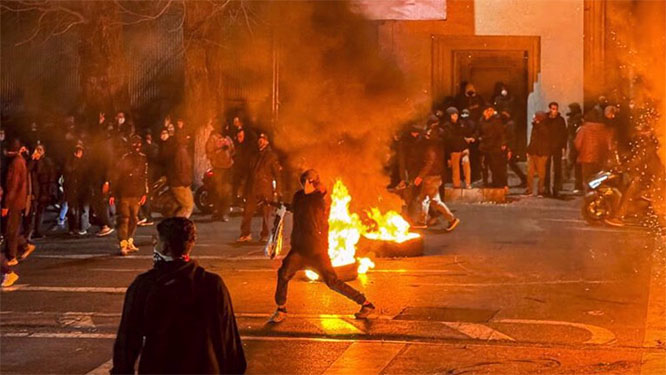
Iranian security and intelligence forces have captured more than 470 individuals in three provinces, identified as key figures behind the recent wave of violent unrest and terrorist activities linked to foreign-backed networks.

The Intelligence Ministry's provincial office in Khorasan Razavi announced on Monday the arrest of 192 armed terrorists, identified as the main agents behind recent riots in the region. 

According to an official statement, the detainees were involved in the killing of several security personnel and civilians, setting fire to mosques, public service facilities, and buses, as well as attacks on military and law enforcement centers.

The seized items from the group include several bulletproof vests, Kalashnikov rifles, hunting weapons, Winchester rifles, and various cold weapons such as daggers, swords, brass knuckles, tactical knives, crossbows, and chains.

Evidence indicates that some of the individuals were tied to hostile movements and terrorist organizations, with links overseas. Others were identified as members of violent criminal gangs, actively taking part in the unrest alongside their associates.

Simultaneously, in the western province of Lorestan, the IRGC announced the arrest of 134 individuals as the main leaders and influential field agents of a US-Israeli terrorist network.

The IRGC statement stated that these individuals formed terrorist cells during the recent unrest, committing "Daesh-like" acts.

They wounded security forces with firearms and cold weapons, and burned and destroyed public and private properties, including mosques, shops, banks, and private and public vehicles.

In the northwestern province of Zanjan, the police reported detaining 150 people identified as principal leaders and agents behind recent riots.

Authorities noted that these individuals were responsible for destroying public and private property and intentionally setting fire to vehicles in the province's squares.

Their crimes include shedding the blood of innocent people, destroying public and private property, attempting to enter military sites, disrupting public order, and spreading terror among citizens.

A variety of cold weapons were reportedly seized from the detainees.

What began late last month as peaceful protests over economic hardship across Iran turned violent after public statements by US and Israeli regime figures encouraged vandalism and disorder.

During the unrest, foreign-backed mercenaries rampaged through cities, killing security forces and civilians and damaging public property.

Comments

Add new comment

  • Coastaldigest.com reserves the right to delete or block any comments.
  • Coastaldigset.com is not responsible for its readers’ comments.
  • Comments that are abusive, incendiary or irrelevant are strictly prohibited.
  • Please use a genuine email ID and provide your name to avoid reject.
News Network
January 20,2026

iran.jpg

Iranian security and intelligence forces have captured more than 470 individuals in three provinces, identified as key figures behind the recent wave of violent unrest and terrorist activities linked to foreign-backed networks.

The Intelligence Ministry's provincial office in Khorasan Razavi announced on Monday the arrest of 192 armed terrorists, identified as the main agents behind recent riots in the region. 

According to an official statement, the detainees were involved in the killing of several security personnel and civilians, setting fire to mosques, public service facilities, and buses, as well as attacks on military and law enforcement centers.

The seized items from the group include several bulletproof vests, Kalashnikov rifles, hunting weapons, Winchester rifles, and various cold weapons such as daggers, swords, brass knuckles, tactical knives, crossbows, and chains.

Evidence indicates that some of the individuals were tied to hostile movements and terrorist organizations, with links overseas. Others were identified as members of violent criminal gangs, actively taking part in the unrest alongside their associates.

Simultaneously, in the western province of Lorestan, the IRGC announced the arrest of 134 individuals as the main leaders and influential field agents of a US-Israeli terrorist network.

The IRGC statement stated that these individuals formed terrorist cells during the recent unrest, committing "Daesh-like" acts.

They wounded security forces with firearms and cold weapons, and burned and destroyed public and private properties, including mosques, shops, banks, and private and public vehicles.

In the northwestern province of Zanjan, the police reported detaining 150 people identified as principal leaders and agents behind recent riots.

Authorities noted that these individuals were responsible for destroying public and private property and intentionally setting fire to vehicles in the province's squares.

Their crimes include shedding the blood of innocent people, destroying public and private property, attempting to enter military sites, disrupting public order, and spreading terror among citizens.

A variety of cold weapons were reportedly seized from the detainees.

What began late last month as peaceful protests over economic hardship across Iran turned violent after public statements by US and Israeli regime figures encouraged vandalism and disorder.

During the unrest, foreign-backed mercenaries rampaged through cities, killing security forces and civilians and damaging public property.

Comments

Add new comment

  • Coastaldigest.com reserves the right to delete or block any comments.
  • Coastaldigset.com is not responsible for its readers’ comments.
  • Comments that are abusive, incendiary or irrelevant are strictly prohibited.
  • Please use a genuine email ID and provide your name to avoid reject.