



Malian PM resigns as anger mounts over massacre

Agencies
April 19, 2019

Bamako, Apr 19: Mali's prime minister resigned along with his entire government on Thursday following criticism over their handling of an upsurge of violence in the centre of the country and a massacre last month that left 160 people dead.

A statement from President Ibrahim Boubacar Keita's office said he had accepted Soumeylou Boubeye Maiga's resignation, along with those of his ministers, two weeks after mass protests erupted over the rising tide of violence.

Lawmakers from both ruling and opposition parties had submitted a motion of no confidence against the government on Wednesday, blaming Maiga and his administration for failing to clamp down on the unrest.

"A prime minister will be named very soon and a new government will be put in place after consultations with all political forces" from both the ruling and opposition sides, the statement from Keita's office said. The president had on Tuesday said in a televised address that he had "heard the anger", without explicitly naming the prime minister.

The government had come under mounting pressure over its handling of violence in the restive Mopti region and especially a massacre on March 23 in which 160 people were killed in the village of Ogossagou near the border with Burkina Faso.

Members of the Dogon ethnic group -- a hunting and farming community with a long history of tension with the nomadic Fulani people over access to land -- were accused of being behind the mass killing.

Tens of thousands of people took to the streets of Bamako on April 5 to protest against the upsurge of violence, accusing the government of not doing enough to stop it. The protest was called by Muslim religious leaders, organisations representing the Fulani herding community, opposition parties and civil society groups.

Mali has been struggling to restore stability since Islamist extremists linked to Al-Qaeda took control of the country's vast desert north in early 2012. While the jihadists were largely driven out in a French-led military operation that began in January 2013, huge areas are still in the grip of lawlessness, despite a 2015 peace agreement with some armed groups that sought to definitively stamp out the Islamist threat.

Since then, militants have shifted from the north towards the more densely populated centre of the country, where they have sharpened ancient rivalries and ethnic conflicts that date back years. Jihadist attacks have also spread to Burkina Faso, Chad and Niger, forcing tens of thousands of people from their homes.

Comments

Add new comment

  • Coastaldigest.com reserves the right to delete or block any comments.
  • Coastaldigset.com is not responsible for its readers’ comments.
  • Comments that are abusive, incendiary or irrelevant are strictly prohibited.
  • Please use a genuine email ID and provide your name to avoid reject.
News Network
January 23,2026

Mangaluru: The Karnataka Government Polytechnic (KPT), Mangaluru, has achieved autonomous status from the All India Council for Technical Education (AICTE), becoming the first government polytechnic in the country to receive such recognition in its 78-year history. The status was granted by AICTE, New Delhi, and subsequently approved by the Karnataka Board of Technical Education in October last year.

Officials said the autonomy was conferred a few months ago. Until recently, AICTE extended autonomous status only to engineering colleges, excluding diploma institutions. However, with a renewed national focus on skill development, several government polytechnics across India have now been granted autonomy.

KPT, the second-largest polytechnic in Karnataka, was established in 1946 with four branches and has since expanded to offer eight diploma programmes, including computer science and polymer technology. The institution is spread across a 19-acre campus.

Ravindra M Keni, the first dean of the institution, told The Times of India that AICTE had proposed autonomous status for polytechnic institutions that are over 25 years old. “Many colleges applied. In the first round, 100 institutions were shortlisted, which was further narrowed down to 15 in the second round. We have already completed one semester after becoming an autonomous institution,” he said. He added that nearly 500 students are admitted annually across eight three-year diploma courses.

Explaining the factors that helped KPT secure autonomy, Keni said the institution has consistently recorded 100 per cent admissions and placements for its graduates. He also noted its strong performance in sports, with the college emerging champions for 12 consecutive years, along with active student participation in NCC and NSS activities.

Autonomous status allows KPT to design industry-oriented curricula, conduct examinations, prepare question papers, and manage academic documentation independently. The institution can also directly collaborate with industries and receive priority funding from AICTE or the Ministry of Education. While academic autonomy has been granted, financial control will continue to rest with the state government.

“There will be separate committees for examinations, question paper setting, boards of studies, and boards of examiners. The institution will now have the freedom to conduct admissions without government notifications and issue its own marks cards,” Keni said, adding that new academic initiatives would be planned after a year of functioning under the autonomous framework.

Comments

Add new comment

  • Coastaldigest.com reserves the right to delete or block any comments.
  • Coastaldigset.com is not responsible for its readers’ comments.
  • Comments that are abusive, incendiary or irrelevant are strictly prohibited.
  • Please use a genuine email ID and provide your name to avoid reject.
News Network
February 3,2026

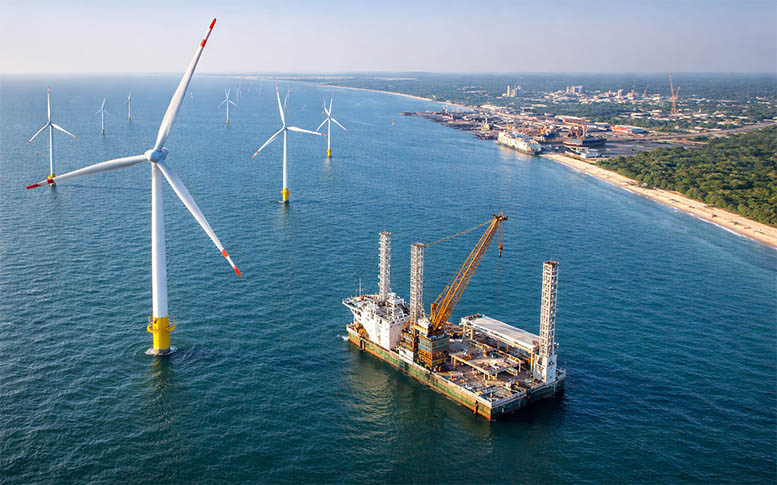
wind.jpg

Dakshina Kannada MP Capt Brijesh Chowta has urged the Centre to give high priority to offshore wind energy generation along the Mangaluru coast, citing its strategic importance to India’s green energy and port-led development goals.

Raising the issue in the Lok Sabha under Rule 377, Chowta said studies by the National Institute of Oceanography have identified the Mangaluru coastline as part of India’s promising offshore wind ‘Zone-2’, covering nearly 6,490 sq km. He noted that the region’s relatively low exposure to cyclones and earthquakes makes it suitable for long-term offshore wind projects and called for its development as a dedicated offshore wind energy zone.

Highlighting the role of New Mangalore Port, Chowta said its modern infrastructure, multiple berths and heavy cargo-handling capacity position it well as a logistics hub for transporting and assembling large wind energy equipment.

He also pointed to the presence of major industrial units such as MRPL, OMPL, UPCL and the Mangaluru SEZ, which could serve as direct buyers of green power through power purchase agreements, improving project viability and speeding up execution.

With Karnataka’s peak power demand crossing 18,000 MW in early 2025, Chowta stressed the need to diversify renewable energy sources. He added that offshore wind projects in the Arabian Sea are strategically safer compared to the cyclone-prone Bay of Bengal.

Calling the project vital to India’s target of 500 GW of renewable energy by 2030, Chowta urged the Ministry of New and Renewable Energy to initiate resource assessments, pilot projects and stakeholder consultations at the earliest.

Comments

Add new comment

  • Coastaldigest.com reserves the right to delete or block any comments.
  • Coastaldigset.com is not responsible for its readers’ comments.
  • Comments that are abusive, incendiary or irrelevant are strictly prohibited.
  • Please use a genuine email ID and provide your name to avoid reject.