




Celebration of ‘progress and unity’ marks Saudi Arabia’s 93rd National Day

Agencies
September 23, 2023

saudi.jpg

Riyadh, Sept 23: This day marks the 93rd National Day of Saudi Arabia, a day of pride and celebration for both its citizens and residents. Under the visionary leadership that prioritizes the well-being and prosperity of the people, this joyous occasion reflects upon the nation's remarkable journey toward a promising future.

As we commemorate this historic day, the Saudi Press Agency (SPA) takes us on a reflective journey through the life of a true statesman, King Abdulaziz bin Abdulrahman Al-Faisal Al Saud. On September 23, 1932, he achieved the monumental task of unifying the disparate tribes and scattered regions of the Arabian Peninsula, establishing the Kingdom of Saudi Arabia. This Islamic state, with Riyadh as its capital, adopted the Holy Qur'an and the Prophet's Sunnah as its constitution.

King Abdulaziz's remarkable journey began in Riyadh in 1293 Hijri. At the tender age of seven, he began learning to read and write, and at ten, his father, Imam Abdulrahman Al-Faisal, gathered scholars and tutors to instill in him the fundamentals of Islam and equestrian skills. His upbringing was greatly influenced by his courageous father and wise mother, Princess Sarah Al-Sudairi. King Abdulaziz shared a close bond with his siblings, including his sister, Princess Noura.

Throughout his life, King Abdulaziz encountered numerous challenges that shaped his character and instilled in him qualities of patience, strength, and statesmanship. One of the most trying moments was his forced departure from Riyadh in 1308 Hijri when he and his family settled in various locations, including the Yabrin oasis, Bahrain, and Kuwait. Despite these hardships, his determination to reclaim Riyadh, a city with deep historical significance for his family, remained unwavering.

In his twenties, King Abdulaziz embarked on a journey back to Riyadh, leading an army. His arrival in Al-Shaqib district marked the beginning of a pivotal chapter. Following a brief but intense battle, he restored order, ushering in a period of political stability that laid the foundation for Riyadh's growth and prosperity.

In 1320 Hijri, the people and notables of Riyadh pledged allegiance to him as Emir of Najd and Imam of its people. This victory brought much-needed stability after years of turmoil, setting the stage for Riyadh's transformation.

King Abdulaziz's tireless efforts to unite the nation, restore security, and combat the chaos of the Arabian Peninsula culminated in him becoming the revered leader of a newly constructed nation, securing a respected place for it on the world stage.

On September 23, 1932, King Abdulaziz issued a royal decree, renaming the state from the Kingdom of Hejaz and Najd and its annexes as the Kingdom of Saudi Arabia.

With the nation-building process well underway, King Abdulaziz turned his attention to expanding the Two Holy Mosques to serve pilgrims and establishing schools, hospitals, villages, and irrigation systems to support agriculture. These ambitious endeavors required substantial funding.

In the fall of 1933, oil exploration efforts began, initially yielding no results. However, persistence paid off when oil was discovered 5,000 feet underground in the "Ain Jet" area in 1939. This discovery marked a turning point, opening the doors to major state projects.

King Abdulaziz's interest extended beyond domestic affairs; he maintained diplomatic relations with countries worldwide, prioritizing the Kingdom's independence while fostering relations irrespective of religious, cultural, or civilizational differences. His approach garnered admiration from world leaders and media alike.

In Muharram 1373 Hijri, King Abdulaziz fell seriously ill in Taif, and he passed away on November 9, 1953. He was laid to rest in Al-Oud Cemetery, Riyadh.

As he built his nation, King Abdulaziz's commitment to education was unwavering. He avidly read Arabic books on various sciences, printing and distributing them freely. He sought the counsel of his citizens, guided by Islamic principles, fostering cooperation between the ruler and the governed.

King Abdulaziz's righteous approach, continued by his sons, laid the groundwork for the Kingdom's remarkable development, characterized by collaboration between the leadership and the people.

In a historic gathering on Muharram 25, 1355 Hijri, King Abdulaziz emphasized his desire for close ties with the people, stating, "My door is always open to anyone who wants to talk."

Under his leadership, Saudi Arabia forged strong relationships with Arab and Muslim nations and engaged the international community with transparency and pragmatism.

King Abdulaziz's legacy was the culmination of a rich history. The First Saudi State, founded by Imam Mohammed bin Saud in 1139 Hijri, laid the foundation for the nation's development. The Second Saudi State, initiated by Turki bin Abdullah bin Mohammed bin Saud, continued this legacy for approximately 68 years.

However, the true turning point came on the fifth day of Shawwal, 1319 Hijri, when King Abdulaziz reclaimed Riyadh with valor, establishing a state grounded in the principles of the Holy Qur'an and Prophet Mohammad's Sunnah.

Subsequent leaders, including King Saud, King Faisal, King Khalid, King Fahd, and King Abdullah, each contributed to the nation's progress and development, with a focus on education, healthcare, industry, and economic growth.

Today, under the wise leadership of Custodian of the Two Holy Mosques King Salman, Saudi Arabia continues its journey of growth, development, and global influence. The Kingdom boasts a strong economy that ranks among the world's top 20.

As we celebrate Saudi Arabia's National Day, we reflect on the nation's remarkable accomplishments, secure in the knowledge that its legacy of progress and unity will continue to thrive under the leadership of King Salman. Saudi Arabia stands as a testament to what can be achieved with vision, determination, and the unwavering commitment to the welfare of its people.

Comments

Add new comment

  • Coastaldigest.com reserves the right to delete or block any comments.
  • Coastaldigset.com is not responsible for its readers’ comments.
  • Comments that are abusive, incendiary or irrelevant are strictly prohibited.
  • Please use a genuine email ID and provide your name to avoid reject.
News Network
January 23,2026

Karnataka Governor Thaawarchand Gehlot read only three lines from the 122-paragraph address prepared by the Congress-led state government while addressing the joint session of the Legislature on Thursday, effectively bypassing large sections critical of the BJP-led Union government.

The omitted portions of the customary Governor’s address outlined what the state government described as a “suppressive situation in economic and policy matters” under India’s federal framework. The speech also sharply criticised the Centre’s move to replace the Mahatma Gandhi National Rural Employment Guarantee Act (MGNREGA) with the Viksit Bharat–Guarantee for Rozgar and Ajeevika Mission (Gramin) Act, commonly referred to as the VB-GRAM (G) Act.

Governor Gehlot had earlier conveyed his objection to several paragraphs that were explicitly critical of the Union government. On Thursday, he confined himself to the opening lines — “I extend a warm welcome to all of you to the joint session of the State legislature. I am extremely pleased to address this august House” — before jumping directly to the concluding sentence of the final paragraph.

He ended the address by reading the last line of paragraph 122: “Overall, my government is firmly committed to doubling the pace of the State’s economic, social and physical development. Jai Hind — Jai Karnataka.”

According to the prepared speech, the Karnataka government demanded the scrapping of the VB-GRAM (G) Act, describing it as “contractor-centric” and detrimental to rural livelihoods, and called for the full restoration of MGNREGA. The state government argued that the new law undermines decentralisation, weakens labour protections, and centralises decision-making in violation of constitutional norms.

Key points from the unread sections of the speech:

•    Karnataka facing a “suppressive” economic and policy environment within the federal system

•    Repeal of MGNREGA described as a blow to rural livelihoods

•    VB-GRAM (G) Act accused of protecting corporate and contractor interests

•    New law alleged to weaken decentralised governance

•    Decision-making said to be imposed by the Centre without consulting states

•    Rights of Adivasis, women, backward classes and agrarian communities curtailed

•    Labourers allegedly placed under contractor control

•    States facing mounting fiscal stress due to central policies

•    VB-GRAM (G) Act accused of enabling large-scale corruption

Comments

Add new comment

  • Coastaldigest.com reserves the right to delete or block any comments.
  • Coastaldigset.com is not responsible for its readers’ comments.
  • Comments that are abusive, incendiary or irrelevant are strictly prohibited.
  • Please use a genuine email ID and provide your name to avoid reject.
News Network
January 20,2026

DGP.jpg

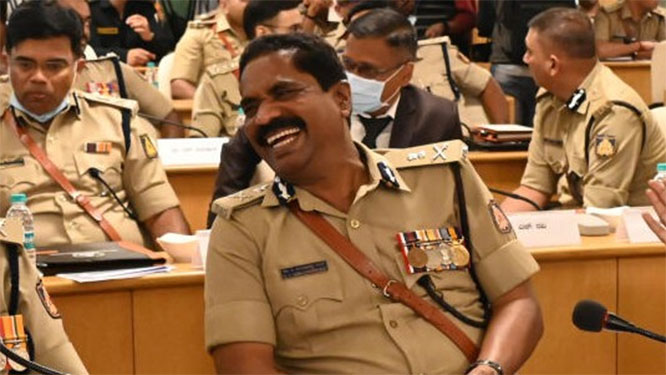
Karnataka DGP (Civil Rights Enforcement) K Ramachandra Rao was suspended with immediate effect, as per a state government order issued on Monday, 19 January. The order cited conduct unbecoming of a government servant and causing embarrassment to the state administration.

The Karnataka government suspended Rao after a purported video showed him in a compromising position with a woman inside his official chamber. The video went viral on social media. Rao rejected the videos outright, terming them "fabricated and false".

Who is K Ramachandra Rao?

Rao is a DGP-rank officer who was heading the Directorate of Civil Rights Enforcement until his suspension. He was promoted to DGP in September 2023 and assumed office in October 2023, the Sunday Guardian reported.

He also served as the Chairman and Managing Director of the Karnataka State Police Housing and Infrastructure Development Corporation Limited.

His stint as the Inspector General of Police (IGP) for the Southern Range was also marred by controversy. In 2014, during a cash seizure near Mysuru’s Yelwal, officials claimed the seized amount was ₹20 lakh, while the accused (Kerala-based merchants) claimed it was around ₹2.27 crore.

Rao, who was present during the seizure, denied all allegations. However, he was transferred soon after.

Allegations of collusion with a businessman surfaced, and a senior police officer was quoted by The Sunday Guardian as saying, “In Rao’s case, the CID has clearly mentioned that there was a great degree of lapse on the part of Rao and a deputy superintendent of police after it was brought to their notice that a few policemen, including a gunman attached to the IGP, were involved in the robbery.”

Rao had denied all wrongdoing in that incident. Despite past controversies, he rose to the state’s top police position, the Sunday Guardian reported.

Ranya Rao’s stepfather

Rao is the stepfather of Kannada actress Harshavardhini Ranya alias Ranya Rao, accused of orchestrating the illegal import of gold worth over ₹12.56 crore from Dubai to India along with two others — businessman Tarun Raju, and jewellery dealer Sahil Jain.

‘Obscene video’ controversy

A viral video showed Rao behaving inappropriately with a woman inside his office while in uniform.

The Karnataka government said in its Monday order that “vide videos and news reports widely broadcast on public news channels and media platforms, it is observed that Dr K Ramachandra Rao has acted in an obscene manner which is unbecoming of a Government Servant and also causing embarrassment to the Government.”

The order said the matter was examined by the state government, which found that the officer's conduct amounted to a violation of Rule 3 of the All India Services (Conduct) Rules, 1968.

The government said it is prima facie satisfied that "it is necessary to place Rao under suspension with immediate effect, pending inquiry".

During the suspension period, Rao will be entitled to subsistence allowance as per Rule 4 of the All India Services (Discipline and Appeal) Rules, 1969.

The order also places restrictions on his movement, stating that during the period of suspension, the officer must not leave headquarters under any circumstances without the written permission of the state government.

Comments

Add new comment

  • Coastaldigest.com reserves the right to delete or block any comments.
  • Coastaldigset.com is not responsible for its readers’ comments.
  • Comments that are abusive, incendiary or irrelevant are strictly prohibited.
  • Please use a genuine email ID and provide your name to avoid reject.
News Network
January 20,2026

Mangaluru: In a major step towards strengthening rural innovation, the Office of the Principal Scientific Adviser (PSA) to the Government of India is supporting the establishment of RuTAGe Smart Village Centres (RSVCs) across the country through collaborations with academic institutions, civil society organisations and philanthropic partners.

As part of this national initiative, Nitte (Deemed to be University) will set up the first RSVCs in the region at Nitte GP in Udupi district and at the Nitte Health Centre, Sevanjali Trust, Farangipete, in Dakshina Kannada district. The centres will be inaugurated on January 21. In South India, the programme is being implemented by the Section Infin-8 Foundation (SI-8).

Speaking to reporters on Monday, SI-8 founder-director Vishwas US said experts from Nitte University and SI-8 would work closely with farmers, students, youth and local entrepreneurs to adapt and deploy technologies tailored to local needs.

Project head Prof Iddya Karunasagar, representing Nitte DU, said the RSVCs at Nitte and Farangipete would serve as demonstration hubs for a wide range of agriculture, energy, skill-development and assistive technologies. These include solar dryers for fruits, vegetables and crops; soil-testing solutions; power weeders and women-friendly farm tools; wind-powered devices for rural artisans; grain storage systems; grass-cutting and tree-climbing equipment; and liquid fertiliser production using cowshed waste.

SI-8 CEO Aravind C Kumar said the centres would also provide access to digital and knowledge-based platforms such as ISRO applications, government scheme portals, market linkage tools and gamified learning resources, along with assistive technologies for persons with visual impairments.

Highlighting the broader impact of the initiative, Principal Scientific Adviser Prof Ajay Kumar Sood said it demonstrated how applied research could bridge the rural–urban divide and help create self-reliant, technology-enabled villages.

The initiative has been made possible through philanthropic support from Dr NC Murthy of ACM Business Solutions, LLC, USA. Dr Sapna Poti, Director (Strategic Alliances) at the Office of the Principal Scientific Adviser, said the long-term objective is to build self-sufficient, technology-driven communities capable of generating sustainable livelihoods on their own.

Comments

Add new comment

  • Coastaldigest.com reserves the right to delete or block any comments.
  • Coastaldigset.com is not responsible for its readers’ comments.
  • Comments that are abusive, incendiary or irrelevant are strictly prohibited.
  • Please use a genuine email ID and provide your name to avoid reject.