Gaza hospitals stretched to breaking point by Israeli bombing; infections exploding: UN

News Network
December 13, 2023

Gazahospital.jpg

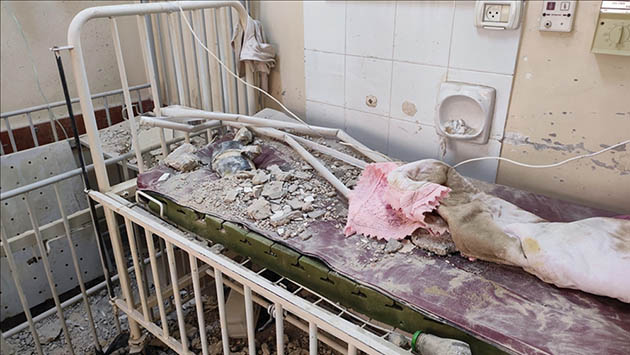
The United Nations says only 13 out of 36 hospitals in the Gaza Strip are partially functional as Israeli occupation forces are targeting medical centers and staff amid heavily bombardment of the besieged territory.

The United Nations Office for the Coordination of Humanitarian Affairs (OCHA) said in a report on Tuesday that the services provided to patients in operational hospitals are “limited” as they have run out of bed capacity.

“The two major hospitals in southern Gaza are operating at three times above their bed capacity while facing critical shortages of basic supplies and fuel,” the report said. “Only one of these hospitals is in the north.”

“[Bed] occupancy rates are now reaching 206 percent in inpatient departments and 250 percent in intensive care units. Additionally, these hospitals are providing shelter to thousands of displaced people,” it added citing data from the Gaza Ministry of Health.

The report also said that the maternity department at Kamal Adwan Hospital in Beit Lahiya, north of Gaza, was hit on Monday, resulting in the death of several mothers.

The hospital remains surrounded by Israeli troops and tanks, and fighting has been reported in its vicinity for three consecutive days, the OCHA report added.

“The hospital is currently accommodating 65 patients, including 12 children in the intensive care unit (ICU) and six newborns in incubators. About 3,000 internally displaced persons (IDPs) remain trapped in the facility and are awaiting evacuation with extreme shortages of water, food, and power reported.”

Ahmed al-Kahlout, head of the Kamal Adwan Hospital, told Al Jazeera that “no one can leave” the hospital, which has been under siege by Israeli tanks for four days and they face “extremely difficult” conditions.

The OCHA report also said that for the sixth consecutive day, Al-Awda Hospital in Jabalya (northern Gaza) remains surrounded by Israeli forces as fighting has been reported in its vicinity.

“Reportedly, 250 doctors, patients, and their family members are trapped inside the hospital,” it said, adding that two medical staff were reportedly killed by Israeli forces while on duty inside the hospital on Saturday.

“Let us be clear: Al-Awda is a functioning hospital with medical staff and many patients in vulnerable condition. Targeting medical workers as they care for their patients is utterly reprehensible, utterly inhumane,” The Doctors Without Borders (Medecins Sans Frontieres, or MSF) said on X, formerly Twitter.

The vicinities of Al-Aqsa Hospital in Deir Al-Balah and Al-Amal Hospital in Khan Younis were also repeatedly bombarded on Sunday and Monday which impeded the access of dozens of casualties, according to the report.

Gaza hospitals are routinely viewed as mere military targets for the Israeli military. Israel has repeatedly claimed that Hamas locates its operational bases in tunnels under hospitals and other civilian infrastructure, a charge Hamas dismisses.

The Israeli army has so far failed to show convincing evidence of  either Hamas-run tunnels or a military command center under the hospitals.

Elsewhere in its report, OCHA voiced concerns over the rapid spread of infectious diseases in the Gaza Strip due to the “overcrowding and poor sanitary conditions” at shelters provided by the United Nations Relief and Works Agency for Palestine Refugees in the Near East (UNRWA) in the south.

“There have been significant increases in some communicable diseases and conditions such as diarrhea, acute respiratory infections, skin infections, and hygiene-related conditions like lice,” the report said.

The report added that on average, UNRWA shelters located in the middle and southern areas are currently sheltering nine times the number of IDPs as was planned for.

Since the start of the offensive on October 7, Israel has killed at least 18,205 Palestinians, mostly women and children, and injured 49,645 others.

Thousands more are also missing and presumed dead under the rubble in Gaza, which is under “complete siege” by Israel.

Earlier, WHO Director-General Tedros Adhanom Ghebreyesus warned that “Gaza’s health system is on its knees and collapsing, with the risk expected to worsen with the deteriorating situation and approaching winter conditions. 

Comments

Add new comment

  • Coastaldigest.com reserves the right to delete or block any comments.
  • Coastaldigset.com is not responsible for its readers’ comments.
  • Comments that are abusive, incendiary or irrelevant are strictly prohibited.
  • Please use a genuine email ID and provide your name to avoid reject.
News Network
January 20,2026

DGP.jpg

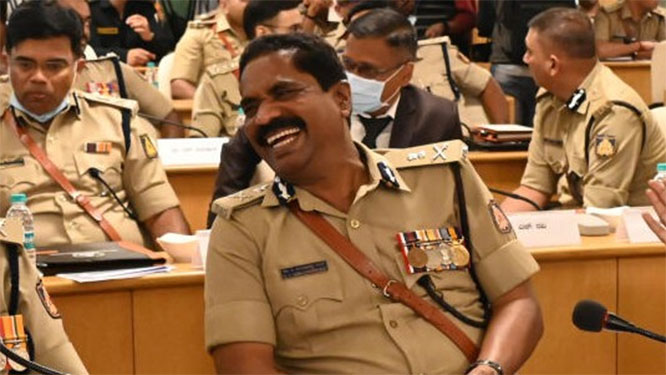
Karnataka DGP (Civil Rights Enforcement) K Ramachandra Rao was suspended with immediate effect, as per a state government order issued on Monday, 19 January. The order cited conduct unbecoming of a government servant and causing embarrassment to the state administration.

The Karnataka government suspended Rao after a purported video showed him in a compromising position with a woman inside his official chamber. The video went viral on social media. Rao rejected the videos outright, terming them "fabricated and false".

Who is K Ramachandra Rao?

Rao is a DGP-rank officer who was heading the Directorate of Civil Rights Enforcement until his suspension. He was promoted to DGP in September 2023 and assumed office in October 2023, the Sunday Guardian reported.

He also served as the Chairman and Managing Director of the Karnataka State Police Housing and Infrastructure Development Corporation Limited.

His stint as the Inspector General of Police (IGP) for the Southern Range was also marred by controversy. In 2014, during a cash seizure near Mysuru’s Yelwal, officials claimed the seized amount was ₹20 lakh, while the accused (Kerala-based merchants) claimed it was around ₹2.27 crore.

Rao, who was present during the seizure, denied all allegations. However, he was transferred soon after.

Allegations of collusion with a businessman surfaced, and a senior police officer was quoted by The Sunday Guardian as saying, “In Rao’s case, the CID has clearly mentioned that there was a great degree of lapse on the part of Rao and a deputy superintendent of police after it was brought to their notice that a few policemen, including a gunman attached to the IGP, were involved in the robbery.”

Rao had denied all wrongdoing in that incident. Despite past controversies, he rose to the state’s top police position, the Sunday Guardian reported.

Ranya Rao’s stepfather

Rao is the stepfather of Kannada actress Harshavardhini Ranya alias Ranya Rao, accused of orchestrating the illegal import of gold worth over ₹12.56 crore from Dubai to India along with two others — businessman Tarun Raju, and jewellery dealer Sahil Jain.

‘Obscene video’ controversy

A viral video showed Rao behaving inappropriately with a woman inside his office while in uniform.

The Karnataka government said in its Monday order that “vide videos and news reports widely broadcast on public news channels and media platforms, it is observed that Dr K Ramachandra Rao has acted in an obscene manner which is unbecoming of a Government Servant and also causing embarrassment to the Government.”

The order said the matter was examined by the state government, which found that the officer's conduct amounted to a violation of Rule 3 of the All India Services (Conduct) Rules, 1968.

The government said it is prima facie satisfied that "it is necessary to place Rao under suspension with immediate effect, pending inquiry".

During the suspension period, Rao will be entitled to subsistence allowance as per Rule 4 of the All India Services (Discipline and Appeal) Rules, 1969.

The order also places restrictions on his movement, stating that during the period of suspension, the officer must not leave headquarters under any circumstances without the written permission of the state government.

Comments

Add new comment

  • Coastaldigest.com reserves the right to delete or block any comments.
  • Coastaldigset.com is not responsible for its readers’ comments.
  • Comments that are abusive, incendiary or irrelevant are strictly prohibited.
  • Please use a genuine email ID and provide your name to avoid reject.
News Network
January 23,2026

Mangaluru: The Karnataka Government Polytechnic (KPT), Mangaluru, has achieved autonomous status from the All India Council for Technical Education (AICTE), becoming the first government polytechnic in the country to receive such recognition in its 78-year history. The status was granted by AICTE, New Delhi, and subsequently approved by the Karnataka Board of Technical Education in October last year.

Officials said the autonomy was conferred a few months ago. Until recently, AICTE extended autonomous status only to engineering colleges, excluding diploma institutions. However, with a renewed national focus on skill development, several government polytechnics across India have now been granted autonomy.

KPT, the second-largest polytechnic in Karnataka, was established in 1946 with four branches and has since expanded to offer eight diploma programmes, including computer science and polymer technology. The institution is spread across a 19-acre campus.

Ravindra M Keni, the first dean of the institution, told The Times of India that AICTE had proposed autonomous status for polytechnic institutions that are over 25 years old. “Many colleges applied. In the first round, 100 institutions were shortlisted, which was further narrowed down to 15 in the second round. We have already completed one semester after becoming an autonomous institution,” he said. He added that nearly 500 students are admitted annually across eight three-year diploma courses.

Explaining the factors that helped KPT secure autonomy, Keni said the institution has consistently recorded 100 per cent admissions and placements for its graduates. He also noted its strong performance in sports, with the college emerging champions for 12 consecutive years, along with active student participation in NCC and NSS activities.

Autonomous status allows KPT to design industry-oriented curricula, conduct examinations, prepare question papers, and manage academic documentation independently. The institution can also directly collaborate with industries and receive priority funding from AICTE or the Ministry of Education. While academic autonomy has been granted, financial control will continue to rest with the state government.

“There will be separate committees for examinations, question paper setting, boards of studies, and boards of examiners. The institution will now have the freedom to conduct admissions without government notifications and issue its own marks cards,” Keni said, adding that new academic initiatives would be planned after a year of functioning under the autonomous framework.

Comments

Add new comment

  • Coastaldigest.com reserves the right to delete or block any comments.
  • Coastaldigset.com is not responsible for its readers’ comments.
  • Comments that are abusive, incendiary or irrelevant are strictly prohibited.
  • Please use a genuine email ID and provide your name to avoid reject.
News Network
February 1,2026

Bengaluru, Feb 1: For travelers landing at Kempegowda International Airport (KIA), the sleek, wood-paneled curves of Terminal 2 promise a world-class welcome. But the famed “Garden City” charm quickly withers at the curb. As India’s aviation sector swells to record numbers—handling over 43 million passengers in Bengaluru alone this past year—the “last mile” has turned into a marathon of frustration.

The Bengaluru Logjam: Rules vs Reality

While the city awaits the 2027 completion of the Namma Metro Blue Line, the interim has been chaotic. Recent “decongestion” rules at Terminal 1 have pushed app-based cab pickups to distant parking zones, forcing weary passengers into a 20-minute walk with luggage.

“I landed after ten months away and felt like a stranger in my own city,” says Ruchitha Jain, a Koramangala resident. “My driver couldn’t find me, staff couldn’t guide me, and the so-called ‘Premium’ lane is just a fancy tax on convenience.”

•    The Cost of Distance: A 40-km cab ride can now easily cross ₹1,500, driven by demand pricing and airport surcharges.

•    The Bus Gap: While Vayu Vajra remains a lifeline, its ₹300–₹400 fare is often cited as the most expensive airport bus service in the country.

A National Pattern of Disconnect

The struggle is not unique to Karnataka. From Chennai’s coast to Hyderabad’s plateau, India’s airports tell a familiar story: brilliant runways, broken exits.

City:    Primary Issue   |    Recent Development

Bengaluru:    Cab pickup restrictions & distance  |    App-based taxis shifted to far parking zones; long walks and fare spikes reported

Chennai:    Multi-Level Parking (MLCP) hike  |    Passengers report 40-minute walks to reach cab pickup points

Hyderabad:    “Taxi mafia” & touting  |    Over 440 touting cases reported; security presence intensified

Mumbai:    Fare scams  |     Tourists charged ₹18,000 for just 400 metres, triggering police action

In Hyderabad, travelers continue to battle entrenched local groups that intimidate Uber and Ola drivers, pushing passengers toward overpriced private taxis. Chennai flyers, meanwhile, complain that reaching the designated pickup zones now takes longer than short-haul flights from cities like Coimbatore.

The ‘Budget Day’ Hope

As Finance Minister Nirmala Sitharaman presents the Union Budget 2026 today, the aviation sector is watching closely. With the government’s renewed emphasis on multimodal integration, there is cautious hope for funding toward seamless airport-metro-bus hubs.

The vision is clear: a future where planes, trains, and metros speak the same language. Until then, passengers at KIA—and airports across India—will continue to discover that the hardest part of flying isn’t the thousands of kilometres in the air, but the last few on the ground.

Comments

Add new comment

  • Coastaldigest.com reserves the right to delete or block any comments.
  • Coastaldigset.com is not responsible for its readers’ comments.
  • Comments that are abusive, incendiary or irrelevant are strictly prohibited.
  • Please use a genuine email ID and provide your name to avoid reject.