



Israel seeks to assassinate Hamas leaders around the world after war on Gaza

News Network
December 2, 2023

hamas.jpg

The Israeli regime's top spy agencies reportedly seek to “assassinate” Hamas leaders around the world after its brutal war on the Gaza Strip that has already killed more than 15,000 Palestinians ends. 

With orders from Israeli prime minister Benjamin Netanyahu, the regime’s top spy agencies, including Mossad, are working on plans to assassinate Hamas leaders living in Lebanon, Turkey, Qatar, and other Persian Gulf countries, The Wall Street Journal cites unnamed Israeli officials on Thursday. 

"The question now for Israeli leaders isn't about whether to try to kill Hamas leaders elsewhere in the world, but where—and how, the officials said," wrote the newspaper.

The report claimed that there had been calls to immediately assassinate Khaled Meshaal, one of the top Hamas leaders, after the Palestinian resistance group launched the Al-Aqsa Storm Operation against the regime on October 7.

Israel’s prime minister hinted at the regime’s plans for assassinations abroad in an address in late November, when he said that he had “instructed the Mossad to act against the heads of Hamas wherever they are.”

Israel has a long history of conducting assassination operations outside its borders in violation of international law, sovereignty of other countries, and human rights.

Israel’s minister of military affairs Yoav Gallant also threatened Hamas leaders back then, saying, “The struggle is worldwide.”

Efraim Halevy, a former Mossad director, however, told the Journal that the regime’s plan “is not supported by everyone.”

"Pursuing Hamas on a worldwide scale and trying to systematically remove all its leaders from this world is a desire to exact revenge, not a desire to achieve a strategic aim."

After Israel was caught off guard by Hamas operation on the occupied territories, it started a brutal bombing campaign against the besieged Gaza Strip. The regime has so far killed more than 15,000 Palestinians, about 40 percent of whom are children. 

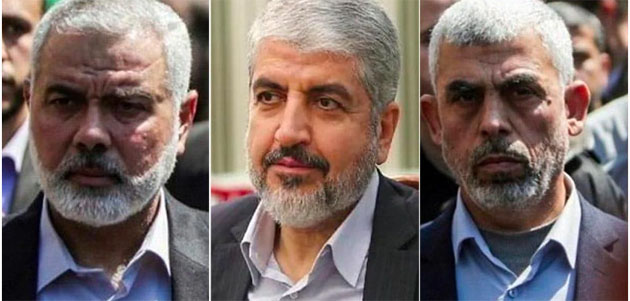
Some of the big names that may feature in Mossad's kill list are Ismail Haniyeh, Mohammed Deif, Yahya Sinwar and Khaled Mashal. 

Ismail Haniyeh

Haniyeh, 60, is a politician who is a former Palestinian prime minister. He was elected as the head of Hamas' political bureau in 2017.  In 2006, while serving as the Palestinian PM, Haniyeh was the subject of an assassination plot using a poison-filled letter. 

Haniyeh lives in voluntary exile, splitting his time between Qatar and Turkey. 

Mohammed Deif

Deif heads Hamas' military wing, the Ezzdine al-Qassam Brigades, and is Israel's public enemy number one. Israeli authorities have tried to assassinate him at least six times, as per reports. He has also been on the US list of "international terrorists" since 2015.

The audio message at the start of the October 7 Hamas attack on Israel, dubbed the "Al-Aqsa Flood", carried Deif's voice. His current whereabouts are unknown but Israel believes he is fighting alongside Hamas fighters in the Gaza Strip.

Yahya Sinwar

Sinwar, 61, is a former commander of the Ezzdine al-Qassam Brigades and was elected in 2017 as head of Hamas in Gaza. He has spent 23 years in Israeli jails before his release in 2011 in a prisoner exchange involving French-Israeli soldier Gilad Shalit who was held captive by Hamas.

Some of the Israeli hostages taken to Gaza have spoken about encountering Sinwar during their captivity. 

Khaled Mashal

Mashal is a founding member of Hamas Politburo and was the chairman until 2017. His current whereabouts are believed to be in Qatar.

Mashal was at the centre of a sensational assassination attempt in Jordan in 1997 when Mossad agents, posing as Canadian tourists, sprayed a deadly toxin into one of his ears. The Mossad kill-team was captured and Mashal fell into a coma.

US President Bill Clinton had to intervene and the then Mossad chief Danny Yatom had to fly to Amman with an antidote.

Comments

Add new comment

  • Coastaldigest.com reserves the right to delete or block any comments.
  • Coastaldigset.com is not responsible for its readers’ comments.
  • Comments that are abusive, incendiary or irrelevant are strictly prohibited.
  • Please use a genuine email ID and provide your name to avoid reject.
News Network
February 1,2026

Bengaluru, Feb 1: For travelers landing at Kempegowda International Airport (KIA), the sleek, wood-paneled curves of Terminal 2 promise a world-class welcome. But the famed “Garden City” charm quickly withers at the curb. As India’s aviation sector swells to record numbers—handling over 43 million passengers in Bengaluru alone this past year—the “last mile” has turned into a marathon of frustration.

The Bengaluru Logjam: Rules vs Reality

While the city awaits the 2027 completion of the Namma Metro Blue Line, the interim has been chaotic. Recent “decongestion” rules at Terminal 1 have pushed app-based cab pickups to distant parking zones, forcing weary passengers into a 20-minute walk with luggage.

“I landed after ten months away and felt like a stranger in my own city,” says Ruchitha Jain, a Koramangala resident. “My driver couldn’t find me, staff couldn’t guide me, and the so-called ‘Premium’ lane is just a fancy tax on convenience.”

•    The Cost of Distance: A 40-km cab ride can now easily cross ₹1,500, driven by demand pricing and airport surcharges.

•    The Bus Gap: While Vayu Vajra remains a lifeline, its ₹300–₹400 fare is often cited as the most expensive airport bus service in the country.

A National Pattern of Disconnect

The struggle is not unique to Karnataka. From Chennai’s coast to Hyderabad’s plateau, India’s airports tell a familiar story: brilliant runways, broken exits.

City:    Primary Issue   |    Recent Development

Bengaluru:    Cab pickup restrictions & distance  |    App-based taxis shifted to far parking zones; long walks and fare spikes reported

Chennai:    Multi-Level Parking (MLCP) hike  |    Passengers report 40-minute walks to reach cab pickup points

Hyderabad:    “Taxi mafia” & touting  |    Over 440 touting cases reported; security presence intensified

Mumbai:    Fare scams  |     Tourists charged ₹18,000 for just 400 metres, triggering police action

In Hyderabad, travelers continue to battle entrenched local groups that intimidate Uber and Ola drivers, pushing passengers toward overpriced private taxis. Chennai flyers, meanwhile, complain that reaching the designated pickup zones now takes longer than short-haul flights from cities like Coimbatore.

The ‘Budget Day’ Hope

As Finance Minister Nirmala Sitharaman presents the Union Budget 2026 today, the aviation sector is watching closely. With the government’s renewed emphasis on multimodal integration, there is cautious hope for funding toward seamless airport-metro-bus hubs.

The vision is clear: a future where planes, trains, and metros speak the same language. Until then, passengers at KIA—and airports across India—will continue to discover that the hardest part of flying isn’t the thousands of kilometres in the air, but the last few on the ground.

Comments

Add new comment

  • Coastaldigest.com reserves the right to delete or block any comments.
  • Coastaldigset.com is not responsible for its readers’ comments.
  • Comments that are abusive, incendiary or irrelevant are strictly prohibited.
  • Please use a genuine email ID and provide your name to avoid reject.
News Network
February 3,2026

wind.jpg

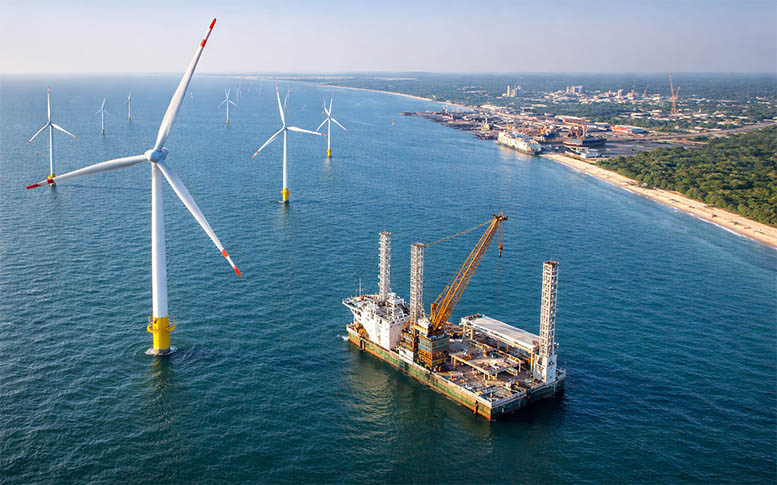
Dakshina Kannada MP Capt Brijesh Chowta has urged the Centre to give high priority to offshore wind energy generation along the Mangaluru coast, citing its strategic importance to India’s green energy and port-led development goals.

Raising the issue in the Lok Sabha under Rule 377, Chowta said studies by the National Institute of Oceanography have identified the Mangaluru coastline as part of India’s promising offshore wind ‘Zone-2’, covering nearly 6,490 sq km. He noted that the region’s relatively low exposure to cyclones and earthquakes makes it suitable for long-term offshore wind projects and called for its development as a dedicated offshore wind energy zone.

Highlighting the role of New Mangalore Port, Chowta said its modern infrastructure, multiple berths and heavy cargo-handling capacity position it well as a logistics hub for transporting and assembling large wind energy equipment.

He also pointed to the presence of major industrial units such as MRPL, OMPL, UPCL and the Mangaluru SEZ, which could serve as direct buyers of green power through power purchase agreements, improving project viability and speeding up execution.

With Karnataka’s peak power demand crossing 18,000 MW in early 2025, Chowta stressed the need to diversify renewable energy sources. He added that offshore wind projects in the Arabian Sea are strategically safer compared to the cyclone-prone Bay of Bengal.

Calling the project vital to India’s target of 500 GW of renewable energy by 2030, Chowta urged the Ministry of New and Renewable Energy to initiate resource assessments, pilot projects and stakeholder consultations at the earliest.

Comments

Add new comment

  • Coastaldigest.com reserves the right to delete or block any comments.
  • Coastaldigset.com is not responsible for its readers’ comments.
  • Comments that are abusive, incendiary or irrelevant are strictly prohibited.
  • Please use a genuine email ID and provide your name to avoid reject.
News Network
January 23,2026

Mangaluru: The Karnataka Government Polytechnic (KPT), Mangaluru, has achieved autonomous status from the All India Council for Technical Education (AICTE), becoming the first government polytechnic in the country to receive such recognition in its 78-year history. The status was granted by AICTE, New Delhi, and subsequently approved by the Karnataka Board of Technical Education in October last year.

Officials said the autonomy was conferred a few months ago. Until recently, AICTE extended autonomous status only to engineering colleges, excluding diploma institutions. However, with a renewed national focus on skill development, several government polytechnics across India have now been granted autonomy.

KPT, the second-largest polytechnic in Karnataka, was established in 1946 with four branches and has since expanded to offer eight diploma programmes, including computer science and polymer technology. The institution is spread across a 19-acre campus.

Ravindra M Keni, the first dean of the institution, told The Times of India that AICTE had proposed autonomous status for polytechnic institutions that are over 25 years old. “Many colleges applied. In the first round, 100 institutions were shortlisted, which was further narrowed down to 15 in the second round. We have already completed one semester after becoming an autonomous institution,” he said. He added that nearly 500 students are admitted annually across eight three-year diploma courses.

Explaining the factors that helped KPT secure autonomy, Keni said the institution has consistently recorded 100 per cent admissions and placements for its graduates. He also noted its strong performance in sports, with the college emerging champions for 12 consecutive years, along with active student participation in NCC and NSS activities.

Autonomous status allows KPT to design industry-oriented curricula, conduct examinations, prepare question papers, and manage academic documentation independently. The institution can also directly collaborate with industries and receive priority funding from AICTE or the Ministry of Education. While academic autonomy has been granted, financial control will continue to rest with the state government.

“There will be separate committees for examinations, question paper setting, boards of studies, and boards of examiners. The institution will now have the freedom to conduct admissions without government notifications and issue its own marks cards,” Keni said, adding that new academic initiatives would be planned after a year of functioning under the autonomous framework.

Comments

Add new comment

  • Coastaldigest.com reserves the right to delete or block any comments.
  • Coastaldigset.com is not responsible for its readers’ comments.
  • Comments that are abusive, incendiary or irrelevant are strictly prohibited.
  • Please use a genuine email ID and provide your name to avoid reject.