Israeli genocide leaves 1.10 lakh Gazans killed, injured or missing: Euro-Med

News Network
February 5, 2024

gaza.jpg

A Geneva-based human rights organization has provided a gruesome report on the vast trail of death and destruction left by four months of Israel's genocidal war on the besieged Gaza Strip. 

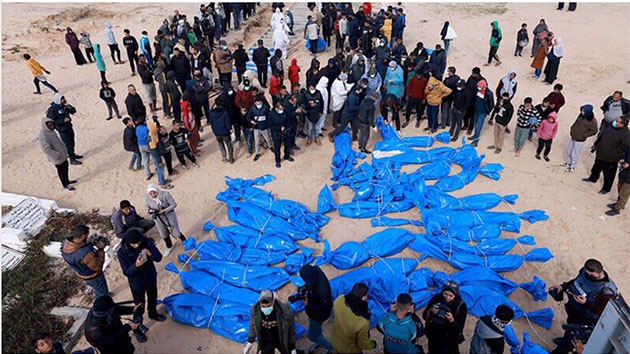
"Approximately 110,000 Palestinians are reported killed, missing and injured, leaving many suffering long-term disabilities four months into Israel’s genocide in the Gaza Strip," Euro-Med Human Rights Monitor said in a statement issued on Sunday.

According to Euro-Med's report, the figure includes a total of 35,096 fatalities -- 32,220 of whom civilians -- including 12,345 children, 7,656 women, 309 health personnel, 41 civil defense personnel, and 121 journalists.

The death toll provided by the rights organization encompasses those who have been trapped beneath the debris of buildings hit by Israeli air and artillery strikes for more than 14 consecutive days and are, therefore, presumed dead.

Euro-Med said the number of those wounded throughout the Israeli war of aggression stands at 67,240, including hundreds who have suffered critical injuries.

Israel not heeding ICJ's ruling

Euro-Med's report added that the Israeli atrocities continue unabated despite an interim ruling that was issued by the International Court of Justice last week, obliging the regime to take all possible measures to prevent genocide against Gaza's population.

"Within a week of the International Court of Justice’s ruling, the Israeli army killed over 1,048 Palestinians—most of them civilians—and injured over 1,800 others, and carried out 108 massacres," the rights organization said.

It added that continuation of the regime's crimes is "against international humanitarian law, [and] the 1949 Geneva Convention, and amounts to war crimes according to the Rome Statute, which governs the International Criminal Court."

The rights organization also urged the international community to act swiftly "to impose a binding executive decision on the International Court of Justice’s ruling, establish an immediate ceasefire [in Gaza], [and] guarantee the safety of civilians and their return to their homes."

Mass displacements

Throughout its unrelenting aggression, the Israeli military has uprooted about two million Palestinians, approximately 90 percent of the total population of Gaza, from their homes and residential areas amid a lack of safe shelters, the Euro-Med said.

It added that the regime's displacement spree has led to complete destruction of 79,200 housing units and partial damage to 207,000 units.

"...Israel has targeted more than 245 square kilometers, [which accounts for] 67 percent of the entire Gaza Strip. This includes all of Gaza City and the Strip’s northern regions, where residents have been ordered to evacuate since late October. The majority of them have not yet been able to return; neither have residents of large areas in the central and southern sections of the Strip that Israel had designated as safe areas," the report said.

Elsewhere in its report, the rights organization warned that the Israeli military aggression is apparently aimed at re-occupying Gaza -- from which the regime withdrew in 2005.

"Israel continues to escalate its military assaults against Palestinian civilians in an apparent attempt to expand its territory to include the entire Gaza Strip [by] uprooting the vast majority of the Strip’s population in violation of international law. This likely amounts to war crimes, crimes against humanity, and genocide," the rights group said.

It also emphasized that the regime is deliberately targeting civilian infrastructure in order to cause as many casualties, material losses, and as much general destruction as possible as a form of retaliation and collective punishment.

According to Euro-Med Monitor’s team, the facilities targeted by Israel during its ongoing attacks include 334 schools, 1,720 industrial facilities, 183 health facilities, 478 mosques, three churches, 171 press offices, and 199 archaeological sites.

 

Comments

Add new comment

  • Coastaldigest.com reserves the right to delete or block any comments.
  • Coastaldigset.com is not responsible for its readers’ comments.
  • Comments that are abusive, incendiary or irrelevant are strictly prohibited.
  • Please use a genuine email ID and provide your name to avoid reject.
News Network
February 1,2026

Bengaluru: Karnataka Deputy Chief Minister D K Shivakumar on Sunday criticised the Union Budget presented by Finance Minister Nirmala Sitharaman, claiming it offered no tangible benefit to the state.

Though he said he was yet to study the budget in detail, Shivakumar asserted that Karnataka had gained little from it. “There is no benefit for our state from the central budget. I was observing it. They have now named a programme after Mahatma Gandhi, after repealing the MGNREGA Act that was named after him,” he said.

Speaking to reporters here, the Deputy Chief Minister demanded the restoration of MGNREGA, and made it clear that the newly enacted rural employment scheme — VB-G RAM G — which proposes a 60:40 fund-sharing formula between the Centre and the states, would not be implemented in Karnataka.

“I don’t see any major share for our state in this budget,” he added.

Shivakumar, who also holds charge of Bengaluru development, said there were high expectations for the city from the Union Budget. “The Prime Minister calls Bengaluru a ‘global city’, but what has the Centre done for it?” he asked.

He also drew attention to the problems faced by sugar factories, particularly those in the cooperative sector, alleging a lack of timely decisions and support from the central government.

Noting that the Centre has the authority to fix the minimum support price (MSP) for agricultural produce, Shivakumar said the Union government must take concrete steps to protect farmers’ interests.

Comments

Add new comment

  • Coastaldigest.com reserves the right to delete or block any comments.
  • Coastaldigset.com is not responsible for its readers’ comments.
  • Comments that are abusive, incendiary or irrelevant are strictly prohibited.
  • Please use a genuine email ID and provide your name to avoid reject.
News Network
January 23,2026

oscar.jpg

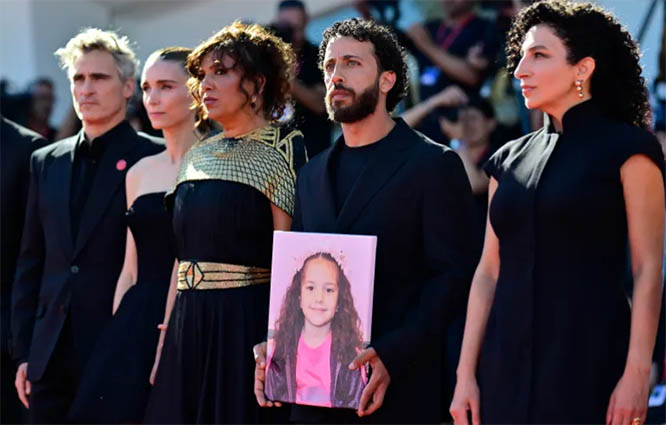
The Voice of Hind Rajab, inspired by the tragic final moments of a young Palestinian girl killed by Israeli fire in Gaza, has been nominated for an Academy Award in the Best International Feature Film category.

Directed by Tunisian filmmaker Kaouther Ben Hania, the film recounts the true story of five-year-old Hind Rajab, who lost her life in January 2024 while fleeing Israeli bombardment with her family.

The film features the real audio of Hind’s desperate call to the Palestinian Red Crescent Society, where she pleaded for help moments before the vehicle she was in was struck by 355 bullets.

The haunting narrative begins with a brief call made from the besieged Tel al-Hawa neighborhood of Gaza, where gunfire and armored vehicles drowned out every sound.

After witnessing the brutal killing of her family, she made a trembling call, her voice reduced to a whisper as she spoke of the massacre and her unbearable loneliness as the sole survivor.

Premiering at the Venice International Film Festival in September 2025, The Voice of Hind Rajab garnered widespread acclaim, receiving a record-setting 23-minute standing ovation and the Silver Lion Grand Jury Prize, the festival’s second-highest honor.

In her acceptance speech, Ben Hania dedicated the film to humanitarian workers and first responders in Gaza, emphasizing that Hind's voice symbolizes countless civilians affected by war.

She aims to give voice to victims often reduced to mere statistics, highlighting the broader suffering of civilians in war zones.

The film’s Oscar nomination underscores its powerful storytelling and ethical approach to depicting real-life tragedy, making it a crucial piece of contemporary cinema.

It serves not only as a narration of individual tragedy but also as an artistic and documentary response to the silence and censorship that often overshadow West Asian struggles and wars.

Using an innovative method she calls docufiction, Ben Hania bridges unvarnished reality and narrative structure, creating a work that is both artistically valuable and socially impactful.

Born in 1977 in Sidi Bouzid—later the epicenter of the Arab revolution—her background profoundly influenced her worldview and artistic approach.

She is a graduate of the Higher School of Audiovisual Arts of Tunis, Pantheon-Sorbonne University, and La Fémis in Paris, where her studies equipped her with the technical and theoretical tools needed to address complex subjects. 

Comments

Add new comment

  • Coastaldigest.com reserves the right to delete or block any comments.
  • Coastaldigset.com is not responsible for its readers’ comments.
  • Comments that are abusive, incendiary or irrelevant are strictly prohibited.
  • Please use a genuine email ID and provide your name to avoid reject.
News Network
January 20,2026

Mangaluru: In a major step towards strengthening rural innovation, the Office of the Principal Scientific Adviser (PSA) to the Government of India is supporting the establishment of RuTAGe Smart Village Centres (RSVCs) across the country through collaborations with academic institutions, civil society organisations and philanthropic partners.

As part of this national initiative, Nitte (Deemed to be University) will set up the first RSVCs in the region at Nitte GP in Udupi district and at the Nitte Health Centre, Sevanjali Trust, Farangipete, in Dakshina Kannada district. The centres will be inaugurated on January 21. In South India, the programme is being implemented by the Section Infin-8 Foundation (SI-8).

Speaking to reporters on Monday, SI-8 founder-director Vishwas US said experts from Nitte University and SI-8 would work closely with farmers, students, youth and local entrepreneurs to adapt and deploy technologies tailored to local needs.

Project head Prof Iddya Karunasagar, representing Nitte DU, said the RSVCs at Nitte and Farangipete would serve as demonstration hubs for a wide range of agriculture, energy, skill-development and assistive technologies. These include solar dryers for fruits, vegetables and crops; soil-testing solutions; power weeders and women-friendly farm tools; wind-powered devices for rural artisans; grain storage systems; grass-cutting and tree-climbing equipment; and liquid fertiliser production using cowshed waste.

SI-8 CEO Aravind C Kumar said the centres would also provide access to digital and knowledge-based platforms such as ISRO applications, government scheme portals, market linkage tools and gamified learning resources, along with assistive technologies for persons with visual impairments.

Highlighting the broader impact of the initiative, Principal Scientific Adviser Prof Ajay Kumar Sood said it demonstrated how applied research could bridge the rural–urban divide and help create self-reliant, technology-enabled villages.

The initiative has been made possible through philanthropic support from Dr NC Murthy of ACM Business Solutions, LLC, USA. Dr Sapna Poti, Director (Strategic Alliances) at the Office of the Principal Scientific Adviser, said the long-term objective is to build self-sufficient, technology-driven communities capable of generating sustainable livelihoods on their own.

Comments

Add new comment

  • Coastaldigest.com reserves the right to delete or block any comments.
  • Coastaldigset.com is not responsible for its readers’ comments.
  • Comments that are abusive, incendiary or irrelevant are strictly prohibited.
  • Please use a genuine email ID and provide your name to avoid reject.