At midnight, Riyadh erupts in cheers for a woman in car

Agencies
June 24, 2018

Riyadh, Jun 24: Every few metres someone -- a newlywed couple, a group of young girls with balloons -- stops Samar Almogren to cheer her on or flash her a thumbs-up.

It's midnight in Riyadh, and she's making her way across the city she was born and raised in, finally in the driver's seat of her own car.

Saudi Arabia's notorious ban on women driving ended today. After drinking tea and counting down the minutes, at midnight, Samar -- a TV anchor and mother-of-three -- went upstairs to kiss her four-year-old son Salloum goodnight.

She then put on a flowing white abaya, strode out of her front door, accompanied by her best friend, and walked towards a white GMC parked outside her house in the Narjiss neighbourhood in northern Riyadh.

Across the street, her neighbour had just arrived home with two bags of groceries. He paused, placed his shopping on the hood of his car, and watched her closely.

In her cateye glasses, wedge sandals and nose ring, she did not skip a beat. She smiled, climbed in, started the ignition and pulled out of her parking spot.

"I have goosebumps," she says as she turns onto the King Fahd highway, the main road in the Saudi capital.

She drives in silence for a few minutes, glancing up at the moon, then adds: "I never in my life imagined I would be driving here. On this road. Driving."

The question of whether Saudi Arabian society is "ready" for women to drive has been hotly debated in the kingdom.

In 2013, Sheikh Saleh al-Luhaidan, a notable Saudi cleric, announced driving could damage a woman's ovaries and push the pelvis up, thus leading to birth defects.

Resistance to the end of the driving ban still resonates across some segments of society, with songs titled "You will not drive" and "No woman no drive" popping up on social media in recent weeks.

But as she drives across Riyadh, men and women stopped Samar's SUV to congratulate her and voice their support.

A group of men in their 20s, waiting for the police assessment of a minor accident, spot Samar driving by. They smile and cheer. The policeman, too, looks up and smiles.

A man in a suit, smoking on a sidewalk, applauds her loudly. A young couple walking hand-in-hand -- him in a t-shirt and jeans, her in head-to-toe black abaya and niqab -- stop to flash her a thumbs-up and a victory sign.

"I'm proud, proud, proud," says one man driving by the scene. "It feels like a holiday".

"This is the society they say is not ready for women to drive," Samar says, visibly moved.

Samar, whose youngest son was born with Down's syndrome, has already decided where she will drive the next day.

"My first trip, tomorrow, is to take Salloumi to my mother's house," she says. "And then to take my mother wherever she wants."

For many, the end of Saudi Arabia's driving ban for women is a welcome step, but far from enough in a country that still has a guardianship system in 2018.

Under the system, women need the permission of their closest male relative -- husband, father, brother or even son -- for most facets of life, including travelling, enrolling in school and in certain cases receiving medical attention.

Samar says she is fully aware that her newfound freedom to drive was not the fruit of activists who have long fought Saudi Arabia's repressive gender policies -- some of whom were arrested just this month.

Decades of campaigning by activists failed to achieve what one stroke of the king's pen ended in a royal decree signed last year.

"This was a political decision," she says.

But the will for women to drive in Saudi Arabia -- like the will to dismantle the guardianship system -- goes back nearly two decades.

On November 6, 1990, 47 women drove themselves through the streets of Riyadh in an act of protest against, and in defiance of, the ban, stopping only when they were arrested.

Some lost their jobs. Others lost the support of their families. What was not lost was their cause.

One of the women, Faiza al-Bakr, now works with Samar at the national paper where she runs a twice-weekly column.

"It was them," Samar says of Bakr and the 46 others. "They're the ones who started it all for us. They're the ones who cut the yellow tape."

Comments

Add new comment

  • Coastaldigest.com reserves the right to delete or block any comments.
  • Coastaldigset.com is not responsible for its readers’ comments.
  • Comments that are abusive, incendiary or irrelevant are strictly prohibited.
  • Please use a genuine email ID and provide your name to avoid reject.
News Network
January 23,2026

modIKERALA.jpg

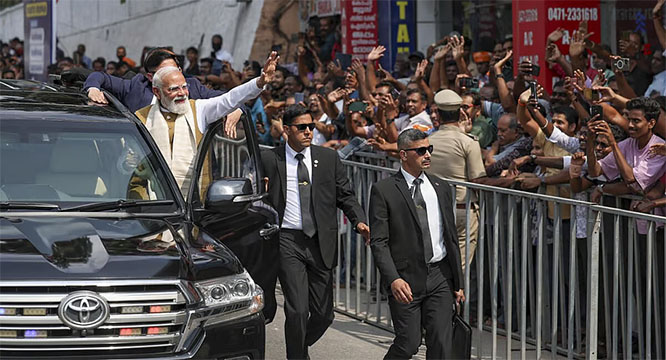
Prime Minister Narendra Modi, during his visit to Thiruvananthapuram on Friday, January 23, indicated that the Bharatiya Janata Party (BJP) is aiming to expand its political footprint in Kerala ahead of the Assembly elections scheduled in the coming months.

Speaking at a BJP-organised public meeting, Modi drew parallels between the party’s early electoral gains in Gujarat and its recent victory in the Thiruvananthapuram Municipal Corporation. The civic body win, which ended decades of Left control, was cited by the Prime Minister as a possible starting point for the party’s broader ambitions in the state.

Recalling BJP’s political trajectory in Gujarat, Modi said the party was largely insignificant before 1987 and received little media attention. He pointed out that the BJP’s first major breakthrough came with its victory in the Ahmedabad Municipal Corporation that year.

“Just as our journey in Gujarat began with one city, Kerala’s journey has also started with a single city,” Modi said, suggesting that the party’s municipal-level success could translate into wider electoral acceptance.

The Prime Minister alleged that successive governments led by the Left Democratic Front (LDF) and the United Democratic Front (UDF) had failed to adequately develop Thiruvananthapuram. He accused both fronts of corruption and neglect, claiming that basic infrastructure and facilities were denied to the capital city for decades.

According to Modi, the BJP’s control of the civic body represents a shift driven by public dissatisfaction with the existing political alternatives. He asserted that the BJP administration in Thiruvananthapuram had begun working towards development, though no specific details or timelines were outlined.

Addressing the gathering at Putharikandam Maidan, Modi said the BJP intended to project Thiruvananthapuram as a “model city,” reiterating his party’s commitment to governance-led change.

The Prime Minister’s visit to Kerala also included the inauguration of several development projects and the flagging off of new train services, as the BJP intensifies its political outreach in the poll-bound state.

Comments

Add new comment

  • Coastaldigest.com reserves the right to delete or block any comments.
  • Coastaldigset.com is not responsible for its readers’ comments.
  • Comments that are abusive, incendiary or irrelevant are strictly prohibited.
  • Please use a genuine email ID and provide your name to avoid reject.
News Network
January 20,2026

Mangaluru: In a major step towards strengthening rural innovation, the Office of the Principal Scientific Adviser (PSA) to the Government of India is supporting the establishment of RuTAGe Smart Village Centres (RSVCs) across the country through collaborations with academic institutions, civil society organisations and philanthropic partners.

As part of this national initiative, Nitte (Deemed to be University) will set up the first RSVCs in the region at Nitte GP in Udupi district and at the Nitte Health Centre, Sevanjali Trust, Farangipete, in Dakshina Kannada district. The centres will be inaugurated on January 21. In South India, the programme is being implemented by the Section Infin-8 Foundation (SI-8).

Speaking to reporters on Monday, SI-8 founder-director Vishwas US said experts from Nitte University and SI-8 would work closely with farmers, students, youth and local entrepreneurs to adapt and deploy technologies tailored to local needs.

Project head Prof Iddya Karunasagar, representing Nitte DU, said the RSVCs at Nitte and Farangipete would serve as demonstration hubs for a wide range of agriculture, energy, skill-development and assistive technologies. These include solar dryers for fruits, vegetables and crops; soil-testing solutions; power weeders and women-friendly farm tools; wind-powered devices for rural artisans; grain storage systems; grass-cutting and tree-climbing equipment; and liquid fertiliser production using cowshed waste.

SI-8 CEO Aravind C Kumar said the centres would also provide access to digital and knowledge-based platforms such as ISRO applications, government scheme portals, market linkage tools and gamified learning resources, along with assistive technologies for persons with visual impairments.

Highlighting the broader impact of the initiative, Principal Scientific Adviser Prof Ajay Kumar Sood said it demonstrated how applied research could bridge the rural–urban divide and help create self-reliant, technology-enabled villages.

The initiative has been made possible through philanthropic support from Dr NC Murthy of ACM Business Solutions, LLC, USA. Dr Sapna Poti, Director (Strategic Alliances) at the Office of the Principal Scientific Adviser, said the long-term objective is to build self-sufficient, technology-driven communities capable of generating sustainable livelihoods on their own.

Comments

Add new comment

  • Coastaldigest.com reserves the right to delete or block any comments.
  • Coastaldigset.com is not responsible for its readers’ comments.
  • Comments that are abusive, incendiary or irrelevant are strictly prohibited.
  • Please use a genuine email ID and provide your name to avoid reject.
News Network
January 23,2026

oscar.jpg

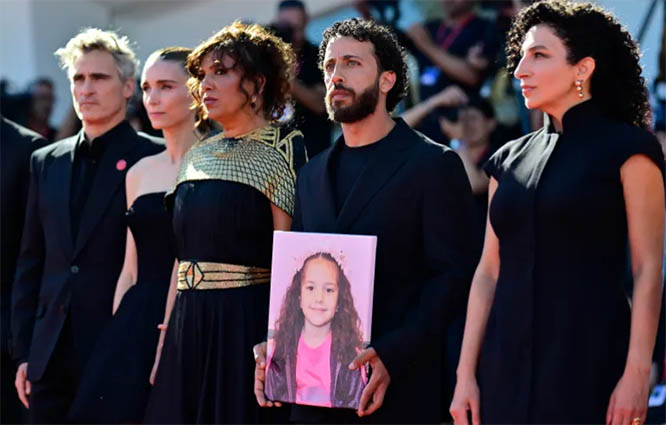
The Voice of Hind Rajab, inspired by the tragic final moments of a young Palestinian girl killed by Israeli fire in Gaza, has been nominated for an Academy Award in the Best International Feature Film category.

Directed by Tunisian filmmaker Kaouther Ben Hania, the film recounts the true story of five-year-old Hind Rajab, who lost her life in January 2024 while fleeing Israeli bombardment with her family.

The film features the real audio of Hind’s desperate call to the Palestinian Red Crescent Society, where she pleaded for help moments before the vehicle she was in was struck by 355 bullets.

The haunting narrative begins with a brief call made from the besieged Tel al-Hawa neighborhood of Gaza, where gunfire and armored vehicles drowned out every sound.

After witnessing the brutal killing of her family, she made a trembling call, her voice reduced to a whisper as she spoke of the massacre and her unbearable loneliness as the sole survivor.

Premiering at the Venice International Film Festival in September 2025, The Voice of Hind Rajab garnered widespread acclaim, receiving a record-setting 23-minute standing ovation and the Silver Lion Grand Jury Prize, the festival’s second-highest honor.

In her acceptance speech, Ben Hania dedicated the film to humanitarian workers and first responders in Gaza, emphasizing that Hind's voice symbolizes countless civilians affected by war.

She aims to give voice to victims often reduced to mere statistics, highlighting the broader suffering of civilians in war zones.

The film’s Oscar nomination underscores its powerful storytelling and ethical approach to depicting real-life tragedy, making it a crucial piece of contemporary cinema.

It serves not only as a narration of individual tragedy but also as an artistic and documentary response to the silence and censorship that often overshadow West Asian struggles and wars.

Using an innovative method she calls docufiction, Ben Hania bridges unvarnished reality and narrative structure, creating a work that is both artistically valuable and socially impactful.

Born in 1977 in Sidi Bouzid—later the epicenter of the Arab revolution—her background profoundly influenced her worldview and artistic approach.

She is a graduate of the Higher School of Audiovisual Arts of Tunis, Pantheon-Sorbonne University, and La Fémis in Paris, where her studies equipped her with the technical and theoretical tools needed to address complex subjects. 

Comments

Add new comment

  • Coastaldigest.com reserves the right to delete or block any comments.
  • Coastaldigset.com is not responsible for its readers’ comments.
  • Comments that are abusive, incendiary or irrelevant are strictly prohibited.
  • Please use a genuine email ID and provide your name to avoid reject.