Small cap stocks post biggest single day jump in 6 years after SEBI circular

Agencies
September 15, 2020

stocks.png

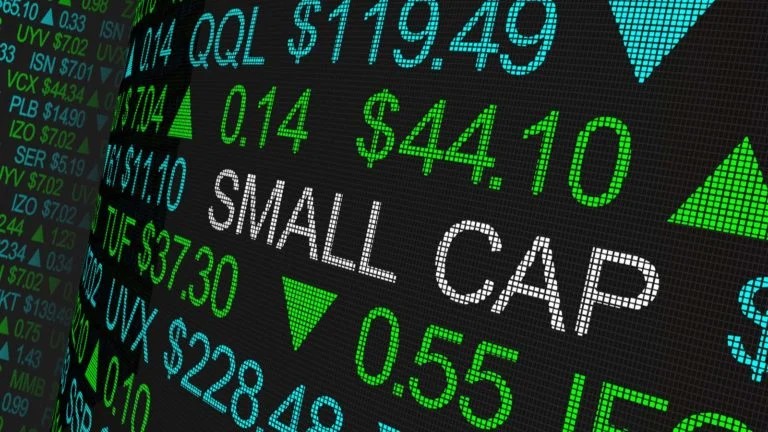
Mumbai, Sept 15: The small cap index posted its biggest single day gain in over six years on Monday after the SEBI circular on multi cap mutual funds triggered buying.

The estimates by analysts and brokerage houses indicate that the net inflow from large caps would be around Rs 27,000 crore into the small caps and around Rs 13,000 crore into the mid caps following the SEBI circular to invest 25 per cent each of assets of multi cap funds into large, mid and small cap stocks.

The huge rally in small cap stocks has come even after fund managers asked investors not to rush to buy small cap stocks in haste and there were clarifications that mutual funds have several options apart from rebalancing their schemes including a merger of schemes to comply with the circular.

Siddhartha Khemka, Head - Retail Research, Motilal Oswal Financial Services said mid-cap and small cap stocks gained sharply.

He said investors were attracted towards Mid/small caps due to the SEBI mandate to Multicap mutual funds to invest a minimum of 25 per cent each in large, mid and small cap stocks. Small Cap Index posted its biggest 1-day gain in over six years.

Deepak Jasani, Head of Retail Research, HDFC Securities said that the recent SEBI circular on allocation by Multicap schemes spurred buying in a lot of small and midcaps in anticipation of fund buying that could emerge later to adhere to the new regulation. The Nifty midcap index ended 2.6 per cent higher while the smallcap index gained 5.6 per cent - the most since May 2014.

Nifty has ended the first day of the week in the negative while the broader market has reacted positively to the latest SEBI circular, he added.

In a note to investors, Sage One has said that SEBI had done a big re-categorization of mutual funds (MFs) in early 2018 which triggered initial rotation from small/midcaps to large caps, and the falling prices created their own snowball effect resulting in the small cap universe correcting by 40-60 per cent. During this period the large cap indices delivered positive returns. In the latest re-categorization of multi-cap MFs, a small part of the 2018 action has been reversed.

As per the note, institutional shareholding (SH) in large cap space is currently 20 per cent above the December 2017 levels whereas it's 41 per cent lower for the small cap space.

The total institutional holding has increased by 10 per cent during this period. Small cap companies make up 10% of the total market capitalization, but the institutional holding is only at 5.3 per cent of their total holding. In December 2017 small cap companies made 16 per cent of the total market capitalization. The biggest contribution in the market drop was the forced selling by the domestic institutions. As prices dropped, it forces other investors to move out and seek performing asset classes such as the large caps, the note said.

The note said that whether MFs actually do the entire re-allocation or whether they merge their multi cap schemes into the large cap schemes is an unknown.

"Irrespective of the amount that actually gets re-allocated, just the anticipation could bring in fresh capital in small/mid cap schemes under MFs, PMS' and AIFs. It doesn't take much inflow to move stocks in this universe," the note said.

The research notes that the impact cost of actual exits was as high as 15 times in the small cap space. This means that if one was to invest fresh capital of Rs 1,000 crore in the small cap companies, on an average their market cap would go up by Rs 15,000 crore. There will not be enough sellers available when the expectation is that this space would do well in presence of forced buyers.

"Even if we assume that only half (Rs 13,500 crore) the capital would be re-allocated by the MFs and assume that there will be no fresh inflows in the small cap companies by other investors and in addition even if we assume that the buying impact would be half (7.5x), the increase in the market cap of the small cap universe would be more than Rs 1 lakh which is around 36% increase in total market cap (currently Rs 2.80 lakh crore) of the small cap companies," the research said.

This step would benefit more than 1000 companies compared to just 100 companies that benefited by the 2018 circular. In an environment when debt raising is multiple times difficult for the smaller companies, this SEBI triggered change would help equity raising capability of these companies.

HDFC Securities said in a note that given the size of multicap funds and higher allocation especially to smallcap stocks; some concerns have been raised about achieving the prescribed investment limits without creating a bubble in small and midcap stocks.

The AUM of smallcap stocks across equity categories (excluding sectoral) as on July 2020 is Rs 68,109 crore – compare this with Rs 28,000 crore worth fresh buying required.

"These stocks have less free float availability, relatively lower volumes, corporate governance issues and higher impact cost (both at the time of getting in and getting out). Also, liquidity issues in smallcap stocks could get compounded in bear markets when these funds face redemption pressure and are required to sell small cap stocks where impact costs could be large," it said.

Schemes requiring the least reshuffling include multicap funds from Invesco, IDFC and Nippon, while schemes requiring the most reshuffling include Kotak Standard, HDFC Equity, Motilal Multicap 35, Axis and Canara Robeco Eq diversified fund, HFDC Securities said.

Comments

Add new comment

  • Coastaldigest.com reserves the right to delete or block any comments.
  • Coastaldigset.com is not responsible for its readers’ comments.
  • Comments that are abusive, incendiary or irrelevant are strictly prohibited.
  • Please use a genuine email ID and provide your name to avoid reject.
News Network
November 26,2025

students.jpg

Bengaluru, Nov 26: Karnataka is taking its first concrete steps towards lifting a three-decade-old ban on student elections in colleges and universities. Deputy Chief Minister D.K. Shivakumar announced Wednesday that the state government will form a small committee to study the reintroduction of campus polls, a practice halted in 1989 following incidents of violence.

Speaking at a 'Constitution Day' event organised by the Karnataka Congress, Mr. Shivakumar underscored the move's aim: nurturing new political leadership from the grassroots.

"Recently, (Leader of the Opposition in Lok Sabha) Rahul Gandhi wrote a letter to me and Chief Minister (Siddaramaiah) asking us to think about restarting student elections," Shivakumar stated. "I'm announcing today that we'll form a small committee and seek a report on this."

Student elections were banned in Karnataka in 1989, largely due to concerns over violence and the infiltration of political party affiliates into campus life. The ban effectively extinguished vibrant student bodies and the pipeline of young leaders they often produced.

Mr. Shivakumar, who also serves as the Karnataka Congress president, said that former student leaders will be consulted to "study the pros and cons" of the re-introduction.

Acknowledging the history of the ban, he added, "There were many criminal activities taking place back then. We’ll see how we can conduct (student) elections by regulating such criminal activities."

The Deputy CM reminisced about his own journey, which began on campus. He recalled his political activism at Sri Jagadguru Renukacharya College leading to his first Assembly ticket in 1985 at the age of 23. "That's how student leadership was at the time. Such leadership has gone today. College elections have stopped," he lamented, adding that for many, college elections were "like a big movement" where leaders were forged.

The move, driven by the Congress high command's push to cultivate young talent, will face scrutiny from academics and university authorities who have, in the past, expressed concern that the return of polls could disrupt the peaceful academic environment and turn campuses into political battlegrounds.

Comments

Add new comment

  • Coastaldigest.com reserves the right to delete or block any comments.
  • Coastaldigset.com is not responsible for its readers’ comments.
  • Comments that are abusive, incendiary or irrelevant are strictly prohibited.
  • Please use a genuine email ID and provide your name to avoid reject.
coastaldigest.com news network
November 29,2025

health1.jpg

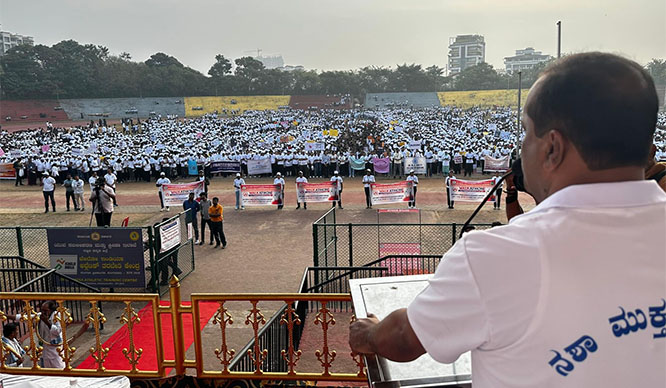
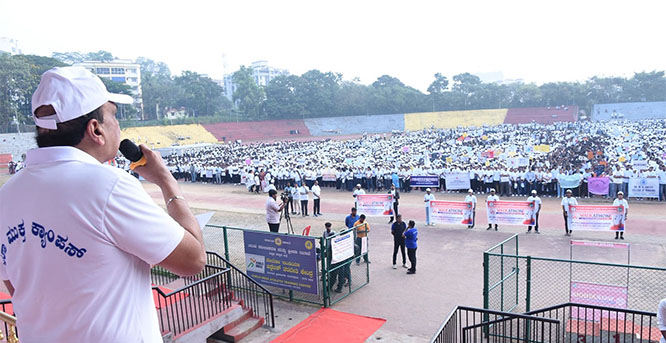
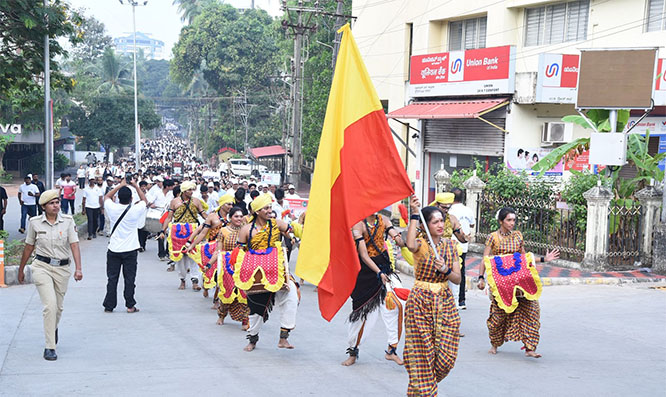
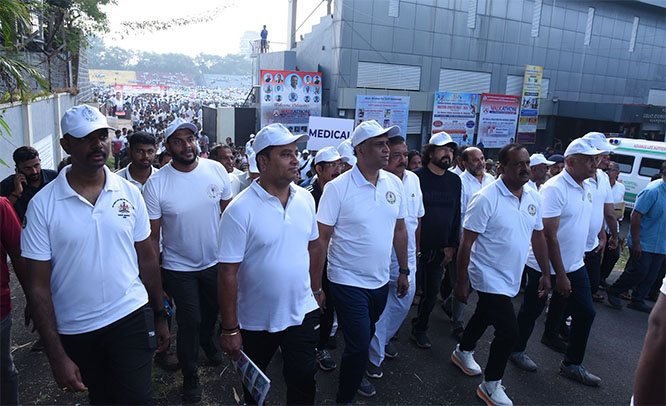
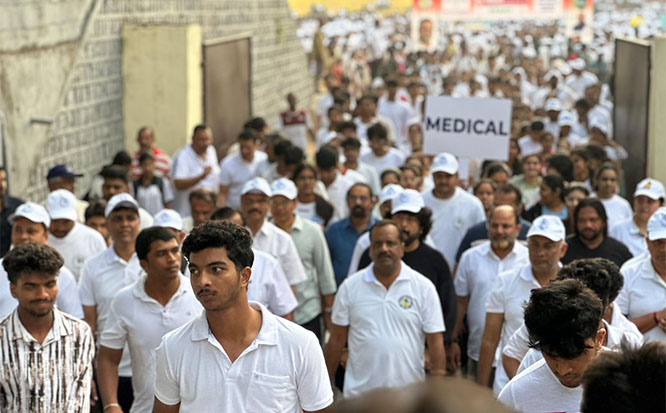
Mangaluru, Nov 29: Around 12,500 healthcare students from Medical, Dental, AYUSH, Pharmacy, Nursing, Physiotherapy and Allied Health Sciences colleges of Dakshina Kannada, affiliated to Rajiv Gandhi University of Health Sciences (RGUHS), took part in a massive walkathon to promote awareness on Organ Donation and Nasha Mukth Bharat.

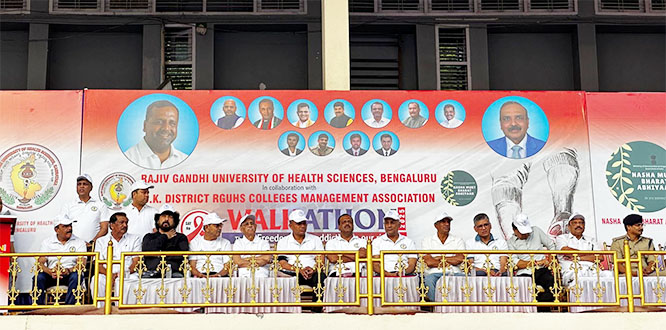
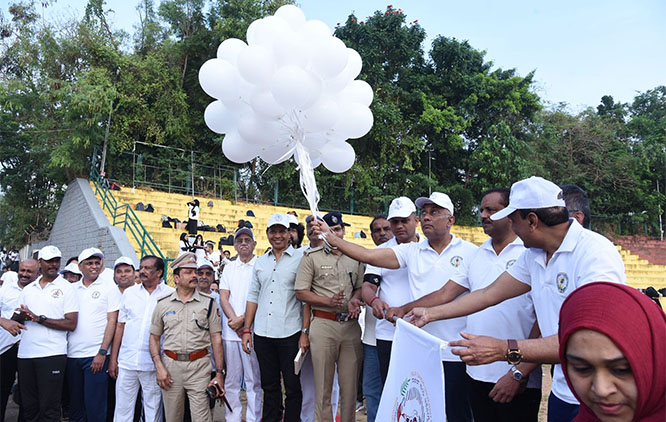
The inaugural ceremony was held at Mangala Stadium. Dr Bhagavan B C, Hon’ble Vice-Chancellor of RGUHS, delivered the welcome address. The walkathon was flagged off by Shri U T Khader, Hon’ble Speaker of the Karnataka Legislative Assembly, and presided over by Shri Dinesh Gundu Rao, Hon’ble Minister for Health, Family Welfare and Dakshina Kannada District In-charge. Dakshina Kannada MP Shri Brijesh Chowta also addressed the students.

Music director Guru Kiran, MLA Dr Bharat Shetty (Mangalore North), Police Commissioner Shri Sudheer Kumar Reddy, Shri Manjunath Bhandary and Shri Harish Kumar were among those present.

Institution heads including Dr Haji U K Monu (Kanachur Colleges), Dr Shantharam Shetty (Tejaswini College), Dr Bhaskar Shetty (City Group of Colleges), Mr Abdul Rahiman (Kanachur Institute of Medical Sciences), and the District Health Officer, Mangalore, also participated.

The vote of thanks was delivered by Prof U T Ifthikar Fareed, Syndicate Member, RGUHS.

The event was organised by Dr U T Ifthikar Ali and Dr Shiva Sharan (Syndicate Members), Prof Vaishali (Senate Member), Prof Mohammad Suhail (Chairman, BOS Physiotherapy), Dr Sharan Shetty (Former Senate Member), along with principals and faculty of various colleges.

Students marched from Mangala Stadium to Karavali Grounds via MCC and Lalbagh signal. The event set a record as one of the largest gatherings of healthcare students for a social cause in the RGUHS Dakshina Kannada Zone.

health7.jpg

health6.jpg

health5.jpg

health4.jpg

health3.jpg

health2.jpg

Comments

Add new comment

  • Coastaldigest.com reserves the right to delete or block any comments.
  • Coastaldigset.com is not responsible for its readers’ comments.
  • Comments that are abusive, incendiary or irrelevant are strictly prohibited.
  • Please use a genuine email ID and provide your name to avoid reject.
News Network
November 22,2025

The Karnataka government has announced a 50% rebate on pending traffic and transport fines. The discount is available from November 21 to December 12.

The rebate applies to all traffic e-challans and violation cases booked by the RTO between 1991–92 and 2019–20. Officials clarified that the offer is not applicable to pending tax dues and is restricted only to traffic-violation fines.

Across Karnataka, more than 4 lakh RTO cases remain pending, including those involving transport vehicles. While thousands of vehicle owners have already cleared their dues, the department expects to generate substantial revenue through this limited-period rebate.

How to Pay and Avail the Discount

There are three ways to check and pay your pending fines:

1. Through Mobile Apps
Available on both Play Store and App Store:
•    Karnataka State Police (KSP) app
•    KarnatakaOne app
•    ASTraM app

Steps:
•    Enter your vehicle number in any of the above apps
•    Verify the photo/details of your vehicle
•    Pay the fine with the 50% discount applied

2. Visit a Traffic Police Station

You can pay your pending fine at any nearby traffic police station.

3. Visit the Traffic Management Centre (TMC)

•    Location: First Floor, Infantry Road, near Indian Express, Bengaluru

Transport Commissioner Yogeesh A M said, “We don't issue e-challans, so there's no online payment system.”

The department estimates ₹52 crore in pending RTO fines up to March 2020. “With the 50% rebate, we expect to collect around ₹25 crore if all dues are cleared,” he added.

Comments

Add new comment

  • Coastaldigest.com reserves the right to delete or block any comments.
  • Coastaldigset.com is not responsible for its readers’ comments.
  • Comments that are abusive, incendiary or irrelevant are strictly prohibited.
  • Please use a genuine email ID and provide your name to avoid reject.