NASA's Voyager 2 probe nearing interstellar space

Agencies
October 7, 2018

NASA's Voyager 2 probe is approaching interstellar space and has detected an increase in cosmic rays that originate outside our solar system, the US space agency said.

Launched in 1977, Voyager 2 is a little less than 17.7 billion kilometres from Earth, or more than 118 times the distance from Earth to the Sun. Since 2007 the probe has been travelling through the outermost layer of the heliosphere -- the vast bubble around the Sun and the planets dominated by solar material and magnetic fields.

Voyager scientists have been watching for the spacecraft to reach the outer boundary of the heliosphere, known as the heliopause. Once Voyager 2 exits the heliosphere, it will become the second human-made object, after Voyager 1, to enter interstellar space.

Since late August, the Cosmic Ray Subsystem instrument on Voyager 2 has measured about a five per cent increase in the rate of cosmic rays hitting the spacecraft compared to early August.

The probe's Low-Energy Charged Particle instrument has detected a similar increase in higher-energy cosmic rays. Cosmic rays are fast-moving particles that originate outside the solar system. Some of these cosmic rays are blocked by the heliosphere, so mission planners expect that Voyager 2 will measure an increase in the rate of cosmic rays as it approaches and crosses the boundary of the heliosphere.

In May 2012, Voyager 1 experienced an increase in the rate of cosmic rays similar to what Voyager 2 is now detecting. That was about three months before Voyager 1 crossed the heliopause and entered interstellar space. However, Voyager team members note that the increase in cosmic rays is not a definitive sign that the probe is about to cross the heliopause.

Voyager 2 is in a different location in the heliosheath -- the outer region of the heliosphere -- than Voyager 1 had been, and possible differences in these locations mean Voyager 2 may experience a different exit timeline than Voyager 1.

The fact that Voyager 2 may be approaching the heliopause six years after Voyager 1 is also relevant because the heliopause moves inward and outward during the Sun's 11-year activity cycle.

Solar activity refers to emissions from the Sun, including solar flares and eruptions of material called coronal mass ejections. During the 11-year solar cycle, the Sun reaches both a maximum and a minimum level of activity.

"We're seeing a change in the environment around Voyager 2, there's no doubt about that," said Ed Stone, Voyager Project Scientist.

"We're going to learn a lot in the coming months, but we still don't know when we'll reach the heliopause. We're not there yet -- that is one thing I can say with confidence," said Stone.

Comments

Add new comment

  • Coastaldigest.com reserves the right to delete or block any comments.
  • Coastaldigset.com is not responsible for its readers’ comments.
  • Comments that are abusive, incendiary or irrelevant are strictly prohibited.
  • Please use a genuine email ID and provide your name to avoid reject.
coastaldigest.com news network
January 19,2026

rizwanzameer.jpg

Bengaluru: As the dust settles on the recent legislative session, the corridors of Vidhana Soudha are buzzing with more than just policy talk. A high-stakes game of political musical chairs has begun, exposing a deepening rift within the Congress party’s Muslim leadership as a major Cabinet reshuffle looms.

With the party hierarchy signaling a "50% refresh" to gear up for the 2028 Assembly elections, the race to fill three projected Muslim ministerial berths has transformed from a strategic discussion into an all-out turf war.

The "Star Son" Spark

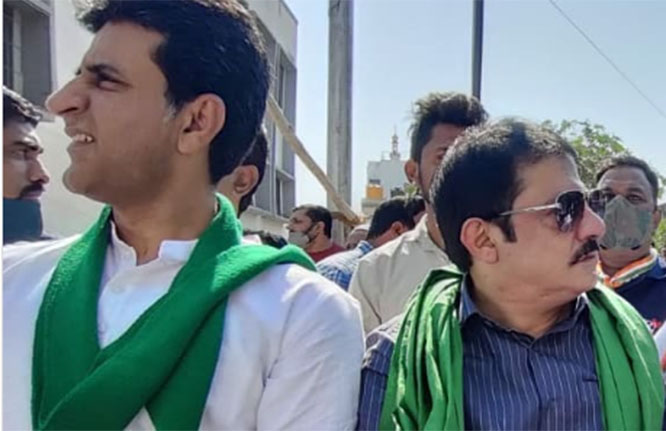
The internal friction turned public this week following provocative remarks by Zaid Khan, actor and son of Wakf Minister Zameer Ahmed Khan. Zaid’s claim—that his father "helped" secure a ticket for Shivajinagar MLA Rizwan Arshad in 2023—has acted as a lightning rod for resentment.

Rizwan’s camp was quick to fire back, dismissing the comment as a desperate attempt by Zameer to manufacture seniority. "Rizwan’s political pedigree was forged in the NSUI and Youth Congress long before Zameer even stepped into the party," a supporter noted, highlighting Rizwan’s tenure as an AICC secretary and his two-term presidency of the State Youth Congress.

A Tale of Two Loyalists

While both Zameer Ahmed Khan and Rizwan Arshad are staunch allies of Chief Minister Siddaramaiah and represent Bengaluru strongholds, their political DNA could not be more different:

•    Zameer Ahmed Khan: A four-time MLA who crossed over from JD(S) in 2018. Known for his "overzealous" and often polarizing outreach during communal flashpoints—from the DJ Halli riots to the recent Wakf land notice controversy—his style has frequently left the Congress high command in a state of "discomfort."

•    Rizwan Arshad: A homegrown organizational man. Seen as a "quiet performer," Arshad represents the sophisticated, moderate face of the party, preferred by those who find Zameer’s brand of politics too volatile.

The Outsiders Looking In

The bickering isn't limited to a duo. The "Beary" community, represented by leaders like N A Haris and Saleem Ahmed, is demanding its pound of flesh. Saleem Ahmed, the Chief Whip in the Legislative Council, has dropped the veil of diplomacy, openly declaring his ministerial aspirations.

"I was the only working president not included in the Cabinet last time," Saleem noted pointedly, signaling that the "loyalty quota" is no longer enough to keep the peace.

As Chief Minister Siddaramaiah prepares to finalize the list, he faces a delicate balancing act: rewarding the aggressive grassroots mobilization of Zameer’s camp without alienating the organizational stalwarts and minority sub-sects who feel increasingly sidelined by the "Chamarajpet-Shivajinagar" binary.

Comments

Add new comment

  • Coastaldigest.com reserves the right to delete or block any comments.
  • Coastaldigset.com is not responsible for its readers’ comments.
  • Comments that are abusive, incendiary or irrelevant are strictly prohibited.
  • Please use a genuine email ID and provide your name to avoid reject.
News Network
January 16,2026

gaurimurder.jpg

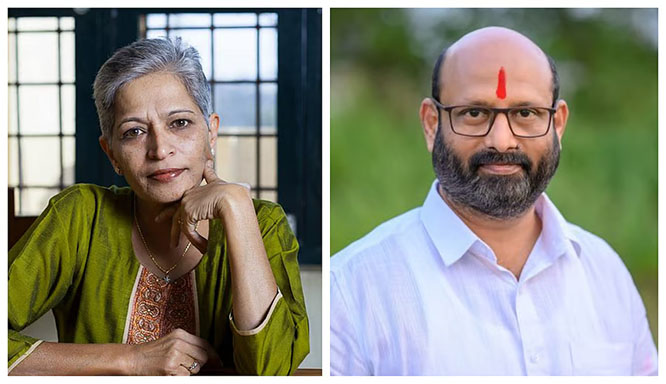
Mumbai: In a shocking development, Shrikant Pangarkar, an accused in the murder of journalist-activist Gauri Lankesh and the Nalasopara arms and ammunition haul case, has won the Jalna Municipal Corporation (JMC) elections as an independent candidate.

Pangarkar emerged victorious from Ward 13 of the JMC, where he was pitted against the BJP. Notably, the Shiv Sena led by Deputy Chief Minister Eknath Shinde, which contested the Jalna civic polls independently, did not field a candidate in the ward.

Gauri Lankesh was shot dead outside her residence in Bengaluru on September 5, 2017. A prominent journalist and activist, she edited Lankesh Patrike, a Kannada weekly founded by her father P Lankesh, and later ran her own publication, Gauri Lankesh Patrike.

Pangarkar was granted bail by the Karnataka High Court on September 4, 2024, in the Lankesh murder case. Ahead of the October 2024 Assembly elections, he was inducted into the Shiv Sena and appointed chief of the party’s Jalna campaign. However, following intense criticism, then Chief Minister Eknath Shinde revoked the appointment.

A former municipal councillor in Jalna between 2001 and 2006 from the undivided Shiv Sena under late Balasaheb Thackeray, Pangarkar later became associated with right-wing organisations.

In August 2018, he was arrested by the Maharashtra Anti-Terrorism Squad (ATS) in connection with the seizure of crude bombs and weapons in Nalasopara and booked under the Explosives Act, Explosive Substances Act, and the Unlawful Activities (Prevention) Act (UAPA). He is currently out on bail in both cases.

Soon after the election results were declared, Pangarkar’s supporters celebrated his victory.

After filing his nomination, Pangarkar had said he was returning to politics after a gap and had received an encouraging response from voters. “I have worked for the people earlier and have returned again,” he said, asserting that the cases against him had no bearing on the elections. “The matter is before the court. I stand before the nyay devta. There may be misunderstandings by agencies, but the court will decide. I am 100 per cent innocent,” he maintained, adding that the Lankesh murder case was unrelated to the civic polls and pertained to Karnataka.

Comments

Add new comment

  • Coastaldigest.com reserves the right to delete or block any comments.
  • Coastaldigset.com is not responsible for its readers’ comments.
  • Comments that are abusive, incendiary or irrelevant are strictly prohibited.
  • Please use a genuine email ID and provide your name to avoid reject.
News Network
January 23,2026

modIKERALA.jpg

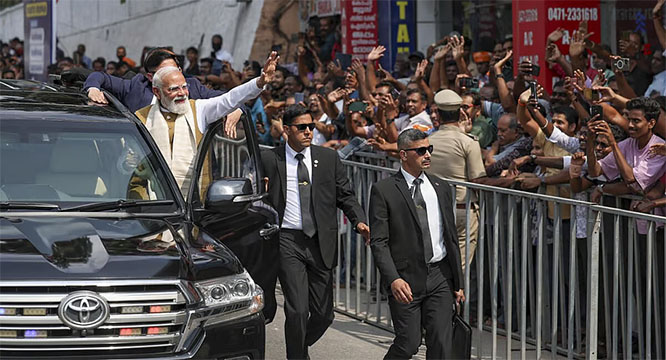
Prime Minister Narendra Modi, during his visit to Thiruvananthapuram on Friday, January 23, indicated that the Bharatiya Janata Party (BJP) is aiming to expand its political footprint in Kerala ahead of the Assembly elections scheduled in the coming months.

Speaking at a BJP-organised public meeting, Modi drew parallels between the party’s early electoral gains in Gujarat and its recent victory in the Thiruvananthapuram Municipal Corporation. The civic body win, which ended decades of Left control, was cited by the Prime Minister as a possible starting point for the party’s broader ambitions in the state.

Recalling BJP’s political trajectory in Gujarat, Modi said the party was largely insignificant before 1987 and received little media attention. He pointed out that the BJP’s first major breakthrough came with its victory in the Ahmedabad Municipal Corporation that year.

“Just as our journey in Gujarat began with one city, Kerala’s journey has also started with a single city,” Modi said, suggesting that the party’s municipal-level success could translate into wider electoral acceptance.

The Prime Minister alleged that successive governments led by the Left Democratic Front (LDF) and the United Democratic Front (UDF) had failed to adequately develop Thiruvananthapuram. He accused both fronts of corruption and neglect, claiming that basic infrastructure and facilities were denied to the capital city for decades.

According to Modi, the BJP’s control of the civic body represents a shift driven by public dissatisfaction with the existing political alternatives. He asserted that the BJP administration in Thiruvananthapuram had begun working towards development, though no specific details or timelines were outlined.

Addressing the gathering at Putharikandam Maidan, Modi said the BJP intended to project Thiruvananthapuram as a “model city,” reiterating his party’s commitment to governance-led change.

The Prime Minister’s visit to Kerala also included the inauguration of several development projects and the flagging off of new train services, as the BJP intensifies its political outreach in the poll-bound state.

Comments

Add new comment

  • Coastaldigest.com reserves the right to delete or block any comments.
  • Coastaldigset.com is not responsible for its readers’ comments.
  • Comments that are abusive, incendiary or irrelevant are strictly prohibited.
  • Please use a genuine email ID and provide your name to avoid reject.