New Zealanders reach out to Muslims in wake of worst terror attack

Agencies
March 16, 2019

Christchurch, Mat 16: New Zealand's stricken residents reached out to Muslims in their neighborhoods and around the country on Saturday (March 16), with a fierce determination to show kindness to a community in pain as a 28-year-old white supremacist stood silently before a judge, accused in mass shootings at two mosques that left 49 people dead.

Brenton Harrison Tarrant appeared in court amid strict security, shackled and wearing all-white prison garb, and showed no emotion when the judge read him one murder charge. The judge said "it was reasonable to assume" more such charges would follow. Tarrant, who posted an anti-immigrant manifesto online and apparently used a helmet-mounted camera to broadcast live video of the slaughter in the city of Christchurch, appeared to make a hand sign, similar to an OK sign, that is sometimes associated with white nationalists.

The massacre during Friday prayers prompted a heartfelt response from Prime Minister Jacinda Ardern, who pronounced it "one of New Zealand's darkest days" and said the shooter, an Australian native, had chosen to strike in New Zealand "because we represent diversity, kindness, compassion."

Her fellow countrymen seemed to want to prove her right by volunteering acts of kindness. Some offered rides to the grocery store or volunteered to walk with their Muslim neighbors if they felt unsafe.

In online forums, people discussed Muslim food restrictions as they prepared to drop off meals for those affected.

"Love always wins over hate. Lots of love for our Muslim brothers" read a handwritten card on a wall of flowers in a historic part of the city that stretched a full block.

Still, Muslims were advised to stay away from mosques while the nation's security alert remained at the second-highest level a day after the deadliest shooting in modern New Zealand history.

Ardern said 39 survivors remained hospitalized on Saturday with 11 critically wounded. But updates were slow to come, and many families were still waiting for news of their missing loved ones.

Outside one of the two mosques, 32-year-old Ash Mohammed pushed through police barricades in hopes of finding out what happened to his father and two brothers, whose cellphones rang unanswered. An officer stopped him.

"We just want to know if they are dead or alive," Mohammed told the officer.

Hungry for any news, families and friends of the victims gathered at the city's Hagley College, near the hospital.

They included Asif Shaikh, 44, who said he was among more than 100 people at the Al Noor mosque when the attacker came in. He said he survived by played dead, but was desperate to know what happened to his friends who were there with him.

"It's been 36 hours, I haven't heard anything about them," he said.

Nearby, Akhtar Khokhur leaned on the shoulders of her friend and cried as she held up her cellphone with an image of her husband.

"I still don't know where he is," she said.

Khokhur, 58, and husband Mehaboobbhai Khokhur, 65, had traveled from India to spend time with their son Imran, their first visit in the eight years since he moved to New Zealand. The couple was due to fly out Sunday.

Imran had dropped off his father, an electrical engineer, at the Al Noor mosque on Friday and was looking for a parking space when the shooting began. They have not heard from him since.

The gunman had posted a jumbled, 74-page manifesto on social media in which he identified himself as an Australian and white supremacist who was out to avenge attacks in Europe perpetrated by Muslims.

He livestreamed 17 minutes of the rampage at Al Noor mosque, where, armed with at least two assault rifles and a shotgun, he sprayed worshippers with bullets, killing at least 41 people. More people were killed in an attack on a second mosque a short time later.

Facebook, Twitter and Google scrambled to take down the gunman's video, which was widely available on social media for hours after the bloodbath.

The second attack took place at the Linwood mosque about 5 kilometers (3 miles) away.

The video showed the killer was carrying a shotgun and two fully automatic military assault rifles, with an extra magazine taped to one of the weapons so that he could reload quickly. He also had more assault weapons in the trunk of his car, along with what appeared to be explosives.

Two other armed suspects were taken into custody Friday while police tried to determine what role, if any, they played in the cold-blooded attack that stunned New Zealand, a country so peaceful that police officers rarely carry guns.

Tarrant's relatives in the Australian town of Grafton, in New South Wales, contacted police after learning of the shooting and were helping with the investigation, local authorities said. Tarrant has spent little time in Australia in the past four years and only had minor traffic infractions on his record.

Police Commissioner Mike Bush confirmed Tarrant was involved in both shootings but stopped short of saying he was the sole gunman.

During the Saturday morning hearing, a man who was not in court was charged with using writings to incite hatred against a race or ethnicity, but it was not clear if his case was related to the mosque attacks.

"We appear to primarily be dealing with one primary perpetrator, but we want to make sure that we don't take anything for granted in ensuring New Zealanders' safety," Ardern said.

New Zealand, with a population of 5 million, has relatively loose gun laws and an estimated 1.5 million firearms, or roughly one for every three people. But it has one of the lowest gun homicide rates in the world. In 2015, it had just eight.

Ardern said Tarrant was a licensed gun owner who bought the five guns used in the crimes legally.

"I can tell you one thing right now, our gun laws will change," Ardern said.

She did not offer too much detail, but said a ban on semi-automatic weapons would be looked at. Neighboring Australia has virtually banned semi-automatic rifles from private ownership since a lone gunman killed 35 people with assault rifles in 1996.

Before Friday's attack, New Zealand's deadliest shooting in modern history took place in 1990 in the small town of Aramoana, where a gunman killed 13 people following a dispute with a neighbor.

Comments

Add new comment

  • Coastaldigest.com reserves the right to delete or block any comments.
  • Coastaldigset.com is not responsible for its readers’ comments.
  • Comments that are abusive, incendiary or irrelevant are strictly prohibited.
  • Please use a genuine email ID and provide your name to avoid reject.
News Network
January 31,2026

trumpkill.jpg

The US Department of Justice has released millions of new documents linked to the case of convicted child sex offender Jeffrey Epstein, before removing some pages that contained complaints mentioning President Donald Trump.

Deputy Attorney General Todd Blanche said on Friday that approximately 3.5 million files were published to comply with the Epstein Transparency Act, following criticism that the administration had missed a December 19 deadline set by Congress.

The documents include FBI communications and complaints submitted as tips, some of which list comments mentioning Trump and others who had social or professional ties to Epstein.

Trump has repeatedly denied any wrongdoing in relation to his past association with Epstein.

Pages removed from DOJ website

After their publication, pages containing complaints that mentioned Trump were removed from the DOJ website and now return a “page not found” message. Copies of the documents, however, have circulated widely on social media. CNN anchor Jake Tapper was among those who publicly noted that the pages had been taken down.

One complaint, filed by a friend of a victim, says Trump forced a girl aged 13–14 to perform “oral sex” approximately 35 years ago in New Jersey. The document states that an investigator was sent to Washington to conduct an interview.

Another complaint says Trump regularly paid an individual to perform sexual acts and adds that he was present when her newborn child was murdered by a relative. The paperwork notes that there was “no contact made” with the complainant.

A separate complaint, which provided no contact information, said “calendar girls” parties at Trump’s Mar-a-Lago involved children and sexual abuse. The document also names several public figures as present at such events.

In another account, a complainant said they witnessed a “sex trafficking ring” at Trump National Golf Club in Rancho Palos Verdes, California, in the mid-1990s. The person noted “threats” from Trump’s head of security if she spoke publicly about what she had seen.

Other figures mentioned in the files

The latest release also includes a draft email Epstein wrote to himself in 2013, referring to Microsoft co-founder Bill Gates. In the message, Epstein said Gates asked him to delete emails and referenced “personal matters.”

The DOJ has not provided a detailed explanation for why certain pages were removed after publication. The department said the document release was ongoing.

Comments

Add new comment

  • Coastaldigest.com reserves the right to delete or block any comments.
  • Coastaldigset.com is not responsible for its readers’ comments.
  • Comments that are abusive, incendiary or irrelevant are strictly prohibited.
  • Please use a genuine email ID and provide your name to avoid reject.
News Network
January 20,2026

iran.jpg

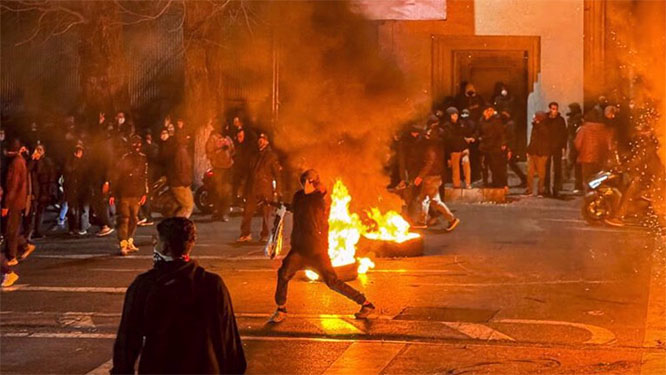
Iranian security and intelligence forces have captured more than 470 individuals in three provinces, identified as key figures behind the recent wave of violent unrest and terrorist activities linked to foreign-backed networks.

The Intelligence Ministry's provincial office in Khorasan Razavi announced on Monday the arrest of 192 armed terrorists, identified as the main agents behind recent riots in the region. 

According to an official statement, the detainees were involved in the killing of several security personnel and civilians, setting fire to mosques, public service facilities, and buses, as well as attacks on military and law enforcement centers.

The seized items from the group include several bulletproof vests, Kalashnikov rifles, hunting weapons, Winchester rifles, and various cold weapons such as daggers, swords, brass knuckles, tactical knives, crossbows, and chains.

Evidence indicates that some of the individuals were tied to hostile movements and terrorist organizations, with links overseas. Others were identified as members of violent criminal gangs, actively taking part in the unrest alongside their associates.

Simultaneously, in the western province of Lorestan, the IRGC announced the arrest of 134 individuals as the main leaders and influential field agents of a US-Israeli terrorist network.

The IRGC statement stated that these individuals formed terrorist cells during the recent unrest, committing "Daesh-like" acts.

They wounded security forces with firearms and cold weapons, and burned and destroyed public and private properties, including mosques, shops, banks, and private and public vehicles.

In the northwestern province of Zanjan, the police reported detaining 150 people identified as principal leaders and agents behind recent riots.

Authorities noted that these individuals were responsible for destroying public and private property and intentionally setting fire to vehicles in the province's squares.

Their crimes include shedding the blood of innocent people, destroying public and private property, attempting to enter military sites, disrupting public order, and spreading terror among citizens.

A variety of cold weapons were reportedly seized from the detainees.

What began late last month as peaceful protests over economic hardship across Iran turned violent after public statements by US and Israeli regime figures encouraged vandalism and disorder.

During the unrest, foreign-backed mercenaries rampaged through cities, killing security forces and civilians and damaging public property.

Comments

Add new comment

  • Coastaldigest.com reserves the right to delete or block any comments.
  • Coastaldigset.com is not responsible for its readers’ comments.
  • Comments that are abusive, incendiary or irrelevant are strictly prohibited.
  • Please use a genuine email ID and provide your name to avoid reject.
News Network
February 1,2026

Bengaluru: Karnataka Deputy Chief Minister D K Shivakumar on Sunday criticised the Union Budget presented by Finance Minister Nirmala Sitharaman, claiming it offered no tangible benefit to the state.

Though he said he was yet to study the budget in detail, Shivakumar asserted that Karnataka had gained little from it. “There is no benefit for our state from the central budget. I was observing it. They have now named a programme after Mahatma Gandhi, after repealing the MGNREGA Act that was named after him,” he said.

Speaking to reporters here, the Deputy Chief Minister demanded the restoration of MGNREGA, and made it clear that the newly enacted rural employment scheme — VB-G RAM G — which proposes a 60:40 fund-sharing formula between the Centre and the states, would not be implemented in Karnataka.

“I don’t see any major share for our state in this budget,” he added.

Shivakumar, who also holds charge of Bengaluru development, said there were high expectations for the city from the Union Budget. “The Prime Minister calls Bengaluru a ‘global city’, but what has the Centre done for it?” he asked.

He also drew attention to the problems faced by sugar factories, particularly those in the cooperative sector, alleging a lack of timely decisions and support from the central government.

Noting that the Centre has the authority to fix the minimum support price (MSP) for agricultural produce, Shivakumar said the Union government must take concrete steps to protect farmers’ interests.

Comments

Add new comment

  • Coastaldigest.com reserves the right to delete or block any comments.
  • Coastaldigset.com is not responsible for its readers’ comments.
  • Comments that are abusive, incendiary or irrelevant are strictly prohibited.
  • Please use a genuine email ID and provide your name to avoid reject.