21-yr-old Kannada actress dies during fat removal surgery, parents blame hospital

News Network
May 17, 2022

chetanaraj.jpg

Bengaluru, May 17: A 21-year-old Kannada actress died yesterday after a fat removal surgery at a private hospital in Bengaluru. Chethana Raj developed complications after the surgery, her family alleges. A case has been filed against doctors at Dr Shetty's Cosmetic Clinic in Rajajinagar on a police complaint by her parents.

Chetana Raj acted in serials like Geetha, Doresani and Olavina Nildana, which were aired on Colors Kannada television channel. She also played small roles in some Kannada films. 

Chetana went to Dr Shetty's Hospital near Navarang Theatre in northern Bengaluru's Rajajinagar at around 8.30 am on May 16 for a surgery to cut excess fat, her father Varadaraju said. "She went with some friends. We didn't know about the surgery. She wasn't discharged even until 5 pm. At around 9 pm, I learnt about her death," he said. 

According to Varadaju, Chetana was taken to another hospital where she was declared brought dead. "She faced breathing problems. Doctors said her lungs were filled with water, causing the death," he said and blamed medical negligence for the tragedy. 

Varadaraju stressed that no consent was taken from the family before the surgery and said he would file a police complaint against the doctors. 

Kaade Hospital, located in Manjunathanagar, where the actress was declared brought dead, issued a news statement, claiming that she had died before being brought in there. 

According to the hospital, Chetana was taken there around 5.30 pm on May 16 by an anaesthetist named Melvin. 

"Melvin barged into our hospital with a patient (who was found unresponsive later) disregarding all the protocols of the hospital and threatening our security. Before our doctors could intervene and check the patient, he pushed the patient into our ICU and demanded that our doctors treat the patient on the lines indicated by him as the patient had suffered a cardiac arrest during some procedure at their hospital M/s Dr Shetty's Cosmetic Centre," said Dr Sandeep V, ICU Intensivist.  

According to Dr Sandeep, no patient file or doctor's recommendatory note or any other document depicting her condition was submitted to them. The patient did not have a pulse. Still, on the insistence of Dr Melvin and the team, CPR was undertaken for about 45 minutes but the patient could not be revived as it appeared that she was brought dead, he added.

Dr Sandeep claimed that their doctors were "forced" by Dr Melvin and his team to declare the patient dead only at 6.45 pm "for reasons best known to them." 

"We strongly object to this kind of behaviour by these doctors and we may decide to file a report against them," Dr Sandeep said. 

Comments

Add new comment

  • Coastaldigest.com reserves the right to delete or block any comments.
  • Coastaldigset.com is not responsible for its readers’ comments.
  • Comments that are abusive, incendiary or irrelevant are strictly prohibited.
  • Please use a genuine email ID and provide your name to avoid reject.
News Network
February 3,2026

Bengaluru: Following reports of fresh Nipah virus (NiV) cases in West Bengal and heightened vigilance across parts of Southeast Asia, the Karnataka Health Department has placed the state on high alert and activated emergency preparedness protocols.

Health officials said enhanced surveillance measures have been initiated after two healthcare workers in Barasat, West Bengal, tested positive for the virus earlier this month. While no cases have been reported in Karnataka so far, authorities said the state’s past exposure to Nipah outbreaks and high inter-state mobility warranted preventive action.

Officials have directed district health teams to intensify monitoring, particularly at hospitals and points of entry, and to ensure early detection and isolation of suspected cases.

High Mortality Virus with Multiple Transmission Routes

Nipah virus is a zoonotic disease that can spread from animals to humans and has a reported fatality rate ranging between 60 and 75 per cent. Fruit bats, also known as flying foxes, are the natural reservoirs of the virus and can transmit it by contaminating food sources with saliva or urine.

Known modes of transmission include:

•    Contaminated food: Consumption of fruits partially eaten by bats or raw date-palm sap
•    Animal contact: Exposure to infected pigs or other animals
•    Human-to-human transmission: Close contact with body fluids of infected persons, particularly in healthcare settings

Symptoms and Disease Progression

The incubation period typically ranges from 4 to 14 days, though delayed onset has also been reported. Early symptoms often resemble common viral infections, making prompt clinical suspicion critical.

•    Initial symptoms: Fever, headache, body aches, fatigue, sore throat
•    Progressive symptoms: Drowsiness, disorientation, altered mental state
•    Severe stage: Seizures, neck stiffness and acute encephalitis, which can rapidly progress to coma

Public Health Advisory

The Health Department has issued precautionary guidelines urging the public to adopt risk-avoidance practices to prevent any local spillover.

Do’s
•    Wash fruits thoroughly before consumption
•    Drink boiled and cooled water
•    Use protective equipment while handling livestock
•    Maintain strict hand hygiene

Don’ts
•    Avoid fruits found on the ground or showing bite marks
•    Do not consume beverages made from raw tree sap, including toddy
•    Avoid areas with dense bat populations
•    Do not handle sick or dead animals

Preparedness Measures

Officials confirmed that isolation wards are being readied in major government hospitals and that medical staff are being sensitised to identify early warning signs.

“There is no cause for panic, but there is a need for heightened vigilance,” a senior health official said, adding that there is currently no approved vaccine or specific antiviral treatment for Nipah, and care remains largely supportive.

Comments

Add new comment

  • Coastaldigest.com reserves the right to delete or block any comments.
  • Coastaldigset.com is not responsible for its readers’ comments.
  • Comments that are abusive, incendiary or irrelevant are strictly prohibited.
  • Please use a genuine email ID and provide your name to avoid reject.
News Network
January 20,2026

iran.jpg

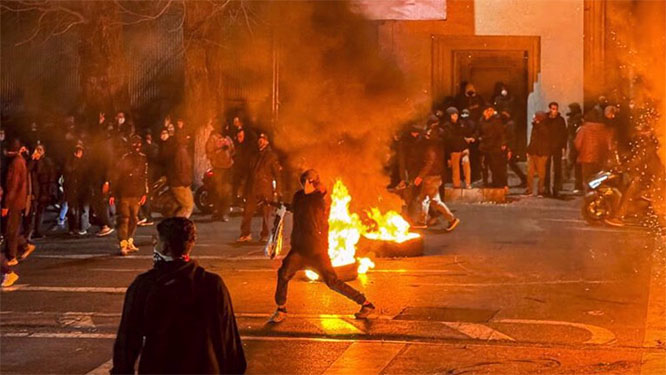
Iranian security and intelligence forces have captured more than 470 individuals in three provinces, identified as key figures behind the recent wave of violent unrest and terrorist activities linked to foreign-backed networks.

The Intelligence Ministry's provincial office in Khorasan Razavi announced on Monday the arrest of 192 armed terrorists, identified as the main agents behind recent riots in the region. 

According to an official statement, the detainees were involved in the killing of several security personnel and civilians, setting fire to mosques, public service facilities, and buses, as well as attacks on military and law enforcement centers.

The seized items from the group include several bulletproof vests, Kalashnikov rifles, hunting weapons, Winchester rifles, and various cold weapons such as daggers, swords, brass knuckles, tactical knives, crossbows, and chains.

Evidence indicates that some of the individuals were tied to hostile movements and terrorist organizations, with links overseas. Others were identified as members of violent criminal gangs, actively taking part in the unrest alongside their associates.

Simultaneously, in the western province of Lorestan, the IRGC announced the arrest of 134 individuals as the main leaders and influential field agents of a US-Israeli terrorist network.

The IRGC statement stated that these individuals formed terrorist cells during the recent unrest, committing "Daesh-like" acts.

They wounded security forces with firearms and cold weapons, and burned and destroyed public and private properties, including mosques, shops, banks, and private and public vehicles.

In the northwestern province of Zanjan, the police reported detaining 150 people identified as principal leaders and agents behind recent riots.

Authorities noted that these individuals were responsible for destroying public and private property and intentionally setting fire to vehicles in the province's squares.

Their crimes include shedding the blood of innocent people, destroying public and private property, attempting to enter military sites, disrupting public order, and spreading terror among citizens.

A variety of cold weapons were reportedly seized from the detainees.

What began late last month as peaceful protests over economic hardship across Iran turned violent after public statements by US and Israeli regime figures encouraged vandalism and disorder.

During the unrest, foreign-backed mercenaries rampaged through cities, killing security forces and civilians and damaging public property.

Comments

Add new comment

  • Coastaldigest.com reserves the right to delete or block any comments.
  • Coastaldigset.com is not responsible for its readers’ comments.
  • Comments that are abusive, incendiary or irrelevant are strictly prohibited.
  • Please use a genuine email ID and provide your name to avoid reject.