



BJP trading MLAs like sheep and goats in Goa, says Karnataka Cong chief

News Network
January 28, 2022

Bengaluru, Jan 28: Karnataka Congress president D K Shivakumar on Friday said that the BJP was trading legislators like "sheep and goats" in Goa, while also accusing the ruling party of spending as much as Rs 30 crore each to lure opposition MLAs into the ruling fold.

Shivakumar, who is in Goa to campaign for the Congress in the poll-bound state, also said that the Congress as a policy had refused to allow the re-entry of 13 defecting MLAs back into the party for the February 14 elections.

"You see the BJP is using money power, spending Rs 30-40 crore. Even on the floor of the house, some MLAs admitted that they were offered Rs 30 crore and some advance has been given to them. MLAs have been bought like sheep and goats. Where is democracy? Democracy has completely failed," Shivakumar told a press conference.

Several Congress defectors out of the 13, who switched to the BJP from 2017 to 2019, were in touch with him over possibilities of joining the opposition party once again, Shivakumar said.

"BJP did 'Operation Lotus' (in Goa). We decided that not a single defector will be taken back. Out of the 13, nearly 10 members wanted to come back to us. They met me personally. A few of them met me in Delhi also. We didn't agree," Shivakumar said.

The Karnataka state Congress president also said that the party had chosen to field fresh, new faces instead, which he said would yield good electoral dividends. "Now, we have selected youngsters, new faces. All of them have pledged that they will not shift their loyalty," Shivakumar said.

According to state Congress president Girish Chodankar, the party was fielding 36-37 candidates for the upcoming polls and the average of Congress candidates was around 48 years.

Comments

Add new comment

  • Coastaldigest.com reserves the right to delete or block any comments.
  • Coastaldigset.com is not responsible for its readers’ comments.
  • Comments that are abusive, incendiary or irrelevant are strictly prohibited.
  • Please use a genuine email ID and provide your name to avoid reject.
News Network
January 23,2026

Mangaluru: The Karnataka Government Polytechnic (KPT), Mangaluru, has achieved autonomous status from the All India Council for Technical Education (AICTE), becoming the first government polytechnic in the country to receive such recognition in its 78-year history. The status was granted by AICTE, New Delhi, and subsequently approved by the Karnataka Board of Technical Education in October last year.

Officials said the autonomy was conferred a few months ago. Until recently, AICTE extended autonomous status only to engineering colleges, excluding diploma institutions. However, with a renewed national focus on skill development, several government polytechnics across India have now been granted autonomy.

KPT, the second-largest polytechnic in Karnataka, was established in 1946 with four branches and has since expanded to offer eight diploma programmes, including computer science and polymer technology. The institution is spread across a 19-acre campus.

Ravindra M Keni, the first dean of the institution, told The Times of India that AICTE had proposed autonomous status for polytechnic institutions that are over 25 years old. “Many colleges applied. In the first round, 100 institutions were shortlisted, which was further narrowed down to 15 in the second round. We have already completed one semester after becoming an autonomous institution,” he said. He added that nearly 500 students are admitted annually across eight three-year diploma courses.

Explaining the factors that helped KPT secure autonomy, Keni said the institution has consistently recorded 100 per cent admissions and placements for its graduates. He also noted its strong performance in sports, with the college emerging champions for 12 consecutive years, along with active student participation in NCC and NSS activities.

Autonomous status allows KPT to design industry-oriented curricula, conduct examinations, prepare question papers, and manage academic documentation independently. The institution can also directly collaborate with industries and receive priority funding from AICTE or the Ministry of Education. While academic autonomy has been granted, financial control will continue to rest with the state government.

“There will be separate committees for examinations, question paper setting, boards of studies, and boards of examiners. The institution will now have the freedom to conduct admissions without government notifications and issue its own marks cards,” Keni said, adding that new academic initiatives would be planned after a year of functioning under the autonomous framework.

Comments

Add new comment

  • Coastaldigest.com reserves the right to delete or block any comments.
  • Coastaldigset.com is not responsible for its readers’ comments.
  • Comments that are abusive, incendiary or irrelevant are strictly prohibited.
  • Please use a genuine email ID and provide your name to avoid reject.
News Network
January 23,2026

Mangaluru: The Karnataka Government Polytechnic (KPT), Mangaluru, has achieved autonomous status from the All India Council for Technical Education (AICTE), becoming the first government polytechnic in the country to receive such recognition in its 78-year history. The status was granted by AICTE, New Delhi, and subsequently approved by the Karnataka Board of Technical Education in October last year.

Officials said the autonomy was conferred a few months ago. Until recently, AICTE extended autonomous status only to engineering colleges, excluding diploma institutions. However, with a renewed national focus on skill development, several government polytechnics across India have now been granted autonomy.

KPT, the second-largest polytechnic in Karnataka, was established in 1946 with four branches and has since expanded to offer eight diploma programmes, including computer science and polymer technology. The institution is spread across a 19-acre campus.

Ravindra M Keni, the first dean of the institution, told The Times of India that AICTE had proposed autonomous status for polytechnic institutions that are over 25 years old. “Many colleges applied. In the first round, 100 institutions were shortlisted, which was further narrowed down to 15 in the second round. We have already completed one semester after becoming an autonomous institution,” he said. He added that nearly 500 students are admitted annually across eight three-year diploma courses.

Explaining the factors that helped KPT secure autonomy, Keni said the institution has consistently recorded 100 per cent admissions and placements for its graduates. He also noted its strong performance in sports, with the college emerging champions for 12 consecutive years, along with active student participation in NCC and NSS activities.

Autonomous status allows KPT to design industry-oriented curricula, conduct examinations, prepare question papers, and manage academic documentation independently. The institution can also directly collaborate with industries and receive priority funding from AICTE or the Ministry of Education. While academic autonomy has been granted, financial control will continue to rest with the state government.

“There will be separate committees for examinations, question paper setting, boards of studies, and boards of examiners. The institution will now have the freedom to conduct admissions without government notifications and issue its own marks cards,” Keni said, adding that new academic initiatives would be planned after a year of functioning under the autonomous framework.

Comments

Add new comment

  • Coastaldigest.com reserves the right to delete or block any comments.
  • Coastaldigset.com is not responsible for its readers’ comments.
  • Comments that are abusive, incendiary or irrelevant are strictly prohibited.
  • Please use a genuine email ID and provide your name to avoid reject.
News Network
February 3,2026

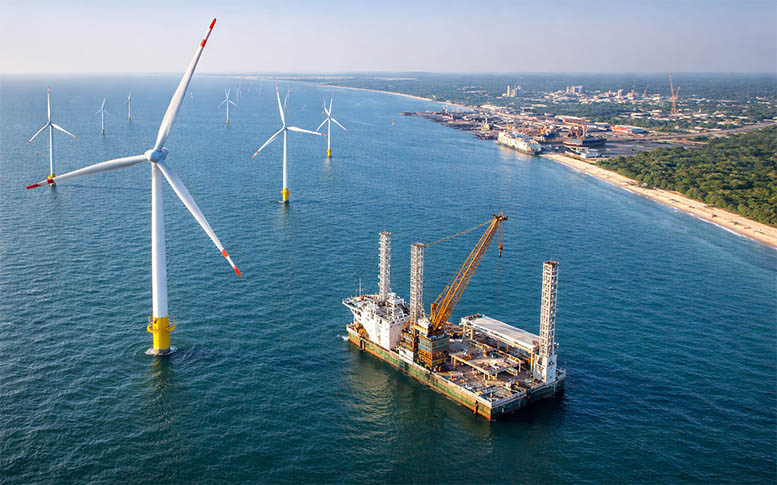
wind.jpg

Dakshina Kannada MP Capt Brijesh Chowta has urged the Centre to give high priority to offshore wind energy generation along the Mangaluru coast, citing its strategic importance to India’s green energy and port-led development goals.

Raising the issue in the Lok Sabha under Rule 377, Chowta said studies by the National Institute of Oceanography have identified the Mangaluru coastline as part of India’s promising offshore wind ‘Zone-2’, covering nearly 6,490 sq km. He noted that the region’s relatively low exposure to cyclones and earthquakes makes it suitable for long-term offshore wind projects and called for its development as a dedicated offshore wind energy zone.

Highlighting the role of New Mangalore Port, Chowta said its modern infrastructure, multiple berths and heavy cargo-handling capacity position it well as a logistics hub for transporting and assembling large wind energy equipment.

He also pointed to the presence of major industrial units such as MRPL, OMPL, UPCL and the Mangaluru SEZ, which could serve as direct buyers of green power through power purchase agreements, improving project viability and speeding up execution.

With Karnataka’s peak power demand crossing 18,000 MW in early 2025, Chowta stressed the need to diversify renewable energy sources. He added that offshore wind projects in the Arabian Sea are strategically safer compared to the cyclone-prone Bay of Bengal.

Calling the project vital to India’s target of 500 GW of renewable energy by 2030, Chowta urged the Ministry of New and Renewable Energy to initiate resource assessments, pilot projects and stakeholder consultations at the earliest.

Comments

Add new comment

  • Coastaldigest.com reserves the right to delete or block any comments.
  • Coastaldigset.com is not responsible for its readers’ comments.
  • Comments that are abusive, incendiary or irrelevant are strictly prohibited.
  • Please use a genuine email ID and provide your name to avoid reject.