



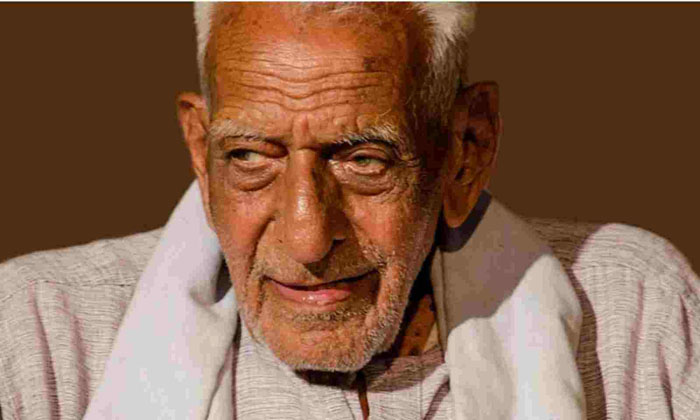
Freedom fighter and activist H S Doreswamy, 103, passes away in Bengaluru

News Network
May 26, 2021

doreswamy.jpg

Bengeluru, May 26: Freedom fighter and activist HS Doreswamy, who was 103 years old, passed away in Bengaluru on Wednesday. He had recovered from COVID-19 on May 12 but was hospitalised at the Jayadeva Hospital in the city again, where he passed away after a cardiac arrest. 

CN Manjunath, the cardiologist at Jayadeva Hospital said, “He had heart failure and a cardiac arrest and passed away today (Wednesday) around 1.30 pm.”

The doctor said that he had a pre-existing valvular heart disease for the last 10 years and that he was admitted to Jayadeva Hospital multiple times in this period. He tested positive for the novel coronavirus earlier this month. “This could be a precipitating factor since he tested positive and was hospitalised till May 12. He was readmitted to the hospital on May 14,” Dr. CN Manjunath added. 

Born on April 10, 1918, in the village of Harohalli, in the erstwhile Kingdom of Mysore, Harohalli Srinivasaiah Doreswamy was brought up by his grandfather, after his parents passed away at the age of five. He joined the freedom struggle at a young age — from planting small scale time bombs in postboxes and in the record rooms of British government officials to burn documents, to organising protests and general strikes in the state of Mysore against the British rule — and actively participated in the freedom struggle including the Quit India movement. He was jailed for 14 months from 1943 to 1944. The Gandhian had also participated in the Mysore Chalo movement to compel the Mysore Maharaja to accede to the Indian State post-independence.

With a Bachelor of Science from the Central College, Bengaluru, Doreswamy was a teacher at a high school and later tried his hand at journalism by bringing out a newspaper called ‘Pauravani.’ Post Independence, in the 1950s, Doreswamy became a part of the Bhoodan movement and also began to fight for the unification of Karnataka. He was actively involved in the Jayaprakash Narayan movement against the Emergency. During the 1980s, he fought for the rights of farmers and other marginalised communities. He was also part of the India Against Corruption movement. Age did not diminish Doreswamy’s spirit, as he stayed active until his final days. He took part in various agitations until the COVID-19 pandemic broke out. In February 2020, at the age of 102, HS Doreswamy sat on a five-day protest in Bengaluru against the Citizenship Amendment Act (CAA).

Doreswamy ran the publication house Sahitya Mandira and an Indian newspaper ‘Pauravani’ during the British Raj and the period afterwards. 

“I was 23-years-old when I was arrested. I had just got a new job as a teacher in a high school then. I started working in June but by then, the Quit India Movement had begun. I helped organise a 14-day strike at the mills across Mysore state and also blew up government record rooms and postboxes with very small time-bombs. Our intention was to disrupt the British government’s daily functioning. By December, I was arrested, and I lost my job as well,” Doreswamy had told Hindustan Times’s Arun Dev in February.

Over the decades, Doreswamy has been a constant figure at various civil rights struggles in Karnataka. He was involved in a number of agitations and committees working against the encroachment of water bodies and dumping of garbage near impoverished areas in and outside Bengaluru. In October 2014, he led an anti-encroachment protest in Bengaluru, demanding the implementation of the Land Grabbing Prohibition Act, 2007 by the state government. He was also involved in agitations against the eviction of adivasis from their tribal lands in Kodagu district.

He had also been one of the prominent figures in the protests against the Citizenship Amendment Act and the NRC. Before the pandemic began, he had vowed to hold a protest every month against CAA and NRC.

A huge controversy had broken out in February 2020 after Doreswamy attended a protest event called ‘Save the Constitution’. An enraged BJP MLA had accused the freedom fighter of acting like a Pakistani agent. "There are many fake freedom fighters. There is one in Bengaluru. Now we have to say what Doreswamy is. Where is that old man? He behaves like a Pakistan agent," BJP MLA from Vijayapura Basanagouda Patil Yatnal had said. Though the issue reached the Karnataka Assembly and snowballed into a huge controversy, Yatnal refused to apologise.

In February 2021, following the detention and arrest of the climate activist Disha Ravi from Bengaluru, Doreswamy shared a message of support for the young activist and asked her “to stay strong”.

Comments

Add new comment

  • Coastaldigest.com reserves the right to delete or block any comments.
  • Coastaldigset.com is not responsible for its readers’ comments.
  • Comments that are abusive, incendiary or irrelevant are strictly prohibited.
  • Please use a genuine email ID and provide your name to avoid reject.
News Network
January 31,2026

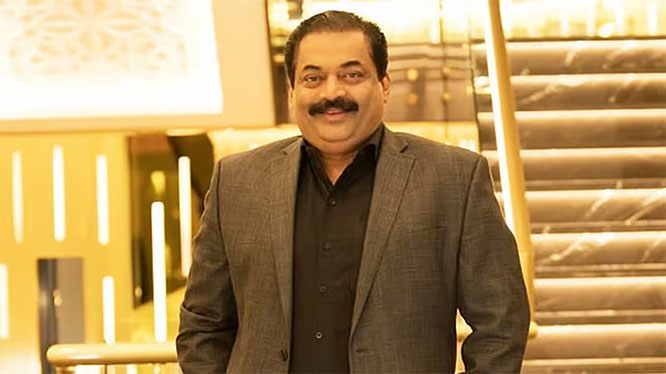
Roy.jpg

Bengaluru: The shooting incident involving CJ Roy, founder of the Confident Group, has once again put the spotlight on a businessman whose life has swung between flamboyant global success and persistent controversy at home.

Though Roy’s business interests extended across continents, his roots lay firmly in Karnataka. An alumnus of Christ School in Bengaluru, he later moved to Tumakuru to pursue an engineering degree. Those familiar with his early years describe him as intensely ambitious, beginning his career as a salesman at a small electronics firm dealing in computers.

Roy’s entry into large-scale real estate came through the Crystal Group, where he worked closely with Latha Namboothiri and rose from manager to director. However, the launch of the Confident Group in 2005 was clouded by industry speculation. Insiders speak of a fallout involving alleged “benami” properties and claims of deception that ultimately led to his independent venture—an episode Roy spent years trying to distance himself from, according to associates.

A tale of two cities

Roy’s professional trajectory diverged sharply across geographies.

In Dubai, he built a reputation as a bold and efficient developer, completing massive luxury residential projects in record time—some reportedly within 11 months. His rapid project delivery and lavish lifestyle in the Emirates earned him admiration and visibility in the real estate sector.

In Bengaluru, however, his image remained far more fractured. Sources say Roy stayed away from the city for several years amid disputes over unpaid dues to vendors and suppliers. Several projects were allegedly stalled, with accusations of unfulfilled commitments to cement and steel suppliers continuing to follow him.

Roy’s return to Bengaluru’s business and social circles began around 2018, marked by a conscious attempt at rebranding. His appointment as Honorary Consul of the Slovak Republic added diplomatic legitimacy, which he complemented with visible CSR initiatives, including ambulance donations and high-profile charity events.

Heavy police presence in Langford Town

Following the incident, police personnel from the Central division were deployed outside the Confident Group building in Langford Town, which also houses the Slovak Honorary Consulate in Bengaluru.

The otherwise busy premises near Hosur Road wore a deserted look on Friday, reflecting the shock and uncertainty that followed the tragedy.

Comments

Add new comment

  • Coastaldigest.com reserves the right to delete or block any comments.
  • Coastaldigset.com is not responsible for its readers’ comments.
  • Comments that are abusive, incendiary or irrelevant are strictly prohibited.
  • Please use a genuine email ID and provide your name to avoid reject.
News Network
January 23,2026

Mangaluru: The Karnataka Government Polytechnic (KPT), Mangaluru, has achieved autonomous status from the All India Council for Technical Education (AICTE), becoming the first government polytechnic in the country to receive such recognition in its 78-year history. The status was granted by AICTE, New Delhi, and subsequently approved by the Karnataka Board of Technical Education in October last year.

Officials said the autonomy was conferred a few months ago. Until recently, AICTE extended autonomous status only to engineering colleges, excluding diploma institutions. However, with a renewed national focus on skill development, several government polytechnics across India have now been granted autonomy.

KPT, the second-largest polytechnic in Karnataka, was established in 1946 with four branches and has since expanded to offer eight diploma programmes, including computer science and polymer technology. The institution is spread across a 19-acre campus.

Ravindra M Keni, the first dean of the institution, told The Times of India that AICTE had proposed autonomous status for polytechnic institutions that are over 25 years old. “Many colleges applied. In the first round, 100 institutions were shortlisted, which was further narrowed down to 15 in the second round. We have already completed one semester after becoming an autonomous institution,” he said. He added that nearly 500 students are admitted annually across eight three-year diploma courses.

Explaining the factors that helped KPT secure autonomy, Keni said the institution has consistently recorded 100 per cent admissions and placements for its graduates. He also noted its strong performance in sports, with the college emerging champions for 12 consecutive years, along with active student participation in NCC and NSS activities.

Autonomous status allows KPT to design industry-oriented curricula, conduct examinations, prepare question papers, and manage academic documentation independently. The institution can also directly collaborate with industries and receive priority funding from AICTE or the Ministry of Education. While academic autonomy has been granted, financial control will continue to rest with the state government.

“There will be separate committees for examinations, question paper setting, boards of studies, and boards of examiners. The institution will now have the freedom to conduct admissions without government notifications and issue its own marks cards,” Keni said, adding that new academic initiatives would be planned after a year of functioning under the autonomous framework.

Comments

Add new comment

  • Coastaldigest.com reserves the right to delete or block any comments.
  • Coastaldigset.com is not responsible for its readers’ comments.
  • Comments that are abusive, incendiary or irrelevant are strictly prohibited.
  • Please use a genuine email ID and provide your name to avoid reject.
News Network
February 4,2026

Mangaluru: Urban local bodies and gram panchayats should make the use of Kannada on signboards mandatory while issuing trade licences to commercial establishments, Dakshina Kannada Deputy Commissioner Darshan HV said. He also called for regular inspections to ensure compliance.

Presiding over the District Kannada Awareness Committee meeting at the deputy commissioner’s office, Darshan said the city corporation would be directed to ensure that shops operating in malls prominently display their names in Kannada. “All commercial establishments, including shops, companies, offices and hotels, must mandatorily display their names in Kannada on signboards,” he said.

The deputy commissioner added that the National Highways Authority of India (NHAI) would be instructed to include Kannada on signboards along national highways. Banks, he said, would be directed through committee meetings to provide application forms in Kannada.

“Even if English-medium schools and colleges impart education in English, their signboards must display the institution’s name in Kannada. Steps will also be taken to ensure that private buses display place names in Kannada,” Darshan said.

During the meeting, committee members raised concerns over the closure of Kannada-medium schools in rural areas due to a shortage of teachers and stressed the need for immediate corrective measures. They also pointed out that several industries employ workers from other states while overlooking local candidates.

Members further demanded that nationalised banks provide deposit and withdrawal slips in Kannada. It was brought to the deputy commissioner’s notice that the presence of staff without knowledge of Kannada in rural branches of nationalised banks is causing hardship to local customers.

Meanwhile, MP Srinath, president of the District Kannada Sahitya Parishat, urged the district administration to allot land for the construction of a district Kannada Bhavana in Mangaluru.

Comments

Add new comment

  • Coastaldigest.com reserves the right to delete or block any comments.
  • Coastaldigset.com is not responsible for its readers’ comments.
  • Comments that are abusive, incendiary or irrelevant are strictly prohibited.
  • Please use a genuine email ID and provide your name to avoid reject.