Gujarat HC quashes order to show Modi's PG degree, imposes fine on CM Kejriwal

News Network
March 31, 2023

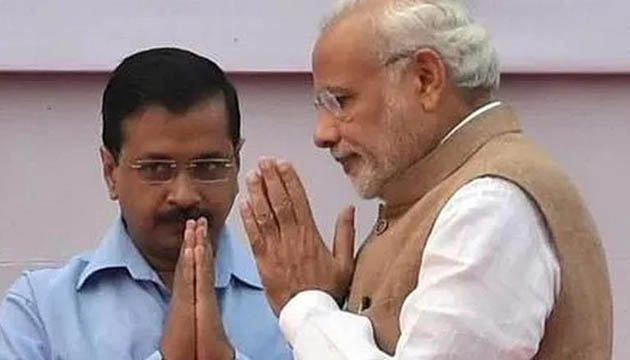
Kejrimodi.jpg

The Gujarat High Court allowed a petition moved by Gujarat University (GU) challenging direction of Central Information Commission (CIC) asking the varsity to provide post graduate degree of Prime Minister Narendra Modi under Right to Information Act (RTI) to Delhi Chief Minister Arvind Kejriwal. 
 
While setting aside the direction of CIC, Justice Biren Vaishnav also imposed a fine of Rs 25,000 on Delhi CM Kejriwal. The Delhi CM was party respondent in the case. The court refused to stay its order after a request by Kejriwal's lawyer for appealing the verdict. 
 
In 2016, GU had moved the court challenging the order passed by CIC directing it to provide information to Delhi chief minister Arvind Kejriwal on the graduation degree of Modi. 
 
The then information commissioner M Sridhar Acharyulu had passed the direction to the Prime Minister's Office to provide information of Modi's graduation and post graduation degrees to GU as well as Delhi University to help them in searching those documents. GU approached the court stating that CIC didn't have jurisdiction to pass such an order and pleaded the court to quash it.
 
The Delhi Chief Minister himself never filed any formal RTI application. It happened after he provided information about his electoral photo identity but criticised CIC publicly saying that it was "obstructing information on Modi's degrees." 
 
The CIC took cognisance of Delhi CM's response as an application and issued notice to PMO to provide "specific number and year" of degrees of "Narendra Damodardas Modi" for making the search for the documents easy for GU and Delhi University.
 
Solicitor General Tushar Mehta had appeared for the state government-run university and argued, "Although the varsity had nothing to hide, a very short and significant question arises for consideration before the court is whether, in principle, the Right to Information Act be applied either for extraneous purpose to satisfy somebody's curiosity or to give a job opportunity to a few individuals who are misusing the provisions. So, in principle the university is contesting." 
 
Mehta had argued, "No objection so far as degree is concerned... degree is in public domain.. degree was placed in public domain in more than one forum. This particular degree nobody is hiding. But, in principle, this needs to be examined." Mehta argued that seeking education qualification of a public person has to satisfy the RTI exemption clauses that it must be in public interest. He said that "just because the public is interested, it can't be held that it is of public interest." 
 
Mehta said that elections can't be questioned on the basis of educational qualification. "Can you seek any personal information merely because you are curious about it? Can a CM seek information about the health of a PM?," Mehta argued. He gave examples of federal laws of the United States of America and the United Kingdom, which guard personal information of citizens.
 
At the end of his submission, he had told the court that the varsity's petition should be allowed with a cost. "Otherwise, we would be doing a great disservice to the Act, which is intended for something else but it is used for something else...it is used for settling political scores, used for childish jabs against opponents."
 
Appearing for Kejriwal, senior lawyer Percy Kavina responded, saying "Settling political scores and politics is inextricably linked with this matter because of the allied parties who are politically antithetical to each other. He stated that provisions under RTI are clear that one shouldn't be required to give the purpose of seeking information.
 
Kavina argued that direction is to furnish information to the public information officer (PIO) of Gujarat University under RTI Act and not the varsity itself. There is no order against the university. 
 
"The university is a statutory body which can't hold the brief for somebody else no matter how desirable it is. The commission directed the PIO of the Prime Minister's Office and Gujarat University. Why should GU spring to the defence of a person who has not chosen to challenge this order. The PIO of the PMO, public information officer of PMO, is the principal directee... he has not chosen to challenge this order," Kavina argued. He also said that instead of challenging it in the high court, an alternative remedy was available for filing an appeal against the commission's order.
 
He argued that when a candidate contesting elections discloses his or her educational qualification, he goes out of the purview of exemption under RTI Act. "An attempt was made and we inquired that a person doesn't hold qualification. It is an offence to file wrong information. Kavina also contended that no information related to the degree was available in the public domain.
 
"Entire case of the university is being pleaded for by a person who is not before the court. If the university is directed to comply with an order then it is for the person whose information is to be given to be asked yes or no. The order can be treated as a request. Do you have a problem? If you have, I will consider it...it is how the rule of law operates. Ex-US president Donald Trump and US president Joe Biden's houses were also investigated by the FBI. No one is above the law," Kavina had argued. 

Comments

Add new comment

  • Coastaldigest.com reserves the right to delete or block any comments.
  • Coastaldigset.com is not responsible for its readers’ comments.
  • Comments that are abusive, incendiary or irrelevant are strictly prohibited.
  • Please use a genuine email ID and provide your name to avoid reject.
News Network
February 1,2026

Bengaluru: The Karnataka High Court has refused to quash an investigation against a WhatsApp group administrator accused of allowing the circulation of obscene and offensive images depicting Hindutva politicians and idols in 2021.

Justice M Nagaprasanna observed that, prima facie, the ingredients of the offence under Section 295A of the Indian Penal Code were made out. “The offence under Section 295A of the IPC is met to every word of its ingredient, albeit prima facie,” the judge said.

The petitioner, Sirajuddin, a resident of Belthangady taluk in Dakshina Kannada district, had challenged the FIR registered against him at the CEN (Cyber, Economics and Narcotics) police station, Mangaluru, for offences under Section 295A of the IPC and Section 67 of the Information Technology Act. Section 295A relates to punishment for deliberate and malicious acts intended to outrage the religious feelings of any class of citizens.

According to the complaint filed by K Jayaraj Salian, also a resident of Belthangady taluk, he received a WhatsApp group link from an unknown source and was added to the group after accessing it. The group reportedly had six administrators and around 250 participants, where obscene and offensive images depicting Hindu deities and certain political figures were allegedly circulated repeatedly.

Sirajuddin was arrested in connection with the case and later released on bail on February 16, 2021. He argued before the court that he was being selectively targeted, while other administrators—including the creator of the group—were neither arrested nor investigated. He also contended that the Magistrate could not have taken cognisance of the offence under Section 295A without prior sanction under Section 196(1) of the CrPC.

Rejecting the argument, Justice Nagaprasanna held that prior sanction is required only at the stage of taking cognisance, and not at the stage of registration of the crime or during investigation.

The judge noted that the State had produced the entire investigation material before the court. “A perusal of the material reveals depictions of Hindu deities in an extraordinarily obscene, demeaning and profane manner. The content is such that its reproduction in a judicial order would itself be inappropriate,” the court said, adding that the material, on its face, had the tendency to outrage religious feelings and disturb communal harmony.

Observing that the case was still at the investigation stage, the court said it could not interdict the probe at this juncture. However, it expressed concern that the investigating officer appeared to have not proceeded uniformly against all administrators. The court clarified that if the investigation revealed the active involvement of any member in permitting the circulation of such content, they must also be proceeded against.

“At this investigative stage, any further observation by this Court would be unnecessary,” the order concluded.

Comments

Add new comment

  • Coastaldigest.com reserves the right to delete or block any comments.
  • Coastaldigset.com is not responsible for its readers’ comments.
  • Comments that are abusive, incendiary or irrelevant are strictly prohibited.
  • Please use a genuine email ID and provide your name to avoid reject.
News Network
January 23,2026

Mangaluru: The Karnataka Government Polytechnic (KPT), Mangaluru, has achieved autonomous status from the All India Council for Technical Education (AICTE), becoming the first government polytechnic in the country to receive such recognition in its 78-year history. The status was granted by AICTE, New Delhi, and subsequently approved by the Karnataka Board of Technical Education in October last year.

Officials said the autonomy was conferred a few months ago. Until recently, AICTE extended autonomous status only to engineering colleges, excluding diploma institutions. However, with a renewed national focus on skill development, several government polytechnics across India have now been granted autonomy.

KPT, the second-largest polytechnic in Karnataka, was established in 1946 with four branches and has since expanded to offer eight diploma programmes, including computer science and polymer technology. The institution is spread across a 19-acre campus.

Ravindra M Keni, the first dean of the institution, told The Times of India that AICTE had proposed autonomous status for polytechnic institutions that are over 25 years old. “Many colleges applied. In the first round, 100 institutions were shortlisted, which was further narrowed down to 15 in the second round. We have already completed one semester after becoming an autonomous institution,” he said. He added that nearly 500 students are admitted annually across eight three-year diploma courses.

Explaining the factors that helped KPT secure autonomy, Keni said the institution has consistently recorded 100 per cent admissions and placements for its graduates. He also noted its strong performance in sports, with the college emerging champions for 12 consecutive years, along with active student participation in NCC and NSS activities.

Autonomous status allows KPT to design industry-oriented curricula, conduct examinations, prepare question papers, and manage academic documentation independently. The institution can also directly collaborate with industries and receive priority funding from AICTE or the Ministry of Education. While academic autonomy has been granted, financial control will continue to rest with the state government.

“There will be separate committees for examinations, question paper setting, boards of studies, and boards of examiners. The institution will now have the freedom to conduct admissions without government notifications and issue its own marks cards,” Keni said, adding that new academic initiatives would be planned after a year of functioning under the autonomous framework.

Comments

Add new comment

  • Coastaldigest.com reserves the right to delete or block any comments.
  • Coastaldigset.com is not responsible for its readers’ comments.
  • Comments that are abusive, incendiary or irrelevant are strictly prohibited.
  • Please use a genuine email ID and provide your name to avoid reject.
News Network
January 20,2026

DGP.jpg

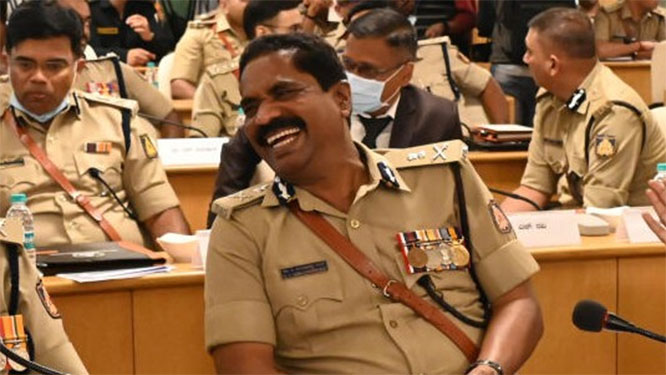
Karnataka DGP (Civil Rights Enforcement) K Ramachandra Rao was suspended with immediate effect, as per a state government order issued on Monday, 19 January. The order cited conduct unbecoming of a government servant and causing embarrassment to the state administration.

The Karnataka government suspended Rao after a purported video showed him in a compromising position with a woman inside his official chamber. The video went viral on social media. Rao rejected the videos outright, terming them "fabricated and false".

Who is K Ramachandra Rao?

Rao is a DGP-rank officer who was heading the Directorate of Civil Rights Enforcement until his suspension. He was promoted to DGP in September 2023 and assumed office in October 2023, the Sunday Guardian reported.

He also served as the Chairman and Managing Director of the Karnataka State Police Housing and Infrastructure Development Corporation Limited.

His stint as the Inspector General of Police (IGP) for the Southern Range was also marred by controversy. In 2014, during a cash seizure near Mysuru’s Yelwal, officials claimed the seized amount was ₹20 lakh, while the accused (Kerala-based merchants) claimed it was around ₹2.27 crore.

Rao, who was present during the seizure, denied all allegations. However, he was transferred soon after.

Allegations of collusion with a businessman surfaced, and a senior police officer was quoted by The Sunday Guardian as saying, “In Rao’s case, the CID has clearly mentioned that there was a great degree of lapse on the part of Rao and a deputy superintendent of police after it was brought to their notice that a few policemen, including a gunman attached to the IGP, were involved in the robbery.”

Rao had denied all wrongdoing in that incident. Despite past controversies, he rose to the state’s top police position, the Sunday Guardian reported.

Ranya Rao’s stepfather

Rao is the stepfather of Kannada actress Harshavardhini Ranya alias Ranya Rao, accused of orchestrating the illegal import of gold worth over ₹12.56 crore from Dubai to India along with two others — businessman Tarun Raju, and jewellery dealer Sahil Jain.

‘Obscene video’ controversy

A viral video showed Rao behaving inappropriately with a woman inside his office while in uniform.

The Karnataka government said in its Monday order that “vide videos and news reports widely broadcast on public news channels and media platforms, it is observed that Dr K Ramachandra Rao has acted in an obscene manner which is unbecoming of a Government Servant and also causing embarrassment to the Government.”

The order said the matter was examined by the state government, which found that the officer's conduct amounted to a violation of Rule 3 of the All India Services (Conduct) Rules, 1968.

The government said it is prima facie satisfied that "it is necessary to place Rao under suspension with immediate effect, pending inquiry".

During the suspension period, Rao will be entitled to subsistence allowance as per Rule 4 of the All India Services (Discipline and Appeal) Rules, 1969.

The order also places restrictions on his movement, stating that during the period of suspension, the officer must not leave headquarters under any circumstances without the written permission of the state government.

Comments

Add new comment

  • Coastaldigest.com reserves the right to delete or block any comments.
  • Coastaldigset.com is not responsible for its readers’ comments.
  • Comments that are abusive, incendiary or irrelevant are strictly prohibited.
  • Please use a genuine email ID and provide your name to avoid reject.