‘India’s teacher education institutions functioning as commercial shops’

News Network
March 18, 2021

Bengaluru, Mar 18: Azim Premji University said on Thursday a study conducted by it has revealed the presence of many sub-standard, dysfunctional teacher education institutions (TEIs) functioning as 'commercial shops'.

Of the 17,503 TEIs in the country, more than 90 per cent are privately-owned, stand-alone institutions, offering single programmes localised in certain geographies, it found.

The University released its first 'Issues in Education' volume on 'Teachers and Teacher Education'.

It said 26 out of 29 private TEIs studied do not have the required number of teacher educators and adopt deliberate corrupt practices to hide this issue.

Most private TEIs in the study deliberately neglect basic curricular requirements that are committed by them to get the approval to run the programmes, it revealed.

Almost all allowed students with shortage of attendance to appear for examinations, the study found.

Most TEIs do not have basic instructional facilities: curriculum laboratories were not available in more than 50 per cent; more than 30 per cent did not have libraries, computer labs or seminar halls, it was stated.

"The dysfunctional Teacher Education system is at the core of India's problems in school education."

"Till we address this comprehensively, all efforts at improving the quality of our schooling is like treating the skin, while an aggressive cancer corrodes the body everywhere inside," Anurag Behar, Vice-Chancellor, Azim Premji University, said.

Comments

Add new comment

  • Coastaldigest.com reserves the right to delete or block any comments.
  • Coastaldigset.com is not responsible for its readers’ comments.
  • Comments that are abusive, incendiary or irrelevant are strictly prohibited.
  • Please use a genuine email ID and provide your name to avoid reject.
News Network
February 1,2026

US President Donald Trump on Saturday claimed that the government of India led by Prime Minister Narendra Modi has made a deal to buy Venezuelan oil, as opposed to purchasing it from Iran.

"We've already made that deal, the concept of the deal," he told reporters on Air Force One.

Trump had imposed 25% tariffs on countries buying Venezuelan oil, including India, in March 2025. He had also hit India with tariffs for buying Russian oil, saying it was "funding" President Vladimir Putin's war against Ukraine.

Trump has said that the US has taken control of the oil-rich Venezuela after capturing former President Nicolas Maduro in January.

A fleet of 18 ships loaded with crude oil bound for refineries in Texas, Louisiana, and Mississippi in January, the most since December 2024, according to a report by the news agency Bloomberg.

Combined crude deliveries to the US will reach about 2,75,000 barrels a day, more than doubling volumes seen in December last year. Shipments to China, which averaged 4,00,000 barrels a day last year, fell to zero in January.

PM Modi, Venezuelan President Agree To Expand Ties

Prime Minister Narendra Modi and Venezuela's acting President Delcy Rodriguez spoke on Friday and agreed to take the bilateral relations to "new heights" in the years ahead.

It was the first phone call between the two leaders since the capture of Maduro and his wife by the US on January 3.

"Spoke with Acting President of Venezuela, Ms. Delcy Rodriguez. We agreed to further deepen and expand our bilateral partnership in all areas, with a shared vision of taking India-Venezuela relations to new heights in the years ahead," PM Modi said in a post on X.

A statement from Prime Minister Modi's office said the two leaders agreed to further expand and deepen the India-Venezuela partnership in all areas, including trade and investment, energy, digital technology, health, agriculture, and people-to-people ties.

They exchanged views on various regional and global issues of mutual interest and underscored the importance of their close cooperation for the Global South, the statement said.

Rodriguez also said that they discussed partnerships in the fields of agriculture, science and technology, mining, and tourism, as well as the pharmaceutical and automotive industries.

Comments

Add new comment

  • Coastaldigest.com reserves the right to delete or block any comments.
  • Coastaldigset.com is not responsible for its readers’ comments.
  • Comments that are abusive, incendiary or irrelevant are strictly prohibited.
  • Please use a genuine email ID and provide your name to avoid reject.
News Network
January 23,2026

Karnataka Governor Thaawarchand Gehlot read only three lines from the 122-paragraph address prepared by the Congress-led state government while addressing the joint session of the Legislature on Thursday, effectively bypassing large sections critical of the BJP-led Union government.

The omitted portions of the customary Governor’s address outlined what the state government described as a “suppressive situation in economic and policy matters” under India’s federal framework. The speech also sharply criticised the Centre’s move to replace the Mahatma Gandhi National Rural Employment Guarantee Act (MGNREGA) with the Viksit Bharat–Guarantee for Rozgar and Ajeevika Mission (Gramin) Act, commonly referred to as the VB-GRAM (G) Act.

Governor Gehlot had earlier conveyed his objection to several paragraphs that were explicitly critical of the Union government. On Thursday, he confined himself to the opening lines — “I extend a warm welcome to all of you to the joint session of the State legislature. I am extremely pleased to address this august House” — before jumping directly to the concluding sentence of the final paragraph.

He ended the address by reading the last line of paragraph 122: “Overall, my government is firmly committed to doubling the pace of the State’s economic, social and physical development. Jai Hind — Jai Karnataka.”

According to the prepared speech, the Karnataka government demanded the scrapping of the VB-GRAM (G) Act, describing it as “contractor-centric” and detrimental to rural livelihoods, and called for the full restoration of MGNREGA. The state government argued that the new law undermines decentralisation, weakens labour protections, and centralises decision-making in violation of constitutional norms.

Key points from the unread sections of the speech:

•    Karnataka facing a “suppressive” economic and policy environment within the federal system

•    Repeal of MGNREGA described as a blow to rural livelihoods

•    VB-GRAM (G) Act accused of protecting corporate and contractor interests

•    New law alleged to weaken decentralised governance

•    Decision-making said to be imposed by the Centre without consulting states

•    Rights of Adivasis, women, backward classes and agrarian communities curtailed

•    Labourers allegedly placed under contractor control

•    States facing mounting fiscal stress due to central policies

•    VB-GRAM (G) Act accused of enabling large-scale corruption

Comments

Add new comment

  • Coastaldigest.com reserves the right to delete or block any comments.
  • Coastaldigset.com is not responsible for its readers’ comments.
  • Comments that are abusive, incendiary or irrelevant are strictly prohibited.
  • Please use a genuine email ID and provide your name to avoid reject.
News Network
February 3,2026

Kanchur2.jpg

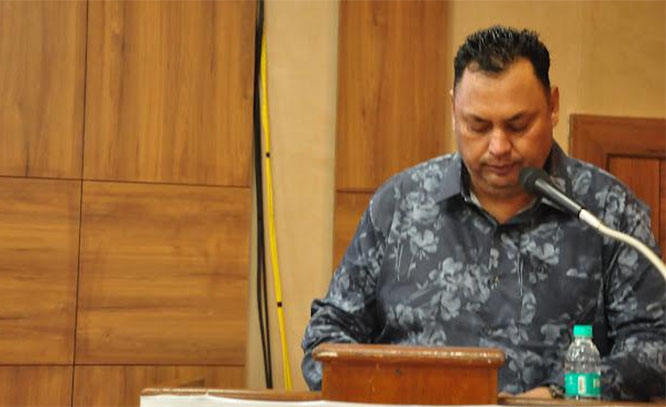
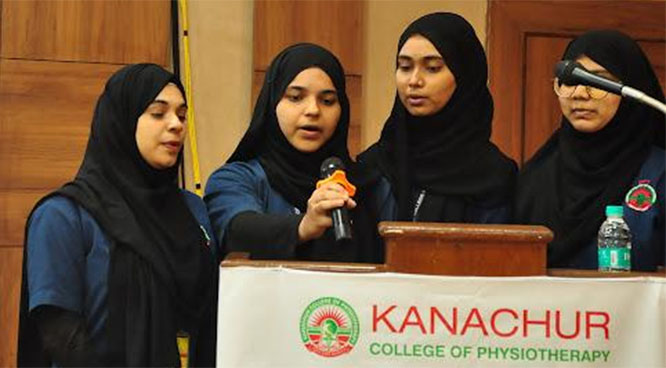
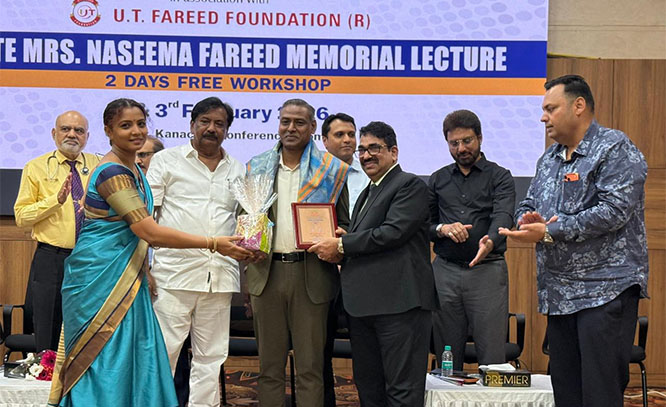
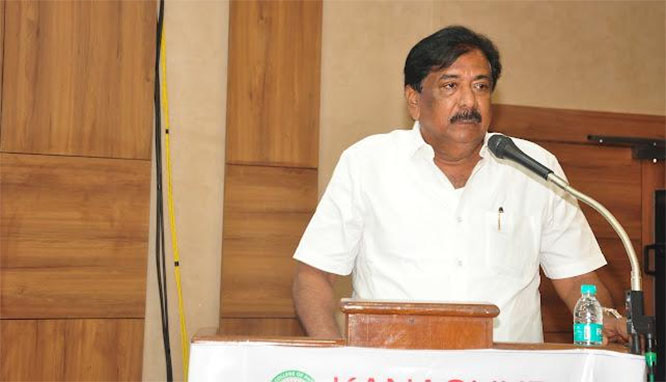
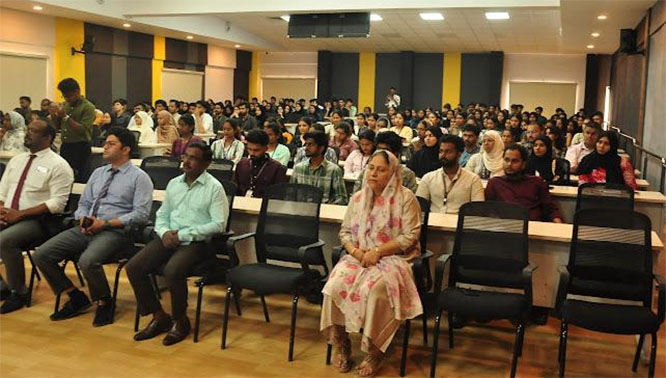
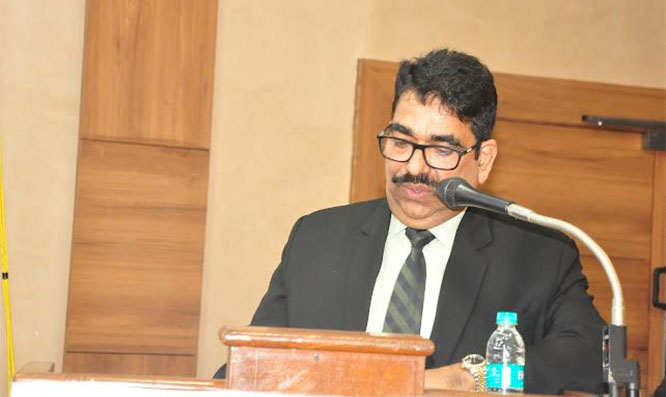
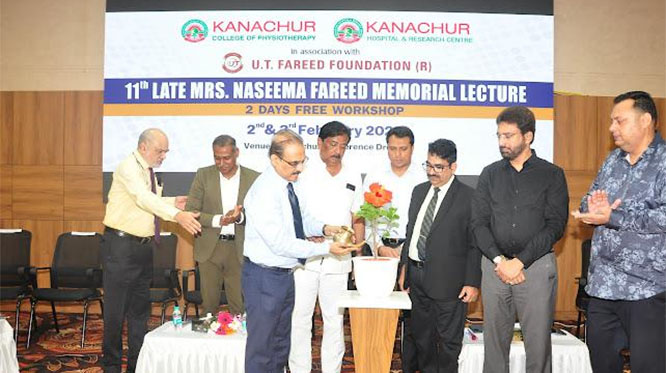
Mangaluru, Feb 3: Kanachur College of Physiotherapy and Kanachur Hospital & Research Centre, in association with U.T. Fareed Foundation (R), organised the 11th Late Mrs. Naseema Fareed Memorial Lecture on Tuesday.

The programme was inaugurated by Dr. Subramanyam K, Head of the Department and Professor, Department of Cardiology, Srinivas Institute of Medical Sciences & Research Centre, Mangaluru. In his inaugural address, Dr. Subramanyam delivered an insightful talk highlighting the vital role of physiotherapy in modern medical care, particularly in cardiac rehabilitation, patient recovery, and improving overall quality of life through a multidisciplinary healthcare approach.

The presidential address was delivered by Dr. Haji U.K. Monu, Chairman, KIET. The keynote address was presented by Dr. Mohammed Ismail Hejamady, who spoke on the evolving scope and significance of physiotherapy.

The event was held in the presence of Mr. Abdul Rahiman, Director, Kanachur Institute of Medical Sciences, Mangaluru; Dr. Vaishali Sreejith, Senate Member, Rajiv Gandhi University of Health Sciences, Bengaluru; Dr. Sudhan S.G., Professor and Principal, Krupanidhi College of Physiotherapy, Bengaluru; Dr. Shanavaz Manipady, Dean, Kanachur Institute of Medical Sciences, Mangaluru; and Dr. Venkat Rai Prabhu, Member, Kanachur Health Science Advisory Council, Kanachur Hospital & Research Centre.

Dr. Mohammad Suhail, Dean, Kanachur College of Physiotherapy, welcomed the guests and delegates.

As part of the programme, a two-day free workshop was organised on the following topics:

•    Art of Practice in Cardiopulmonary Conditions by Dr. Sudhan S.G., Principal, Krupanidhi College of Physiotherapy

•    The Gift of Life – Organ Donation by Dr. Rohan Monis, Chief Administrative Medical Officer

•    Chest X-ray Interpretation by Dr. Hemanth, Department of Radiology, KIMS

•    Pulmonary Rehabilitation by Dr. Vijaya Kumar, Department of Respiratory Medicine, KIMS

Organisers noted that the memorial lecture series has been conducted continuously for the 11th year, benefiting interns and postgraduate students from various colleges across Mangaluru. A total of 130 delegates attended the workshop.

Dr. Reshma, Vice Principal, Kanachur College of Physiotherapy, Mangaluru, delivered the vote of thanks.

Kanchur7.jpg

Kanchur6.jpg

Kanchur5.jpg

Kanchur4.jpg

Kanchur3.jpg

Kanchur1.jpg

Comments

Add new comment

  • Coastaldigest.com reserves the right to delete or block any comments.
  • Coastaldigset.com is not responsible for its readers’ comments.
  • Comments that are abusive, incendiary or irrelevant are strictly prohibited.
  • Please use a genuine email ID and provide your name to avoid reject.