



Instead of a dead body, 10 people can be accommodated on plane: BJP MLA's shocker on killed Karnataka student

News Network
March 4, 2022

Bengaluru, Mar 4: As the family of Naveen Shekharappa Gyanagowda, the student killed in Ukraine, wait for his body to be flown back to Karnataka, a BJP MLA has stirred up a controversy with his comment that "a dead body takes up more space in a flight".

Arvind Bellad, the BJP MLA representing the Hubli-Dharwad constituency in Karnataka, said instead of a coffin, nearly eight to 10 people can be accommodated on the plane.

He was responding to questions on the uncertainty over when Naveen's body would be brought back to Haveri, his hometown.

"The government is putting in effort to bring back the mortal remains of Naveen. Ukraine is a war zone and everyone is aware of it. Efforts are being made and if possible, the body will be brought back," Mr Bellad told reporters.

"While it is very challenging to bring back those who are alive, it has become even more difficult to bring back the dead because a dead body will consume more space on the flight. Instead, eight to 10 persons can be accommodated in place of a dead body, which would consume more space," said the BJP leader.

He added that Prime Minister Narendra Modi is making all efforts to try and bring back Naveen's body.

Naveen's father Shekharappa Gyanagowda had told NDTV on Wednesday that he was assured by the government his body would be brought home "within two days". He said he had requested both PM Modi and Karnataka Chief Minister Basavaraj Bommai to help bring his son's body home.

Naveen, 21, who was studying medicine at the Kharkiv National Medical University, was in a queue outside a grocery store when he was killed in Russian shelling on a government building.

He had been staying in a bunker with other students and had stepped out to stock up on food before catching a train to the border on Tuesday, according to his roommate.

Comments

Add new comment

  • Coastaldigest.com reserves the right to delete or block any comments.
  • Coastaldigset.com is not responsible for its readers’ comments.
  • Comments that are abusive, incendiary or irrelevant are strictly prohibited.
  • Please use a genuine email ID and provide your name to avoid reject.
News Network
February 3,2026

Bengaluru: Following reports of fresh Nipah virus (NiV) cases in West Bengal and heightened vigilance across parts of Southeast Asia, the Karnataka Health Department has placed the state on high alert and activated emergency preparedness protocols.

Health officials said enhanced surveillance measures have been initiated after two healthcare workers in Barasat, West Bengal, tested positive for the virus earlier this month. While no cases have been reported in Karnataka so far, authorities said the state’s past exposure to Nipah outbreaks and high inter-state mobility warranted preventive action.

Officials have directed district health teams to intensify monitoring, particularly at hospitals and points of entry, and to ensure early detection and isolation of suspected cases.

High Mortality Virus with Multiple Transmission Routes

Nipah virus is a zoonotic disease that can spread from animals to humans and has a reported fatality rate ranging between 60 and 75 per cent. Fruit bats, also known as flying foxes, are the natural reservoirs of the virus and can transmit it by contaminating food sources with saliva or urine.

Known modes of transmission include:

•    Contaminated food: Consumption of fruits partially eaten by bats or raw date-palm sap
•    Animal contact: Exposure to infected pigs or other animals
•    Human-to-human transmission: Close contact with body fluids of infected persons, particularly in healthcare settings

Symptoms and Disease Progression

The incubation period typically ranges from 4 to 14 days, though delayed onset has also been reported. Early symptoms often resemble common viral infections, making prompt clinical suspicion critical.

•    Initial symptoms: Fever, headache, body aches, fatigue, sore throat
•    Progressive symptoms: Drowsiness, disorientation, altered mental state
•    Severe stage: Seizures, neck stiffness and acute encephalitis, which can rapidly progress to coma

Public Health Advisory

The Health Department has issued precautionary guidelines urging the public to adopt risk-avoidance practices to prevent any local spillover.

Do’s
•    Wash fruits thoroughly before consumption
•    Drink boiled and cooled water
•    Use protective equipment while handling livestock
•    Maintain strict hand hygiene

Don’ts
•    Avoid fruits found on the ground or showing bite marks
•    Do not consume beverages made from raw tree sap, including toddy
•    Avoid areas with dense bat populations
•    Do not handle sick or dead animals

Preparedness Measures

Officials confirmed that isolation wards are being readied in major government hospitals and that medical staff are being sensitised to identify early warning signs.

“There is no cause for panic, but there is a need for heightened vigilance,” a senior health official said, adding that there is currently no approved vaccine or specific antiviral treatment for Nipah, and care remains largely supportive.

Comments

Add new comment

  • Coastaldigest.com reserves the right to delete or block any comments.
  • Coastaldigset.com is not responsible for its readers’ comments.
  • Comments that are abusive, incendiary or irrelevant are strictly prohibited.
  • Please use a genuine email ID and provide your name to avoid reject.
News Network
February 3,2026

manjeshwar.jpg

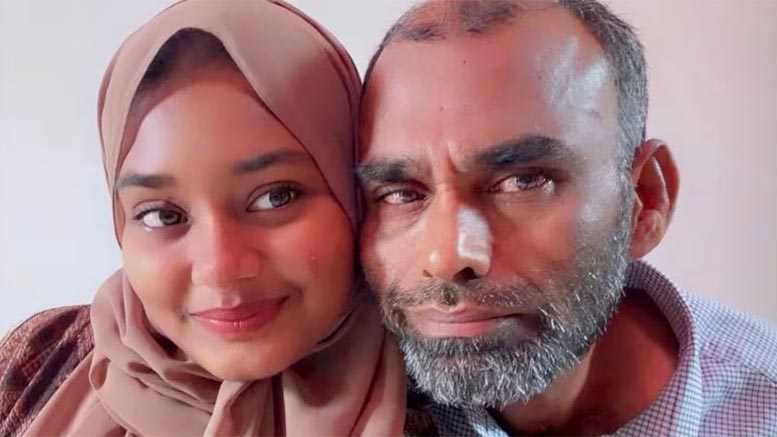
Kasaragod: An 18-year-old girl was stabbed to death at Thuminad in Manjeshwar panchayat on Monday, allegedly by her father following a domestic dispute. 

The victim has been identified as K U Mariyamath Jumaila. Her father, Umar Farooq, has been taken into police custody, Manjeshwar Station House Officer Inspector Ajith Kumar P said.

According to the police, Umar Farooq had been working in a West Asian country and returned home about three months ago. 

Family tensions reportedly escalated after his wife, Thahira (41), decided to seek a divorce and asked him to leave her life. Kasaragod district panchayat member Harshad Vorkady alleged that Umer was addicted to marijuana and frequently caused disturbances at home.

On Monday, Thahira asked Umar to come to her sister’s house in Thuminad to discuss the dispute. Jumaila accompanied her mother. 

Manjeshwar panchayat member Illiyas Thuminad said Umar arrived along with his brother, following which Thahira handed over gold ornaments and property documents to him and asked him to sever ties with her.

However, the police said a property dispute had been ongoing between Umar Farooq and his sister-in-law’s husband. During a heated argument, Umar allegedly attempted to attack the man with a sharp weapon. When Jumaila intervened to stop the assault, she was stabbed in the neck.

The teenager collapsed after bleeding profusely and was rushed to a private hospital in Mangaluru, where doctors declared her dead. Her body was later shifted to Mangalpady Taluk Hospital for post-mortem examination.

Jumaila was a former student of Sirajul Huda English Medium Higher Secondary School, Manjeshwar. 

Comments

Add new comment

  • Coastaldigest.com reserves the right to delete or block any comments.
  • Coastaldigset.com is not responsible for its readers’ comments.
  • Comments that are abusive, incendiary or irrelevant are strictly prohibited.
  • Please use a genuine email ID and provide your name to avoid reject.
News Network
February 3,2026

Bengaluru: Following reports of fresh Nipah virus (NiV) cases in West Bengal and heightened vigilance across parts of Southeast Asia, the Karnataka Health Department has placed the state on high alert and activated emergency preparedness protocols.

Health officials said enhanced surveillance measures have been initiated after two healthcare workers in Barasat, West Bengal, tested positive for the virus earlier this month. While no cases have been reported in Karnataka so far, authorities said the state’s past exposure to Nipah outbreaks and high inter-state mobility warranted preventive action.

Officials have directed district health teams to intensify monitoring, particularly at hospitals and points of entry, and to ensure early detection and isolation of suspected cases.

High Mortality Virus with Multiple Transmission Routes

Nipah virus is a zoonotic disease that can spread from animals to humans and has a reported fatality rate ranging between 60 and 75 per cent. Fruit bats, also known as flying foxes, are the natural reservoirs of the virus and can transmit it by contaminating food sources with saliva or urine.

Known modes of transmission include:

•    Contaminated food: Consumption of fruits partially eaten by bats or raw date-palm sap
•    Animal contact: Exposure to infected pigs or other animals
•    Human-to-human transmission: Close contact with body fluids of infected persons, particularly in healthcare settings

Symptoms and Disease Progression

The incubation period typically ranges from 4 to 14 days, though delayed onset has also been reported. Early symptoms often resemble common viral infections, making prompt clinical suspicion critical.

•    Initial symptoms: Fever, headache, body aches, fatigue, sore throat
•    Progressive symptoms: Drowsiness, disorientation, altered mental state
•    Severe stage: Seizures, neck stiffness and acute encephalitis, which can rapidly progress to coma

Public Health Advisory

The Health Department has issued precautionary guidelines urging the public to adopt risk-avoidance practices to prevent any local spillover.

Do’s
•    Wash fruits thoroughly before consumption
•    Drink boiled and cooled water
•    Use protective equipment while handling livestock
•    Maintain strict hand hygiene

Don’ts
•    Avoid fruits found on the ground or showing bite marks
•    Do not consume beverages made from raw tree sap, including toddy
•    Avoid areas with dense bat populations
•    Do not handle sick or dead animals

Preparedness Measures

Officials confirmed that isolation wards are being readied in major government hospitals and that medical staff are being sensitised to identify early warning signs.

“There is no cause for panic, but there is a need for heightened vigilance,” a senior health official said, adding that there is currently no approved vaccine or specific antiviral treatment for Nipah, and care remains largely supportive.

Comments

Add new comment

  • Coastaldigest.com reserves the right to delete or block any comments.
  • Coastaldigset.com is not responsible for its readers’ comments.
  • Comments that are abusive, incendiary or irrelevant are strictly prohibited.
  • Please use a genuine email ID and provide your name to avoid reject.