Karnataka govt orders uniform dress code in all schools, colleges to curb hijab

News Network
February 5, 2022

girls.jpg

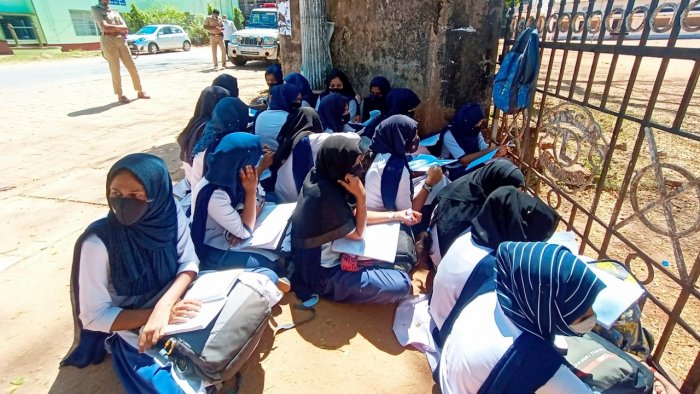
Bengaluru, Feb 5: In the wake of controversy over sudden banishment of hijab-clad girls in a couple educational institutions in Udupi district, the government of Karnataka ordered the mandatory wearing of uniform approved by the state government on school and college campuses. 

The state government referring to judgements of various High Courts, instructed that kids at government schools, colleges must wear uniforms approved by the state government and in private institutions, the uniform approved by the management.

The state government had announced on Friday that it will neither support the hijab nor does it favour the wearing of the saffron robe by the students. However, with the controversy gaining momentum in other districts and drawing the attention of the entire country, the Primary and Secondary Education Department on Saturday issued a formal order mandating a uniform dress code approved by the state government in all government schools and colleges.

While it is mandatory for the government schools kids to wear uniforms approved by the government, the students at private colleges shall wear the uniform approved by the management. Similarly, students in all PU Colleges must wear the uniform approved by the College Development Council (CDC). In case if there is no rule on the uniform, the students must wear those dress that goes well with the idea of equality and unity without affecting the law and order of the region.

Referring to multiple judgements by various High Courts including Mumbai, Kerala and other states, the government order said, "Compelling a student to remove the headscarf on school campus does not amount to a violation under the Article 25 of the Indian Constitution. Also, reviewing the various provisions under the Karnataka Education Act 1983, the state government has the right to decide on the uniform in schools and colleges. As per the sub-clause 2 under section 133 of the Education Act 1983, it is mandatory for students of the government colleges to wear uniform approved by the state government."

6The state government also noted in its order, "The government is holding programmes at various schools, colleges to facilitate uniform learning among students. However, with a few students in some of the institutions arguing to continue with their religious traditions is coming on the way of unity and equality. But the Supreme Court and several High Courts have upheld the uniform dress code over the individual dress code."

Comments

Abdul
 - 
Monday, 7 Feb 2022

If such rules are implemented then it will create problem for all communities specially for Hindus. Concentrate on education rather than traditions. Saffron shawl is basically a political party's identity rather than religious, but still we have no objection.

Add new comment

  • Coastaldigest.com reserves the right to delete or block any comments.
  • Coastaldigset.com is not responsible for its readers’ comments.
  • Comments that are abusive, incendiary or irrelevant are strictly prohibited.
  • Please use a genuine email ID and provide your name to avoid reject.
News Network
January 23,2026

Mangaluru: The Karnataka Government Polytechnic (KPT), Mangaluru, has achieved autonomous status from the All India Council for Technical Education (AICTE), becoming the first government polytechnic in the country to receive such recognition in its 78-year history. The status was granted by AICTE, New Delhi, and subsequently approved by the Karnataka Board of Technical Education in October last year.

Officials said the autonomy was conferred a few months ago. Until recently, AICTE extended autonomous status only to engineering colleges, excluding diploma institutions. However, with a renewed national focus on skill development, several government polytechnics across India have now been granted autonomy.

KPT, the second-largest polytechnic in Karnataka, was established in 1946 with four branches and has since expanded to offer eight diploma programmes, including computer science and polymer technology. The institution is spread across a 19-acre campus.

Ravindra M Keni, the first dean of the institution, told The Times of India that AICTE had proposed autonomous status for polytechnic institutions that are over 25 years old. “Many colleges applied. In the first round, 100 institutions were shortlisted, which was further narrowed down to 15 in the second round. We have already completed one semester after becoming an autonomous institution,” he said. He added that nearly 500 students are admitted annually across eight three-year diploma courses.

Explaining the factors that helped KPT secure autonomy, Keni said the institution has consistently recorded 100 per cent admissions and placements for its graduates. He also noted its strong performance in sports, with the college emerging champions for 12 consecutive years, along with active student participation in NCC and NSS activities.

Autonomous status allows KPT to design industry-oriented curricula, conduct examinations, prepare question papers, and manage academic documentation independently. The institution can also directly collaborate with industries and receive priority funding from AICTE or the Ministry of Education. While academic autonomy has been granted, financial control will continue to rest with the state government.

“There will be separate committees for examinations, question paper setting, boards of studies, and boards of examiners. The institution will now have the freedom to conduct admissions without government notifications and issue its own marks cards,” Keni said, adding that new academic initiatives would be planned after a year of functioning under the autonomous framework.

Comments

Add new comment

  • Coastaldigest.com reserves the right to delete or block any comments.
  • Coastaldigset.com is not responsible for its readers’ comments.
  • Comments that are abusive, incendiary or irrelevant are strictly prohibited.
  • Please use a genuine email ID and provide your name to avoid reject.
News Network
February 3,2026

Kanchur2.jpg

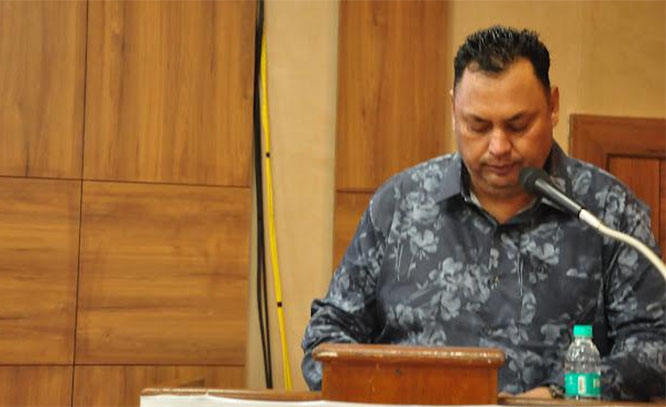
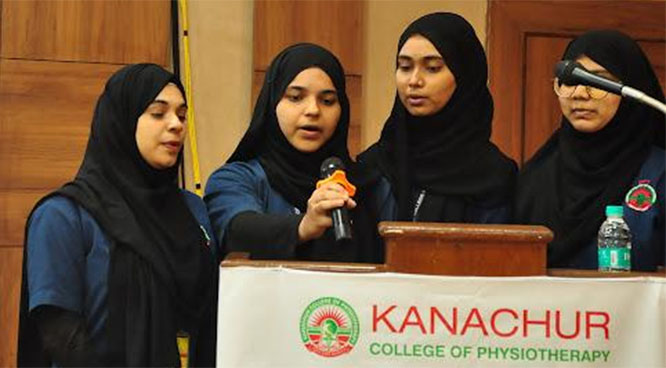
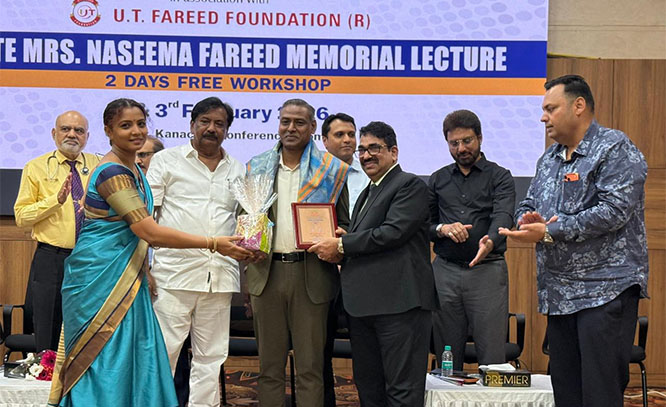
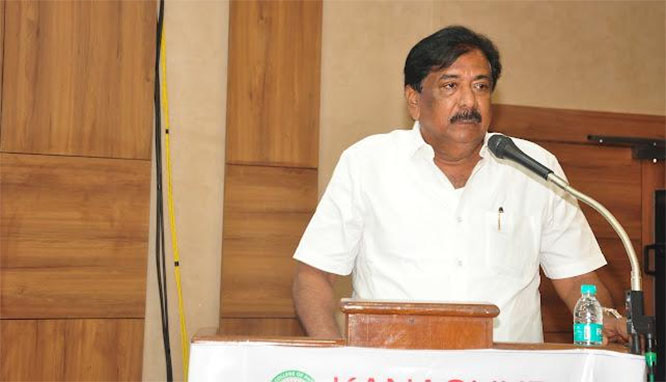
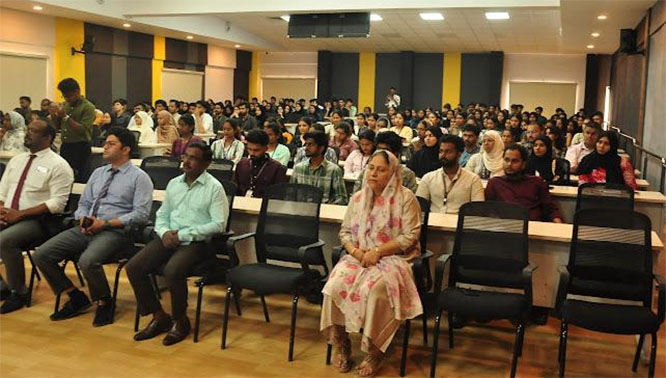
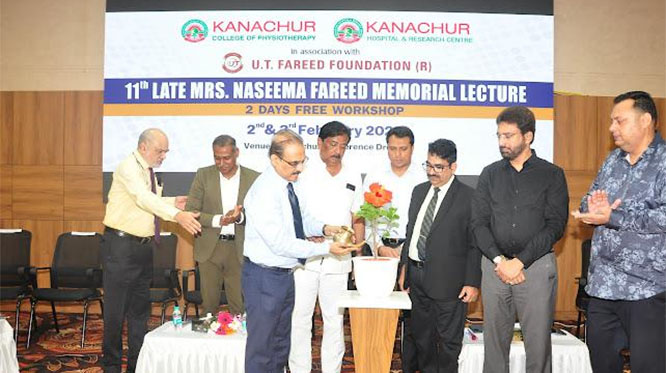
Mangaluru, Feb 3: Kanachur College of Physiotherapy and Kanachur Hospital & Research Centre, in association with U.T. Fareed Foundation (R), organised the 11th Late Mrs. Naseema Fareed Memorial Lecture on Tuesday.

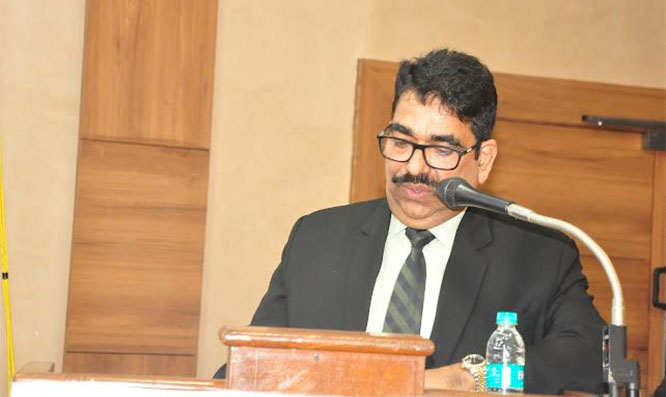
The programme was inaugurated by Dr. Subramanyam K, Head of the Department and Professor, Department of Cardiology, Srinivas Institute of Medical Sciences & Research Centre, Mangaluru. In his inaugural address, Dr. Subramanyam delivered an insightful talk highlighting the vital role of physiotherapy in modern medical care, particularly in cardiac rehabilitation, patient recovery, and improving overall quality of life through a multidisciplinary healthcare approach.

The presidential address was delivered by Dr. Haji U.K. Monu, Chairman, KIET. The keynote address was presented by Dr. Mohammed Ismail Hejamady, who spoke on the evolving scope and significance of physiotherapy.

The event was held in the presence of Mr. Abdul Rahiman, Director, Kanachur Institute of Medical Sciences, Mangaluru; Dr. Vaishali Sreejith, Senate Member, Rajiv Gandhi University of Health Sciences, Bengaluru; Dr. Sudhan S.G., Professor and Principal, Krupanidhi College of Physiotherapy, Bengaluru; Dr. Shanavaz Manipady, Dean, Kanachur Institute of Medical Sciences, Mangaluru; and Dr. Venkat Rai Prabhu, Member, Kanachur Health Science Advisory Council, Kanachur Hospital & Research Centre.

Dr. Mohammad Suhail, Dean, Kanachur College of Physiotherapy, welcomed the guests and delegates.

As part of the programme, a two-day free workshop was organised on the following topics:

•    Art of Practice in Cardiopulmonary Conditions by Dr. Sudhan S.G., Principal, Krupanidhi College of Physiotherapy

•    The Gift of Life – Organ Donation by Dr. Rohan Monis, Chief Administrative Medical Officer

•    Chest X-ray Interpretation by Dr. Hemanth, Department of Radiology, KIMS

•    Pulmonary Rehabilitation by Dr. Vijaya Kumar, Department of Respiratory Medicine, KIMS

Organisers noted that the memorial lecture series has been conducted continuously for the 11th year, benefiting interns and postgraduate students from various colleges across Mangaluru. A total of 130 delegates attended the workshop.

Dr. Reshma, Vice Principal, Kanachur College of Physiotherapy, Mangaluru, delivered the vote of thanks.

Kanchur7.jpg

Kanchur6.jpg

Kanchur5.jpg

Kanchur4.jpg

Kanchur3.jpg

Kanchur1.jpg

Comments

Add new comment

  • Coastaldigest.com reserves the right to delete or block any comments.
  • Coastaldigset.com is not responsible for its readers’ comments.
  • Comments that are abusive, incendiary or irrelevant are strictly prohibited.
  • Please use a genuine email ID and provide your name to avoid reject.
News Network
January 20,2026

Mangaluru: In a major step towards strengthening rural innovation, the Office of the Principal Scientific Adviser (PSA) to the Government of India is supporting the establishment of RuTAGe Smart Village Centres (RSVCs) across the country through collaborations with academic institutions, civil society organisations and philanthropic partners.

As part of this national initiative, Nitte (Deemed to be University) will set up the first RSVCs in the region at Nitte GP in Udupi district and at the Nitte Health Centre, Sevanjali Trust, Farangipete, in Dakshina Kannada district. The centres will be inaugurated on January 21. In South India, the programme is being implemented by the Section Infin-8 Foundation (SI-8).

Speaking to reporters on Monday, SI-8 founder-director Vishwas US said experts from Nitte University and SI-8 would work closely with farmers, students, youth and local entrepreneurs to adapt and deploy technologies tailored to local needs.

Project head Prof Iddya Karunasagar, representing Nitte DU, said the RSVCs at Nitte and Farangipete would serve as demonstration hubs for a wide range of agriculture, energy, skill-development and assistive technologies. These include solar dryers for fruits, vegetables and crops; soil-testing solutions; power weeders and women-friendly farm tools; wind-powered devices for rural artisans; grain storage systems; grass-cutting and tree-climbing equipment; and liquid fertiliser production using cowshed waste.

SI-8 CEO Aravind C Kumar said the centres would also provide access to digital and knowledge-based platforms such as ISRO applications, government scheme portals, market linkage tools and gamified learning resources, along with assistive technologies for persons with visual impairments.

Highlighting the broader impact of the initiative, Principal Scientific Adviser Prof Ajay Kumar Sood said it demonstrated how applied research could bridge the rural–urban divide and help create self-reliant, technology-enabled villages.

The initiative has been made possible through philanthropic support from Dr NC Murthy of ACM Business Solutions, LLC, USA. Dr Sapna Poti, Director (Strategic Alliances) at the Office of the Principal Scientific Adviser, said the long-term objective is to build self-sufficient, technology-driven communities capable of generating sustainable livelihoods on their own.

Comments

Add new comment

  • Coastaldigest.com reserves the right to delete or block any comments.
  • Coastaldigset.com is not responsible for its readers’ comments.
  • Comments that are abusive, incendiary or irrelevant are strictly prohibited.
  • Please use a genuine email ID and provide your name to avoid reject.