Karnataka govt's decision to provide eggs to school children sparks row

News Network
December 5, 2021

Bengaluru, Dec 5: The Karnataka government has begun distribution of eggs to school children in seven districts of the state where the malnourishment indicator is alarming from December 1. The decision has angered a section of society who are demanding that eggs shouldn’t be distributed inside schools as it encourages discrimination among school going children.

Another section supporting egg supplements to school children claims that this project should not stop as protein supplement is badly needed by the students. They say children who have easier access to better nutrition have better education outcomes.

The BJP-JD (S) coalition government in 2007, then headed by HD Kumaraswamy, had rolled back its project of distributing eggs to school children, succumbing to pressure from Brahmin groups. However, it is to be seen how the BJP government responds to the issue now.

Education Minister BC Nagesh said that the scheme has been implemented with people opposing and favouring it. "There is no substitution for egg as such. There is soyabean, but children won't eat it. The project has been implemented with an intention to address malnutrition among children," he stated.

From December 1, the Karnataka government has started providing boiled eggs and bananas to children studying in government aided schools, aged between six and 15 years and suffering from malnutrition, anaemia and deficiency of proteins.

As many as 14,44,322 students studying in the first standard to the eighth standard in Bidar, Raichur, Kalaburagi, Yadgir, Koppal, Ballary and Vijayapura districts would be the beneficiaries. The programme will end in March 2022.

Yadgir district has 74 per cent of students suffering from malnutrition and anaemia. Kalaburagi (72.4 per cent), Ballary (72.3 per cent), Koppal (70.7 per cent), Raichur (70.6 per cent), Bidar (69.1 per cent) and 68 per cent of students in Vijayapura were found to be malnourished.

However, the move by the government is facing stiff opposition. Channa Basavananda Swamiji, National President of Lingayat Dharma Mahasabha, has demanded a rollback of the decision. "There is uniformity among school-going children in terms of dress code, syllabus. There shouldn't be discrimination in terms of food. The government should provide food which is acceptable to all," he said.

"We are discussing a future course of action considering the prevailing Covid situation in the state, and a decision will be taken. Fifteen seers are gathered to discuss the issue," he stated.

Niranjan Aradhya, a development educationist and a former faculty of National Law School of India University, described the opposition to providing eggs to students as a ploy to divide the country based on food. "The government shouldn't succumb to religious threats. The scheme has to be extended to the whole of Karnataka. Eggs have to be given to small children going to anganwadis and students from class one to 10 have to get eggs," he said.

"I don't know why religious seers are getting into it. According to the National Family Health Survey 5th round (2019), in Karnataka, most children are not reaching their ideal height and weight, with stunting (less height for age) of 35.4 per cent, underweight (less weight for age) of 32.9 per cent even before starting their school life at 6 years, and this is more so in children from vulnerable communities," he explained.

When asked how important it is to provide eggs to students in the region, Yadgir District Commissioner Dr Ragapriya R said, "We have seen over the course of three to four months of continuous monitoring, that the children who are being given the nutritional supplement and eggs tend to improve their height, weight and circumference of upper hand, all these parameters do improve."

"In my district (Yadgir) I have not received a single objection so far. No one has come to our office with such a demand."

Providing eggs to students will help. Indian children have the least height in the whole world. One of the biggest reasons is high malnourishment rates. If you give protein automatically the height and weight of the children is going to increase. Even if the children who are getting good nutrition at home are given a supplement of one egg per day definitely their nutritional status improves. Usually better nutritional levels are associated with better learning outcomes, she said.

Basavaraj Dhanur, National President of Basava Dal, stated that they are not opposing eggs for students. "We are only requesting not to distribute them in schools. Let them deliver it to the homes of students or make other arrangements," he said.

Mahaling Swamy Chatnalli of Rastreeya Basava Dal said that Jain, Brahmin and Lingayat community leaders had staged a protest before then Chief Minister H.D. Kumaraswamy's residence opposing distribution of eggs at school in 2007. The decision was reversed. "It hurts religious sentiments. It has to be revoked," he added."

Neighbouring Tamil Nadu introduced eggs with midday meals 50 years ago during the tenure of then Chief Minister MG Ramachandran. The Women and Child Welfare department has been providing eggs to malnourished children for many years. The supply of protein in the form of eggs and pulses is seen as crucial during the Covid pandemic as the virus affects those with less immunity. 

Comments

Add new comment

  • Coastaldigest.com reserves the right to delete or block any comments.
  • Coastaldigset.com is not responsible for its readers’ comments.
  • Comments that are abusive, incendiary or irrelevant are strictly prohibited.
  • Please use a genuine email ID and provide your name to avoid reject.
News Network
February 1,2026

Bengaluru: The Karnataka High Court has refused to quash an investigation against a WhatsApp group administrator accused of allowing the circulation of obscene and offensive images depicting Hindutva politicians and idols in 2021.

Justice M Nagaprasanna observed that, prima facie, the ingredients of the offence under Section 295A of the Indian Penal Code were made out. “The offence under Section 295A of the IPC is met to every word of its ingredient, albeit prima facie,” the judge said.

The petitioner, Sirajuddin, a resident of Belthangady taluk in Dakshina Kannada district, had challenged the FIR registered against him at the CEN (Cyber, Economics and Narcotics) police station, Mangaluru, for offences under Section 295A of the IPC and Section 67 of the Information Technology Act. Section 295A relates to punishment for deliberate and malicious acts intended to outrage the religious feelings of any class of citizens.

According to the complaint filed by K Jayaraj Salian, also a resident of Belthangady taluk, he received a WhatsApp group link from an unknown source and was added to the group after accessing it. The group reportedly had six administrators and around 250 participants, where obscene and offensive images depicting Hindu deities and certain political figures were allegedly circulated repeatedly.

Sirajuddin was arrested in connection with the case and later released on bail on February 16, 2021. He argued before the court that he was being selectively targeted, while other administrators—including the creator of the group—were neither arrested nor investigated. He also contended that the Magistrate could not have taken cognisance of the offence under Section 295A without prior sanction under Section 196(1) of the CrPC.

Rejecting the argument, Justice Nagaprasanna held that prior sanction is required only at the stage of taking cognisance, and not at the stage of registration of the crime or during investigation.

The judge noted that the State had produced the entire investigation material before the court. “A perusal of the material reveals depictions of Hindu deities in an extraordinarily obscene, demeaning and profane manner. The content is such that its reproduction in a judicial order would itself be inappropriate,” the court said, adding that the material, on its face, had the tendency to outrage religious feelings and disturb communal harmony.

Observing that the case was still at the investigation stage, the court said it could not interdict the probe at this juncture. However, it expressed concern that the investigating officer appeared to have not proceeded uniformly against all administrators. The court clarified that if the investigation revealed the active involvement of any member in permitting the circulation of such content, they must also be proceeded against.

“At this investigative stage, any further observation by this Court would be unnecessary,” the order concluded.

Comments

Add new comment

  • Coastaldigest.com reserves the right to delete or block any comments.
  • Coastaldigset.com is not responsible for its readers’ comments.
  • Comments that are abusive, incendiary or irrelevant are strictly prohibited.
  • Please use a genuine email ID and provide your name to avoid reject.
News Network
February 3,2026

Kanchur2.jpg

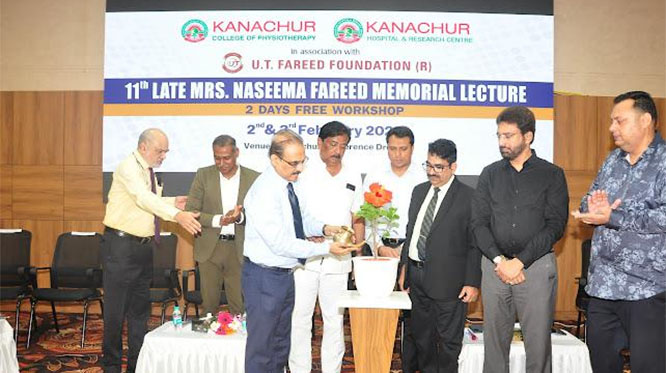
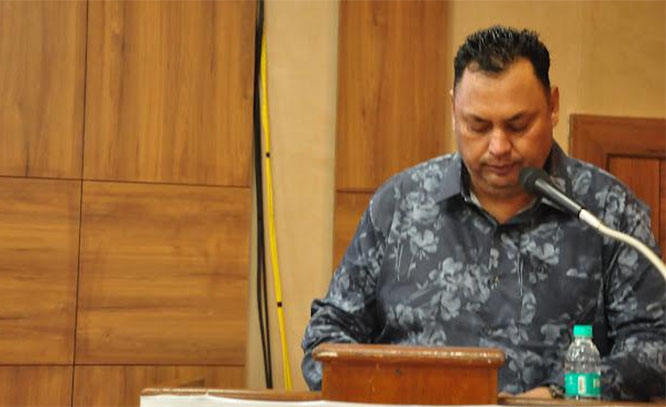
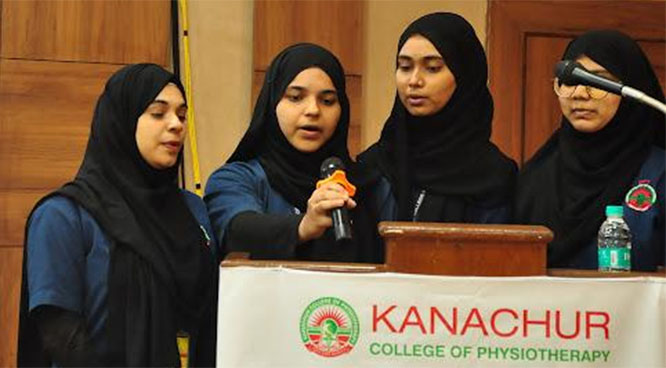
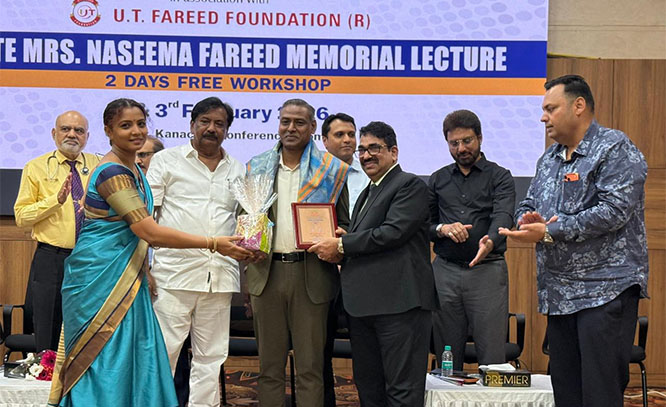
Mangaluru, Feb 3: Kanachur College of Physiotherapy and Kanachur Hospital & Research Centre, in association with U.T. Fareed Foundation (R), organised the 11th Late Mrs. Naseema Fareed Memorial Lecture on Tuesday.

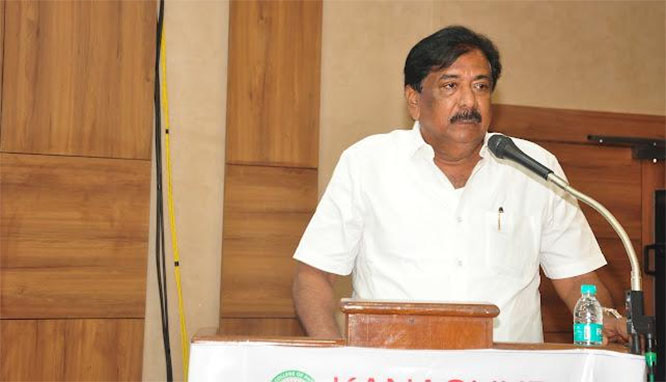
The programme was inaugurated by Dr. Subramanyam K, Head of the Department and Professor, Department of Cardiology, Srinivas Institute of Medical Sciences & Research Centre, Mangaluru. In his inaugural address, Dr. Subramanyam delivered an insightful talk highlighting the vital role of physiotherapy in modern medical care, particularly in cardiac rehabilitation, patient recovery, and improving overall quality of life through a multidisciplinary healthcare approach.

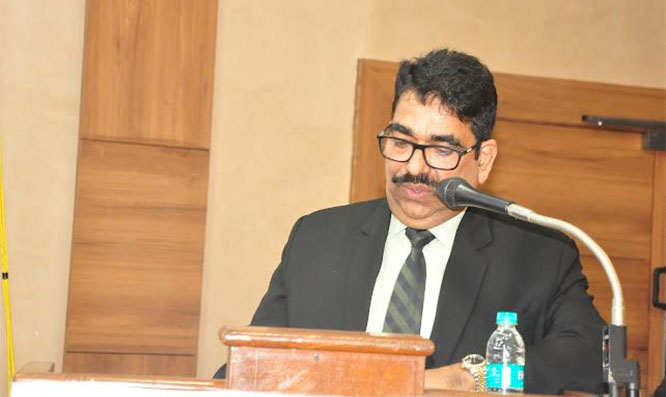
The presidential address was delivered by Dr. Haji U.K. Monu, Chairman, KIET. The keynote address was presented by Dr. Mohammed Ismail Hejamady, who spoke on the evolving scope and significance of physiotherapy.

The event was held in the presence of Mr. Abdul Rahiman, Director, Kanachur Institute of Medical Sciences, Mangaluru; Dr. Vaishali Sreejith, Senate Member, Rajiv Gandhi University of Health Sciences, Bengaluru; Dr. Sudhan S.G., Professor and Principal, Krupanidhi College of Physiotherapy, Bengaluru; Dr. Shanavaz Manipady, Dean, Kanachur Institute of Medical Sciences, Mangaluru; and Dr. Venkat Rai Prabhu, Member, Kanachur Health Science Advisory Council, Kanachur Hospital & Research Centre.

Dr. Mohammad Suhail, Dean, Kanachur College of Physiotherapy, welcomed the guests and delegates.

As part of the programme, a two-day free workshop was organised on the following topics:

•    Art of Practice in Cardiopulmonary Conditions by Dr. Sudhan S.G., Principal, Krupanidhi College of Physiotherapy

•    The Gift of Life – Organ Donation by Dr. Rohan Monis, Chief Administrative Medical Officer

•    Chest X-ray Interpretation by Dr. Hemanth, Department of Radiology, KIMS

•    Pulmonary Rehabilitation by Dr. Vijaya Kumar, Department of Respiratory Medicine, KIMS

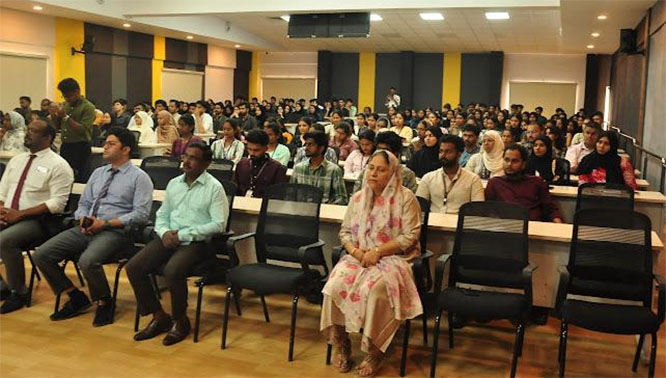
Organisers noted that the memorial lecture series has been conducted continuously for the 11th year, benefiting interns and postgraduate students from various colleges across Mangaluru. A total of 130 delegates attended the workshop.

Dr. Reshma, Vice Principal, Kanachur College of Physiotherapy, Mangaluru, delivered the vote of thanks.

Kanchur7.jpg

Kanchur6.jpg

Kanchur5.jpg

Kanchur4.jpg

Kanchur3.jpg

Kanchur1.jpg

Comments

Add new comment

  • Coastaldigest.com reserves the right to delete or block any comments.
  • Coastaldigset.com is not responsible for its readers’ comments.
  • Comments that are abusive, incendiary or irrelevant are strictly prohibited.
  • Please use a genuine email ID and provide your name to avoid reject.
News Network
January 23,2026

oscar.jpg

The Voice of Hind Rajab, inspired by the tragic final moments of a young Palestinian girl killed by Israeli fire in Gaza, has been nominated for an Academy Award in the Best International Feature Film category.

Directed by Tunisian filmmaker Kaouther Ben Hania, the film recounts the true story of five-year-old Hind Rajab, who lost her life in January 2024 while fleeing Israeli bombardment with her family.

The film features the real audio of Hind’s desperate call to the Palestinian Red Crescent Society, where she pleaded for help moments before the vehicle she was in was struck by 355 bullets.

The haunting narrative begins with a brief call made from the besieged Tel al-Hawa neighborhood of Gaza, where gunfire and armored vehicles drowned out every sound.

After witnessing the brutal killing of her family, she made a trembling call, her voice reduced to a whisper as she spoke of the massacre and her unbearable loneliness as the sole survivor.

Premiering at the Venice International Film Festival in September 2025, The Voice of Hind Rajab garnered widespread acclaim, receiving a record-setting 23-minute standing ovation and the Silver Lion Grand Jury Prize, the festival’s second-highest honor.

In her acceptance speech, Ben Hania dedicated the film to humanitarian workers and first responders in Gaza, emphasizing that Hind's voice symbolizes countless civilians affected by war.

She aims to give voice to victims often reduced to mere statistics, highlighting the broader suffering of civilians in war zones.

The film’s Oscar nomination underscores its powerful storytelling and ethical approach to depicting real-life tragedy, making it a crucial piece of contemporary cinema.

It serves not only as a narration of individual tragedy but also as an artistic and documentary response to the silence and censorship that often overshadow West Asian struggles and wars.

Using an innovative method she calls docufiction, Ben Hania bridges unvarnished reality and narrative structure, creating a work that is both artistically valuable and socially impactful.

Born in 1977 in Sidi Bouzid—later the epicenter of the Arab revolution—her background profoundly influenced her worldview and artistic approach.

She is a graduate of the Higher School of Audiovisual Arts of Tunis, Pantheon-Sorbonne University, and La Fémis in Paris, where her studies equipped her with the technical and theoretical tools needed to address complex subjects. 

Comments

Add new comment

  • Coastaldigest.com reserves the right to delete or block any comments.
  • Coastaldigset.com is not responsible for its readers’ comments.
  • Comments that are abusive, incendiary or irrelevant are strictly prohibited.
  • Please use a genuine email ID and provide your name to avoid reject.