Karnataka govt's decision to provide eggs to school children sparks row

News Network
December 5, 2021

Bengaluru, Dec 5: The Karnataka government has begun distribution of eggs to school children in seven districts of the state where the malnourishment indicator is alarming from December 1. The decision has angered a section of society who are demanding that eggs shouldn’t be distributed inside schools as it encourages discrimination among school going children.

Another section supporting egg supplements to school children claims that this project should not stop as protein supplement is badly needed by the students. They say children who have easier access to better nutrition have better education outcomes.

The BJP-JD (S) coalition government in 2007, then headed by HD Kumaraswamy, had rolled back its project of distributing eggs to school children, succumbing to pressure from Brahmin groups. However, it is to be seen how the BJP government responds to the issue now.

Education Minister BC Nagesh said that the scheme has been implemented with people opposing and favouring it. "There is no substitution for egg as such. There is soyabean, but children won't eat it. The project has been implemented with an intention to address malnutrition among children," he stated.

From December 1, the Karnataka government has started providing boiled eggs and bananas to children studying in government aided schools, aged between six and 15 years and suffering from malnutrition, anaemia and deficiency of proteins.

As many as 14,44,322 students studying in the first standard to the eighth standard in Bidar, Raichur, Kalaburagi, Yadgir, Koppal, Ballary and Vijayapura districts would be the beneficiaries. The programme will end in March 2022.

Yadgir district has 74 per cent of students suffering from malnutrition and anaemia. Kalaburagi (72.4 per cent), Ballary (72.3 per cent), Koppal (70.7 per cent), Raichur (70.6 per cent), Bidar (69.1 per cent) and 68 per cent of students in Vijayapura were found to be malnourished.

However, the move by the government is facing stiff opposition. Channa Basavananda Swamiji, National President of Lingayat Dharma Mahasabha, has demanded a rollback of the decision. "There is uniformity among school-going children in terms of dress code, syllabus. There shouldn't be discrimination in terms of food. The government should provide food which is acceptable to all," he said.

"We are discussing a future course of action considering the prevailing Covid situation in the state, and a decision will be taken. Fifteen seers are gathered to discuss the issue," he stated.

Niranjan Aradhya, a development educationist and a former faculty of National Law School of India University, described the opposition to providing eggs to students as a ploy to divide the country based on food. "The government shouldn't succumb to religious threats. The scheme has to be extended to the whole of Karnataka. Eggs have to be given to small children going to anganwadis and students from class one to 10 have to get eggs," he said.

"I don't know why religious seers are getting into it. According to the National Family Health Survey 5th round (2019), in Karnataka, most children are not reaching their ideal height and weight, with stunting (less height for age) of 35.4 per cent, underweight (less weight for age) of 32.9 per cent even before starting their school life at 6 years, and this is more so in children from vulnerable communities," he explained.

When asked how important it is to provide eggs to students in the region, Yadgir District Commissioner Dr Ragapriya R said, "We have seen over the course of three to four months of continuous monitoring, that the children who are being given the nutritional supplement and eggs tend to improve their height, weight and circumference of upper hand, all these parameters do improve."

"In my district (Yadgir) I have not received a single objection so far. No one has come to our office with such a demand."

Providing eggs to students will help. Indian children have the least height in the whole world. One of the biggest reasons is high malnourishment rates. If you give protein automatically the height and weight of the children is going to increase. Even if the children who are getting good nutrition at home are given a supplement of one egg per day definitely their nutritional status improves. Usually better nutritional levels are associated with better learning outcomes, she said.

Basavaraj Dhanur, National President of Basava Dal, stated that they are not opposing eggs for students. "We are only requesting not to distribute them in schools. Let them deliver it to the homes of students or make other arrangements," he said.

Mahaling Swamy Chatnalli of Rastreeya Basava Dal said that Jain, Brahmin and Lingayat community leaders had staged a protest before then Chief Minister H.D. Kumaraswamy's residence opposing distribution of eggs at school in 2007. The decision was reversed. "It hurts religious sentiments. It has to be revoked," he added."

Neighbouring Tamil Nadu introduced eggs with midday meals 50 years ago during the tenure of then Chief Minister MG Ramachandran. The Women and Child Welfare department has been providing eggs to malnourished children for many years. The supply of protein in the form of eggs and pulses is seen as crucial during the Covid pandemic as the virus affects those with less immunity. 

Comments

Add new comment

  • Coastaldigest.com reserves the right to delete or block any comments.
  • Coastaldigset.com is not responsible for its readers’ comments.
  • Comments that are abusive, incendiary or irrelevant are strictly prohibited.
  • Please use a genuine email ID and provide your name to avoid reject.
News Network
January 20,2026

KCFabudhabi.jpg

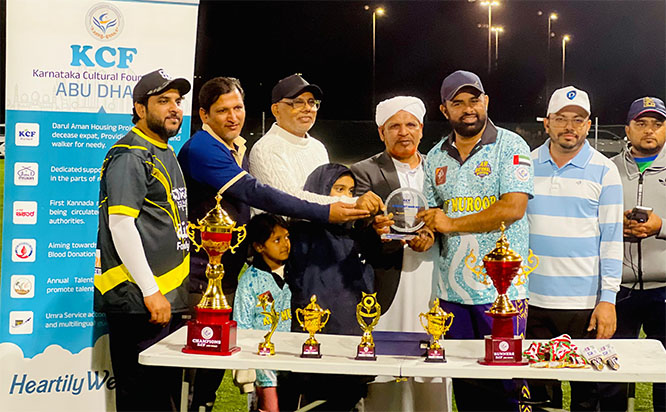
KCF, a global socio-cultural organisation of Karnataka expatriates, is actively involved in education, humanitarian initiatives and community well-being across several countries. The awardees were selected following a structured evaluation of nominations by the Annual Council Program Committee, based on the depth, consistency and long-term impact of their social service.

One of the award recipients, Abdul Razak Haji, a prominent UAE-based entrepreneur from the Qamcon Group of Companies, was honoured for his significant contributions to society. Through both his professional journey and personal initiatives, he has supported numerous employees and families, while also extending assistance in education, housing for the underprivileged and various charitable causes, largely carried out quietly over the years. His award was presented earlier during the Annual Council Program held at the KCF Abu Dhabi office.

The second award was conferred on Latheef Kakkinje, a young social worker based in Abu Dhabi, in recognition of his active involvement in community engagement programmes, sports initiatives, talent festivals and family-oriented social activities. His consistent volunteering efforts and commitment to humanitarian causes were highly appreciated by the selection committee.

The award presentation ceremony for Latheef Kakkinje was held at the Zayed Cricket Stadium (Astro Turf Ground) in the presence of Kedumbady Ibrahim Saqafi, President of KCF UAE; Ibrahim, General Secretary; Kabeer Bayambady, President of KCF Abu Dhabi; Ummer Ishwaramangila, General Secretary; along with other members of the KCF Abu Dhabi cabinet.

Congratulating both awardees, KCF leaders reiterated the organisation’s commitment to recognising individuals who selflessly work for social upliftment and community service.

KCFabudhabi1.jpg

Comments

Add new comment

  • Coastaldigest.com reserves the right to delete or block any comments.
  • Coastaldigset.com is not responsible for its readers’ comments.
  • Comments that are abusive, incendiary or irrelevant are strictly prohibited.
  • Please use a genuine email ID and provide your name to avoid reject.
News Network
February 1,2026

Bengaluru: The Karnataka High Court has refused to quash an investigation against a WhatsApp group administrator accused of allowing the circulation of obscene and offensive images depicting Hindutva politicians and idols in 2021.

Justice M Nagaprasanna observed that, prima facie, the ingredients of the offence under Section 295A of the Indian Penal Code were made out. “The offence under Section 295A of the IPC is met to every word of its ingredient, albeit prima facie,” the judge said.

The petitioner, Sirajuddin, a resident of Belthangady taluk in Dakshina Kannada district, had challenged the FIR registered against him at the CEN (Cyber, Economics and Narcotics) police station, Mangaluru, for offences under Section 295A of the IPC and Section 67 of the Information Technology Act. Section 295A relates to punishment for deliberate and malicious acts intended to outrage the religious feelings of any class of citizens.

According to the complaint filed by K Jayaraj Salian, also a resident of Belthangady taluk, he received a WhatsApp group link from an unknown source and was added to the group after accessing it. The group reportedly had six administrators and around 250 participants, where obscene and offensive images depicting Hindu deities and certain political figures were allegedly circulated repeatedly.

Sirajuddin was arrested in connection with the case and later released on bail on February 16, 2021. He argued before the court that he was being selectively targeted, while other administrators—including the creator of the group—were neither arrested nor investigated. He also contended that the Magistrate could not have taken cognisance of the offence under Section 295A without prior sanction under Section 196(1) of the CrPC.

Rejecting the argument, Justice Nagaprasanna held that prior sanction is required only at the stage of taking cognisance, and not at the stage of registration of the crime or during investigation.

The judge noted that the State had produced the entire investigation material before the court. “A perusal of the material reveals depictions of Hindu deities in an extraordinarily obscene, demeaning and profane manner. The content is such that its reproduction in a judicial order would itself be inappropriate,” the court said, adding that the material, on its face, had the tendency to outrage religious feelings and disturb communal harmony.

Observing that the case was still at the investigation stage, the court said it could not interdict the probe at this juncture. However, it expressed concern that the investigating officer appeared to have not proceeded uniformly against all administrators. The court clarified that if the investigation revealed the active involvement of any member in permitting the circulation of such content, they must also be proceeded against.

“At this investigative stage, any further observation by this Court would be unnecessary,” the order concluded.

Comments

Add new comment

  • Coastaldigest.com reserves the right to delete or block any comments.
  • Coastaldigset.com is not responsible for its readers’ comments.
  • Comments that are abusive, incendiary or irrelevant are strictly prohibited.
  • Please use a genuine email ID and provide your name to avoid reject.
News Network
January 31,2026

Roy.jpg

Bengaluru: The shooting incident involving CJ Roy, founder of the Confident Group, has once again put the spotlight on a businessman whose life has swung between flamboyant global success and persistent controversy at home.

Though Roy’s business interests extended across continents, his roots lay firmly in Karnataka. An alumnus of Christ School in Bengaluru, he later moved to Tumakuru to pursue an engineering degree. Those familiar with his early years describe him as intensely ambitious, beginning his career as a salesman at a small electronics firm dealing in computers.

Roy’s entry into large-scale real estate came through the Crystal Group, where he worked closely with Latha Namboothiri and rose from manager to director. However, the launch of the Confident Group in 2005 was clouded by industry speculation. Insiders speak of a fallout involving alleged “benami” properties and claims of deception that ultimately led to his independent venture—an episode Roy spent years trying to distance himself from, according to associates.

A tale of two cities

Roy’s professional trajectory diverged sharply across geographies.

In Dubai, he built a reputation as a bold and efficient developer, completing massive luxury residential projects in record time—some reportedly within 11 months. His rapid project delivery and lavish lifestyle in the Emirates earned him admiration and visibility in the real estate sector.

In Bengaluru, however, his image remained far more fractured. Sources say Roy stayed away from the city for several years amid disputes over unpaid dues to vendors and suppliers. Several projects were allegedly stalled, with accusations of unfulfilled commitments to cement and steel suppliers continuing to follow him.

Roy’s return to Bengaluru’s business and social circles began around 2018, marked by a conscious attempt at rebranding. His appointment as Honorary Consul of the Slovak Republic added diplomatic legitimacy, which he complemented with visible CSR initiatives, including ambulance donations and high-profile charity events.

Heavy police presence in Langford Town

Following the incident, police personnel from the Central division were deployed outside the Confident Group building in Langford Town, which also houses the Slovak Honorary Consulate in Bengaluru.

The otherwise busy premises near Hosur Road wore a deserted look on Friday, reflecting the shock and uncertainty that followed the tragedy.

Comments

Add new comment

  • Coastaldigest.com reserves the right to delete or block any comments.
  • Coastaldigset.com is not responsible for its readers’ comments.
  • Comments that are abusive, incendiary or irrelevant are strictly prohibited.
  • Please use a genuine email ID and provide your name to avoid reject.