Karnataka govt's decision to provide eggs to school children sparks row

News Network
December 5, 2021

Bengaluru, Dec 5: The Karnataka government has begun distribution of eggs to school children in seven districts of the state where the malnourishment indicator is alarming from December 1. The decision has angered a section of society who are demanding that eggs shouldn’t be distributed inside schools as it encourages discrimination among school going children.

Another section supporting egg supplements to school children claims that this project should not stop as protein supplement is badly needed by the students. They say children who have easier access to better nutrition have better education outcomes.

The BJP-JD (S) coalition government in 2007, then headed by HD Kumaraswamy, had rolled back its project of distributing eggs to school children, succumbing to pressure from Brahmin groups. However, it is to be seen how the BJP government responds to the issue now.

Education Minister BC Nagesh said that the scheme has been implemented with people opposing and favouring it. "There is no substitution for egg as such. There is soyabean, but children won't eat it. The project has been implemented with an intention to address malnutrition among children," he stated.

From December 1, the Karnataka government has started providing boiled eggs and bananas to children studying in government aided schools, aged between six and 15 years and suffering from malnutrition, anaemia and deficiency of proteins.

As many as 14,44,322 students studying in the first standard to the eighth standard in Bidar, Raichur, Kalaburagi, Yadgir, Koppal, Ballary and Vijayapura districts would be the beneficiaries. The programme will end in March 2022.

Yadgir district has 74 per cent of students suffering from malnutrition and anaemia. Kalaburagi (72.4 per cent), Ballary (72.3 per cent), Koppal (70.7 per cent), Raichur (70.6 per cent), Bidar (69.1 per cent) and 68 per cent of students in Vijayapura were found to be malnourished.

However, the move by the government is facing stiff opposition. Channa Basavananda Swamiji, National President of Lingayat Dharma Mahasabha, has demanded a rollback of the decision. "There is uniformity among school-going children in terms of dress code, syllabus. There shouldn't be discrimination in terms of food. The government should provide food which is acceptable to all," he said.

"We are discussing a future course of action considering the prevailing Covid situation in the state, and a decision will be taken. Fifteen seers are gathered to discuss the issue," he stated.

Niranjan Aradhya, a development educationist and a former faculty of National Law School of India University, described the opposition to providing eggs to students as a ploy to divide the country based on food. "The government shouldn't succumb to religious threats. The scheme has to be extended to the whole of Karnataka. Eggs have to be given to small children going to anganwadis and students from class one to 10 have to get eggs," he said.

"I don't know why religious seers are getting into it. According to the National Family Health Survey 5th round (2019), in Karnataka, most children are not reaching their ideal height and weight, with stunting (less height for age) of 35.4 per cent, underweight (less weight for age) of 32.9 per cent even before starting their school life at 6 years, and this is more so in children from vulnerable communities," he explained.

When asked how important it is to provide eggs to students in the region, Yadgir District Commissioner Dr Ragapriya R said, "We have seen over the course of three to four months of continuous monitoring, that the children who are being given the nutritional supplement and eggs tend to improve their height, weight and circumference of upper hand, all these parameters do improve."

"In my district (Yadgir) I have not received a single objection so far. No one has come to our office with such a demand."

Providing eggs to students will help. Indian children have the least height in the whole world. One of the biggest reasons is high malnourishment rates. If you give protein automatically the height and weight of the children is going to increase. Even if the children who are getting good nutrition at home are given a supplement of one egg per day definitely their nutritional status improves. Usually better nutritional levels are associated with better learning outcomes, she said.

Basavaraj Dhanur, National President of Basava Dal, stated that they are not opposing eggs for students. "We are only requesting not to distribute them in schools. Let them deliver it to the homes of students or make other arrangements," he said.

Mahaling Swamy Chatnalli of Rastreeya Basava Dal said that Jain, Brahmin and Lingayat community leaders had staged a protest before then Chief Minister H.D. Kumaraswamy's residence opposing distribution of eggs at school in 2007. The decision was reversed. "It hurts religious sentiments. It has to be revoked," he added."

Neighbouring Tamil Nadu introduced eggs with midday meals 50 years ago during the tenure of then Chief Minister MG Ramachandran. The Women and Child Welfare department has been providing eggs to malnourished children for many years. The supply of protein in the form of eggs and pulses is seen as crucial during the Covid pandemic as the virus affects those with less immunity. 

Comments

Add new comment

  • Coastaldigest.com reserves the right to delete or block any comments.
  • Coastaldigset.com is not responsible for its readers’ comments.
  • Comments that are abusive, incendiary or irrelevant are strictly prohibited.
  • Please use a genuine email ID and provide your name to avoid reject.
News Network
January 20,2026

iran.jpg

Iranian security and intelligence forces have captured more than 470 individuals in three provinces, identified as key figures behind the recent wave of violent unrest and terrorist activities linked to foreign-backed networks.

The Intelligence Ministry's provincial office in Khorasan Razavi announced on Monday the arrest of 192 armed terrorists, identified as the main agents behind recent riots in the region. 

According to an official statement, the detainees were involved in the killing of several security personnel and civilians, setting fire to mosques, public service facilities, and buses, as well as attacks on military and law enforcement centers.

The seized items from the group include several bulletproof vests, Kalashnikov rifles, hunting weapons, Winchester rifles, and various cold weapons such as daggers, swords, brass knuckles, tactical knives, crossbows, and chains.

Evidence indicates that some of the individuals were tied to hostile movements and terrorist organizations, with links overseas. Others were identified as members of violent criminal gangs, actively taking part in the unrest alongside their associates.

Simultaneously, in the western province of Lorestan, the IRGC announced the arrest of 134 individuals as the main leaders and influential field agents of a US-Israeli terrorist network.

The IRGC statement stated that these individuals formed terrorist cells during the recent unrest, committing "Daesh-like" acts.

They wounded security forces with firearms and cold weapons, and burned and destroyed public and private properties, including mosques, shops, banks, and private and public vehicles.

In the northwestern province of Zanjan, the police reported detaining 150 people identified as principal leaders and agents behind recent riots.

Authorities noted that these individuals were responsible for destroying public and private property and intentionally setting fire to vehicles in the province's squares.

Their crimes include shedding the blood of innocent people, destroying public and private property, attempting to enter military sites, disrupting public order, and spreading terror among citizens.

A variety of cold weapons were reportedly seized from the detainees.

What began late last month as peaceful protests over economic hardship across Iran turned violent after public statements by US and Israeli regime figures encouraged vandalism and disorder.

During the unrest, foreign-backed mercenaries rampaged through cities, killing security forces and civilians and damaging public property.

Comments

Add new comment

  • Coastaldigest.com reserves the right to delete or block any comments.
  • Coastaldigset.com is not responsible for its readers’ comments.
  • Comments that are abusive, incendiary or irrelevant are strictly prohibited.
  • Please use a genuine email ID and provide your name to avoid reject.
News Network
February 3,2026

Kanchur2.jpg

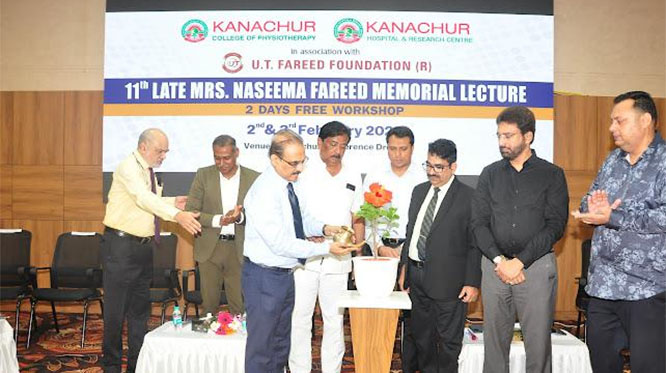
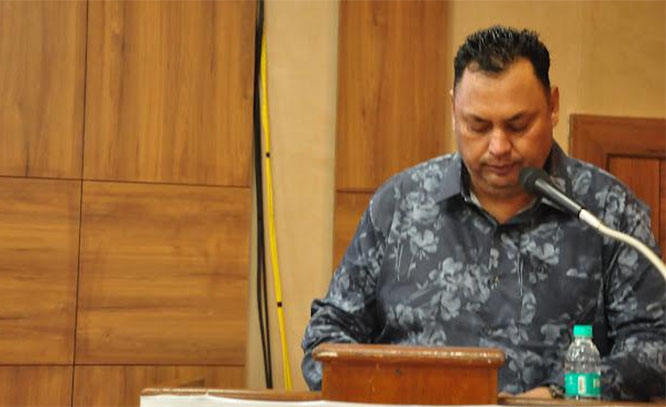
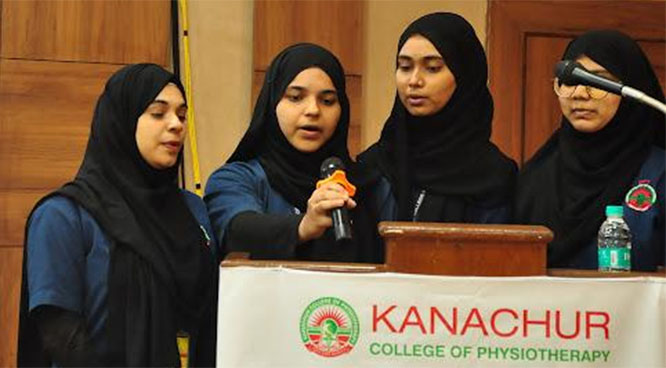
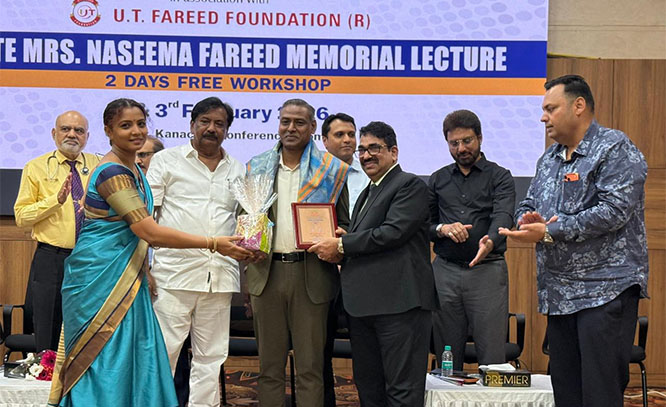
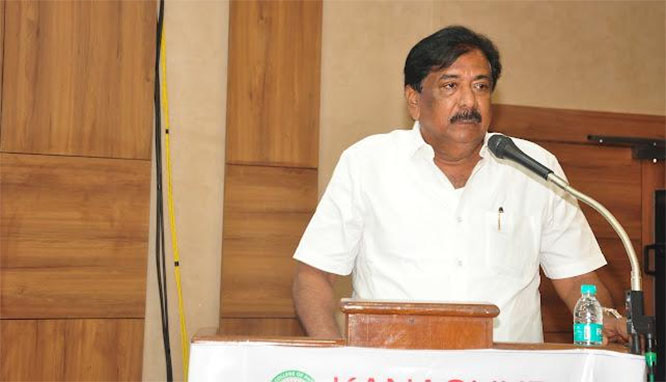
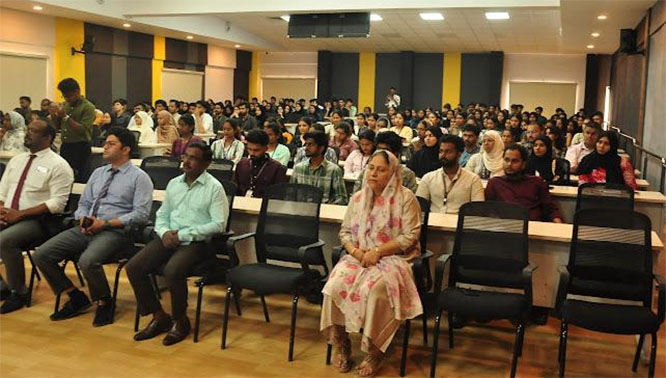
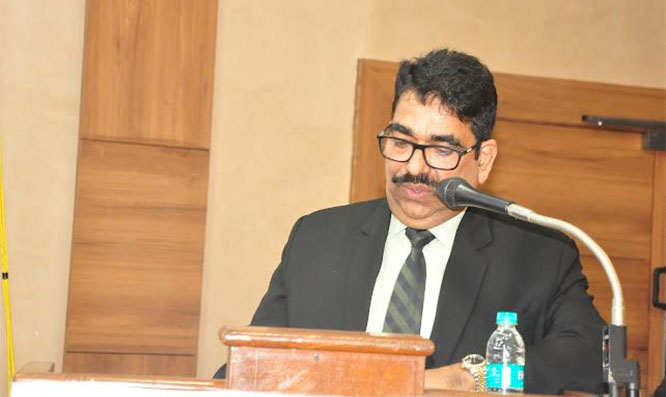
Mangaluru, Feb 3: Kanachur College of Physiotherapy and Kanachur Hospital & Research Centre, in association with U.T. Fareed Foundation (R), organised the 11th Late Mrs. Naseema Fareed Memorial Lecture on Tuesday.

The programme was inaugurated by Dr. Subramanyam K, Head of the Department and Professor, Department of Cardiology, Srinivas Institute of Medical Sciences & Research Centre, Mangaluru. In his inaugural address, Dr. Subramanyam delivered an insightful talk highlighting the vital role of physiotherapy in modern medical care, particularly in cardiac rehabilitation, patient recovery, and improving overall quality of life through a multidisciplinary healthcare approach.

The presidential address was delivered by Dr. Haji U.K. Monu, Chairman, KIET. The keynote address was presented by Dr. Mohammed Ismail Hejamady, who spoke on the evolving scope and significance of physiotherapy.

The event was held in the presence of Mr. Abdul Rahiman, Director, Kanachur Institute of Medical Sciences, Mangaluru; Dr. Vaishali Sreejith, Senate Member, Rajiv Gandhi University of Health Sciences, Bengaluru; Dr. Sudhan S.G., Professor and Principal, Krupanidhi College of Physiotherapy, Bengaluru; Dr. Shanavaz Manipady, Dean, Kanachur Institute of Medical Sciences, Mangaluru; and Dr. Venkat Rai Prabhu, Member, Kanachur Health Science Advisory Council, Kanachur Hospital & Research Centre.

Dr. Mohammad Suhail, Dean, Kanachur College of Physiotherapy, welcomed the guests and delegates.

As part of the programme, a two-day free workshop was organised on the following topics:

•    Art of Practice in Cardiopulmonary Conditions by Dr. Sudhan S.G., Principal, Krupanidhi College of Physiotherapy

•    The Gift of Life – Organ Donation by Dr. Rohan Monis, Chief Administrative Medical Officer

•    Chest X-ray Interpretation by Dr. Hemanth, Department of Radiology, KIMS

•    Pulmonary Rehabilitation by Dr. Vijaya Kumar, Department of Respiratory Medicine, KIMS

Organisers noted that the memorial lecture series has been conducted continuously for the 11th year, benefiting interns and postgraduate students from various colleges across Mangaluru. A total of 130 delegates attended the workshop.

Dr. Reshma, Vice Principal, Kanachur College of Physiotherapy, Mangaluru, delivered the vote of thanks.

Kanchur7.jpg

Kanchur6.jpg

Kanchur5.jpg

Kanchur4.jpg

Kanchur3.jpg

Kanchur1.jpg

Comments

Add new comment

  • Coastaldigest.com reserves the right to delete or block any comments.
  • Coastaldigset.com is not responsible for its readers’ comments.
  • Comments that are abusive, incendiary or irrelevant are strictly prohibited.
  • Please use a genuine email ID and provide your name to avoid reject.
News Network
January 31,2026

Roy.jpg

Bengaluru: The shooting incident involving CJ Roy, founder of the Confident Group, has once again put the spotlight on a businessman whose life has swung between flamboyant global success and persistent controversy at home.

Though Roy’s business interests extended across continents, his roots lay firmly in Karnataka. An alumnus of Christ School in Bengaluru, he later moved to Tumakuru to pursue an engineering degree. Those familiar with his early years describe him as intensely ambitious, beginning his career as a salesman at a small electronics firm dealing in computers.

Roy’s entry into large-scale real estate came through the Crystal Group, where he worked closely with Latha Namboothiri and rose from manager to director. However, the launch of the Confident Group in 2005 was clouded by industry speculation. Insiders speak of a fallout involving alleged “benami” properties and claims of deception that ultimately led to his independent venture—an episode Roy spent years trying to distance himself from, according to associates.

A tale of two cities

Roy’s professional trajectory diverged sharply across geographies.

In Dubai, he built a reputation as a bold and efficient developer, completing massive luxury residential projects in record time—some reportedly within 11 months. His rapid project delivery and lavish lifestyle in the Emirates earned him admiration and visibility in the real estate sector.

In Bengaluru, however, his image remained far more fractured. Sources say Roy stayed away from the city for several years amid disputes over unpaid dues to vendors and suppliers. Several projects were allegedly stalled, with accusations of unfulfilled commitments to cement and steel suppliers continuing to follow him.

Roy’s return to Bengaluru’s business and social circles began around 2018, marked by a conscious attempt at rebranding. His appointment as Honorary Consul of the Slovak Republic added diplomatic legitimacy, which he complemented with visible CSR initiatives, including ambulance donations and high-profile charity events.

Heavy police presence in Langford Town

Following the incident, police personnel from the Central division were deployed outside the Confident Group building in Langford Town, which also houses the Slovak Honorary Consulate in Bengaluru.

The otherwise busy premises near Hosur Road wore a deserted look on Friday, reflecting the shock and uncertainty that followed the tragedy.

Comments

Add new comment

  • Coastaldigest.com reserves the right to delete or block any comments.
  • Coastaldigset.com is not responsible for its readers’ comments.
  • Comments that are abusive, incendiary or irrelevant are strictly prohibited.
  • Please use a genuine email ID and provide your name to avoid reject.