Karnataka tops states, UTs in providing access to justice: IJR 2022

News Network
April 4, 2023

Bengaluru, Apr 4: Karnataka tops the list of states and Union Territories in providing access to justice and three other southern states figure among the best five, according to the India Justice Report 2022.

The IJR, which was released here on Tuesday, said except for Delhi and Chandigarh, no state or union territory spends more than one per cent of its total annual expenditure on judiciary where the vacancy of judges in high courts stands at 30 per cent.

The IJR, an initiative of the Tata Trusts launched in 2019, said as of December 2022, the country had 19 judges for every 10 lakh people and a backlog of 4.8 crore cases. The Law Commission had suggested, as early as in 1987, that there should be 50 judges for every 10 lakh people in a decade’s time.

The statistics were shared in IJR which ranked states and UTs on various parameters like vacancies in judiciary, budgetary allocations, infrastructure, human resources, legal aid, condition of prisons, functioning of police and state human rights commissions.

The Tata Trusts website describes IJR as a "unique initiative" that "ranks individual Indian states in relation to their capacity to deliver access to justice".

While Karnataka topped the chart among 18 large and mid-size states having a population of over 1 crore each, it was followed by Tamil Nadu, Telangana, Gujarat and Andhra Pradesh.

The list of seven small states, having a population of less than one crore each, was headed by Sikkim, followed by Arunachal Pradesh and Tripura.

“The justice system as a whole remains affected by low budgets. Except for two union territories, Delhi and Chandigarh, no state spends more than 1 per cent of its total annual expenditure on the judiciary.

“Vacancy is an issue across the police, prison staff, legal aid, and judiciary. For 1.4 billion (140 crore) people, India has about 20,076 judges with about 22 per cent sanctioned posts vacant. Vacancy among high court judges is at 30 per cent.

“In the police, women are only about 11.75 per cent, despite their numbers doubling in the last decade. About 29 per cent of the officer positions are vacant. The police to population ratio is 152.8 per lakh. The international standard is 222,” the report said.

It said prisons are over-occupied at over 130 per cent and more than two-thirds of the prisoners (77.1 per cent) are awaiting the completion of investigation or trial.

The IJR said most of the states have not fully utilised funds given to them by the Centre and their own increase in spending on the police, prisons, and judiciary has not kept pace with overall increase in state expenditure.

Retired Supreme Court judge Justice Madan B Lokur said, “The third IJR shows that states are making a substantive improvement over the last two ones in terms of adding new dimensions on diversity, training, and infrastructure. Some states have dramatically improved their performance but there is a lot that needs to be done on the whole.”

“So far as the police is concerned there does appear to be a shortage of women officers in police. Legal aid is doing better but still a lot of people need to be provided quality free legal aid, we need to increase the confidence that people have in our services,” he said.

Maja Daruwala, Chief Editor of IJR 2022, said as a member of the comity of nations and, more importantly, as a commitment to itself, India has promised that by 2030 it will have ensured access to justice for all and built effective, accountable, and inclusive institutions at all levels.

“But the official statistics brought together in the IJR this year show that we still have a long way to go. I would again urge that the provision of affordable, efficient and accessible justice services to each one of us be treated as necessary as food, education, or health.

"For this to happen more resources need to be ploughed into it, much more capacity built and much more attention paid to curing long standing deficiencies,” she said.

The report said Karnataka remains the only state to have consistently met its quota for SC, ST and OBC positions, both among police officers and the constabulary.

“In the judiciary, at the subordinate/ district court level, no state met all the three quotas. Only Gujarat and Chhattisgarh met their respective SC quotas. Arunachal Pradesh, Telangana, and Uttarakhand met their respective ST quotas. Kerala, Sikkim, Andhra Pradesh, Maharashtra, Tamil Nadu, Chhattisgarh, and Telangana met OBC quotas,” it said.

Regarding the share of women in key positions across the justice system, which includes police, prisons, judiciary and legal aid, the report states that one out of 10 is a woman.

“While the overall share of women in the police force is about 11.75 per cent, in the officer ranks it is still lower at 8 per cent. Only 13 per cent of high court judges and 35 per cent of subordinate court judges are women. Among prison staff, they are 13 per cent. A majority of states has increased the share of women panel lawyers. Nationally, the share has increased from 18 per cent to 25 per cent,” it said.

It said one in four police stations does not have a single CCTV and nearly three in 10 police stations do not have women help desks.

The report said about 30 per cent (391) of prisons record occupancy rates of above 150 per cent and 54 per cent (709) run above 100 per cent capacity.

“With the exception of Andaman and Nicobar Islands, Arunachal Pradesh, Mizoram, Tripura, and Madhya Pradesh, the undertrial population of all states and Union Territories exceeds 60 per cent," it said.

On the aspect of workload in judiciary, the report said in 28 states/ Union Territories, one in every four high court cases is pending for more than five years. In district courts of 11 states/UTs, one in every four cases is pending for more than five years,” the report said.

The IJR said the population per subordinate court judge and high court judge is 71,224 persons and 17,65,760 persons respectively.

With regard to budgets, it found the national per capita spend on legal aid, including the expenditure of the National Legal Services Authority (NALSA) and the state/ UT governments themselves, is a meagre Rs 4.57 per annum.

Excluding NALSA, this figure drops to Rs 3.87 and, if only NALSA’s budget (2021-22) is considered, the per capita spend is Rs 1.06 only, it said.

It said the national per capita spend on prisons is Rs 43. Nationally, the annual average spend per prisoner has gone down to Rs 38,028 from Rs 43,062. Andhra Pradesh records the highest annual spend on a prisoner at Rs 2,11,157.

“The national per capita spend on judiciary stands at Rs. 146,” it said, adding the national per capita spend on police is at Rs 1151.

“IJR 2022 has reiterated both immediate and foundational corrections. It has flagged urgent filling of vacancies and increased representation. To effect an irreversible change, it has exhorted that Justice delivery be designated as an essential service,” it concluded.

The third IJR also assessed the capacity of the 25 State Human Rights Commissions (SHRC) and found that there are 33,312 pending cases before these panels in March 2021 and the national average vacancy across 25 SHRCs is at 44 per cent.

The statistics show nine states have been working with 50 per cent or more vacancies among members in SHRCs and only six states have women in their executive staff.

Comments

Add new comment

  • Coastaldigest.com reserves the right to delete or block any comments.
  • Coastaldigset.com is not responsible for its readers’ comments.
  • Comments that are abusive, incendiary or irrelevant are strictly prohibited.
  • Please use a genuine email ID and provide your name to avoid reject.
News Network
January 20,2026

KCFabudhabi.jpg

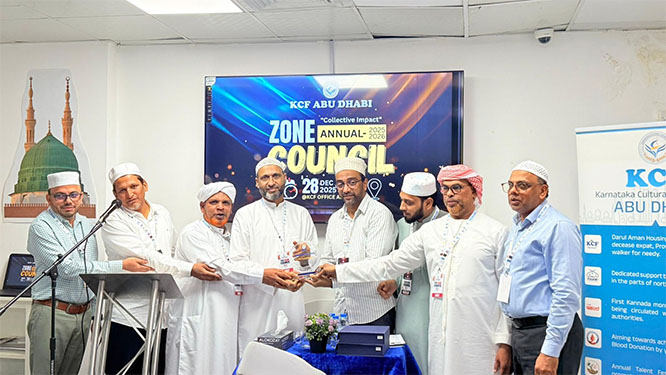
KCF, a global socio-cultural organisation of Karnataka expatriates, is actively involved in education, humanitarian initiatives and community well-being across several countries. The awardees were selected following a structured evaluation of nominations by the Annual Council Program Committee, based on the depth, consistency and long-term impact of their social service.

One of the award recipients, Abdul Razak Haji, a prominent UAE-based entrepreneur from the Qamcon Group of Companies, was honoured for his significant contributions to society. Through both his professional journey and personal initiatives, he has supported numerous employees and families, while also extending assistance in education, housing for the underprivileged and various charitable causes, largely carried out quietly over the years. His award was presented earlier during the Annual Council Program held at the KCF Abu Dhabi office.

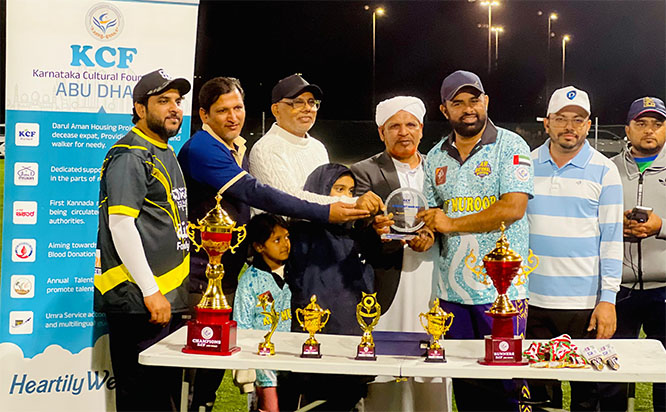
The second award was conferred on Latheef Kakkinje, a young social worker based in Abu Dhabi, in recognition of his active involvement in community engagement programmes, sports initiatives, talent festivals and family-oriented social activities. His consistent volunteering efforts and commitment to humanitarian causes were highly appreciated by the selection committee.

The award presentation ceremony for Latheef Kakkinje was held at the Zayed Cricket Stadium (Astro Turf Ground) in the presence of Kedumbady Ibrahim Saqafi, President of KCF UAE; Ibrahim, General Secretary; Kabeer Bayambady, President of KCF Abu Dhabi; Ummer Ishwaramangila, General Secretary; along with other members of the KCF Abu Dhabi cabinet.

Congratulating both awardees, KCF leaders reiterated the organisation’s commitment to recognising individuals who selflessly work for social upliftment and community service.

KCFabudhabi1.jpg

Comments

Add new comment

  • Coastaldigest.com reserves the right to delete or block any comments.
  • Coastaldigset.com is not responsible for its readers’ comments.
  • Comments that are abusive, incendiary or irrelevant are strictly prohibited.
  • Please use a genuine email ID and provide your name to avoid reject.
coastaldigest.com news network
January 19,2026

badriya.jpg

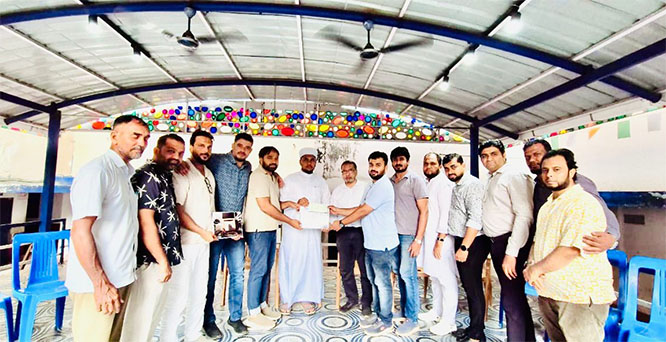
Mangaluru: The Phase I project of Badria Vision 2028 was formally launched at a ceremony held at the Badria Campus on January 17, marking an important step in the institution’s long-term development roadmap.

The programme was attended by P.B. Abdul Hameed, Secretary of the MEA, and P.C. Hasir, Correspondent of the MEA, who presided over the event and underscored the institution’s commitment to growth and academic excellence.

Office-bearers of the Badria Alumni Association were present in large numbers, including A.K. Sajid (President), Shamsuddin and S.M. Farooq (Vice-Presidents), Shaheed (General Secretary), and Khaleel (Treasurer), reflecting strong alumni engagement in the initiative.

The gathering was blessed by Sayyid Shamsuddeen Basith Thangal Kukkaje, Qateeb of Zeenat Yatheem Bakshi, who led a special dua seeking divine guidance and success for the project.

The ceremony also witnessed the participation of prominent alumnus and local corporate professional Abdul Latheef, along with alumni members Naushad, Kalandar, Safwan, members of the core committee, and several other former students.

A key moment of the event was the formal handover of a cheque to Ameen Woodland Architect, signalling the immediate commencement of construction work under Phase I of the project.

Organisers said the launch of Phase I reflects a shared vision, institutional unity, and collective resolve to realise the objectives of Badria Vision 2028.

Comments

Add new comment

  • Coastaldigest.com reserves the right to delete or block any comments.
  • Coastaldigset.com is not responsible for its readers’ comments.
  • Comments that are abusive, incendiary or irrelevant are strictly prohibited.
  • Please use a genuine email ID and provide your name to avoid reject.
News Network
January 20,2026

DGP.jpg

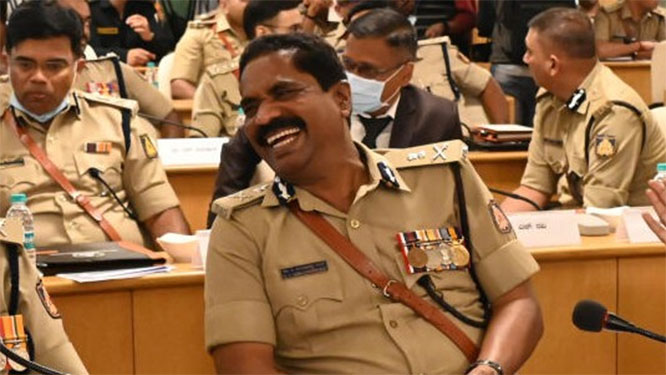
Karnataka DGP (Civil Rights Enforcement) K Ramachandra Rao was suspended with immediate effect, as per a state government order issued on Monday, 19 January. The order cited conduct unbecoming of a government servant and causing embarrassment to the state administration.

The Karnataka government suspended Rao after a purported video showed him in a compromising position with a woman inside his official chamber. The video went viral on social media. Rao rejected the videos outright, terming them "fabricated and false".

Who is K Ramachandra Rao?

Rao is a DGP-rank officer who was heading the Directorate of Civil Rights Enforcement until his suspension. He was promoted to DGP in September 2023 and assumed office in October 2023, the Sunday Guardian reported.

He also served as the Chairman and Managing Director of the Karnataka State Police Housing and Infrastructure Development Corporation Limited.

His stint as the Inspector General of Police (IGP) for the Southern Range was also marred by controversy. In 2014, during a cash seizure near Mysuru’s Yelwal, officials claimed the seized amount was ₹20 lakh, while the accused (Kerala-based merchants) claimed it was around ₹2.27 crore.

Rao, who was present during the seizure, denied all allegations. However, he was transferred soon after.

Allegations of collusion with a businessman surfaced, and a senior police officer was quoted by The Sunday Guardian as saying, “In Rao’s case, the CID has clearly mentioned that there was a great degree of lapse on the part of Rao and a deputy superintendent of police after it was brought to their notice that a few policemen, including a gunman attached to the IGP, were involved in the robbery.”

Rao had denied all wrongdoing in that incident. Despite past controversies, he rose to the state’s top police position, the Sunday Guardian reported.

Ranya Rao’s stepfather

Rao is the stepfather of Kannada actress Harshavardhini Ranya alias Ranya Rao, accused of orchestrating the illegal import of gold worth over ₹12.56 crore from Dubai to India along with two others — businessman Tarun Raju, and jewellery dealer Sahil Jain.

‘Obscene video’ controversy

A viral video showed Rao behaving inappropriately with a woman inside his office while in uniform.

The Karnataka government said in its Monday order that “vide videos and news reports widely broadcast on public news channels and media platforms, it is observed that Dr K Ramachandra Rao has acted in an obscene manner which is unbecoming of a Government Servant and also causing embarrassment to the Government.”

The order said the matter was examined by the state government, which found that the officer's conduct amounted to a violation of Rule 3 of the All India Services (Conduct) Rules, 1968.

The government said it is prima facie satisfied that "it is necessary to place Rao under suspension with immediate effect, pending inquiry".

During the suspension period, Rao will be entitled to subsistence allowance as per Rule 4 of the All India Services (Discipline and Appeal) Rules, 1969.

The order also places restrictions on his movement, stating that during the period of suspension, the officer must not leave headquarters under any circumstances without the written permission of the state government.

Comments

Add new comment

  • Coastaldigest.com reserves the right to delete or block any comments.
  • Coastaldigset.com is not responsible for its readers’ comments.
  • Comments that are abusive, incendiary or irrelevant are strictly prohibited.
  • Please use a genuine email ID and provide your name to avoid reject.